
Division of Sledges finding and cutting a road through heavy hummocks, in the Queen’s Channel — History & Facts
What secret hides in the quiet of the canvas? Beneath the surface of Division of Sledges finding and cutting a road through heavy hummocks, in the Queen’s Channel, an undercurrent of fragility permeates the icy landscape. The painting encapsulates not just a moment in time but an exploration of humanity's struggle against the unforgiving forces of nature. Look to the left at the sledges, their outlines stark against the glacial expanse. Each figure is poised in labor, their forms fragile yet determined, rendered with careful strokes that convey both movement and weight.
Notice how the light dances across the snow, reflecting an ethereal glow, juxtaposed with the deep shadows that hint at the harsh reality of their environment. The cool palette of blues and whites is punctuated by the warm browns of the sledges, creating a striking contrast that emphasizes the vulnerability of both man and machine in this frozen realm. Delve deeper into the tension between the men and their surroundings; it’s as if the snow itself threatens to swallow their efforts. The heavy hummocks, rising like beasts, become symbols of the obstacles in their path—nature’s indifference to human ambition.
The placement of the figures within this vast landscape evokes a sense of isolation and desperation, underlining the delicate balance between survival and surrender in the face of adversity. In 1855, while creating this piece, the artist was deeply engaged in the realities of Arctic exploration, reflecting a period of intense geographical ambition. Working in the context of British military expeditions, May sought to document the harsh conditions faced by those who dared to traverse the polar regions. This painting captures not just a moment of struggle, but also a testament to the human spirit amid the fragility of existence in extreme environments.
More Artworks by Walter William May
Browse all →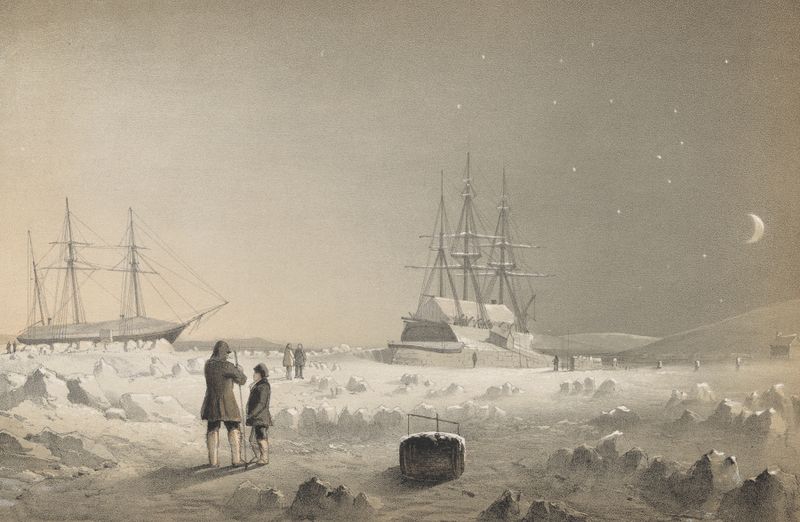
H.M.S. Assistance and Pioneer in Winter Quarters—Returning Daylight
Walter William May
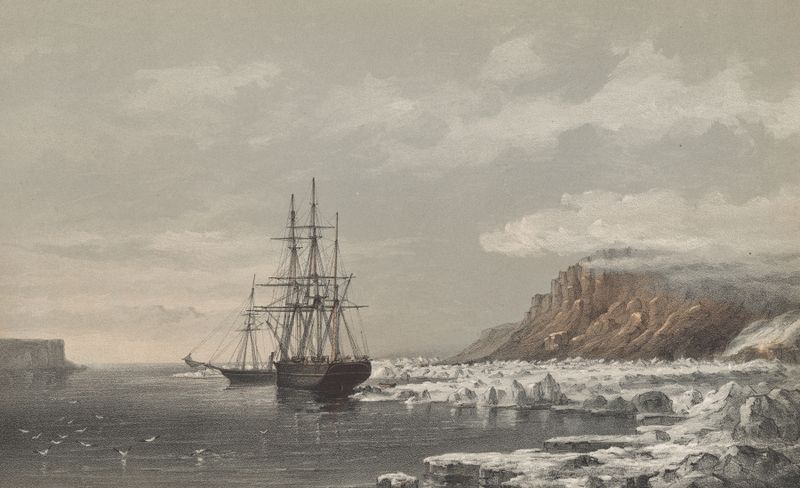
H.M.S. Assistance and Pioneer fast to the Floe, off Cape Majendie, Wellington Channel, 1853
Walter William May
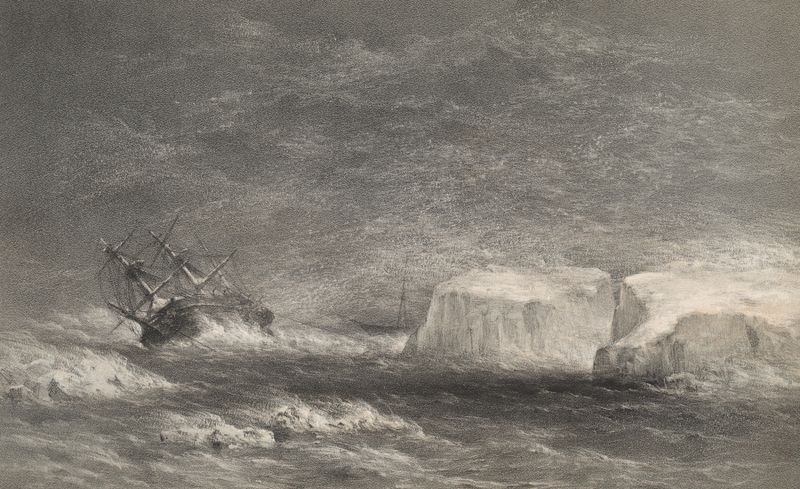
Perilous position of H.M.S. Assistance and Pioneer, on the evening of the 12th of October, 1853.—Disaster Bay
Walter William May
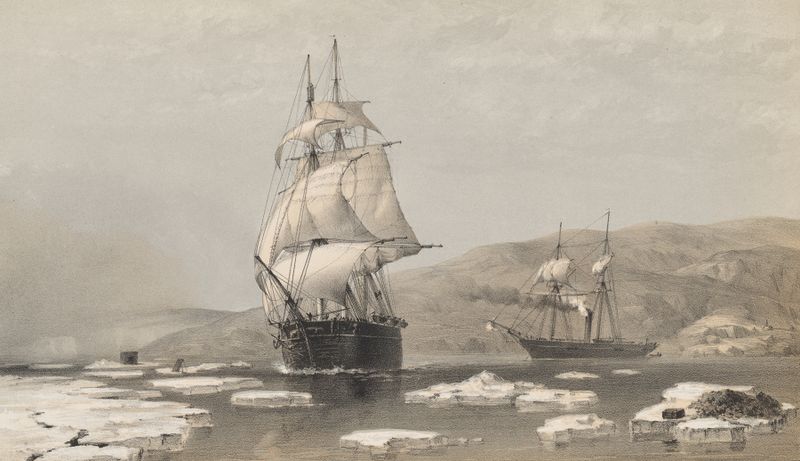
H.M.S. Assistance and Pioneer breaking out of Winter Quarters, 1854
Walter William May
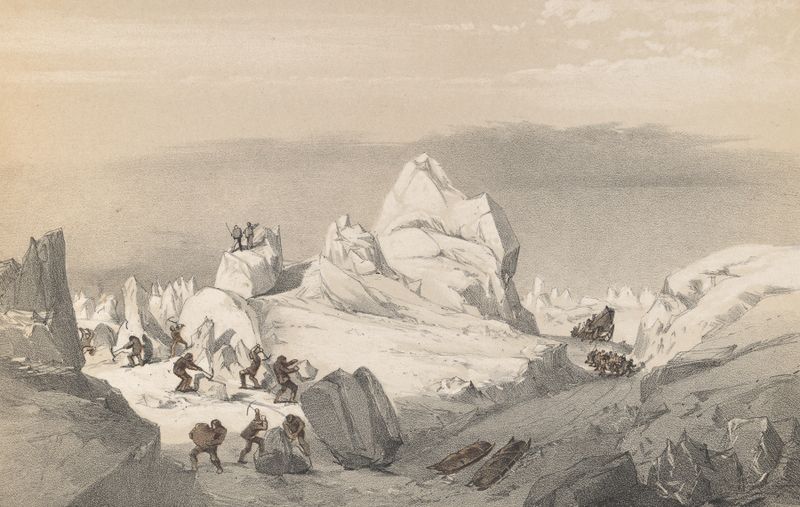
Division of Sledges finding and cutting a road through heavy hummocks, in the Queen’s Channel
Walter William May
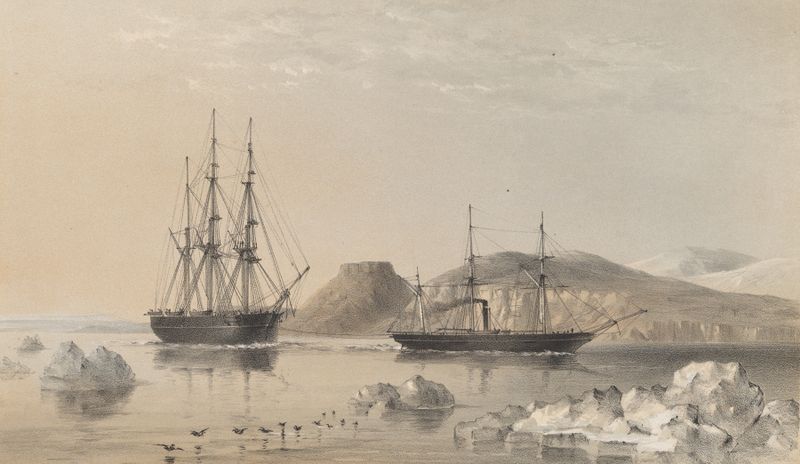
H.M.S. Assistance, in tow of the Pioneer (Captain Sherard Osborn), Passing John Barrow Mount, North of Wellington Channel, 1853
Walter William May
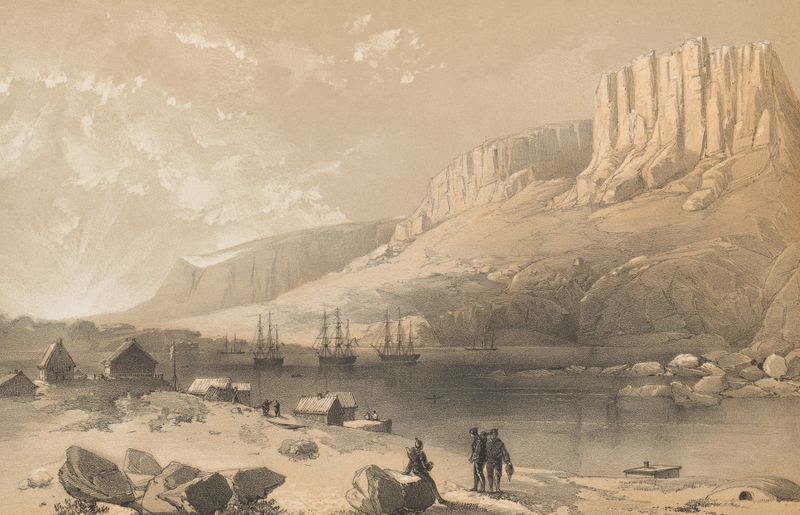
The Arctic Squadron in Leevly Harbour, Island of Disco, West Coast of Greenland
Walter William May
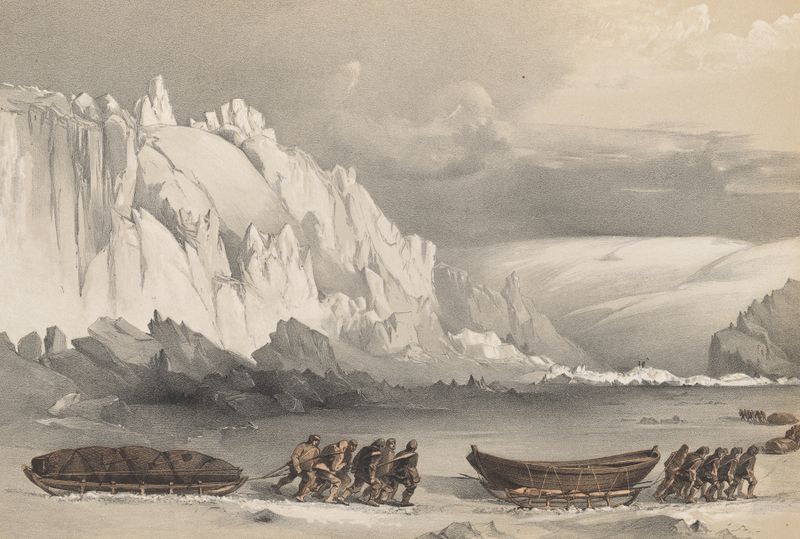
Division of Sledges passing Cape Lady Franklin; Extraordinary masses of ice pressed against the North Shore of Bathurst Land
Walter William May
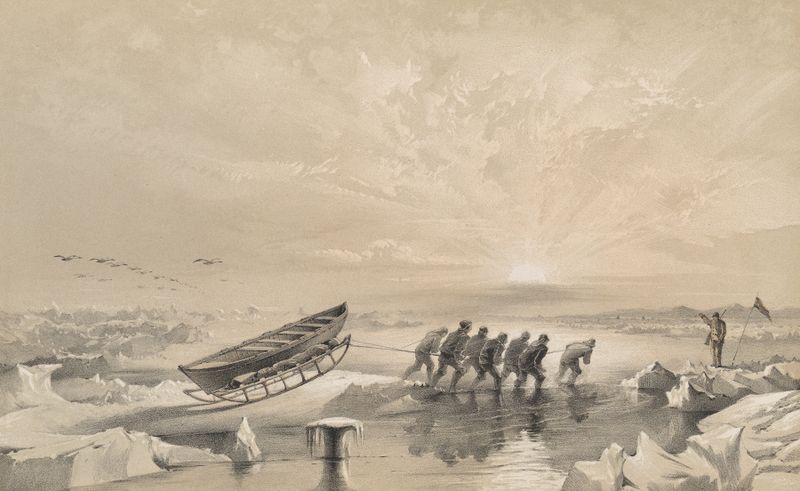
Sledge party returning through water during the month of July
Walter William May
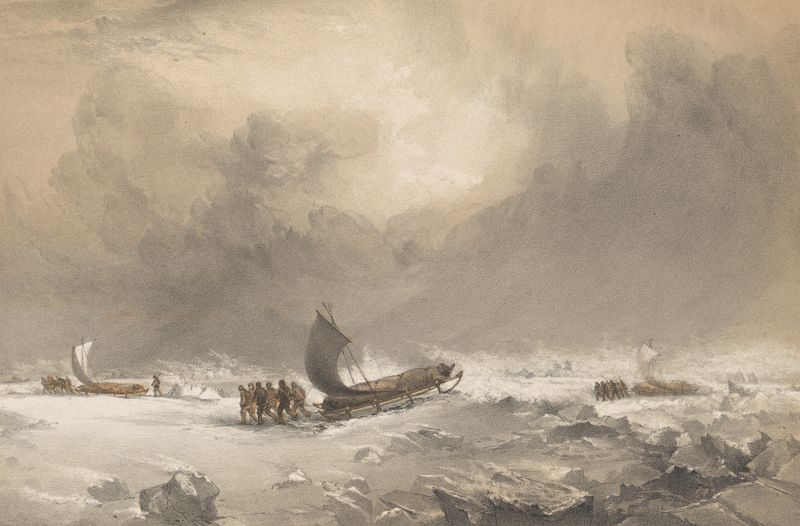
Sledges in a fresh fair wind, going over Hummocky Ice
Walter William May





