
The Arctic Squadron in Leevly Harbour, Island of Disco, West Coast of Greenland — History & Facts
In the realm of the Arctic, where icebergs clash with waves, the movement of ships becomes a dance of survival against nature's harsh embrace. Look to the left at the rugged coastline, where the jagged cliffs frame a turbulent sea, a testament to the wild beauty of Greenland. The vessels, their sails taut with the northern wind, draw the eye towards the horizon, where the sky melts into a palette of blues and grays. The brushwork, both fierce and delicate, captures the play of light on water, hinting at the transient moments of calm amid the chaos.
Notice how the artist employs texture to convey the weight of the ice and the vitality of the ships, creating a dialogue between stability and movement. Beneath the surface, this scene embodies the struggle for existence in an unforgiving environment. The ships represent hope and resilience, battling against the icy grip of the landscape. Yet, there’s a tension in their positioning; they seem both at home and out of place, echoing the duality of man’s ambition versus nature's dominion.
The light refracted through the ice symbolizes clarity in chaos, while the shadows suggest the lurking dangers that lie beneath the surface, reminding us of the fragility of life. In 1855, Walter William May painted this piece during a period when Arctic exploration was gaining fevered momentum. He created it while living in England, reflecting the era's fascination with the polar regions and the quest for knowledge. This was a time when artists were beginning to capture the sublime beauty of nature, navigating the thin line between adventure and peril, a theme that resonates deeply within the artwork.
More Artworks by Walter William May
Browse all →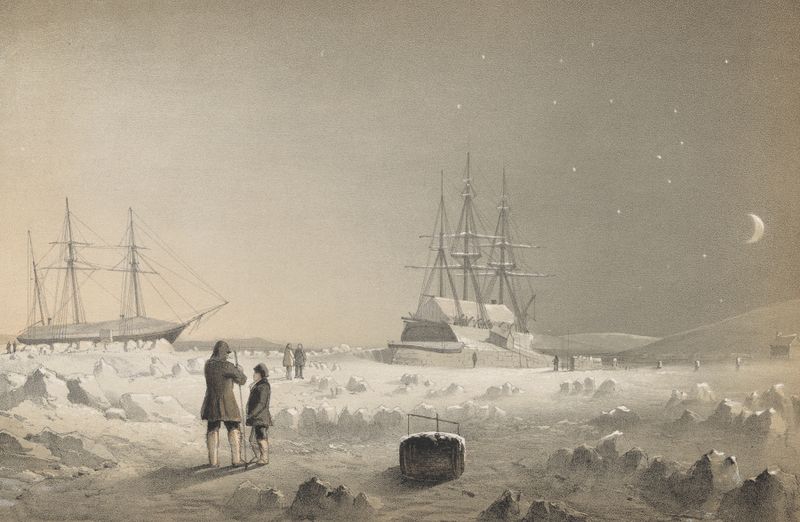
H.M.S. Assistance and Pioneer in Winter Quarters—Returning Daylight
Walter William May
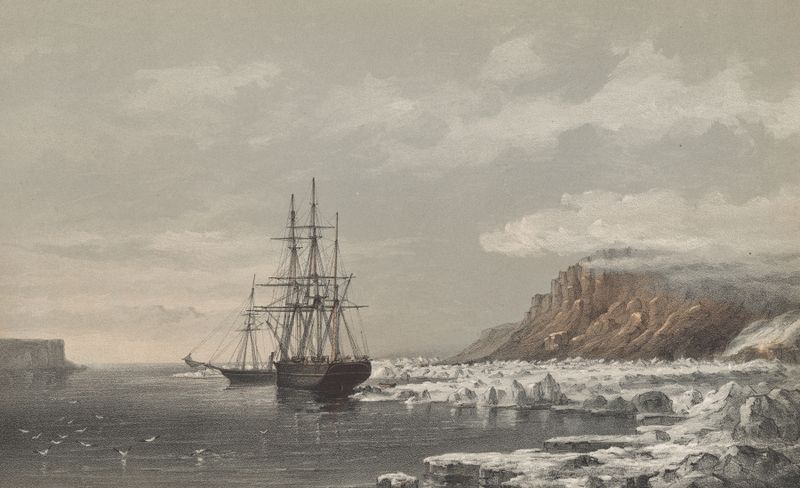
H.M.S. Assistance and Pioneer fast to the Floe, off Cape Majendie, Wellington Channel, 1853
Walter William May
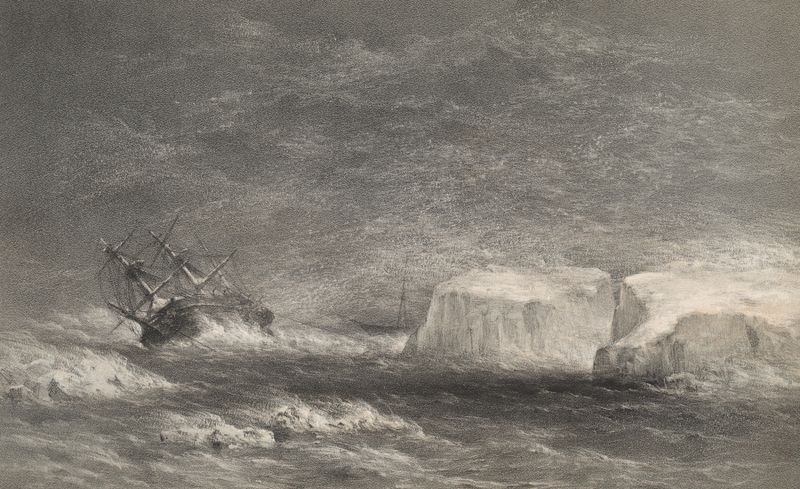
Perilous position of H.M.S. Assistance and Pioneer, on the evening of the 12th of October, 1853.—Disaster Bay
Walter William May
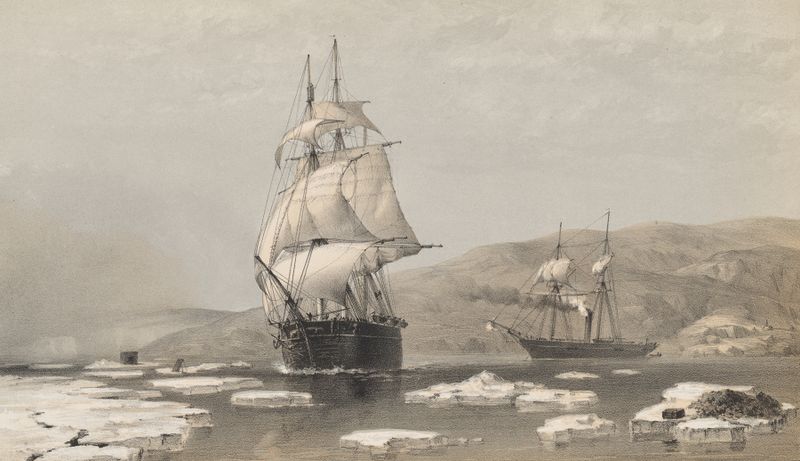
H.M.S. Assistance and Pioneer breaking out of Winter Quarters, 1854
Walter William May
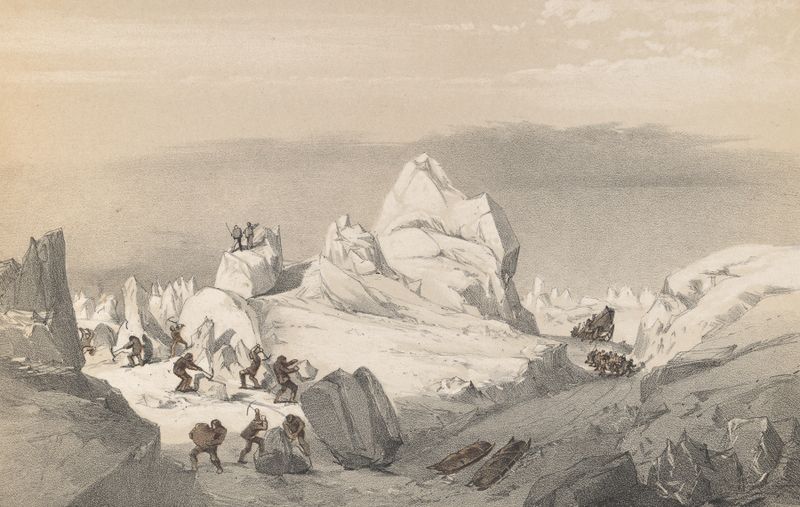
Division of Sledges finding and cutting a road through heavy hummocks, in the Queen’s Channel
Walter William May
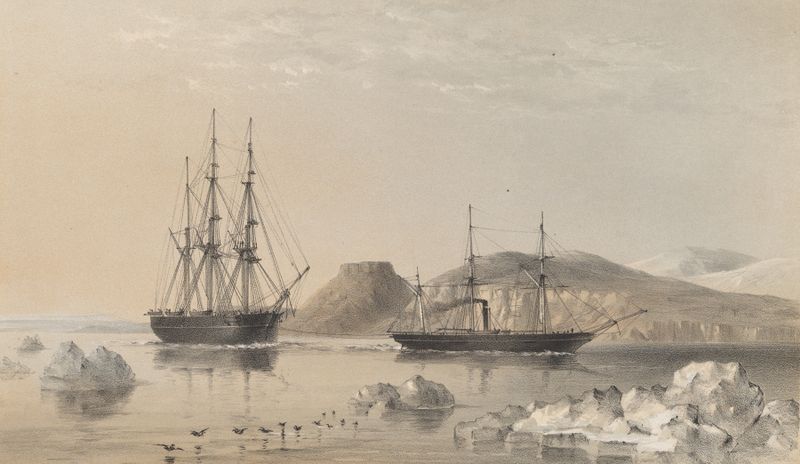
H.M.S. Assistance, in tow of the Pioneer (Captain Sherard Osborn), Passing John Barrow Mount, North of Wellington Channel, 1853
Walter William May
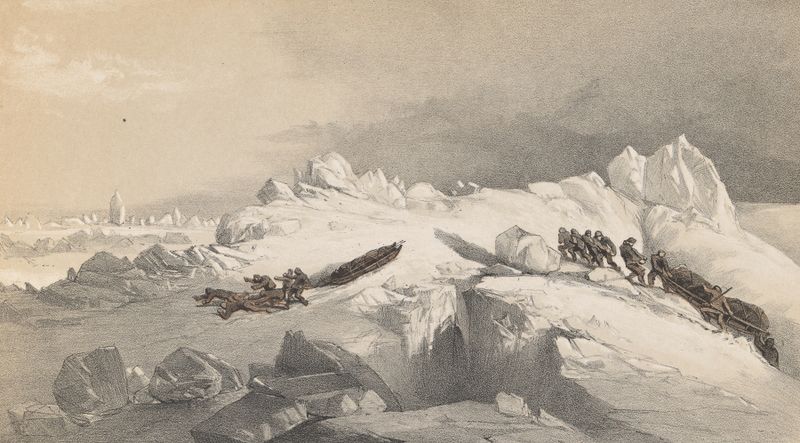
Division of Sledges finding and cutting a road through heavy hummocks, in the Queen’s Channel
Walter William May
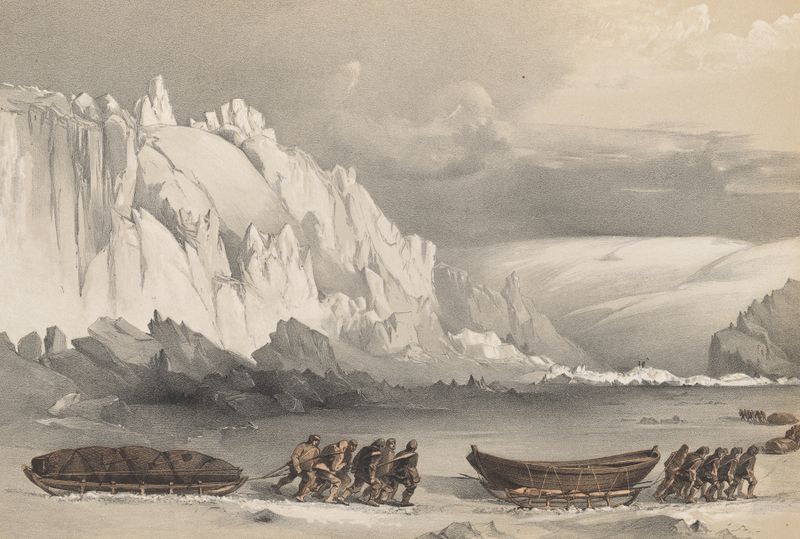
Division of Sledges passing Cape Lady Franklin; Extraordinary masses of ice pressed against the North Shore of Bathurst Land
Walter William May
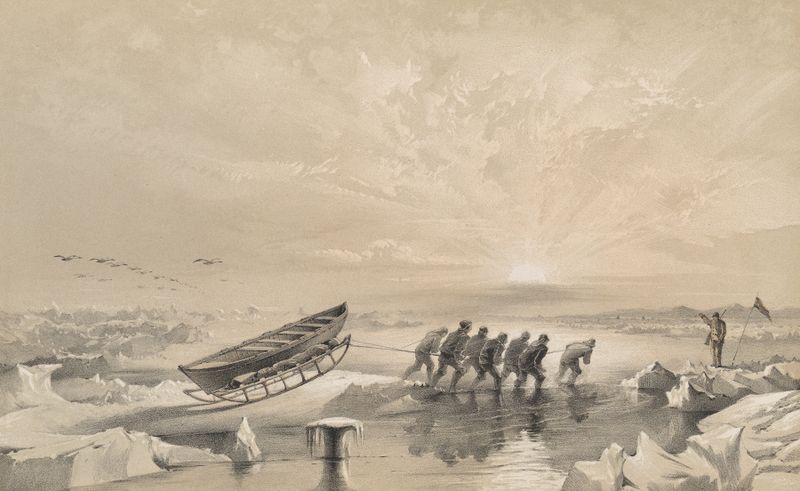
Sledge party returning through water during the month of July
Walter William May
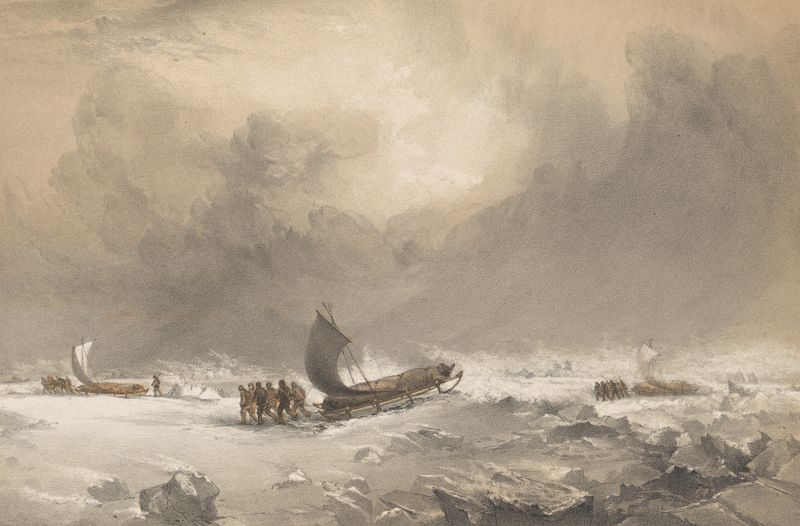
Sledges in a fresh fair wind, going over Hummocky Ice
Walter William May





