
Dünenstrand in Vlissingen — History & Facts
In the gentle embrace of sand and sea, the beauty of decay whispers stories long forgotten. It invites us to consider the transient nature of existence and how life, even in its waning moments, can possess undeniable grace. Look to the left at the soft, undulating dunes, their whispers woven from muted tones of beige and gray, echoing the passage of time. Notice how the brushstrokes mimic the gentle caress of the wind, each ripple suggesting a movement both imperative and contemplative.
The sky above transitions from deep blues to ethereal whites, while a fragile light dances upon the water, illuminating the shoreline where land meets sea — a transient boundary marked by the ebb and flow of life. Within this serene landscape, contrasts emerge: the vibrant richness of the sea against the somber hues of the dunes speaks to the struggle between vitality and decay. The juxtaposition of wild, untamed nature against the stillness of the deserted beach evokes a sense of solitude, where the past lingers like a fading memory. Each grain of sand seems to hold a fragment of history, urging the viewer to ponder the impermanence that shapes our surroundings. Max Clarenbach painted this scene during a time of introspection in his artistic journey, likely in the early 20th century, as he found himself drawn to the tranquil Dutch coast.
This period in his life was marked by a shift toward capturing the essence of landscapes, reflecting both personal and societal changes, as art began to explore themes of nature and existential fragility.
More Artworks by Max Clarenbach
Browse all →
Winter an der Erft
Max Clarenbach

Bäume im Nebel
Max Clarenbach

Winterlandschaft
Max Clarenbach

Nordseestrand – Vlissingen
Max Clarenbach

Winterlandschaft am Niederrhein, bei Wittlaer
Max Clarenbach

Flussufer
Max Clarenbach

Meereslandschaft
Max Clarenbach
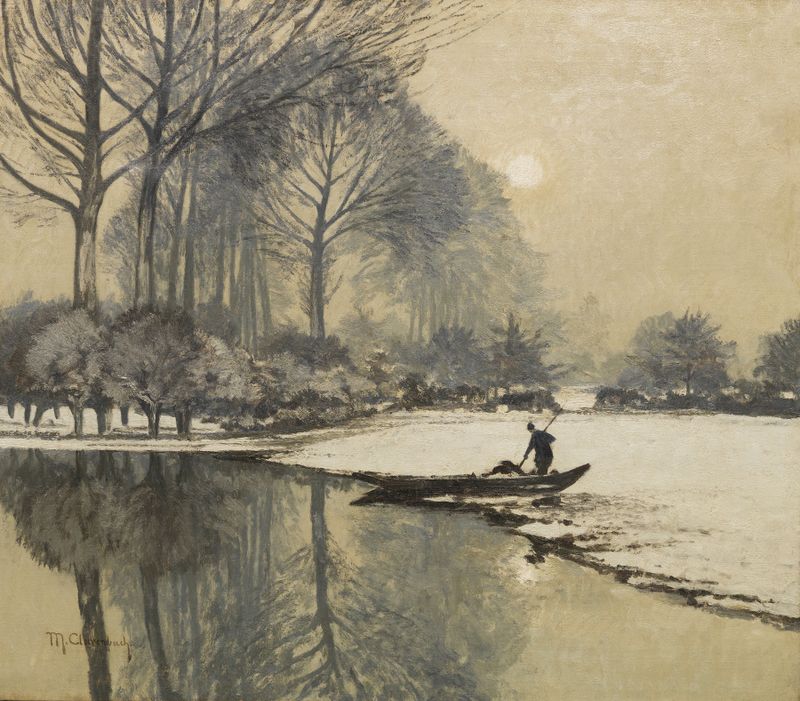
Winterlandschaft mit Kahnfischer
Max Clarenbach

Niederrhein – Treibeis
Max Clarenbach

Der Rhein bei Düsseldorf mit Blick auf die Schnellenburg
Max Clarenbach





