
Dood van Abia — History & Facts
Could beauty survive in a century of chaos? The question resonates through time, echoing the intricacies of the human soul as it grapples with transience and suffering. Look to the left, where pale hands cradle the lifeless figure, adorned in rich hues that contrast sharply with the somber ambiance. The use of chiaroscuro draws your gaze to the expressive features of the mourners, their faces etched with grief, while the reflective surfaces in the background hint at a world that remains ever watchful. Notice how the meticulously painted fabrics intertwine, creating a visual symphony that speaks to the depth of loss and memory. Amidst the sorrow, hidden meanings emerge—the stark juxtaposition of light and dark illustrates the fragility of life and the permanence of death.
The tension between the vibrancy of colors and the muted tones evokes an emotional landscape, suggesting that beauty, though fleeting, persists in the shadows of despair. Each element, from the sorrowful gaze of the figures to the stillness enveloping the scene, invites us to ponder the weight of mortality and the grace that accompanies its acceptance. In 1538, the artist was entrenched in the complex political and artistic landscapes of Northern Europe. Living in Basel, Holbein was deeply influenced by the Reformation and the shifting ideals of beauty and morality.
His works were characterized by acute observation and a keen understanding of human emotion, making his reflections on life and death profoundly relevant during a time of turmoil and transformation in the art world.
More Artworks by Hans Holbein (II)
Browse all →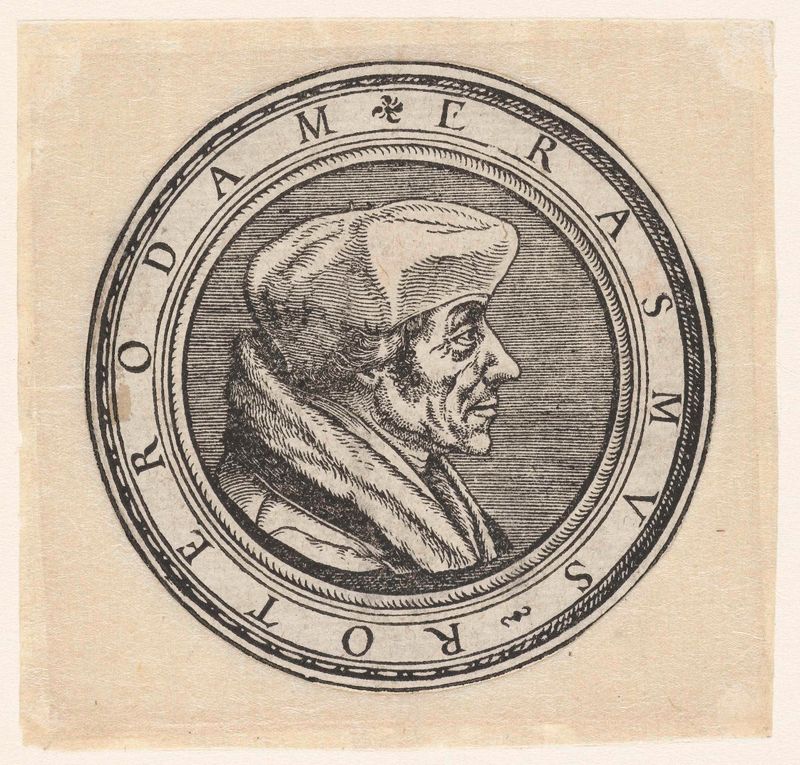
Portret van Erasmus
Hans Holbein (II)
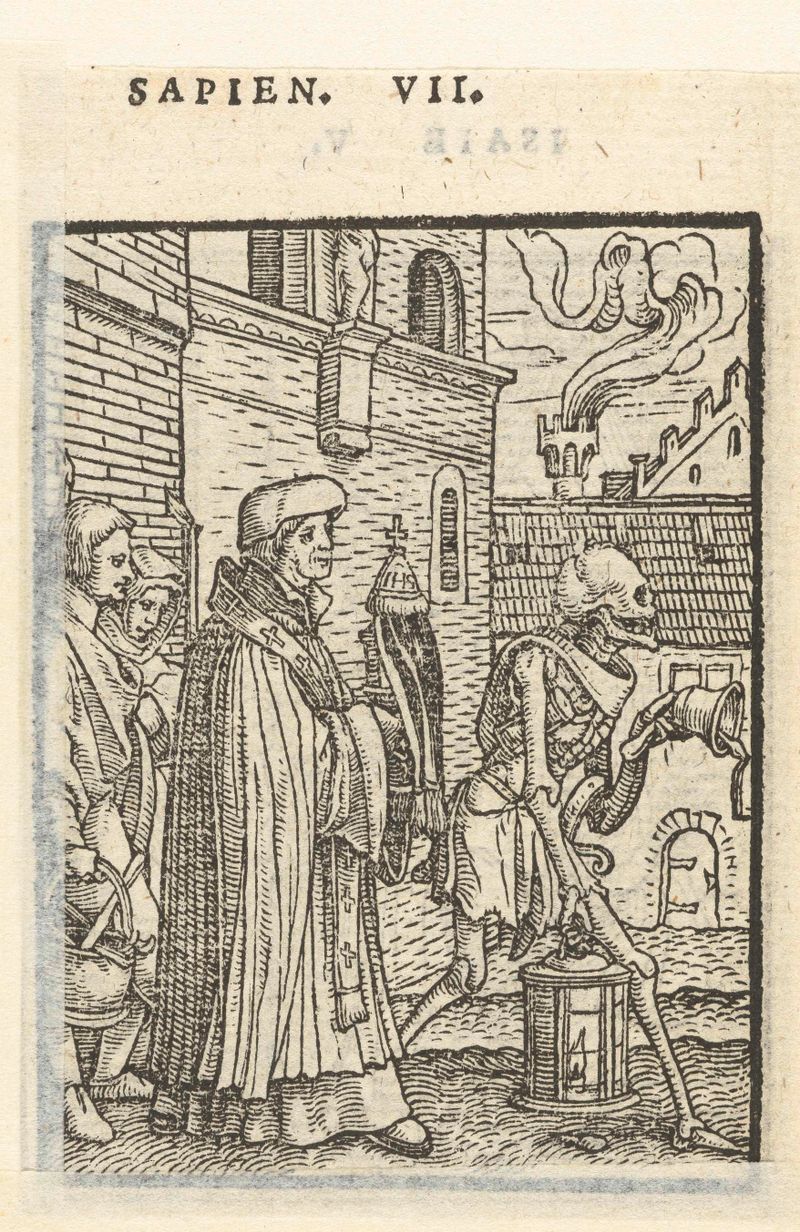
Priester en de Dood
Hans Holbein (II)
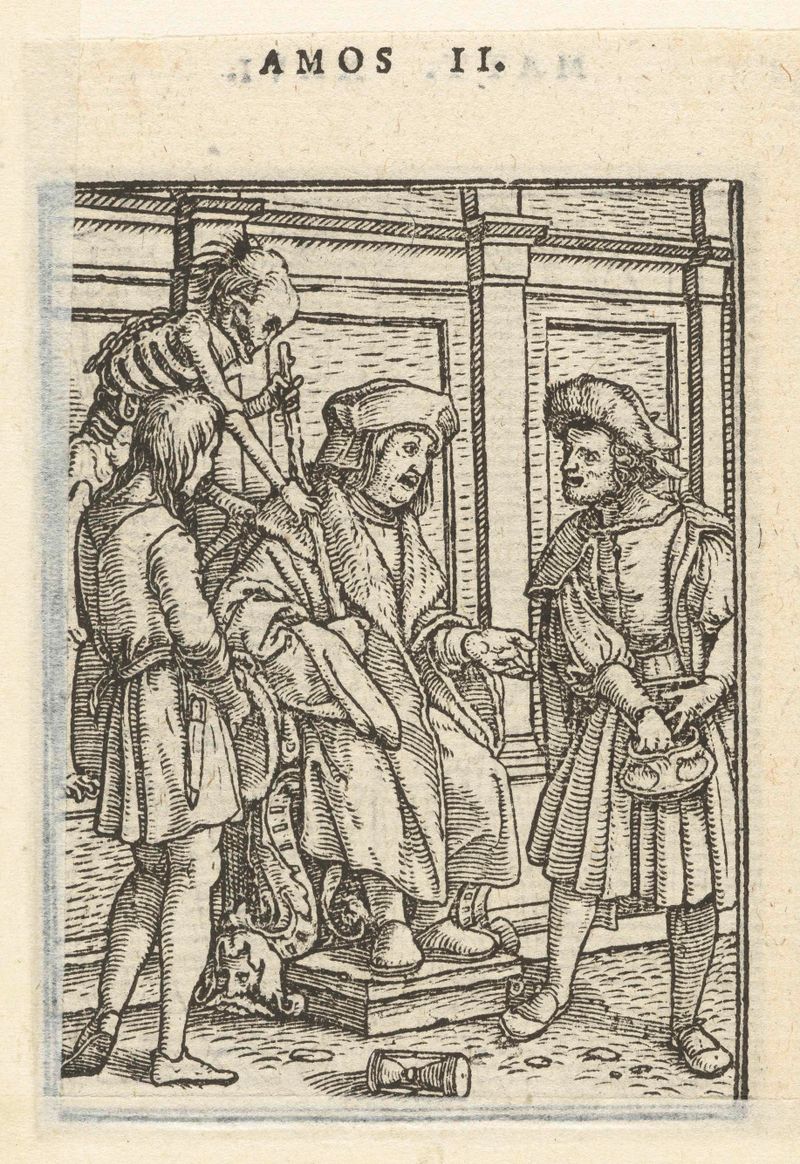
Rechter en de Dood
Hans Holbein (II)
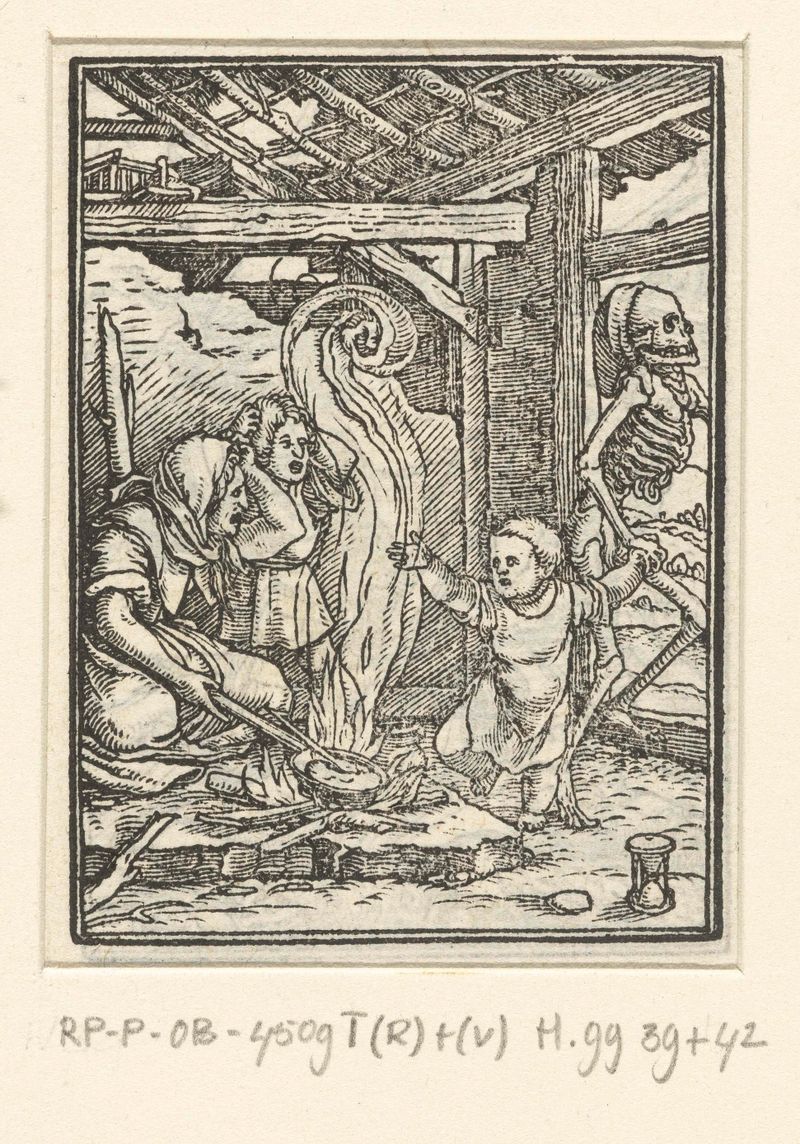
Kind en de Dood
Hans Holbein (II)
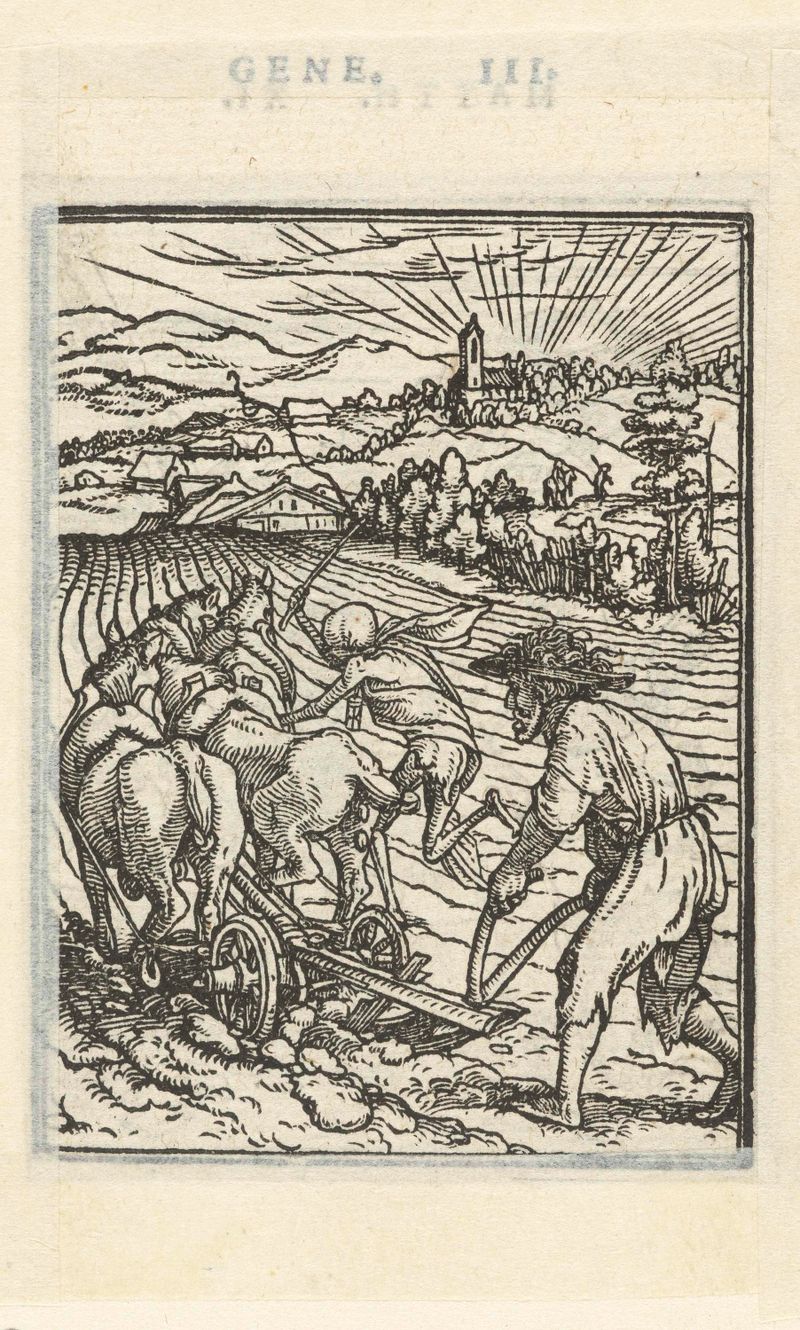
Boer en de Dood
Hans Holbein (II)
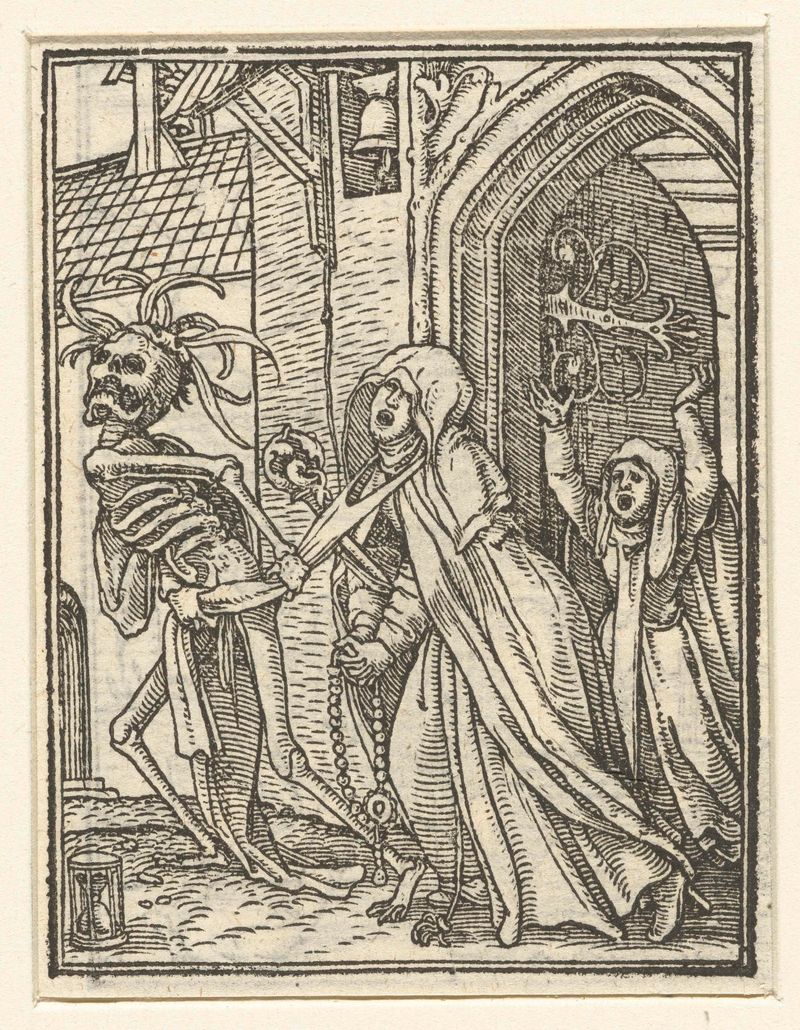
Abdis en de Dood
Hans Holbein (II)
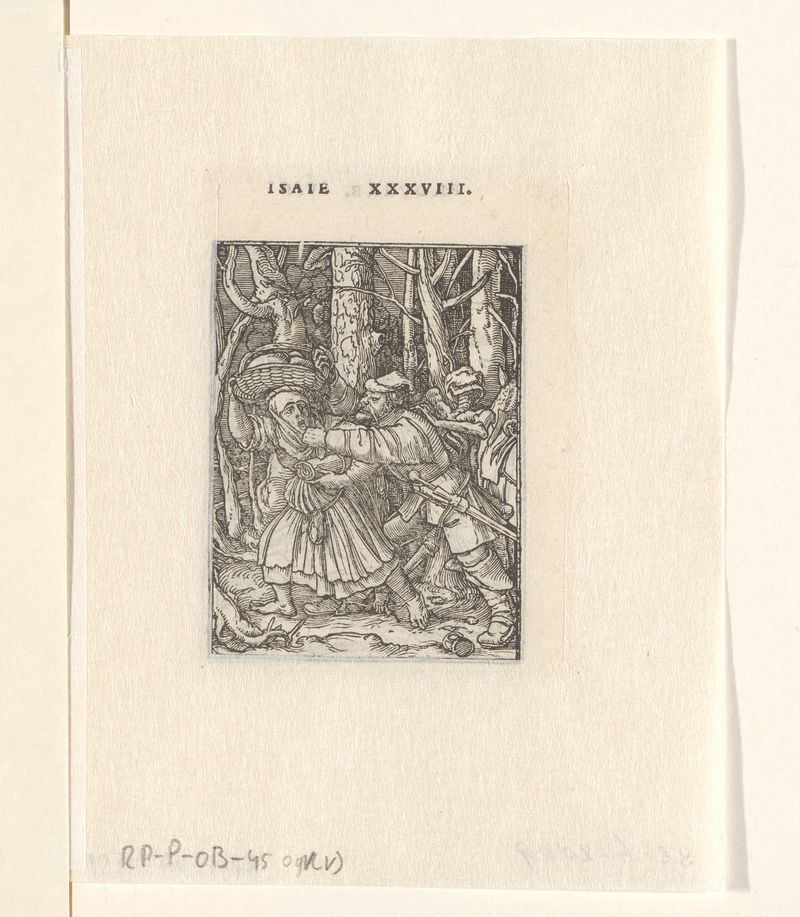
Dief en de Dood
Hans Holbein (II)
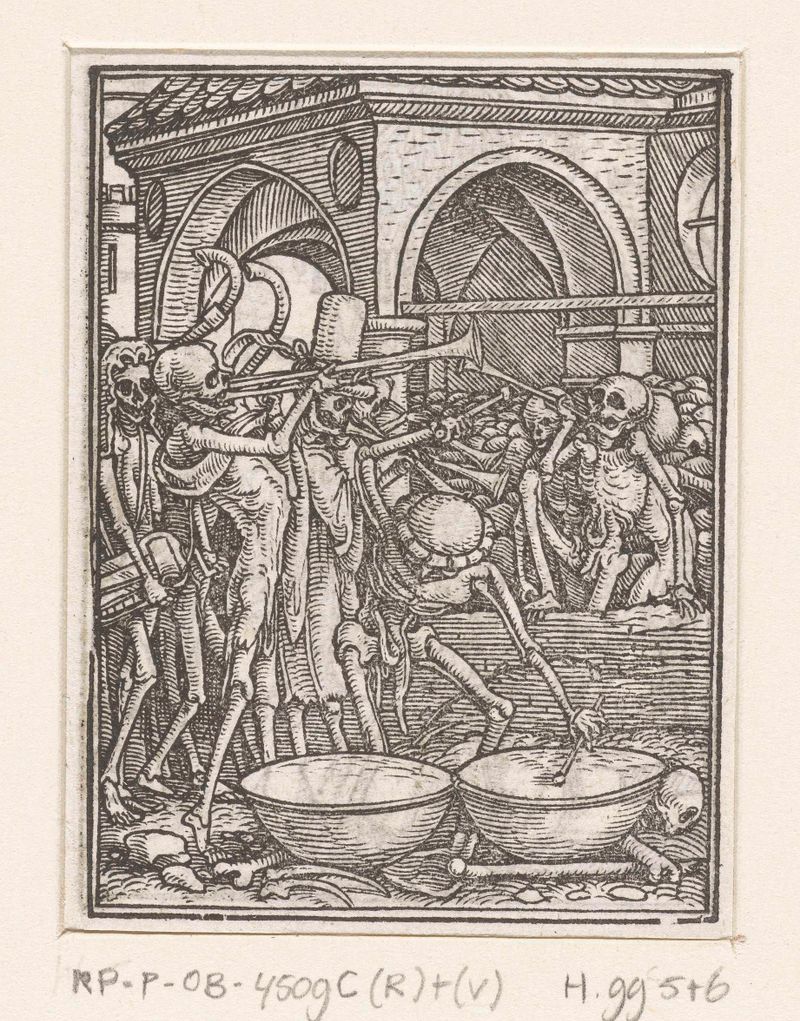
Skeletons Making Music from Dance of the Dead
Hans Holbein (II)
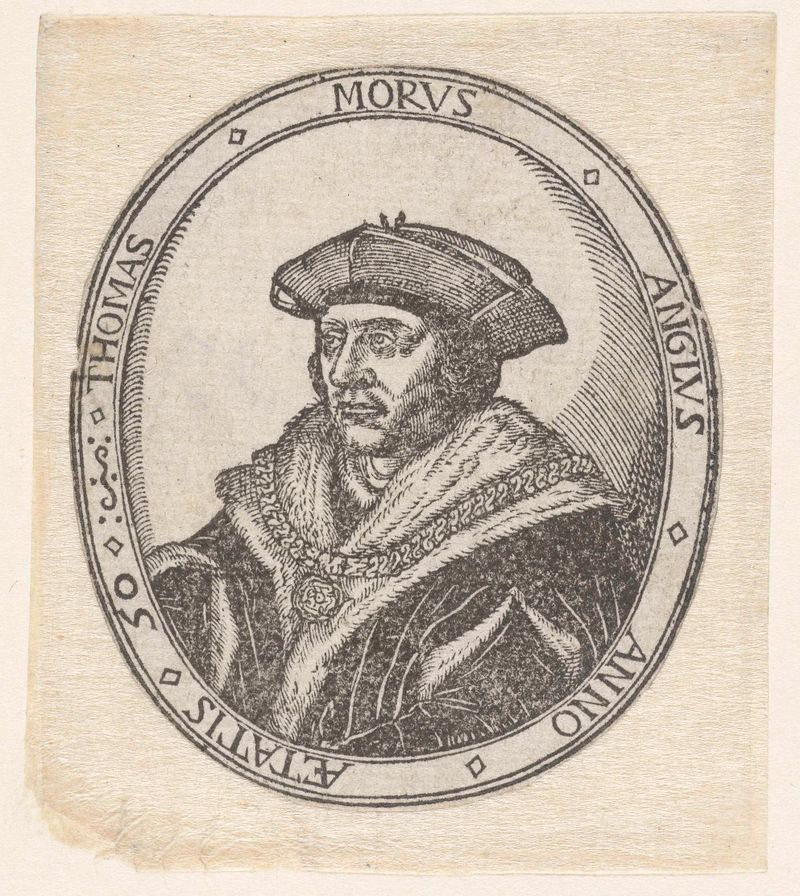
Portret van Thomas More
Hans Holbein (II)
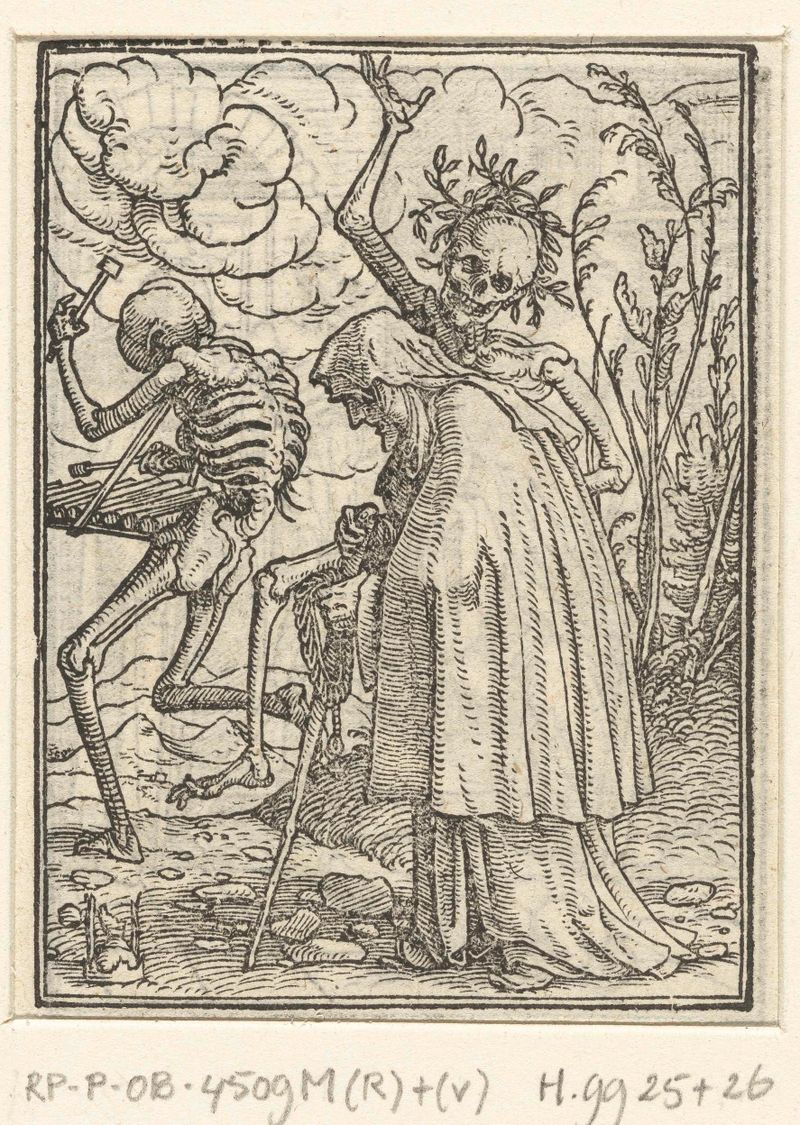
Oude vrouw en de Dood
Hans Holbein (II)





