
Dordrecht, Pont sur la Meuse — History & Facts
The delicate interplay of light in the painting beckons us to explore the depths of its emotional landscape. Here, the subtle dance of illumination reveals more than mere aesthetics; it unveils the fragility of existence itself. Look closely at the shimmering reflections on the water's surface, where the soft hues of blue and green blend seamlessly with the golden light. Notice how the bridge, a prominent feature, captures the eye with its gentle arch, drawing us into the painted world.
The overall composition balances the serene landscape with a hint of activity, as figures on the bank and the bridge suggest a moment suspended in time, framed by the expansive sky above. Boudin masterfully contrasts the ethereal quality of the light with the solidity of the structures, invoking a sense of impermanence. The rich, warm tones create an atmosphere that feels both inviting and melancholic, hinting at the duality of life itself. Small details, like the scattered boats and the distant horizon, contribute to an emotional tension; they remind us of the passage of time and the transient beauty of nature. In 1884, while residing in Normandy, the artist captured Dordrecht, Pont sur la Meuse during a period of experimentation and growth.
At this time, Boudin was transitioning towards a more impressionistic style, influenced by the changing art movements and the natural world around him. His focus on light and atmosphere would soon resonate through the works of his contemporaries, paving the way for future generations of artists.
More Artworks by Eugène Boudin
Browse all →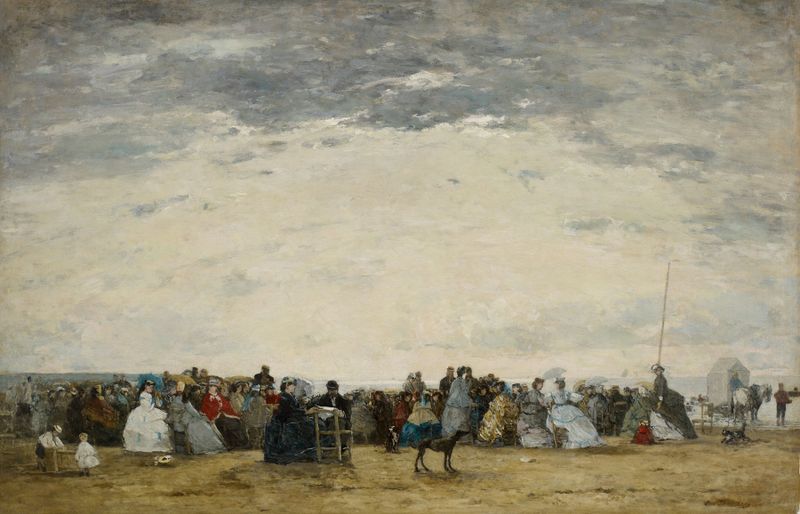
Vacationers on the Beach at Trouville
Eugène Boudin

Washerwoman near Trouville
Eugène Boudin
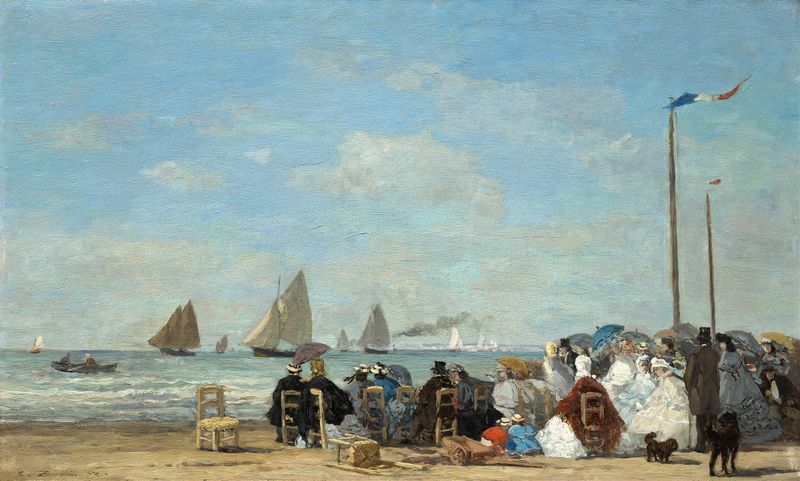
Beach Scene at Trouville
Eugène Boudin

Port aux environs d’Honfleur
Eugène Boudin

Le Faou, un coin du village
Eugène Boudin
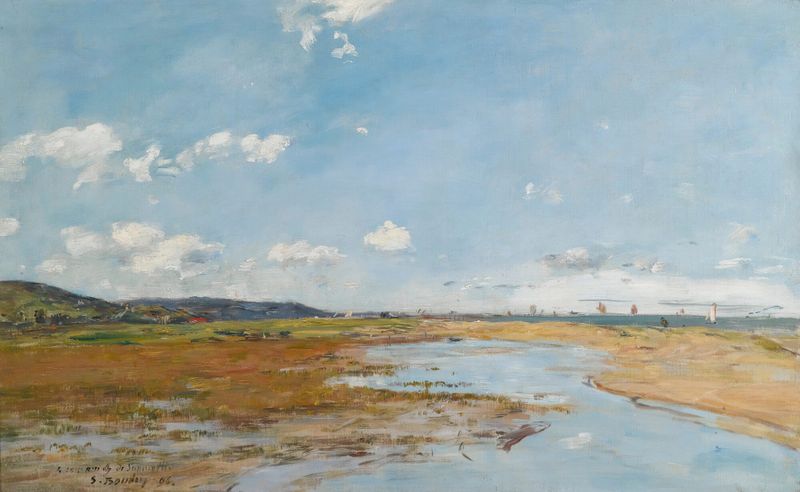
Deauville. Le Rivage
Eugène Boudin
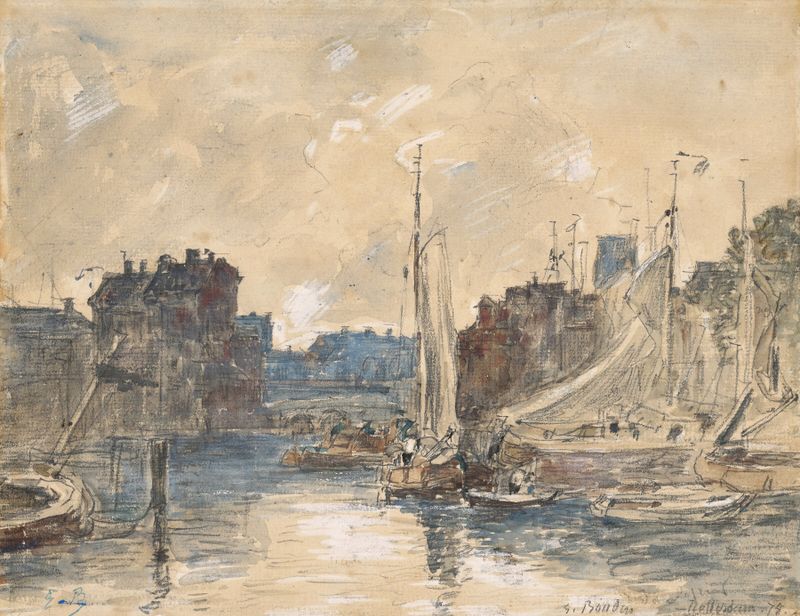
Port de Rotterdam
Eugène Boudin

View of Bordeaux, from the Quai des Chartrons
Eugène Boudin

Trouville, Scène De Plage
Eugène Boudin

Trouville, Le Port
Eugène Boudin





