
Douvres Church, Normandy — History & Facts
In the serene yet stark landscape lies a profound void, where light battles shadow, revealing the duality of existence. Look to the center of the canvas, where the church stands resolutely against a tumultuous sky. Notice how the artist’s delicate brushwork captures the intricate details of the stone façade, each stroke revealing the weight of history. The muted palette, with shades of gray and ochre, allows the warm glow of sunlight to dance upon the structure, offering a moment of respite amid the surrounding gloom.
The composition draws the viewer’s eye upward, evoking a sense of reverence and contemplation. Within the interplay of light and shadow, there emerges a poignant contrast between the solidity of the church and the ephemeral quality of the landscape. The low-hanging clouds suggest approaching storms, hinting at a tension between faith and despair. The barren trees surrounding the church mirror the emotional void, their gnarled branches reaching out as if to grasp for something just beyond reach.
This tension invites reflection on the resilience found in places of worship, even against the backdrop of nature’s indifference. Cotman painted this piece in 1820, during a period when he was exploring landscape and architecture in his work. Living in England, he was influenced by the Romantic movement, which sought to capture the sublime beauty of nature. Amid the rising industrialization of Europe, this painting reflects not only his artistic evolution but also the collective longing for connection to the past and the enduring power of place.
More Artworks by John Sell Cotman
Browse all →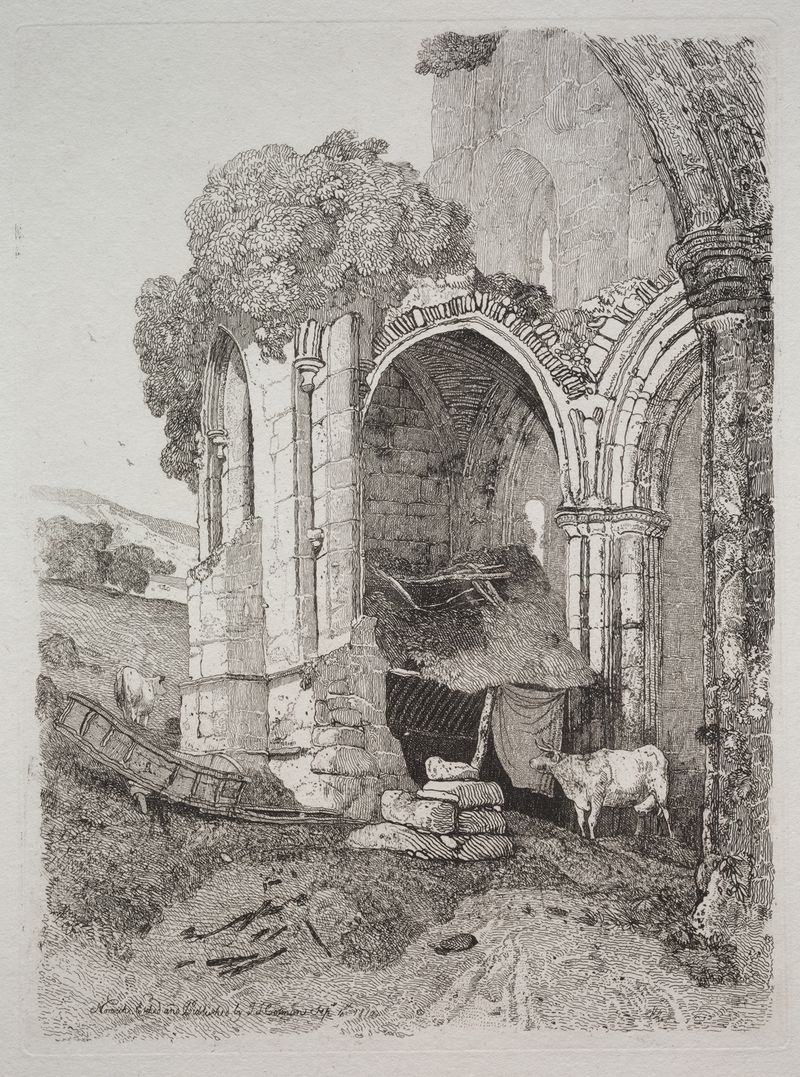
Rievaulx Abbey, Yorkshire
John Sell Cotman
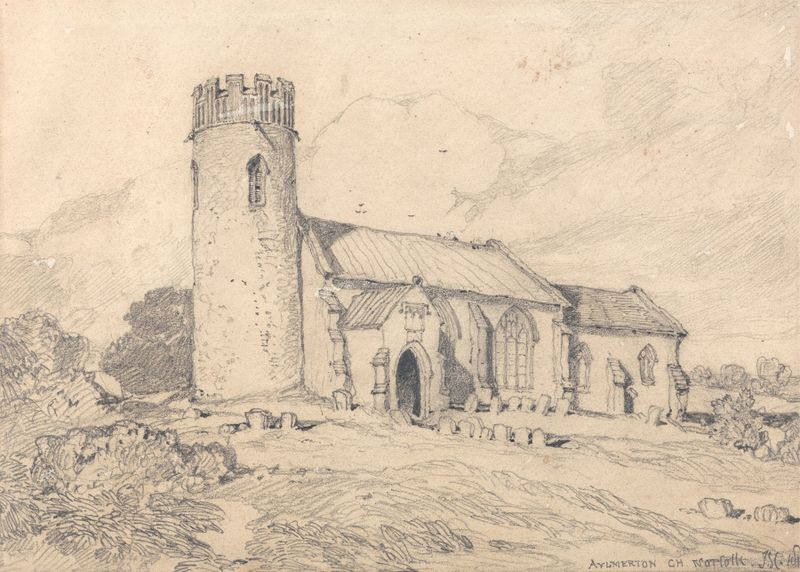
Aylmerton Church; Norfolk, from the South-West
John Sell Cotman
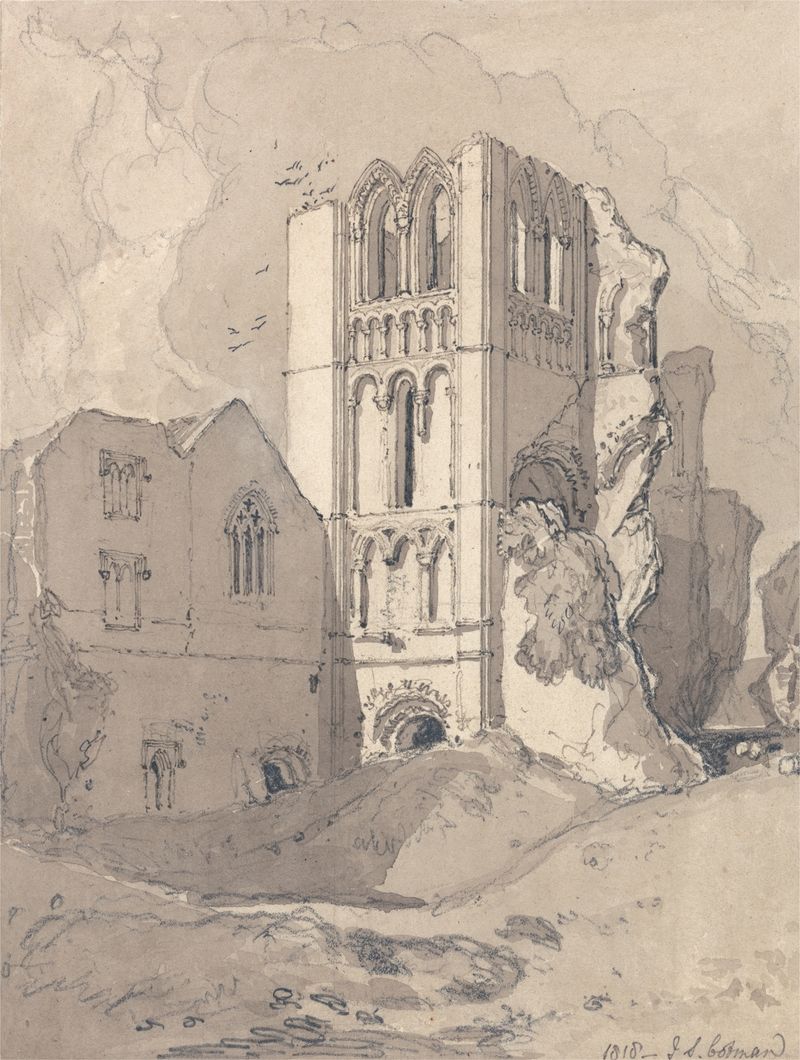
Castle Acre Priory, Norfolk
John Sell Cotman
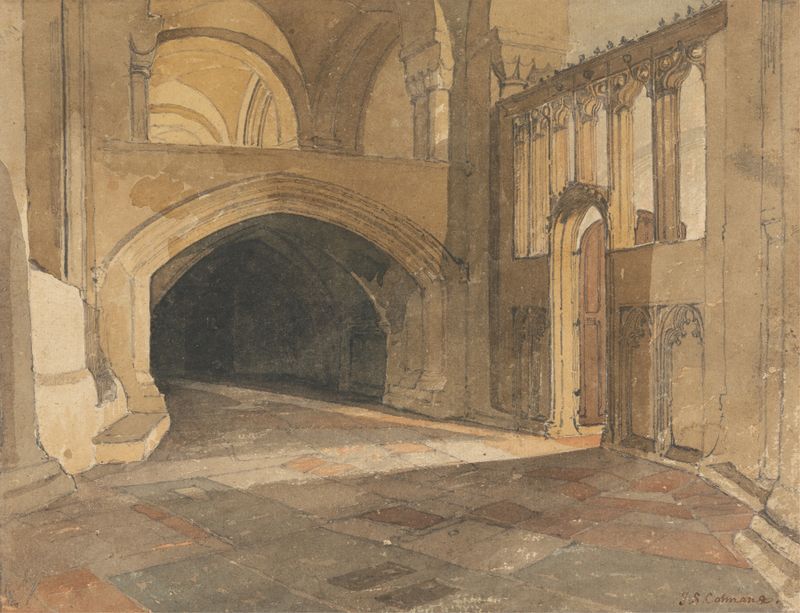
Norwich Cathedral; Entrance to Jesus Chapel
John Sell Cotman
Yarmouth Sands, Norfolk
John Sell Cotman
Castle Acre Priory, Norfolk
John Sell Cotman
Near Whitby, Yorkshire
John Sell Cotman
Whitby
John Sell Cotman
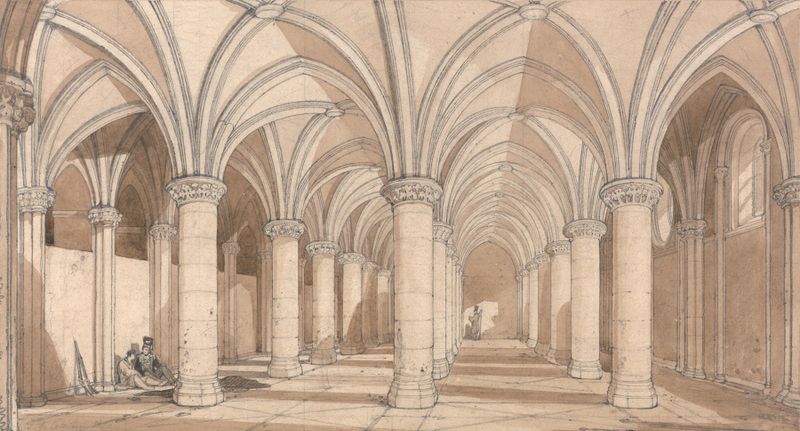
The Barons’ Hall, Mont Saint Michel
John Sell Cotman
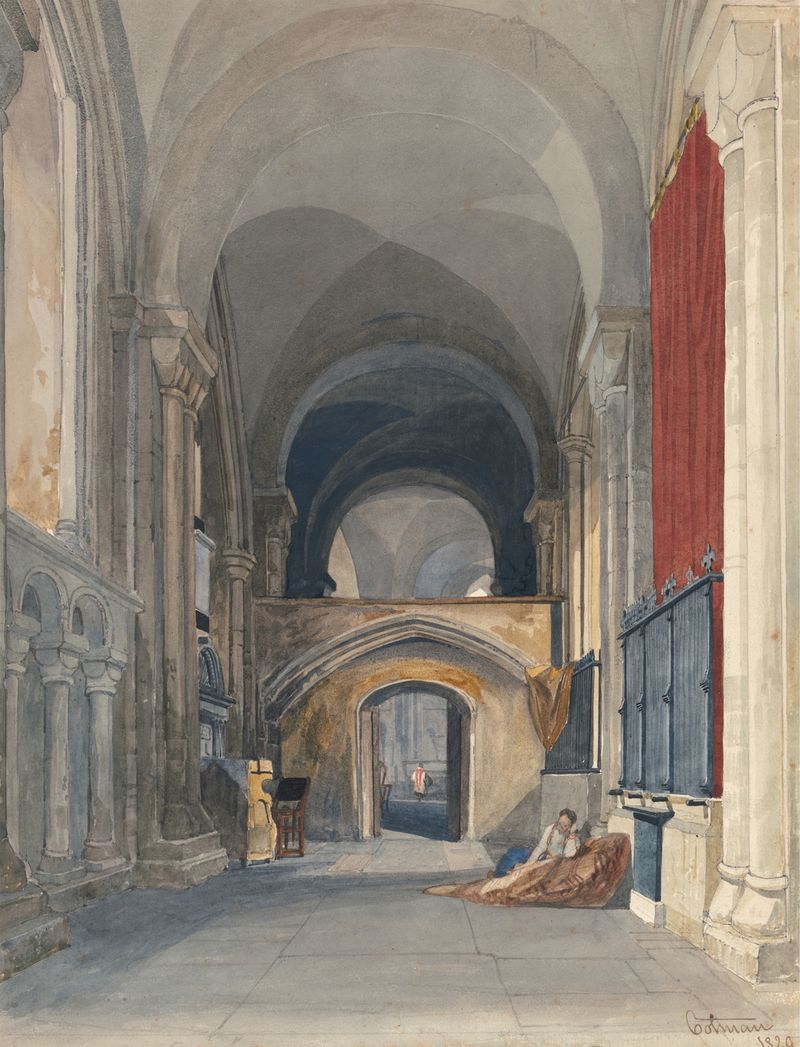
Norwich Cathedral; Interior of the North Aisle of the Choir, Looking East
John Sell Cotman
More Architecture Art
Browse all →
The statue of Liberty
Frédéric Auguste Bartholdi

View of Houses in Delft, Known as ‘The Little Street’
Johannes Vermeer

View of Houses in Delft, Known as ‘The Little Street’
Johannes Vermeer

The Cathedral in Rouen. The portal, Grey Weather
Claude Monet

The yellow house
Vincent van Gogh

The Church in Auvers-sur-Oise, View from the Chevet
Vincent van Gogh