
Drie Mamelukken te paard — History & Facts
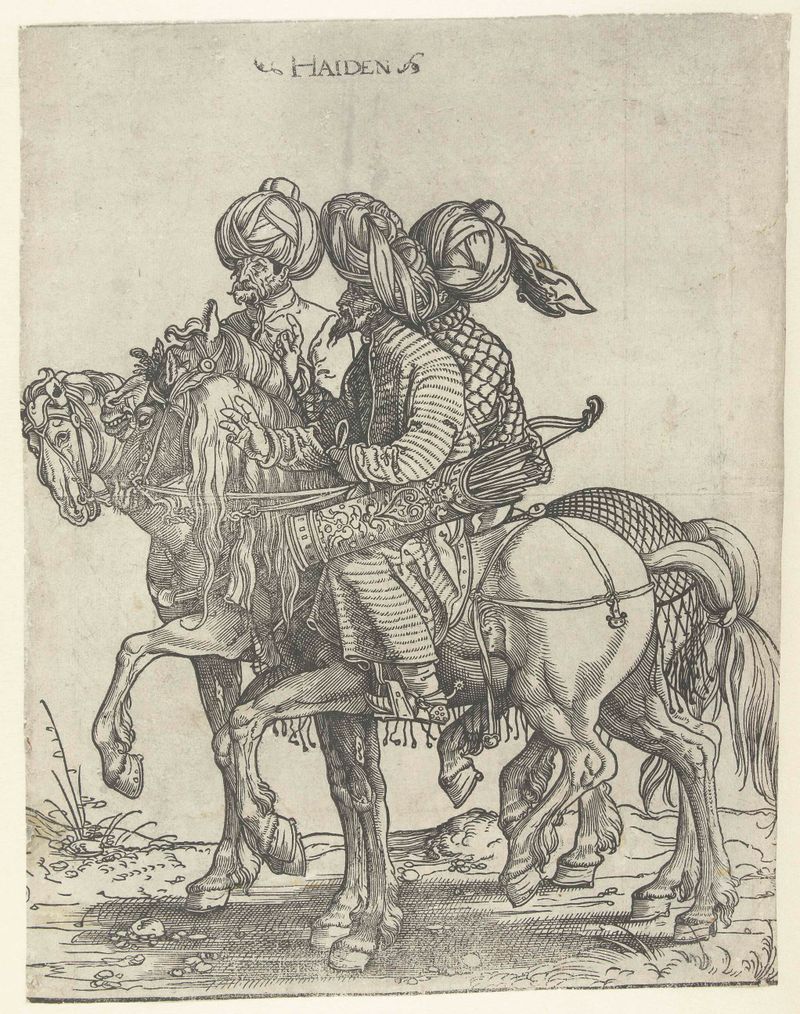
In the stillness of the moment captured on canvas, three Mameluke horsemen stand poised, embodying the tension between power and emptiness. Their magnificent steeds, adorned with intricate harnesses, seem to vibrate with energy, yet a haunting stillness pervades the scene, inviting contemplation of the void that surrounds them. Look to the left at the soldier in a striking red tunic, his gaze firmly fixed on the horizon. The way the light caresses the deep hues of his attire draws the eye, highlighting the dynamic yet serene aura of the composition.
Notice how the artist's deft brushstrokes create a delicate interplay of shadow and light across the horses’ muscular forms, while the muted background fades into a somber palette, emphasizing the central figures and articulating their isolation. This artwork speaks to contradictions: the vibrancy of life contrasted with an undercurrent of desolation. The Mameluke warriors exude strength, yet their expressions reveal a profound emptiness, suggesting a narrative of conflict and loss. Each figure, while majestic, is ensnared in a moment that feels both powerful and impossibly lonely, leading the viewer to ponder the fleeting nature of glory and the existential weight that accompanies it. Jan Swart van Groningen created Drie Mamelukken te paard in 1526, a time when the world was rife with political turmoil and artistic evolution.
Working in the Northern Renaissance style, he was influenced by emerging humanist ideas and the intricate detailing characteristic of the period. This piece reflects both the aspirations of its era and the artist’s own journey, capturing a moment suspended between bravery and the haunting specter of emptiness.
More Artworks by Jan Swart van Groningen
Browse all →
Titelblad Nieuwe Testament
Jan Swart van Groningen

Aanbidding der drie koningen
Jan Swart van Groningen
Evangelist Lucas
Jan Swart van Groningen
Cyrus laat de Israëlieten terugkeren naar Jerusalem
Jan Swart van Groningen

Soleiman de Grote
Jan Swart van Groningen
Portret van Christiaan II van Denemarken
Jan Swart van Groningen
Drie boogschutters te paard
Jan Swart van Groningen

Portret van Karel V
Jan Swart van Groningen

Drie trompetters te paard
Jan Swart van Groningen

De rijke man en Lazarus
Jan Swart van Groningen
More Historical Art
Browse all →
The Night Watch Militia Company of District II under the Command of Captain Frans Banninck Cocq
Rembrandt van Rijn

Lincoln Memorial
Henry Bacon

The Third of May 1808
Francisco de Goya

Isaac and Rebecca, Known as ‘The Jewish Bride’
Rembrandt van Rijn

The Charge of the Mamelukes (1814)
Francisco de Goya

De vier ruiters van de apocalyps
Albrecht Dürer