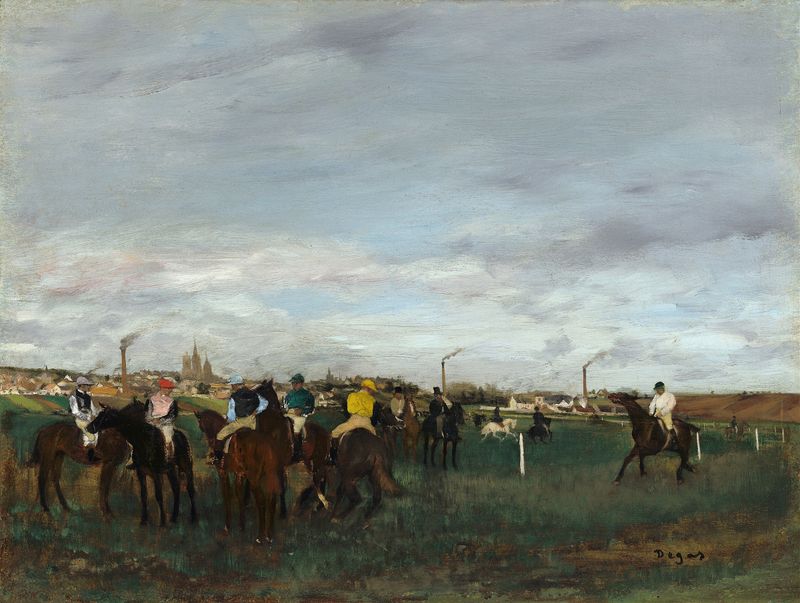
Drie rustende koeien — History & Facts
In the gentle presence of nature’s creatures, a poignant solitude lingers, whispering stories of unobserved moments. The quietude in Drie rustende koeien evokes a sense of yearning that transcends the idyllic pastoral scene. Look to the left, where the three resting cows lie in a soft embrace of verdant grass. The warm, golden hues of the sunlight wash over their bodies, contrasting with the cool shadows that echo the evening’s approach.
Notice how Berchem’s brushstrokes lend texture to the animals' coats, capturing the delicate interplay of light and shadow. The serene backdrop of rolling hills, painted in muted greens and browns, draws the eye toward the tranquil focal point, enveloping the viewer in a world where time seems to stand still. Yet, beneath the tranquility lies an undercurrent of isolation. The cows, though together, are absorbed in their own solitude, embodying a poignant stillness that reflects a deeper longing.
Their relaxed poses appear peaceful, but the subtle tension in their eyes suggests an awareness of the transient. This duality invites contemplation on the nature of companionship and the nuances of existence within the vast, untamed landscape. During the years from 1646 to 1652, Nicolaes Pietersz Berchem was immersed in the vibrant art scene of the Dutch Golden Age, exploring pastoral themes infused with a sense of realism and emotion. His reputation was growing as a master of landscape and animal painting, coinciding with a cultural moment that celebrated both the beauty of nature and the complexities of the human experience.
More Artworks by Nicolaes Pietersz Berchem
Browse all →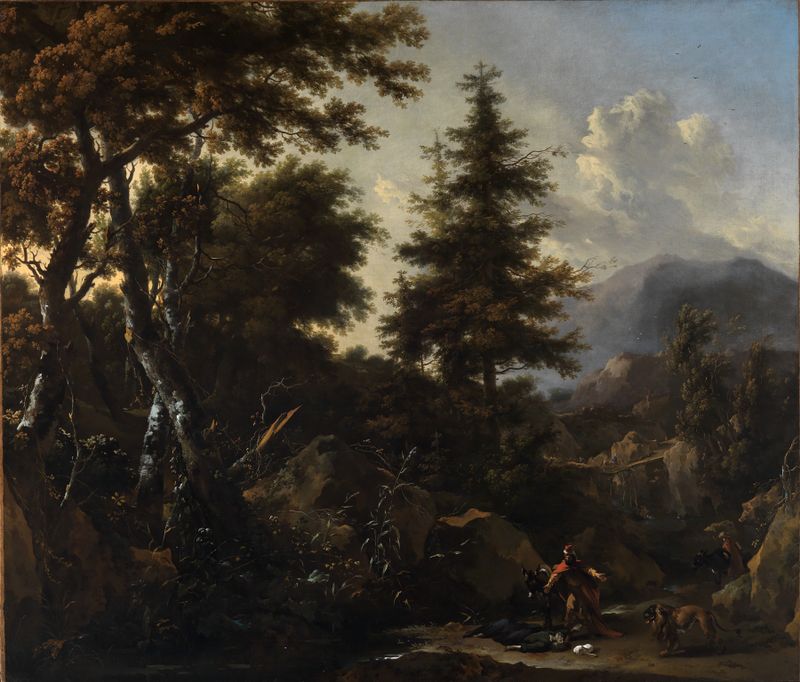
Schlucht im Bergwald mit alttestamentlicher Staffage
Nicolaes Pietersz Berchem
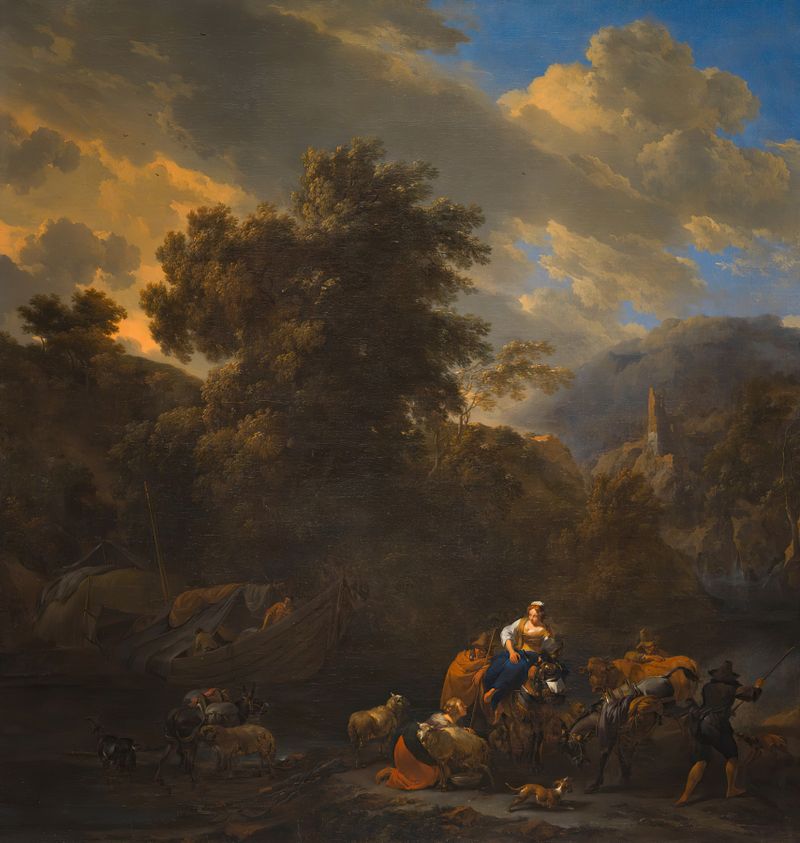
Italianate Landscape with Figures and Pack Animals on the Banks of a River
Nicolaes Pietersz Berchem
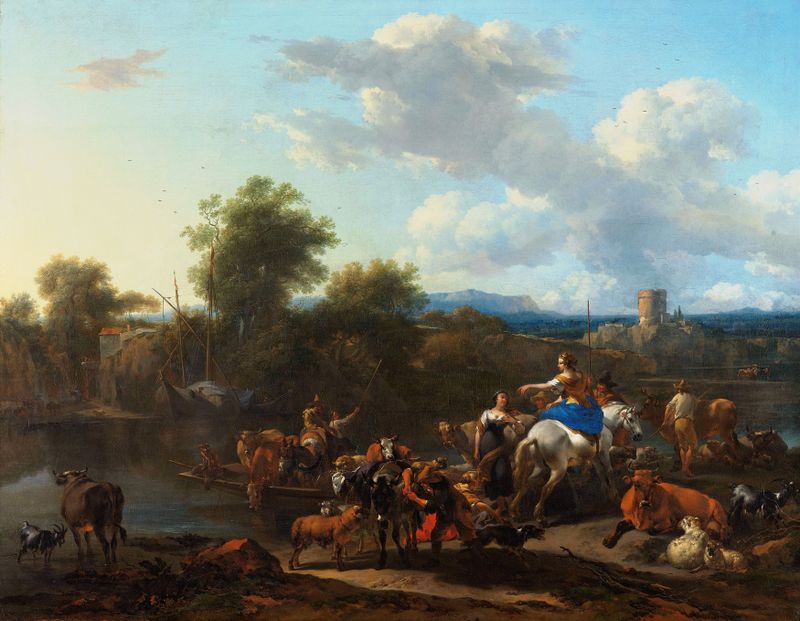
The Cattle Ferry
Nicolaes Pietersz Berchem
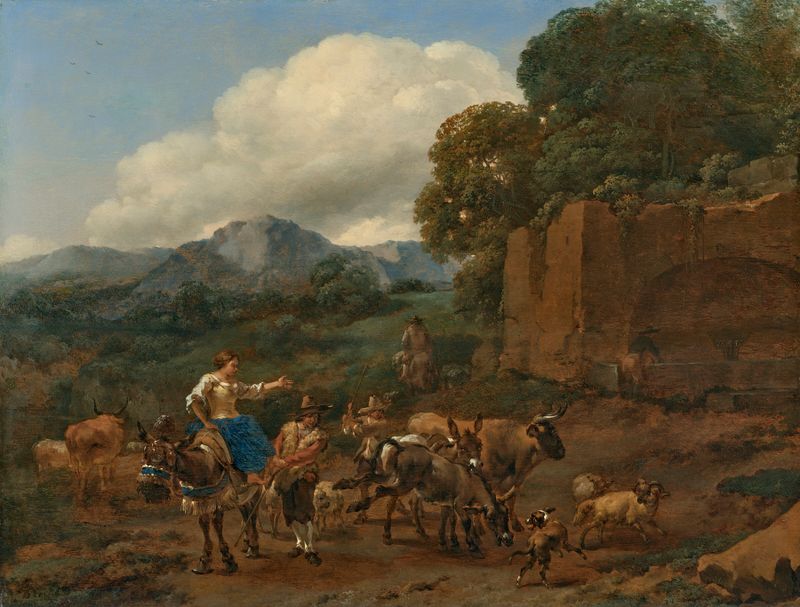
An Italianate landscape with a shepherdess on a mule and a shepherd, herding cattle, sheep, donkeys and dogs on a mountain track next to ruins
Nicolaes Pietersz Berchem
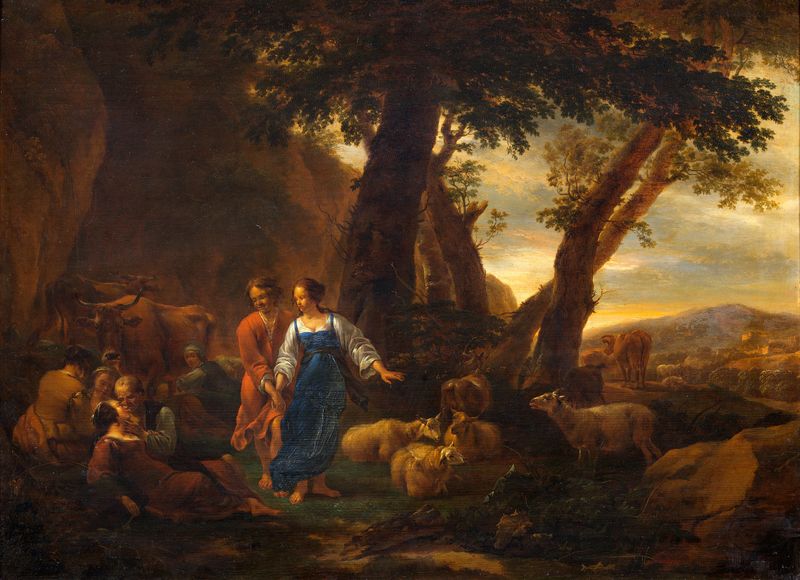
Landscape with Peasants and Cattle
Nicolaes Pietersz Berchem
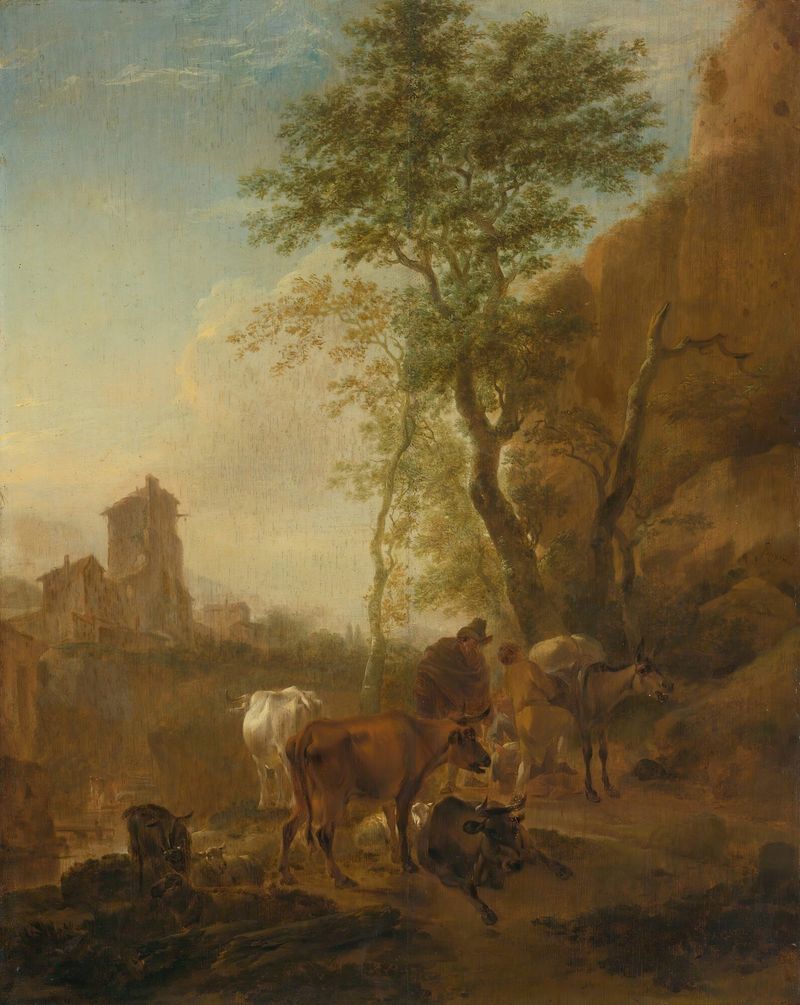
Italianate Landscape With Cows
Nicolaes Pietersz Berchem
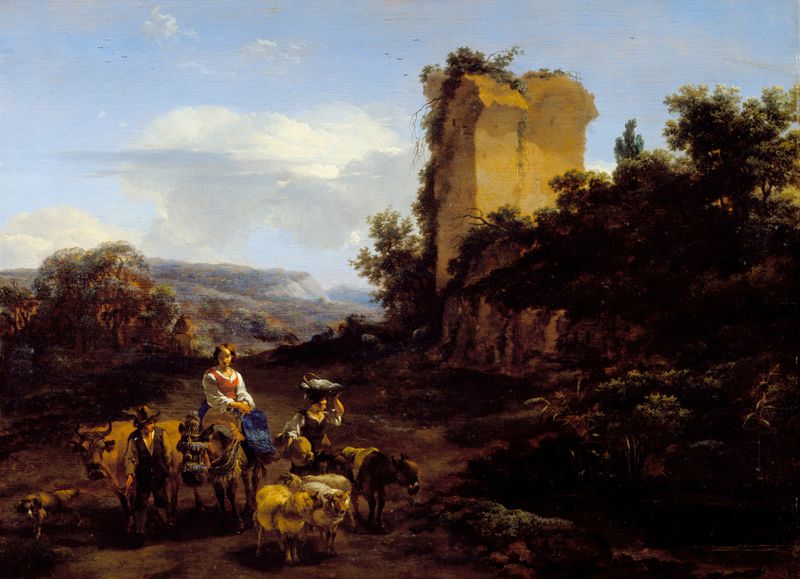
Landscape with Ruins and Travelers
Nicolaes Pietersz Berchem
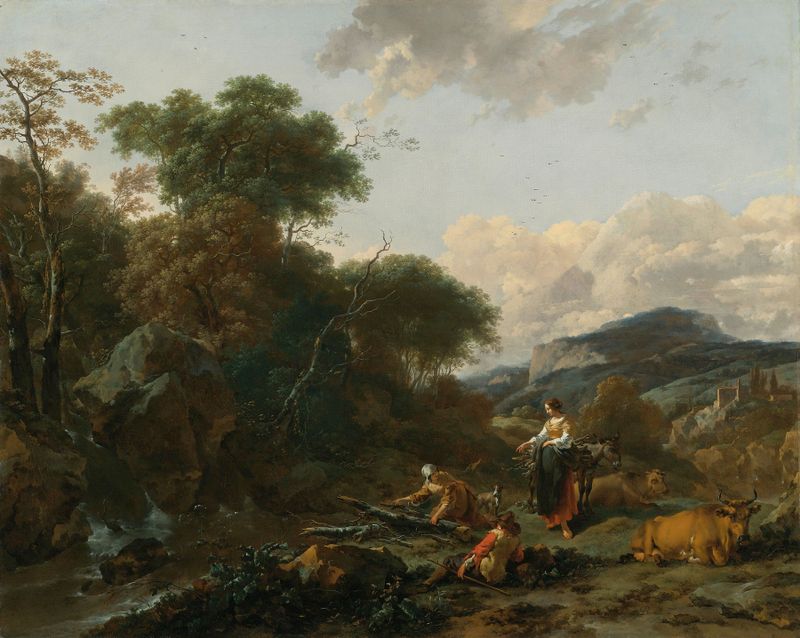
A Landscape With Figures
Nicolaes Pietersz Berchem
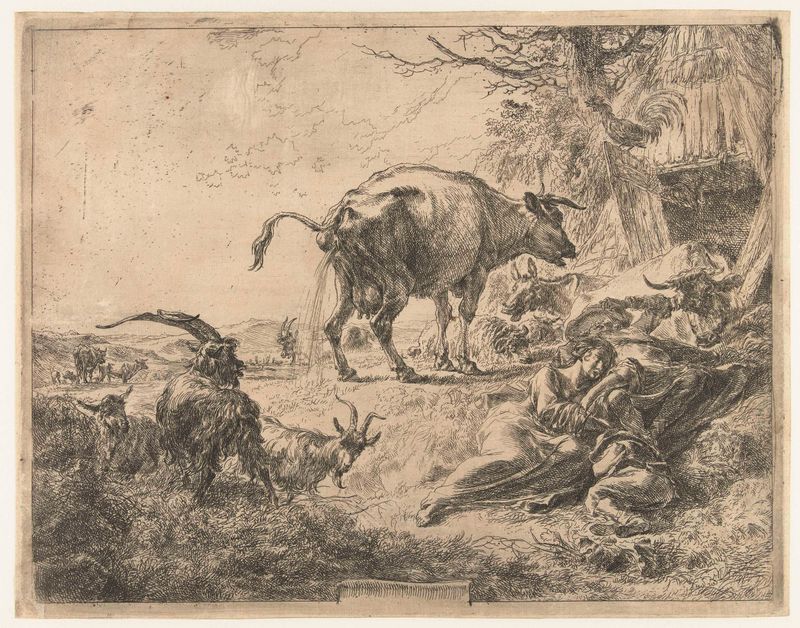
Slapende herdersfamilie en rustend vee
Nicolaes Pietersz Berchem
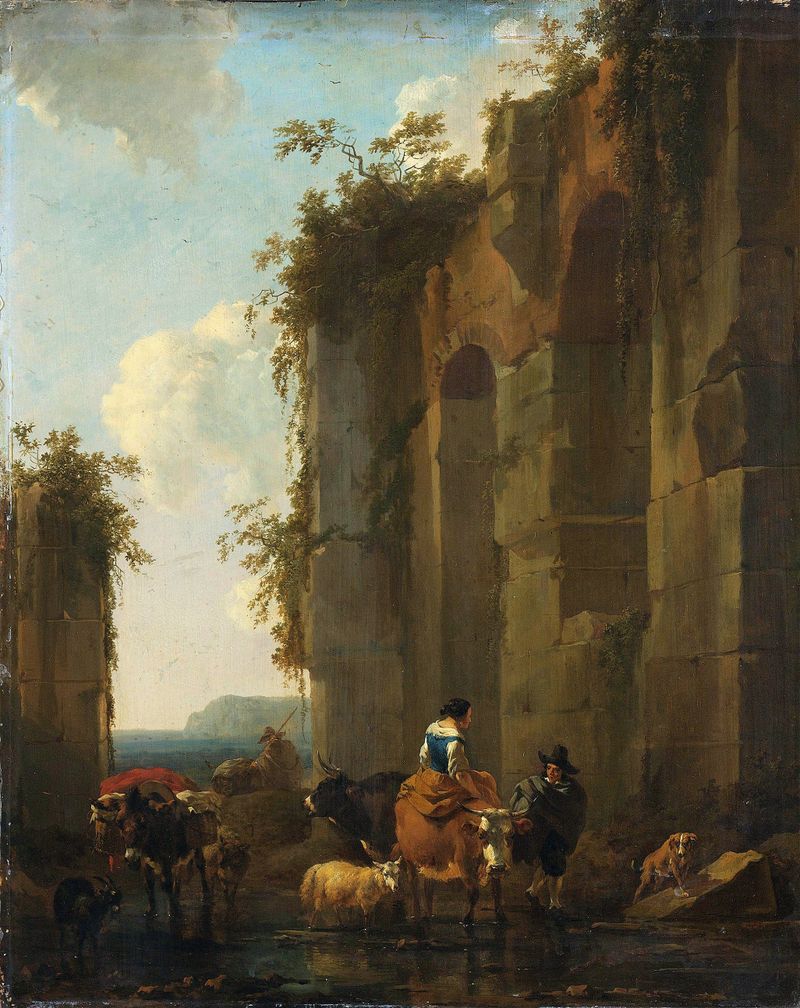
Ruins in Italy
Nicolaes Pietersz Berchem