Drie schapen — History & Facts
In an age where fleeting moments often go unnoticed, the act of capturing quietude becomes an obsession, revealing truths that otherwise remain shrouded in daily life. Look to the foreground, where three sheep gather in tranquil repose, their woolly forms rendered with meticulous detail. The soft, earthy palette of greens and browns invites the viewer to linger, while the gentle play of light highlights the contours of their bodies, creating a serene harmony. Notice how the background fades into a hazy landscape, allowing the sheep to embody stillness amidst a world that buzzes relentlessly beyond the canvas. Delve deeper into the painting’s essence, where the sheep symbolize not only pastoral beauty but also a profound stillness that stands in stark contrast to the chaos of modern existence.
Their presence evokes a sense of solitude and contemplation, inviting reflections on the simplicity of life and the complexity of our obsessions. The careful brushstrokes and soft textures speak to the artist’s desire to capture this fleeting moment of peace, making it resonate on a level that transcends time. In the mid-17th century, when this piece was created, Berchem was immersed in the Dutch Golden Age, a time when art flourished amidst mercantile prosperity. Living in Amsterdam, he was influenced by the natural world and the burgeoning interest in pastoral scenes.
This painting, nestled between 1646 and 1652, showcases his mastery of landscape and animal representation, reflecting a moment in art history where obsession with nature became a profound source of inspiration.
More Artworks by Nicolaes Pietersz Berchem
Browse all →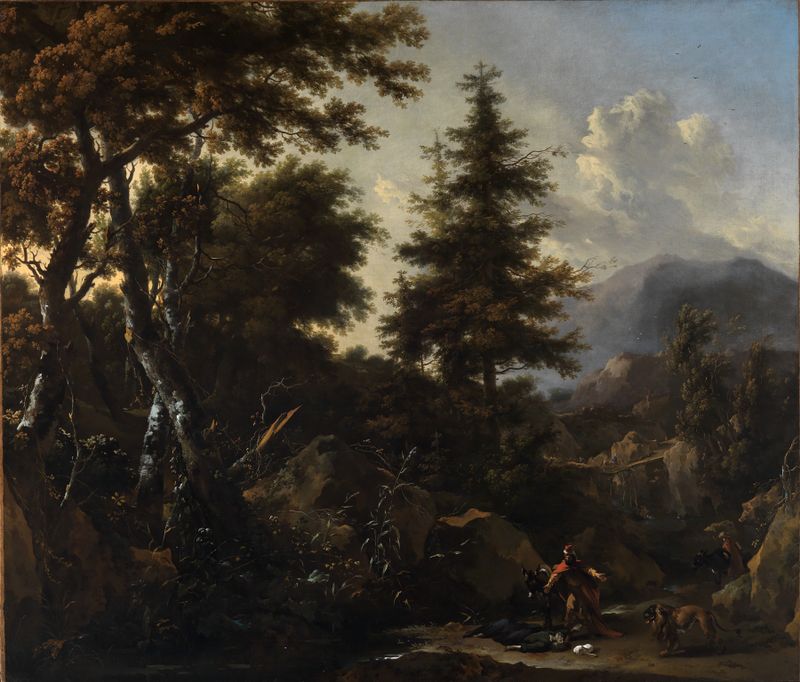
Schlucht im Bergwald mit alttestamentlicher Staffage
Nicolaes Pietersz Berchem
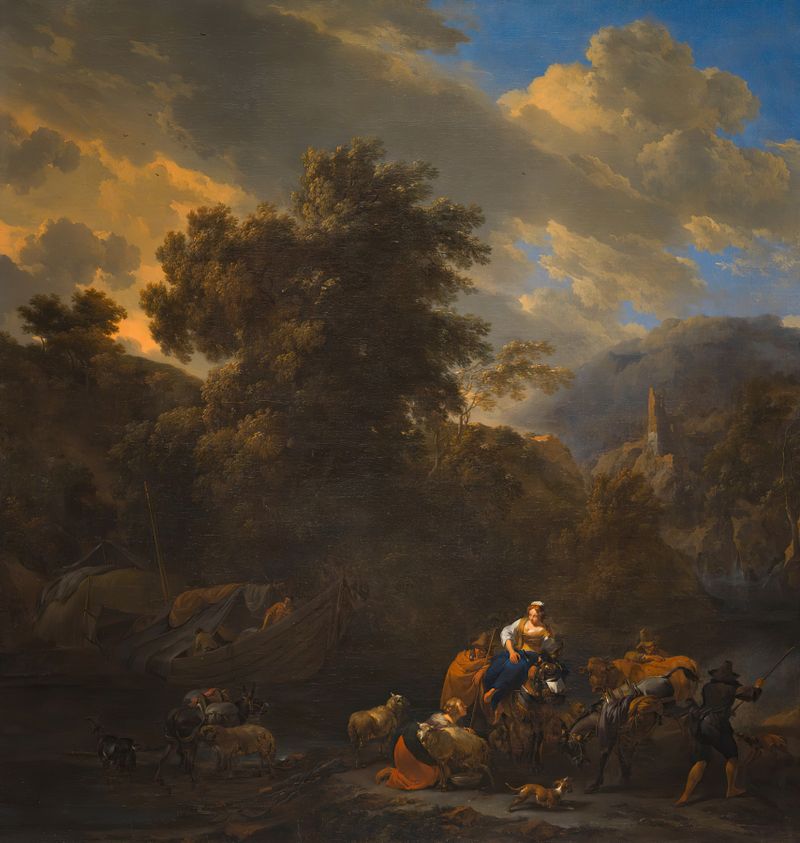
Italianate Landscape with Figures and Pack Animals on the Banks of a River
Nicolaes Pietersz Berchem
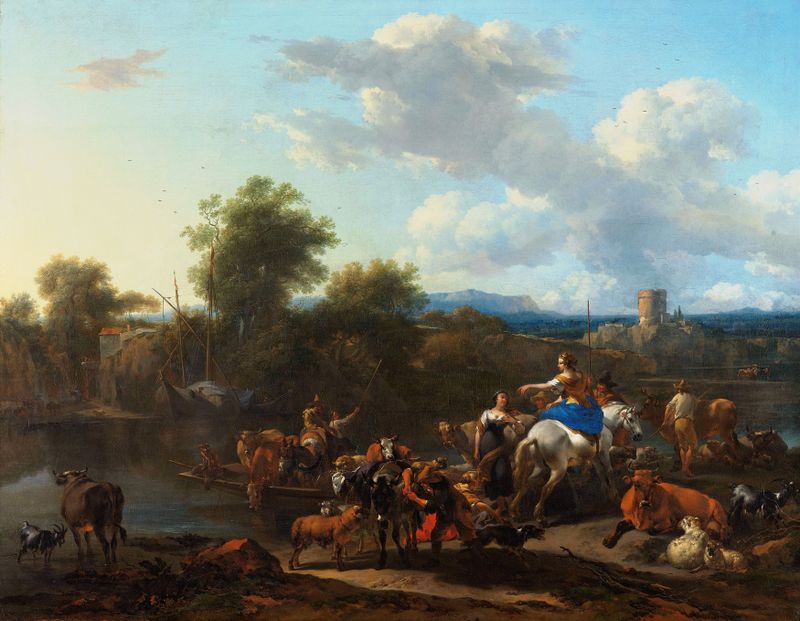
The Cattle Ferry
Nicolaes Pietersz Berchem
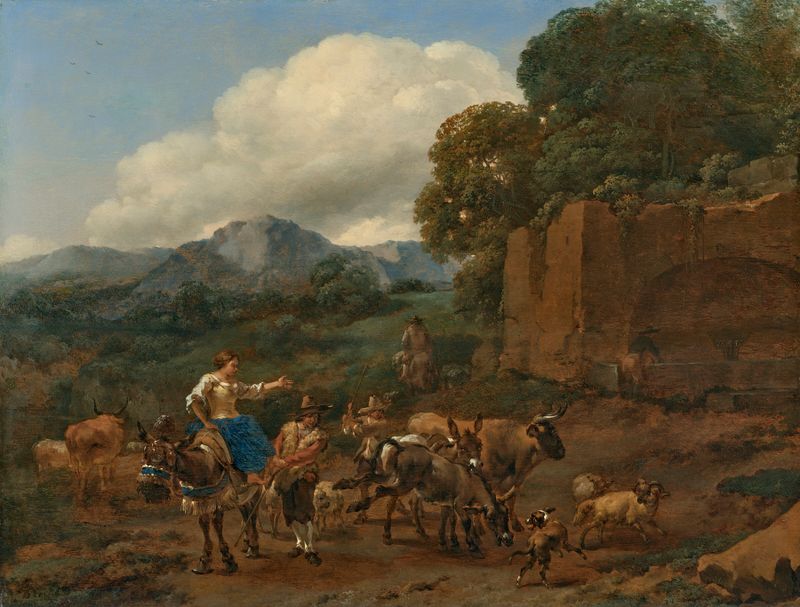
An Italianate landscape with a shepherdess on a mule and a shepherd, herding cattle, sheep, donkeys and dogs on a mountain track next to ruins
Nicolaes Pietersz Berchem
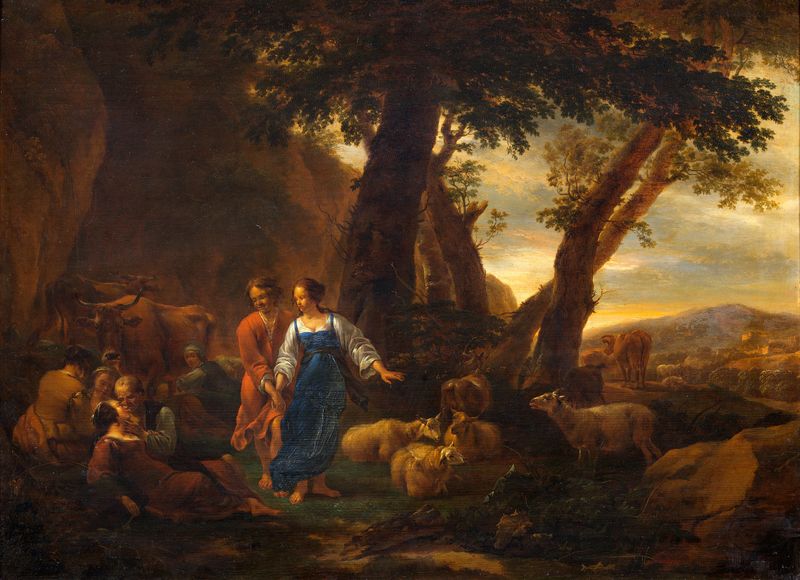
Landscape with Peasants and Cattle
Nicolaes Pietersz Berchem
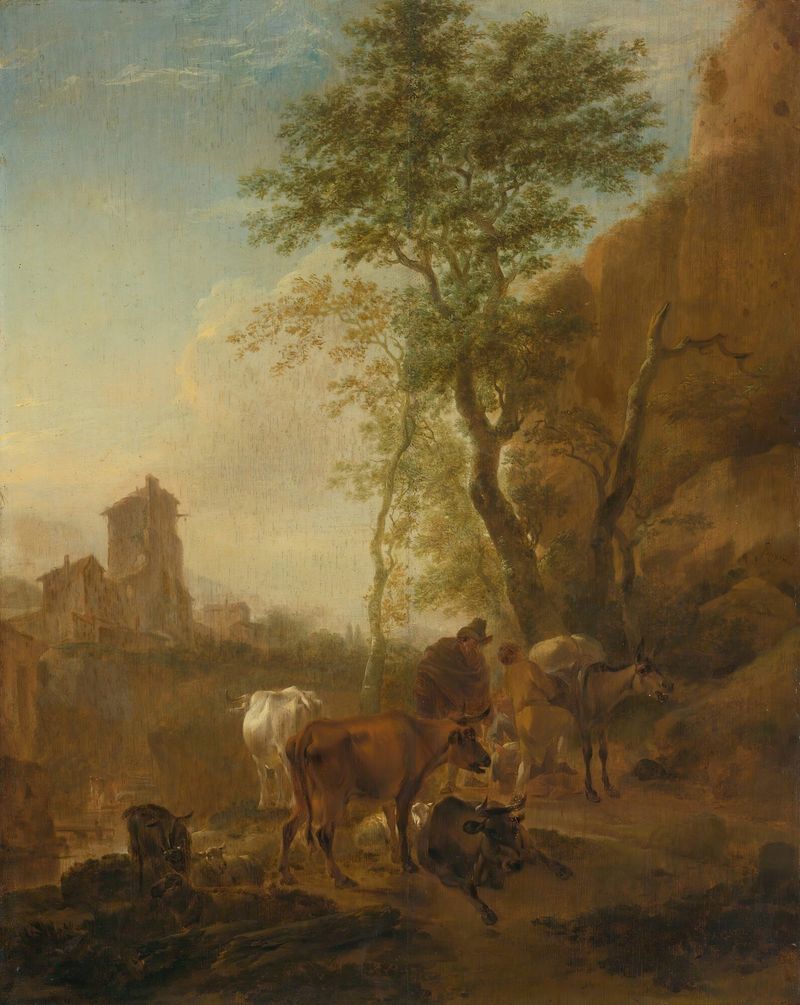
Italianate Landscape With Cows
Nicolaes Pietersz Berchem
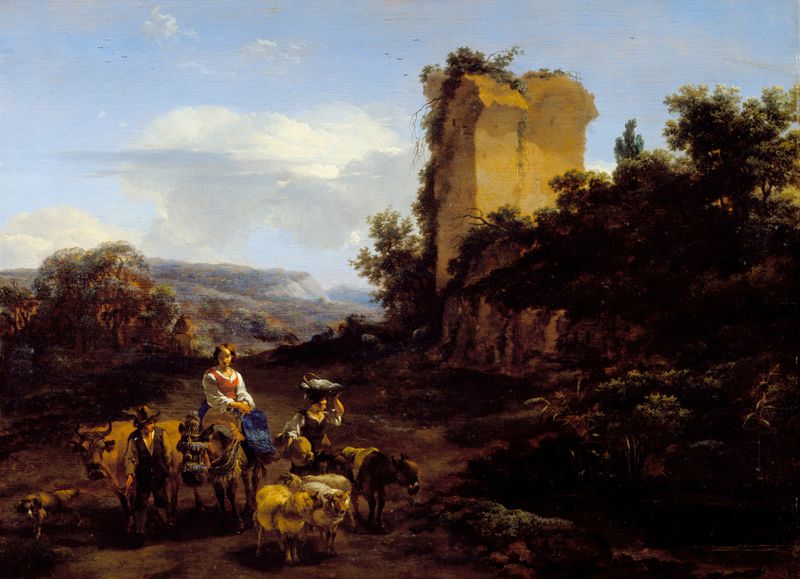
Landscape with Ruins and Travelers
Nicolaes Pietersz Berchem
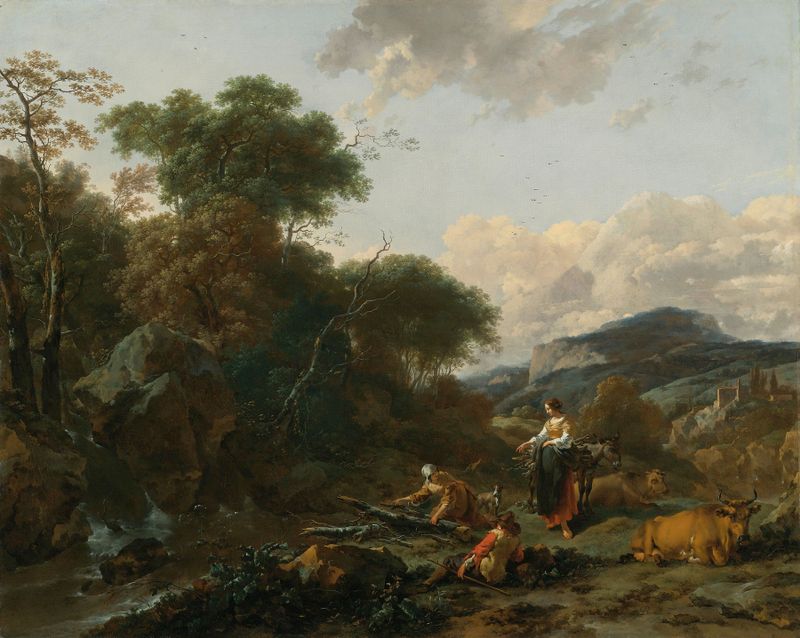
A Landscape With Figures
Nicolaes Pietersz Berchem
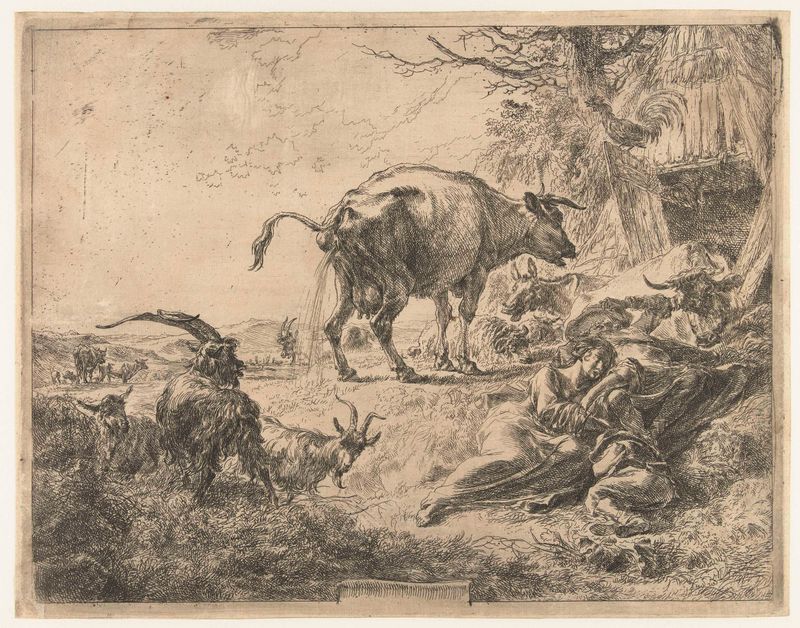
Slapende herdersfamilie en rustend vee
Nicolaes Pietersz Berchem
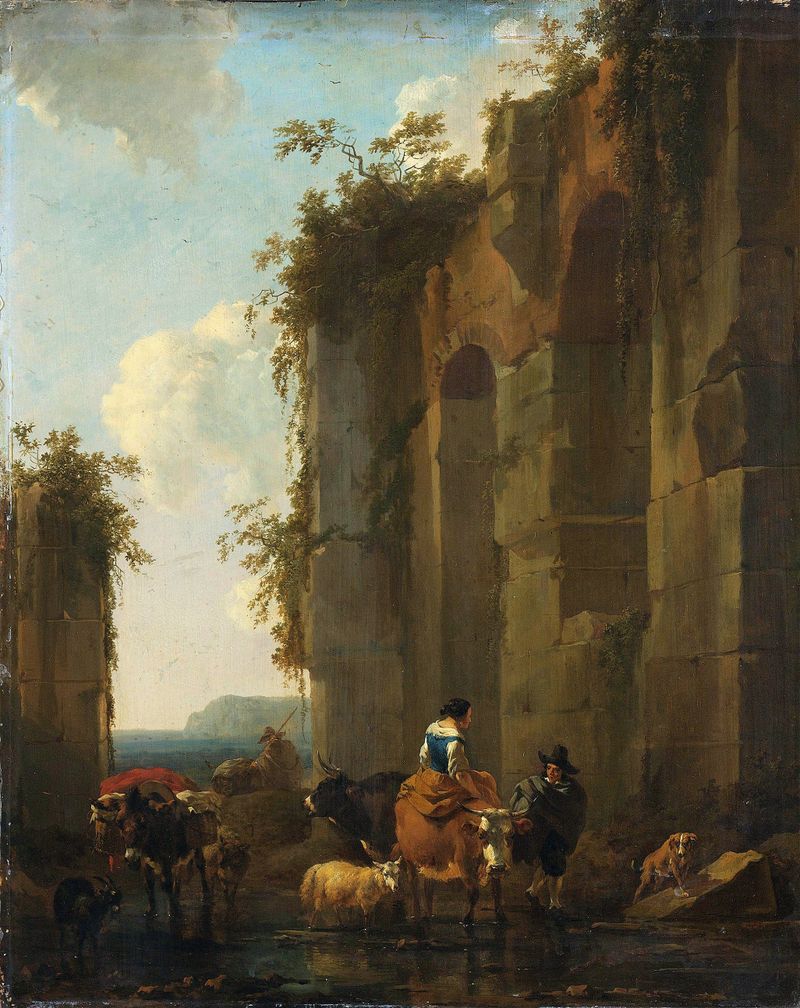
Ruins in Italy
Nicolaes Pietersz Berchem