
Ducks by a lake — History & Facts
What first catches the eye in Ducks by a lake is the way the light glances off the white plumage of the birds, as if the sun has chosen them as its subject. The ducks crowd together at the water’s edge, some peering into the shallows, others pausing mid-step, their bodies rendered with a lively brushwork that suggests both softness and weight. The water itself is a mirror, catching the drama of the sky above—clouds parting to reveal a burst of blue and gold.
The reeds bend in a silent wind, framing the gathering with a sense of shelter. Every detail, from the glint on a beak to the ripple of a wing, draws the viewer into a moment of quiet anticipation, as if the flock is poised between rest and movement. Painted by Alexander Koester by 1932, this work stands firmly in the tradition of late 19th- and early 20th-century animal painting, a genre beloved by both private collectors and the rising middle class who found comfort in scenes of rural peace. Koester, celebrated for his lifelong fascination with ducks, brought an almost scientific attention to their forms, yet always with a painter’s delight in light and color.
Works like this were often commissioned to bring a touch of the countryside into urban homes, at a time when Europe was changing rapidly and such scenes offered a reassuring sense of continuity. Now held in the Dorotheum collection, this painting invites us to linger, to watch the play of sun and cloud, and to wonder what has caught the attention of the ducks at the water’s edge.
More Artworks by Alexander Koester

Ducks on the Lakeside
Alexander Koester

Teichblüten – Altwasser bei Brixen
Alexander Koester
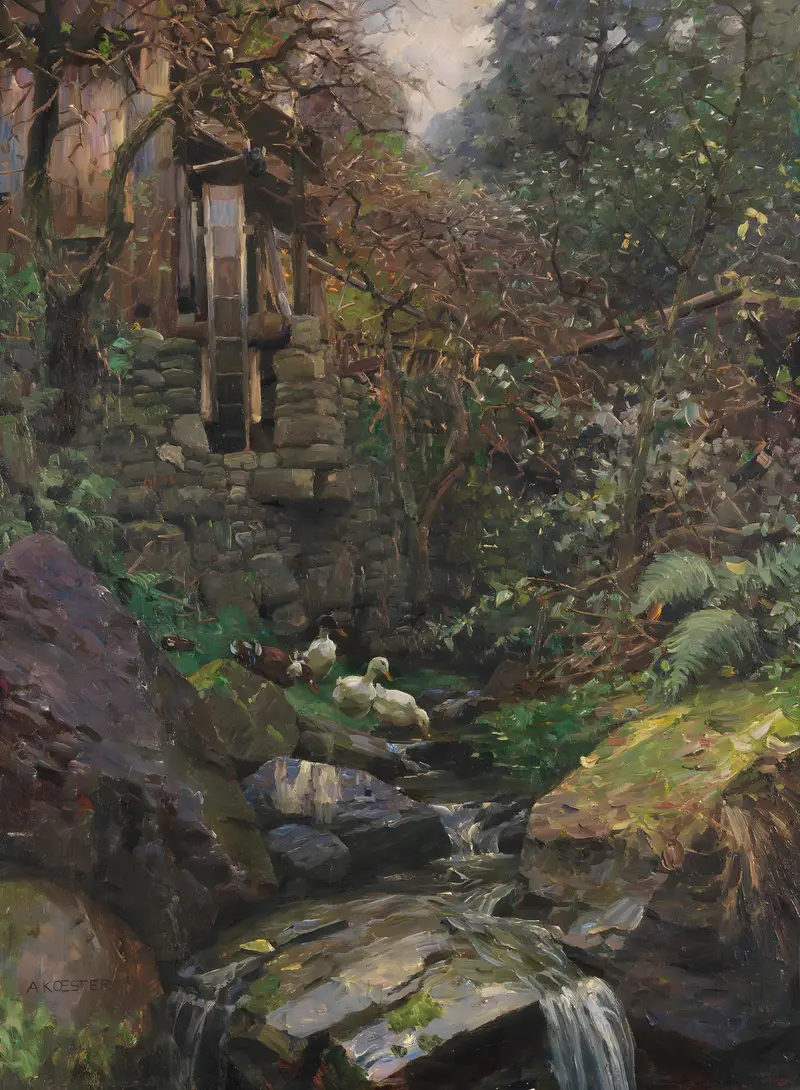
Im Mühlengrund
Alexander Koester

See mit Wetterwolken
Alexander Koester
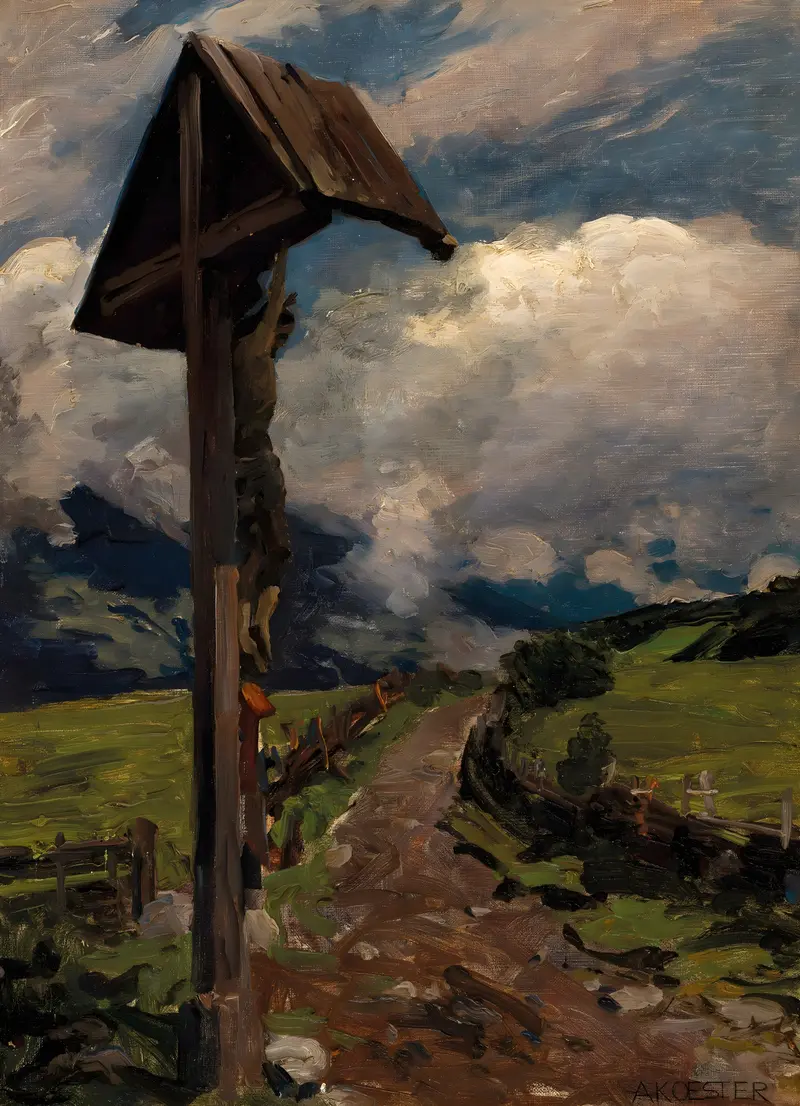
A Wayside Shrine
Alexander Koester
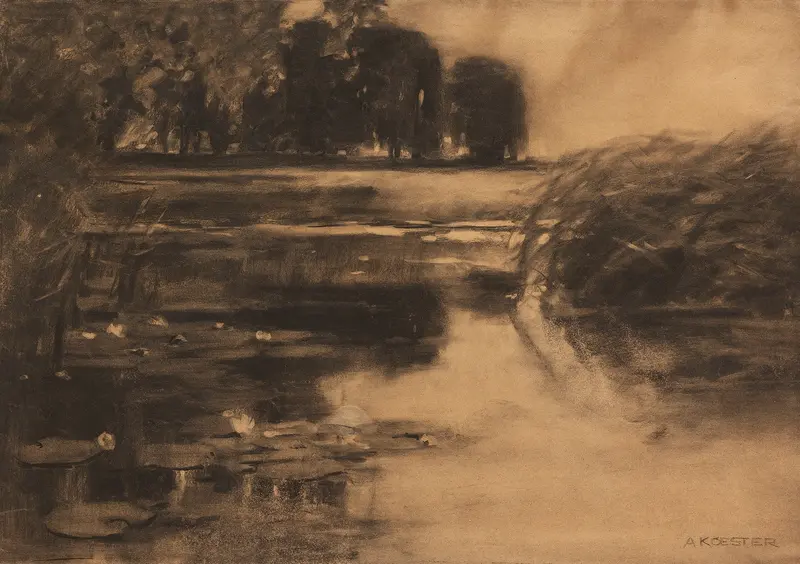
Wasserlandschaft
Alexander Koester
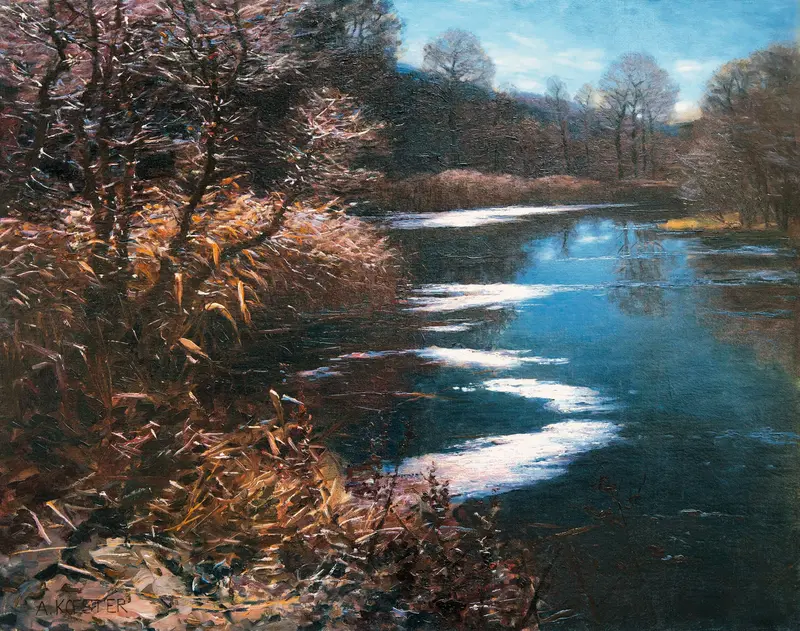
Altwasser bei Brixen
Alexander Koester
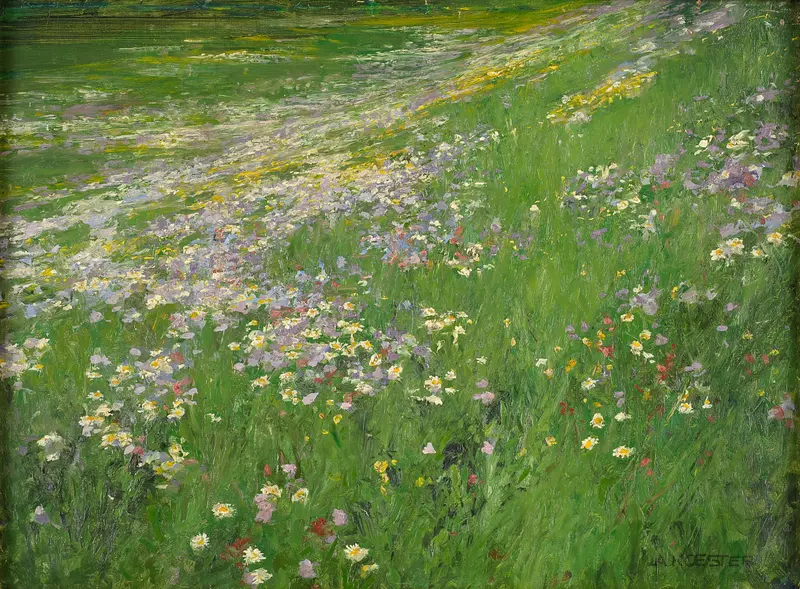
Blumenwiese bei Weßling
Alexander Koester
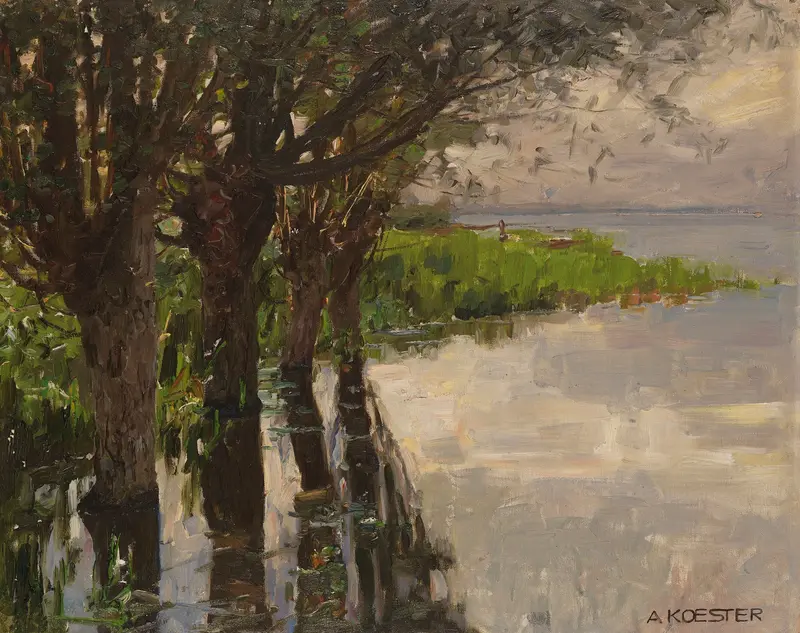
Reichenau, Weiden am See, Sonne
Alexander Koester
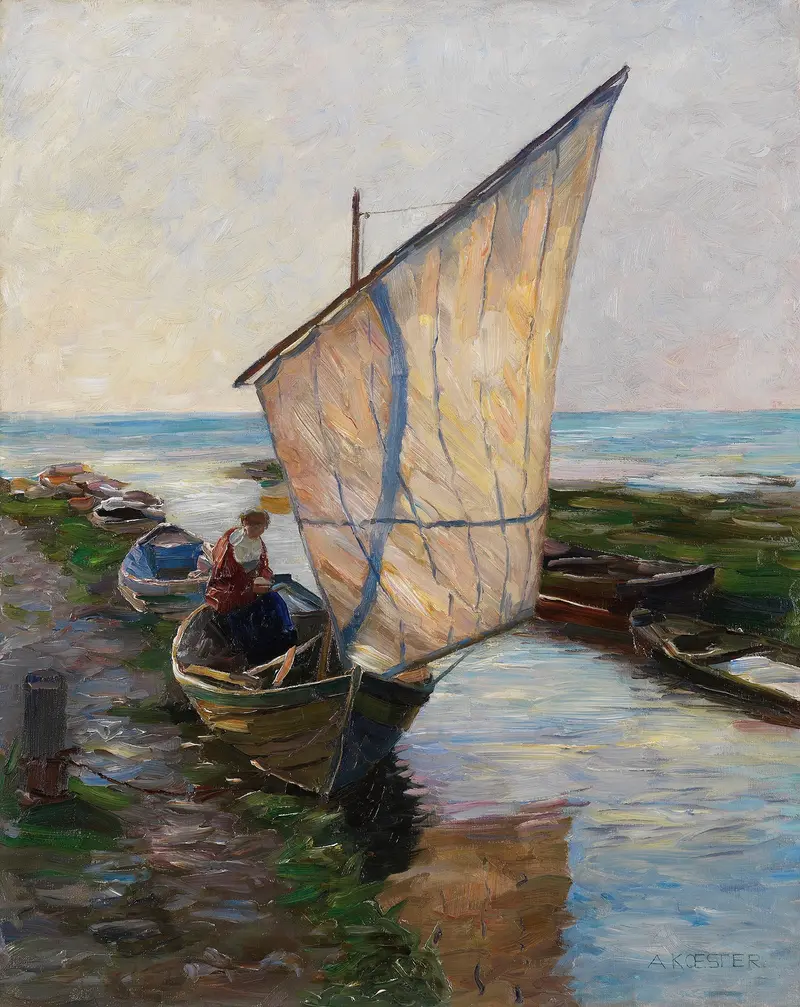
Segelboot, Holland
Alexander Koester





