
Dünenfriedhof — History & Facts
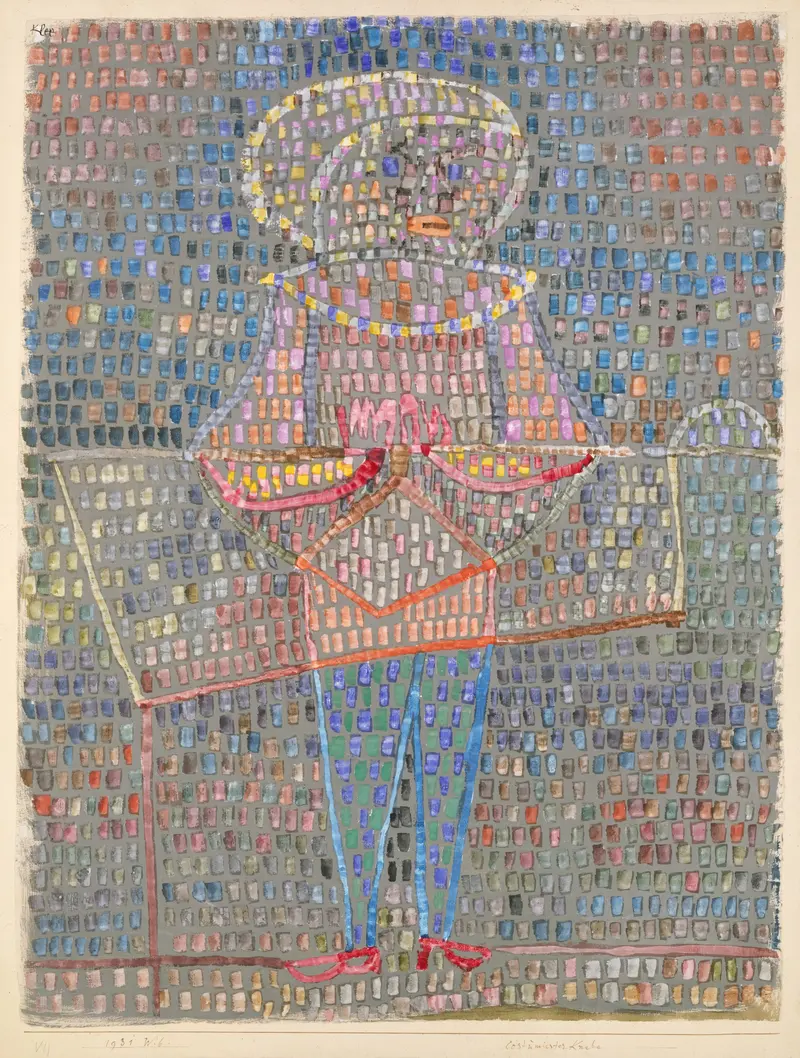
In Dünenfriedhof, Paul Klee presents a dreamlike landscape filled with abstract forms. The colors are vibrant, with shades of blue, green, and yellow dominating the scene. The composition features wavy lines and organic shapes that suggest dunes and vegetation.
This creates a sense of movement and fluidity throughout the painting. The painting is executed in oil on canvas, showcasing Klee's unique style that blends abstraction with representation. The brushwork is expressive, with visible strokes that add texture to the surface. The use of color is particularly striking, as Klee employs a palette that evokes a sense of whimsy and imagination.
Viewers can appreciate the intricate details that Klee integrates into the overall composition. Dünenfriedhof was created during a period when Klee was exploring the relationship between color and form. This work reflects his interest in the natural world, as well as his desire to convey emotion through abstraction. An interesting fact about this painting is that it embodies Klee's belief that art should be a reflection of the artist's inner feelings and thoughts.
This approach makes Dünenfriedhof a significant example of Klee's innovative contributions to modern art.
More Artworks by Paul Klee

More Landscape Art

The Starry Night
Vincent van Gogh

View of Delft
Johannes Vermeer

Water Lilies
Claude Monet

The Grand Canal, Venice, looking north-west from the Ca' Corner to the Ca' Contarini degli Scrigni, with the campanile of Santa Maria della Carità
Canaletto

Windsor Castle
Canaletto

The Grand Canal looking North-East from the Palazzo Dolfin-Manin to the Rialto Bridge
Canaletto