
Dutch Whalers near Spitsbergen — History & Facts
The first thing that seizes the eye in Dutch Whalers near Spitsbergen is the sheer scale of nature, dwarfing the human drama unfolding below. The great whale, dark and massive, commands the foreground, its presence both a prize and a threat to the tiny boats that crowd around it. The men lean into their oars, their red jackets and urgent gestures drawing the viewer’s gaze from the icy shore to the heart of the hunt.
Above, the sky is a stage of shifting clouds, painted with a palette that moves from the gold of a low sun to the chill blue of the northern sea. The ships, their sails furled, wait in the distance, their flags fluttering—a reminder that this is not just a struggle for survival, but a venture of commerce and national pride. Painted in 1690, this work belongs to a world where the Dutch Republic’s fortunes were tied to the sea, and whaling in the Arctic was both a source of wealth and a test of endurance. Scenes like this, often commissioned by shipping companies or wealthy merchants, served as records of enterprise and as celebrations of Dutch maritime prowess.
Abraham Storck was one of several artists who made a specialty of such views, capturing the crisp light and perilous beauty of the far north. Now held in the collection of Stichting Rijksmuseum het Zuiderzeemuseum, the painting stands as a window onto a vanished era—one where the promise and peril of the Arctic drew men to the edge of the known world. Let your eye wander from the determined faces in the boats to the distant, snow-capped peaks, and consider the courage—and cost—of this frozen frontier.
More Artworks by Abraham Storck

The Muscovite legation visiting Amsterdam, 29 August 1697
Abraham Storck
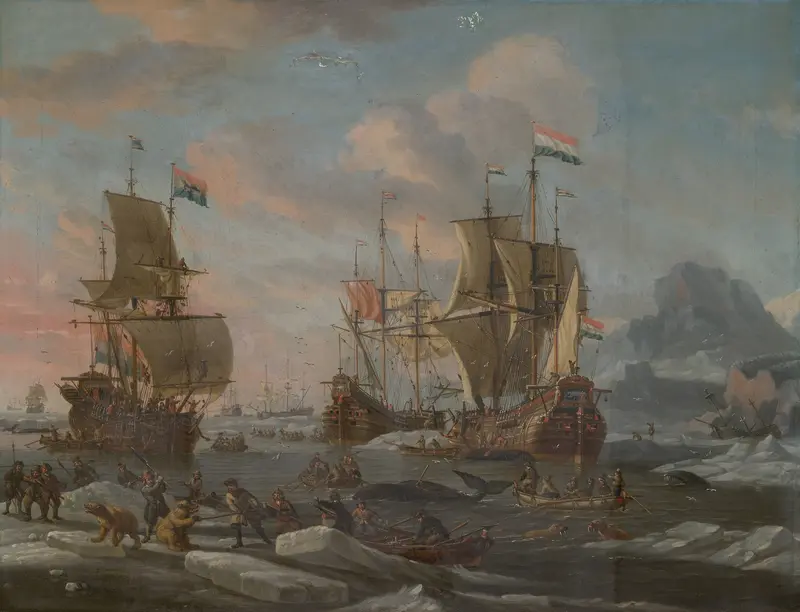
The Dutch Whaling Fleet
Abraham Storck
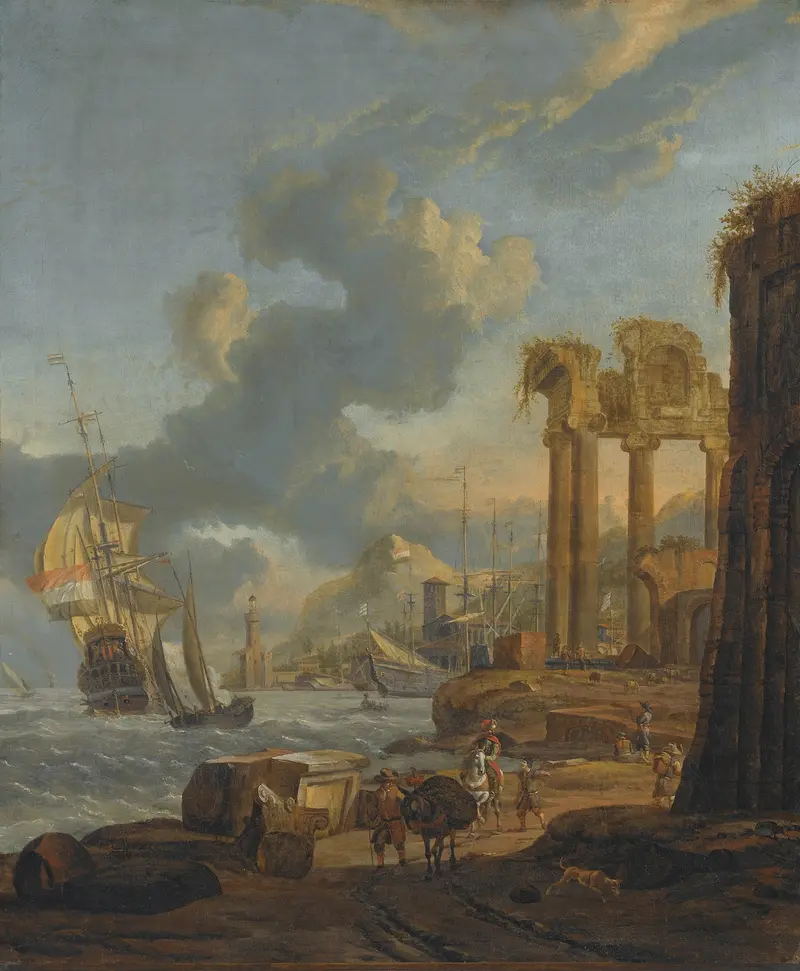
A Mediterranean Harbour Scene With Travellers On The Shore, A Dutch Man-Of-War On The Left
Abraham Storck
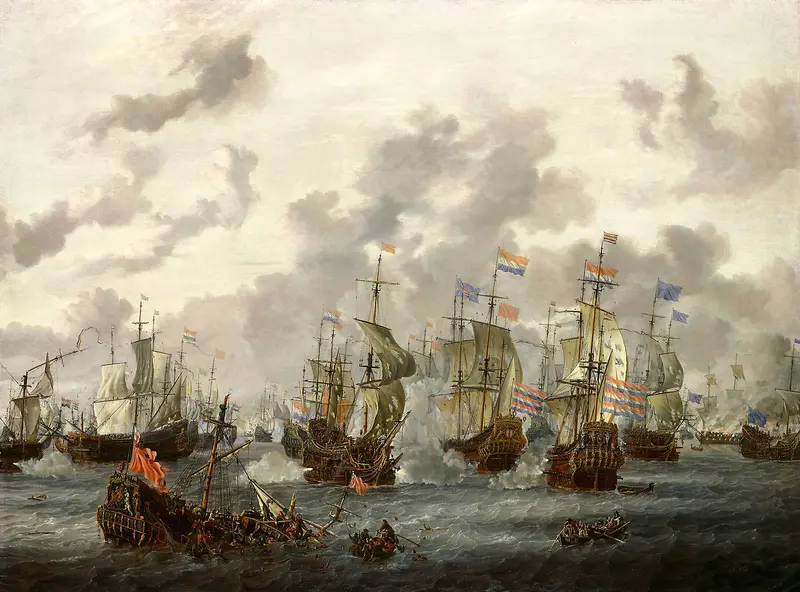
The Four Days’ Battle
Abraham Storck
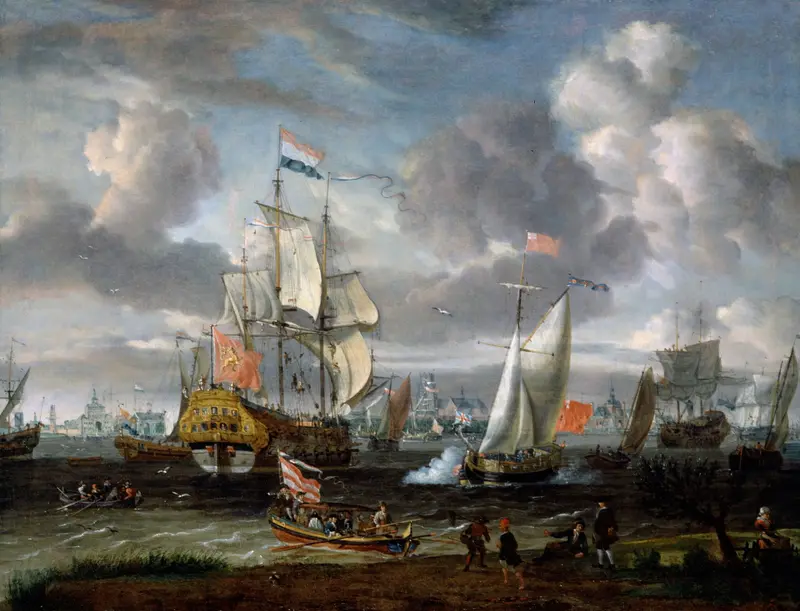
An English Yacht saluting a Dutch Man-of-War in the port of Rotterdam
Abraham Storck
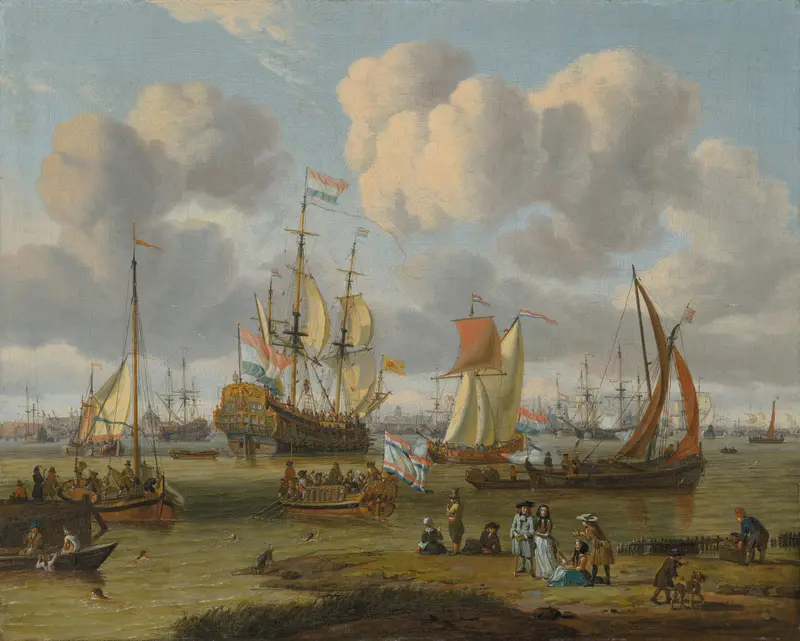
Shipping off Amsterdam with figures on a quay
Abraham Storck
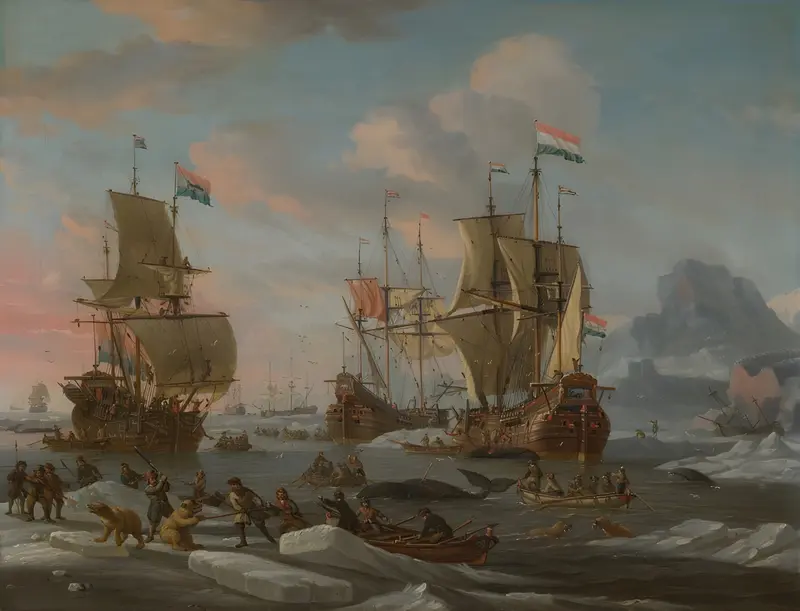
The Dutch Whaling Fleet
Abraham Storck
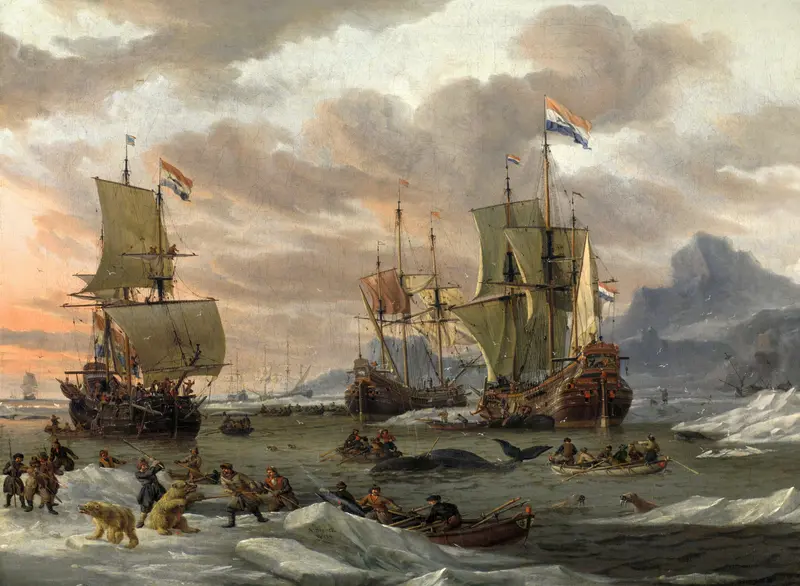
Whaling Grounds in the Arctic Ocean
Abraham Storck
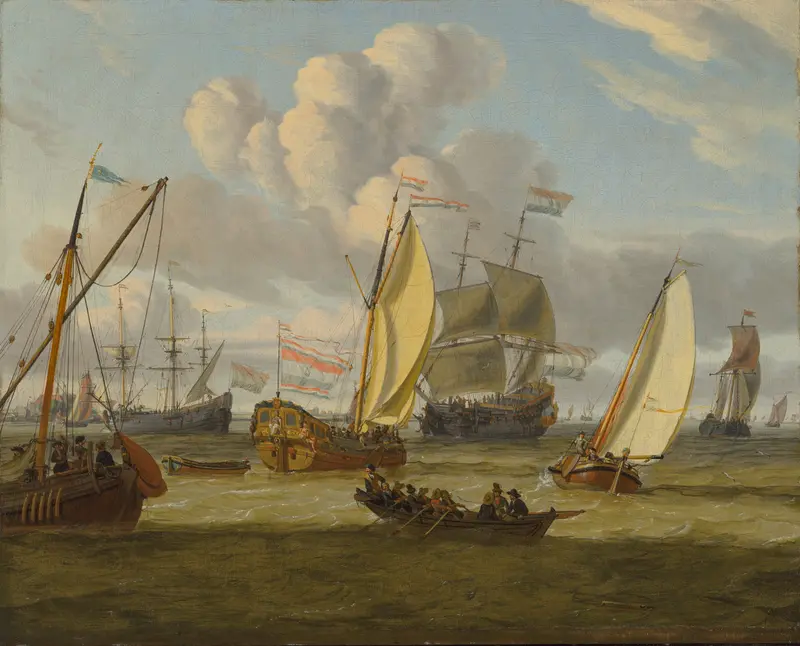
Shipping in an estuary
Abraham Storck
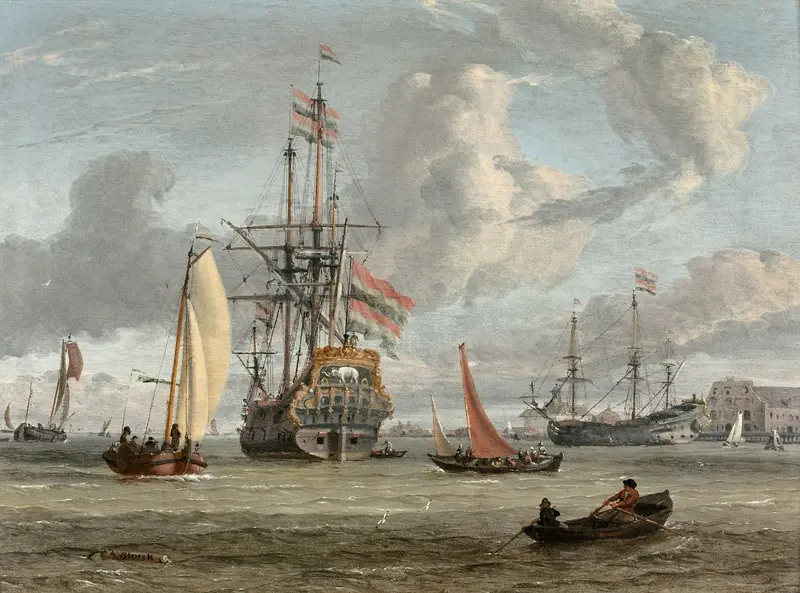
Grand navire de la couronne du Danemark près d’un littoral
Abraham Storck





