
Early Morning After a Storm at Sea — History & Facts
Could beauty survive in a century of chaos? In the aftermath of turmoil, the sea stands as a testament to resilience, its surface shimmering with possibilities. Look to the horizon, where the light breaks through the retreating clouds, illuminating the turbulent waters below. The artist employs a palette of deep blues, soft grays, and hints of warm ochre to evoke the shifting moods of the sea. The dynamic brushstrokes capture the waves’ movement, inviting the viewer to feel the residual tension of the storm.
Notice how the light dances atop the water, creating glistening reflections that draw the eye and stir the spirit. The contrast between the calm after the storm and the chaotic remnants of nature speaks volumes. In this tapestry of color and motion, one can sense the void left behind by the tempest, a poignant reminder of nature’s unpredictable temperament. The solitary figure in the foreground, seemingly at peace, becomes a symbol of hope; even in chaos, one can find solace.
The painting invites contemplation on the interplay between destruction and beauty, urging us to reflect on our place within the natural world. Winslow Homer painted this work between 1900 and 1903, during a period when he was deeply engaged with maritime themes. Living in Maine, he found inspiration in its rugged coastline and the power of the ocean. This period in his life was marked by a focus on the complexities of human experience against the backdrop of nature’s raw beauty, as he sought to reconcile these two seemingly opposing forces in his art.
More Artworks by Winslow Homer
Browse all →
The Gulf Stream
Winslow Homer
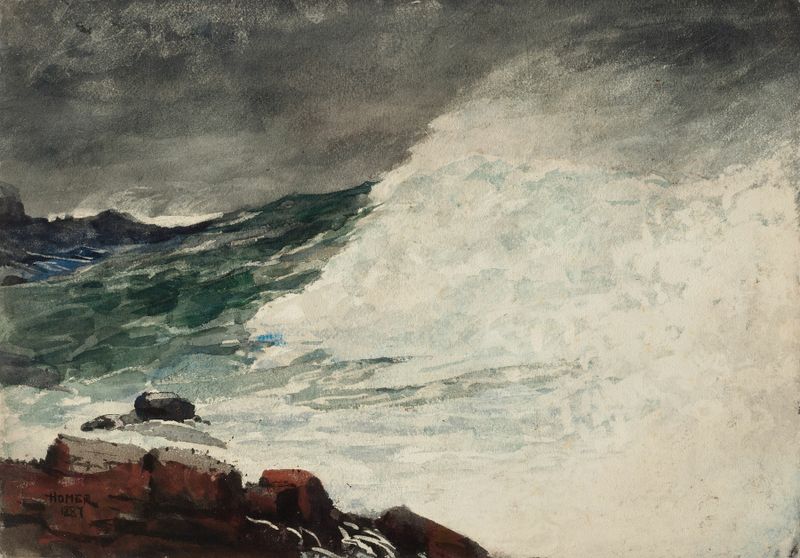
Prout’s Neck, Breaking Wave
Winslow Homer
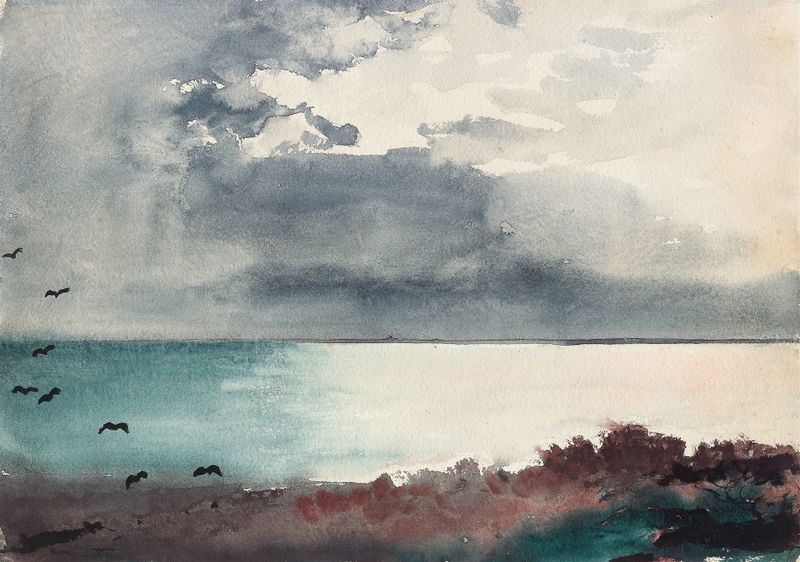
Breaking Storm, Coast of Maine
Winslow Homer
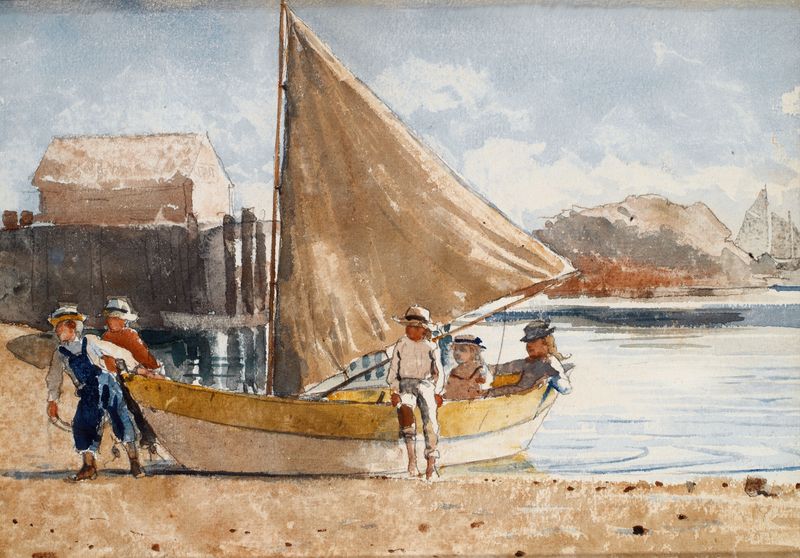
Summertime
Winslow Homer
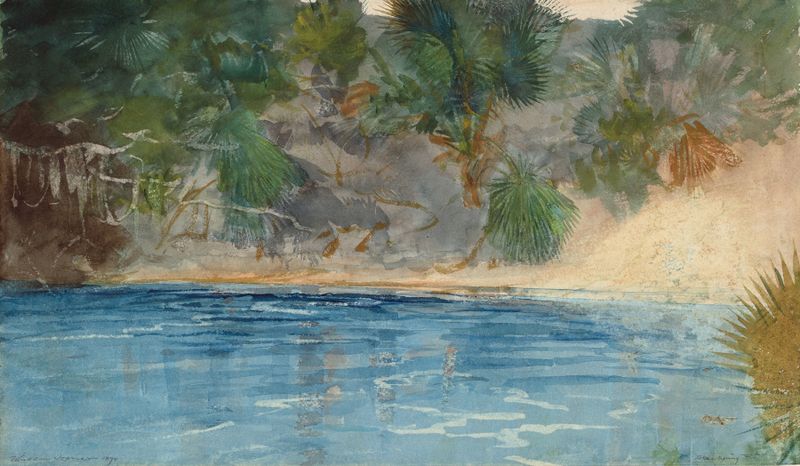
Blue Spring, Florida
Winslow Homer
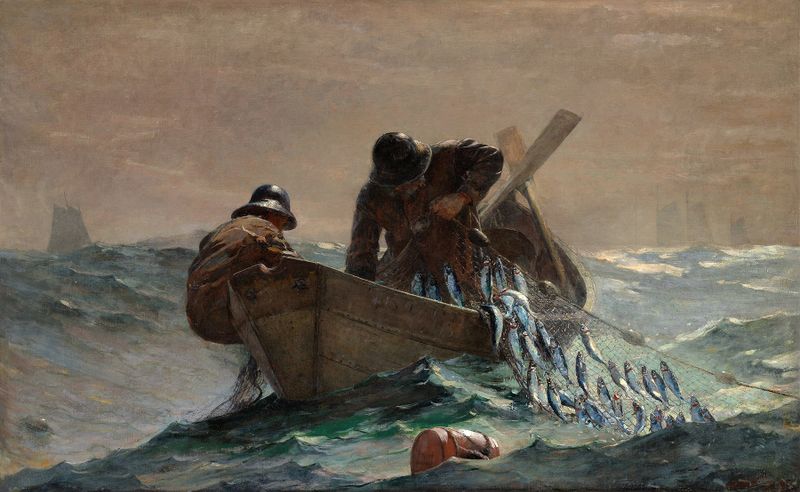
The Herring Net
Winslow Homer
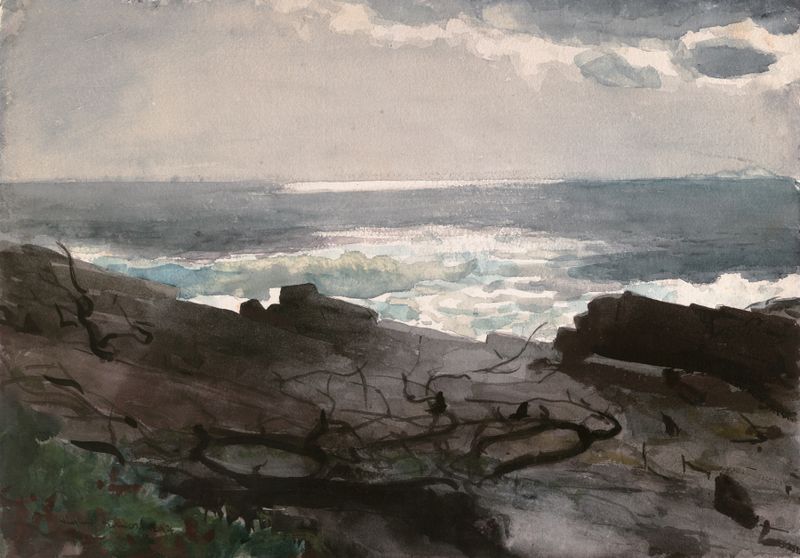
Sunshine and Shadow, Prout’s Neck
Winslow Homer
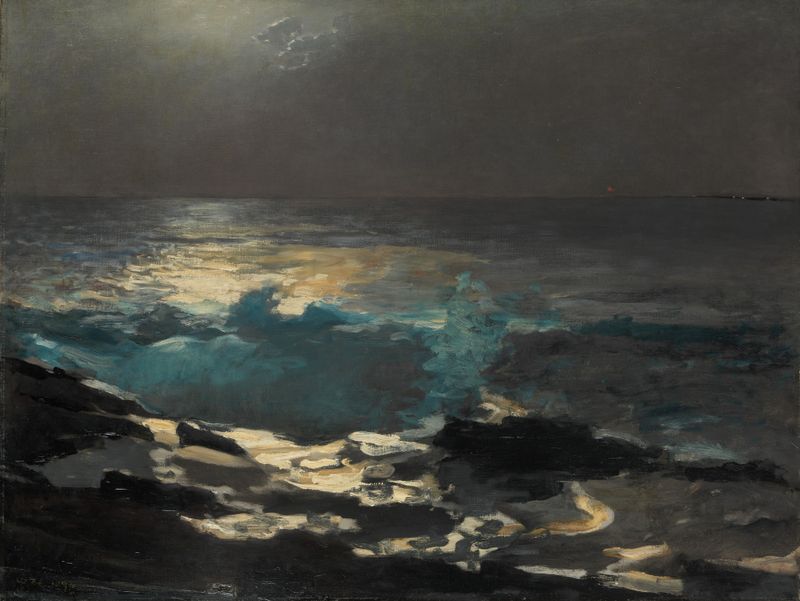
Moonlight, Wood Island Light
Winslow Homer
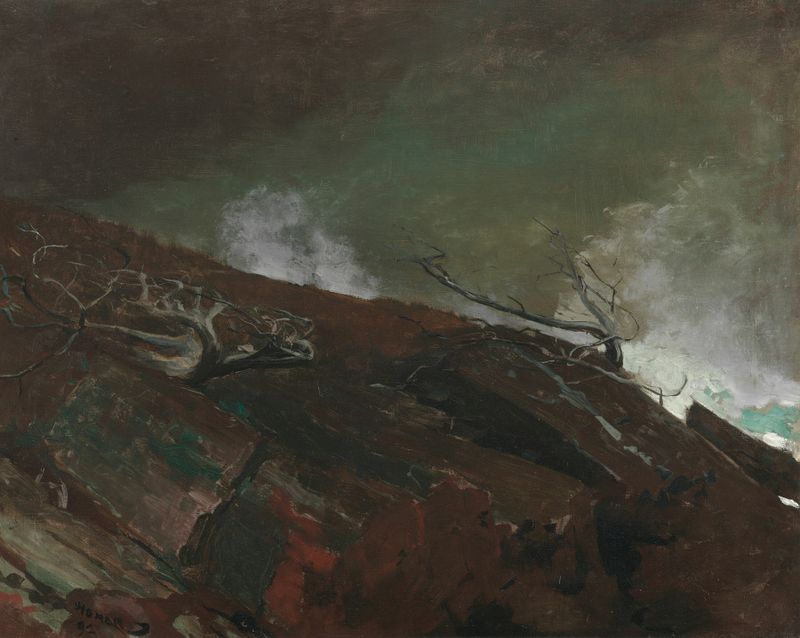
Coast of Maine
Winslow Homer
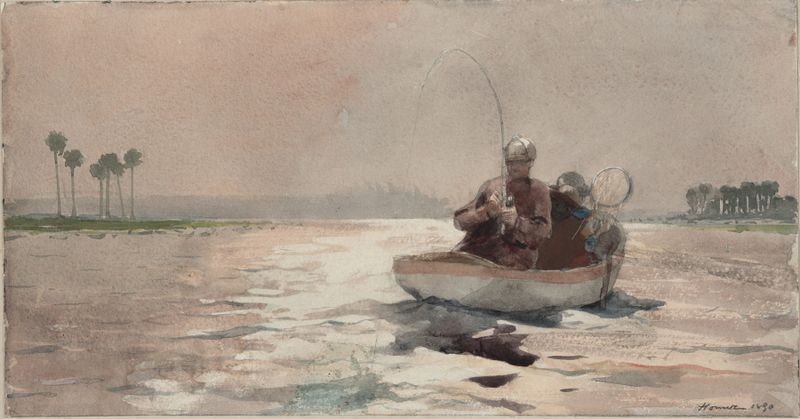
Bass Fishing – Florida
Winslow Homer




