
Emigrants Crossing the Plains — History & Facts
The first thing that seizes the eye in Emigrants Crossing the Plains is the way light floods the land—an amber glow that pours through the trees and seems to set the entire journey ablaze with promise and uncertainty. The painter draws us into the heart of a westward crossing, where a caravan of wagons, livestock, and hopeful travelers threads its way between the shadowed forest and the sheer, sunlit cliffs. Every detail is a signpost: the cattle clustered in the foreground, the figures guiding their teams, the skeletons bleaching quietly in the dust—all reminders that this is a passage marked by both ambition and risk.
The low horizon gives the sky the leading role, its colors shifting from the gold of hope to the bruised blue of coming night, while the trees and rocks stand as silent witnesses to the human drama below. Painted in 1867, this work belongs to a moment when American artists like Albert Bierstadt made the vast landscapes of the West into symbols of national destiny. Such paintings were often commissioned or eagerly collected by those who wanted to see the promise—and the peril—of expansion rendered on a grand scale. The genre fed on the era’s fascination with progress, migration, and the unknown, and works like this one, now found in the digital collection of Google Arts & Culture, still carry the echoes of that restless age.
History has kept few traces of the individual journeys that inspired these images, but the painting’s drama and detail invite us to imagine ourselves among the travelers, caught between the fading light and the open land ahead.
More Artworks by Albert Bierstadt

A Storm in the Rocky Mountains, Mt. Rosalie
Albert Bierstadt
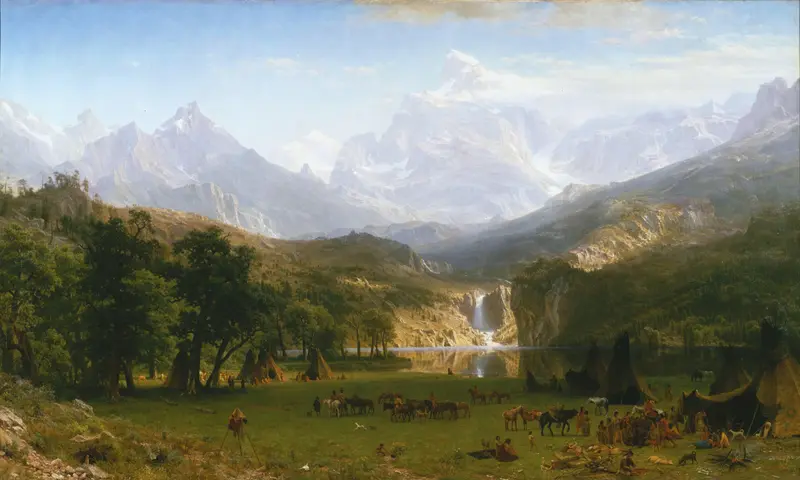
The Rocky Mountains, Lander's Peak
Albert Bierstadt
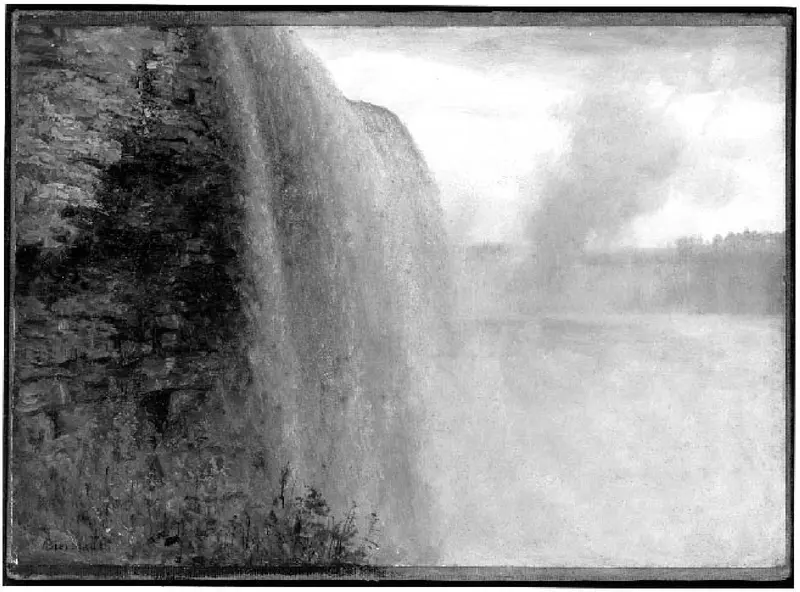
Niagara from the American Side
Albert Bierstadt
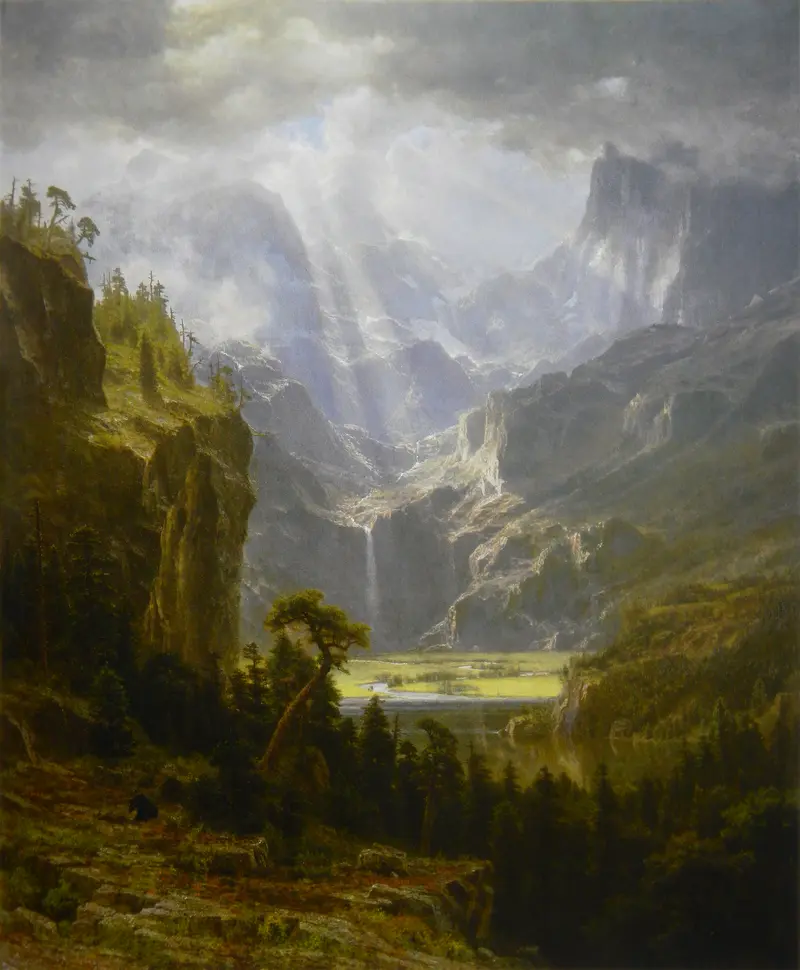
Rocky Mountains, Lander’s Peak
Albert Bierstadt

Valley of the Yosemite
Albert Bierstadt
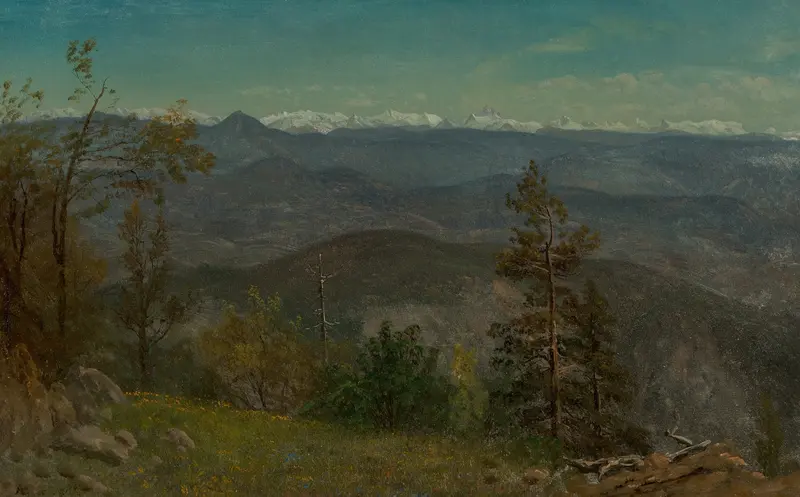
Yosemite Valley, California
Albert Bierstadt
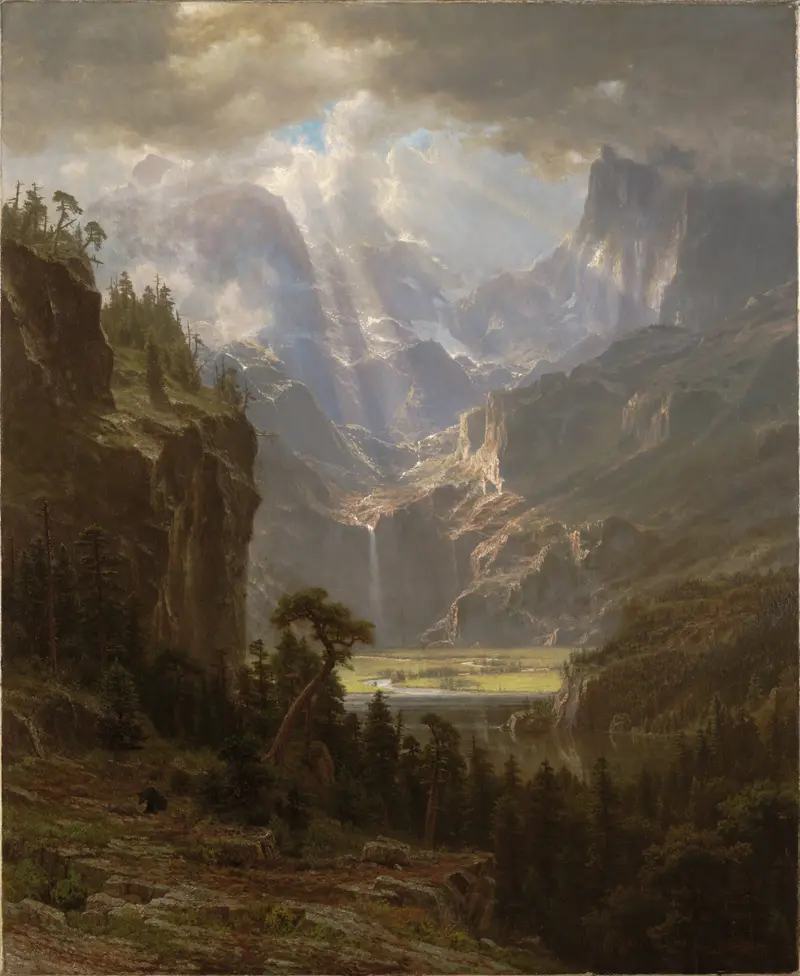
Rocky Mountains, "Lander's Peak"
Albert Bierstadt

Laramie Peak
Albert Bierstadt
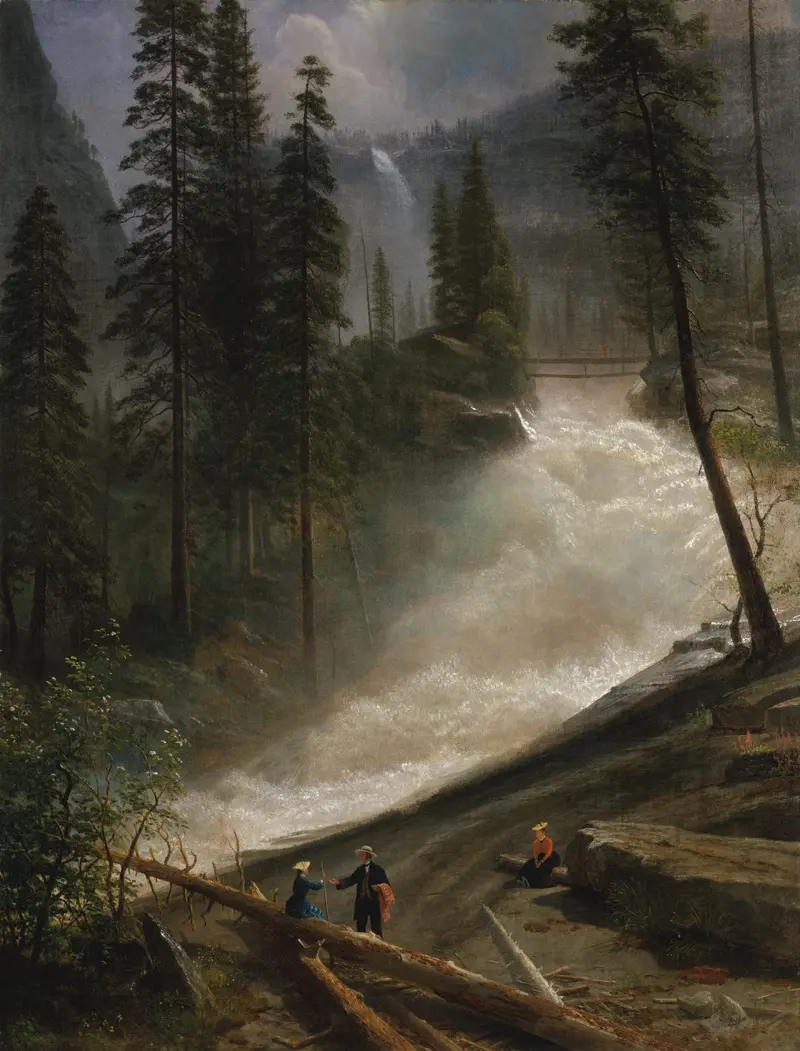
Nevada Falls, Yosemite
Albert Bierstadt
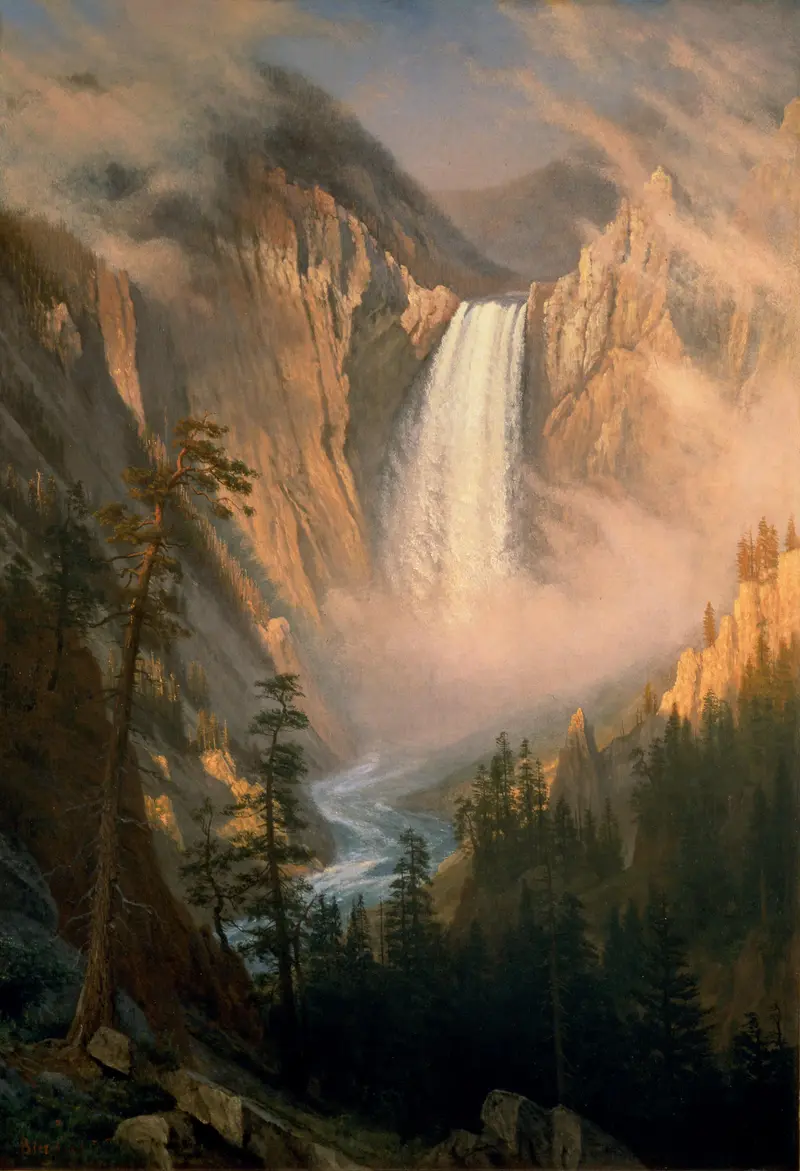
Yellowstone Falls
Albert Bierstadt
More Landscape Art

The Starry Night
Vincent van Gogh

View of Delft
Johannes Vermeer

Water Lilies
Claude Monet

The Grand Canal, Venice, looking north-west from the Ca' Corner to the Ca' Contarini degli Scrigni, with the campanile of Santa Maria della Carità
Canaletto

Windsor Castle
Canaletto

The Grand Canal looking North-East from the Palazzo Dolfin-Manin to the Rialto Bridge
Canaletto