
Enkele hoge bomen voor een open veld — History & Facts
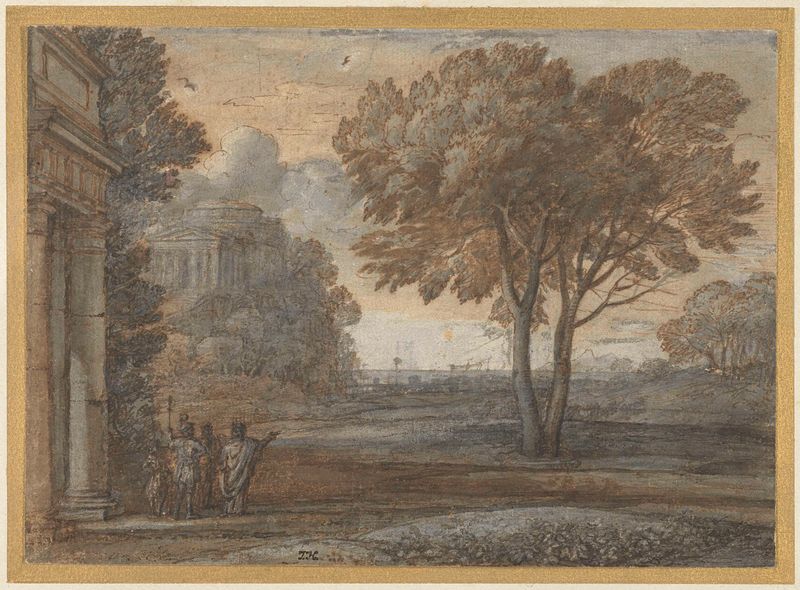
What if silence could speak through light? In Enkele hoge bomen voor een open veld, the stillness of nature captures a moment ripe for transformation, where the quiet whispers of the landscape beckon contemplation. Look to the left, where the towering trees stand sentinel over an expansive field. Their leafy canopies filter the sunlight, casting dappled shadows that dance across the ground. The subtle gradation of greens and browns, expertly blended, creates a harmonious balance, inviting the viewer to breathe in the serenity of this pastoral scene.
Notice how the artist employs soft brushwork to render both the trees and the field, imbuing the work with a gentle, almost dreamlike quality. Yet, beneath this tranquility lies a tension. The towering trees symbolize resilience, steadfast against the winds of change, while the open field suggests both freedom and vulnerability. The interplay of light and shadow hints at the passage of time, transforming the landscape from one moment to the next, reflecting life's transient nature.
The artist subtly invites us to consider the inevitable cycles of growth and decay. Claude Lorrain painted this landscape during the 17th century, a time when European art was shifting towards a greater appreciation of natural beauty and light. Working primarily in Italy, he was influenced by the burgeoning Baroque style, which emphasized dramatic contrasts and emotional depth. This period saw him exploring themes of harmony between man and nature, contributing to the evolution of landscape painting.
More Artworks by Claude Lorrain
Browse all →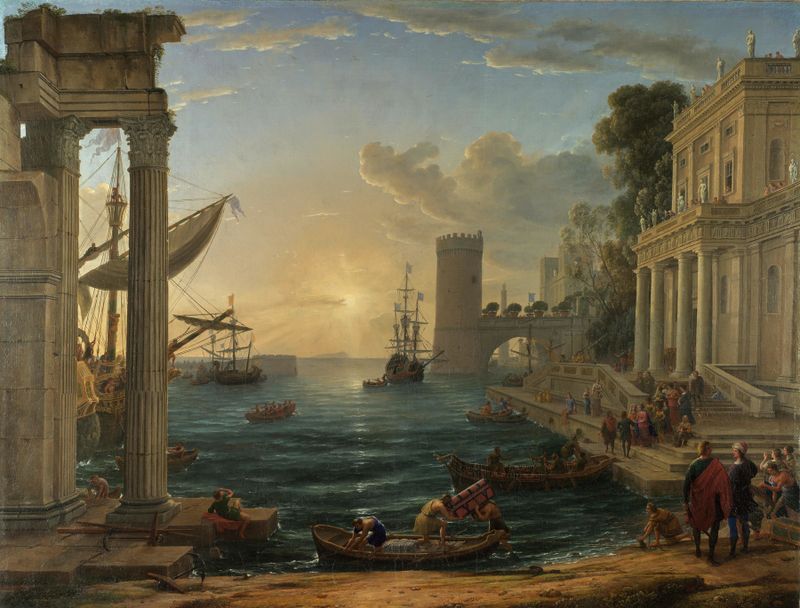
The Embarkation of the Queen of Sheba
Claude Lorrain
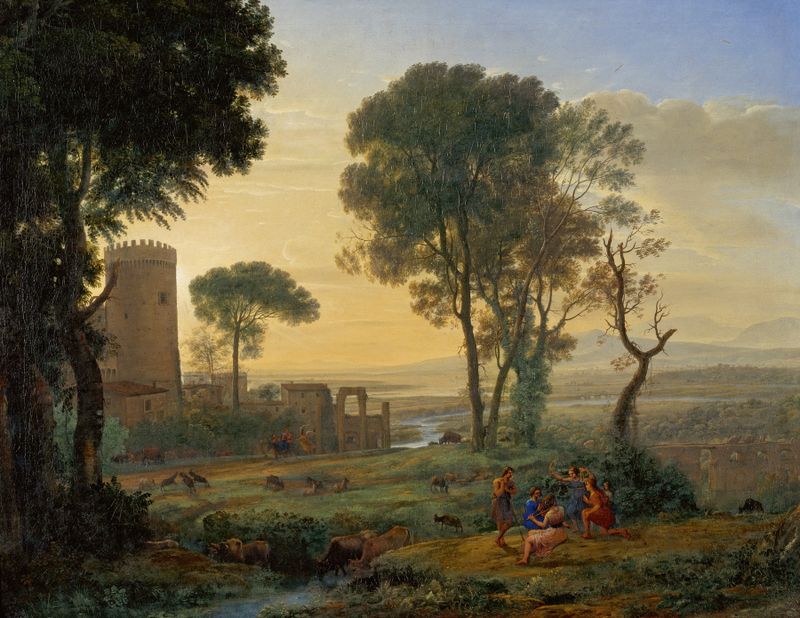
Landscape with the Flight into Egypt
Claude Lorrain
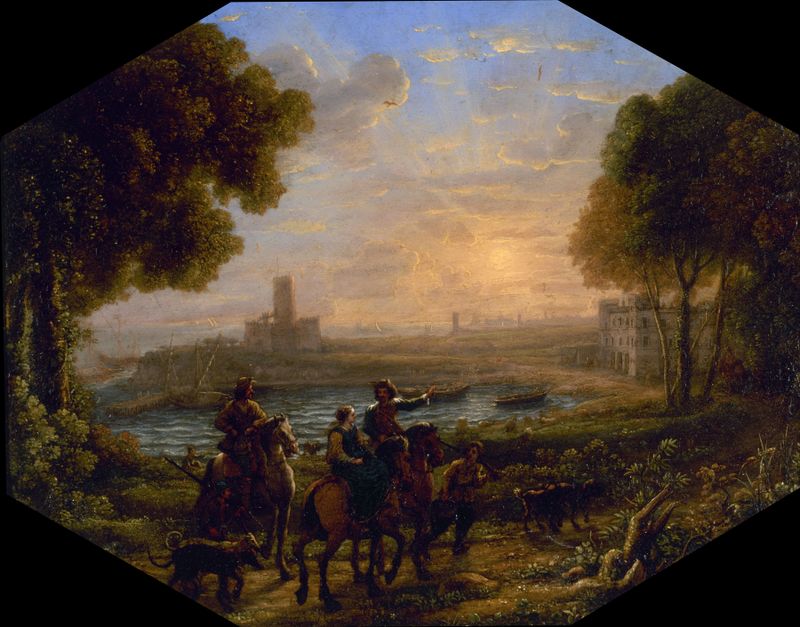
Paysage avec le port de Santa Marinella
Claude Lorrain
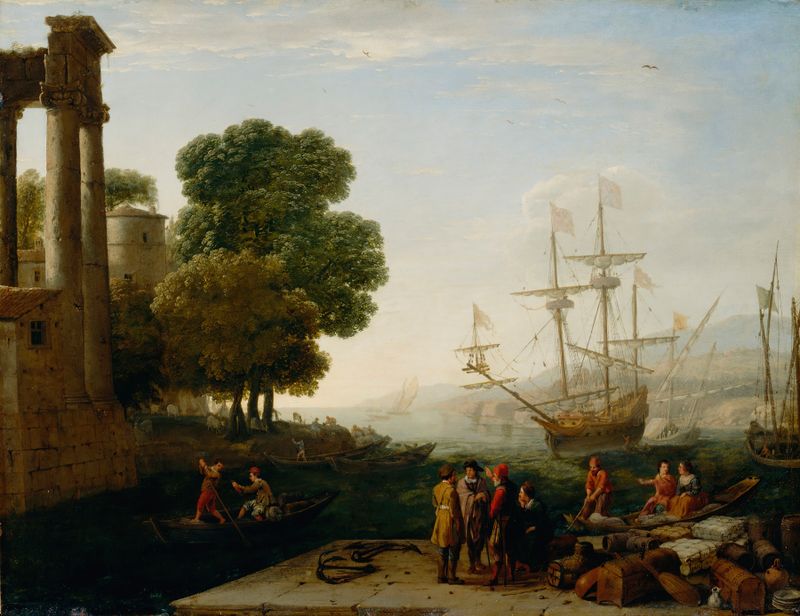
A Seaport at Sunset
Claude Lorrain
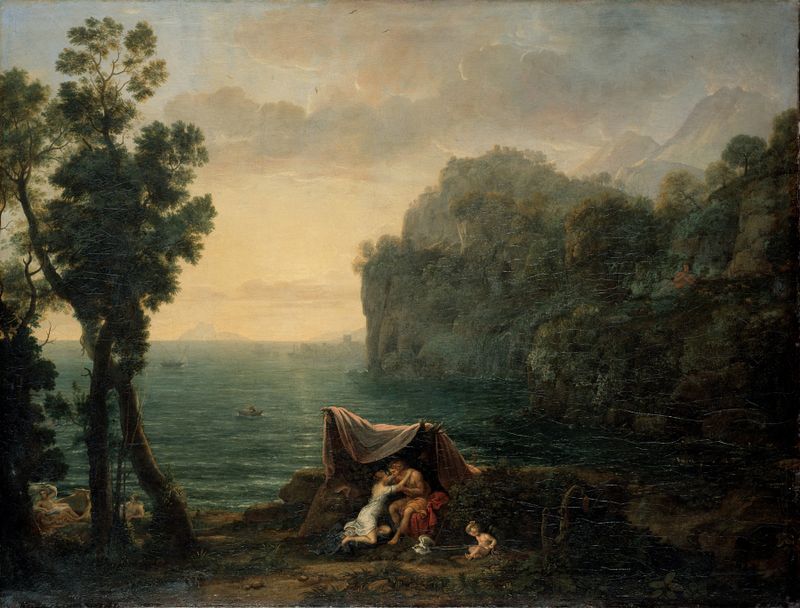
Landscape with Acis and Galatea
Claude Lorrain
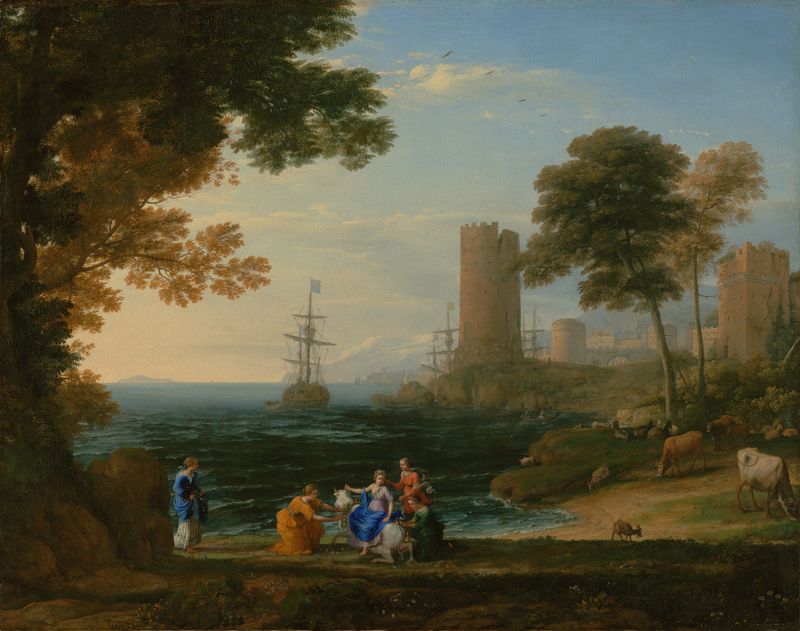
Coast View with the Abduction of Europa
Claude Lorrain
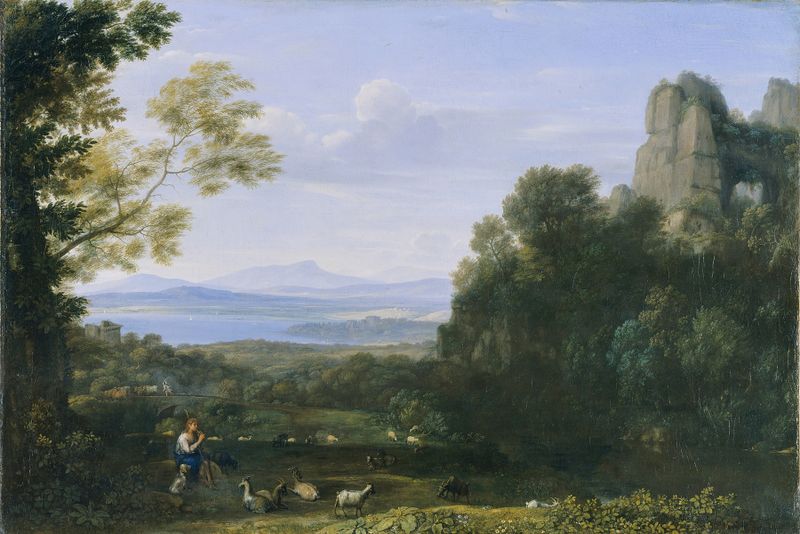
Landscape with Apollo and Mercury
Claude Lorrain
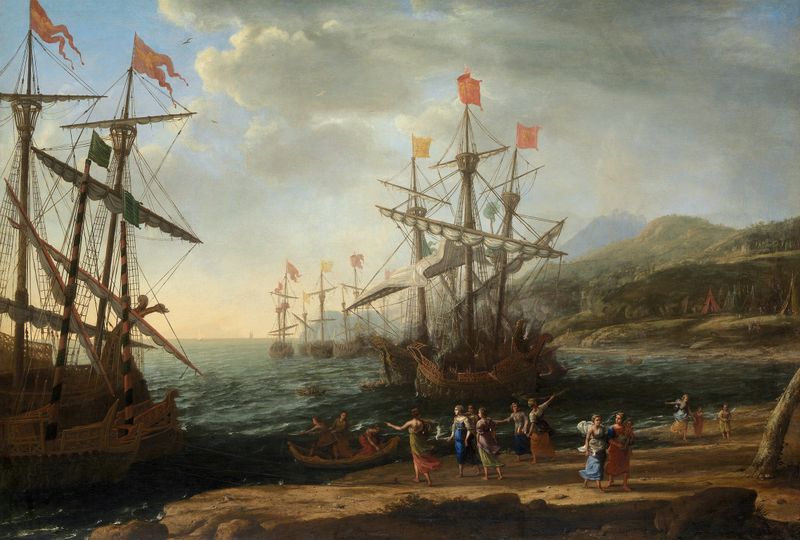
The Trojan Women Setting Fire to Their Fleet
Claude Lorrain
Pastoral landscape
Claude Lorrain
Aeneas op Delos
Claude Lorrain





