
Environs de Brest, embouchure de l’Élorn — History & Facts
In the stillness of the moment, a land breathes anew, caught in the tender embrace of dawn; the edges of reality blur as the earth prepares for rebirth. Here, nature whispers its secrets, each hue a promise, each stroke a sigh of renewal, inviting introspection and reverie. Look to the left at the gentle curve of the Élorn River, where shades of blue and green converge to evoke a sense of tranquility. Notice how the soft brushwork captures the shifting light, illuminating the fog-kissed landscape with an ethereal glow.
The sky, a delicate tapestry of pastel pinks and blues suggests the first light of day, while the trees, rendered in earthy tones, stand as silent witnesses to the passage of time. The interplay of light and shadow creates an emotional tension, as the viewer is drawn between the serene stillness of the scene and the latent energy of life awaiting awakening. Subtle details, like the reflection of the trees in the water, hint at a deeper connection between the elements, suggesting not just a physical landscape, but an emotional landscape where beauty and tranquility coexist alongside the inevitability of change. In 1873, the artist painted this piece in the coastal regions of Brittany, France, during a period when he was embracing plein air techniques. This was a time of burgeoning interest in capturing natural light and atmosphere, as artists sought to break free from traditional constraints.
Boudin, often regarded as a precursor to Impressionism, was influenced by the shifting tides of artistic expression, marking a pivotal moment in his career as he turned towards capturing the essence of nature’s ephemeral beauty.
More Artworks by Eugène Boudin
Browse all →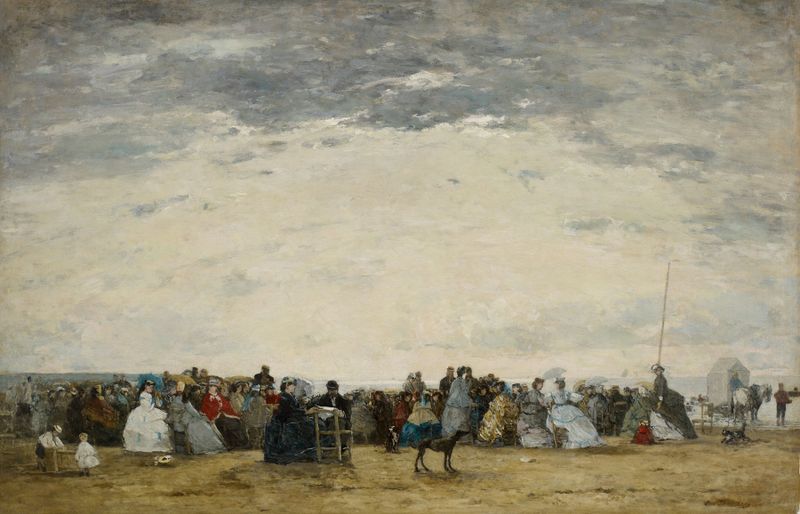
Vacationers on the Beach at Trouville
Eugène Boudin

Washerwoman near Trouville
Eugène Boudin
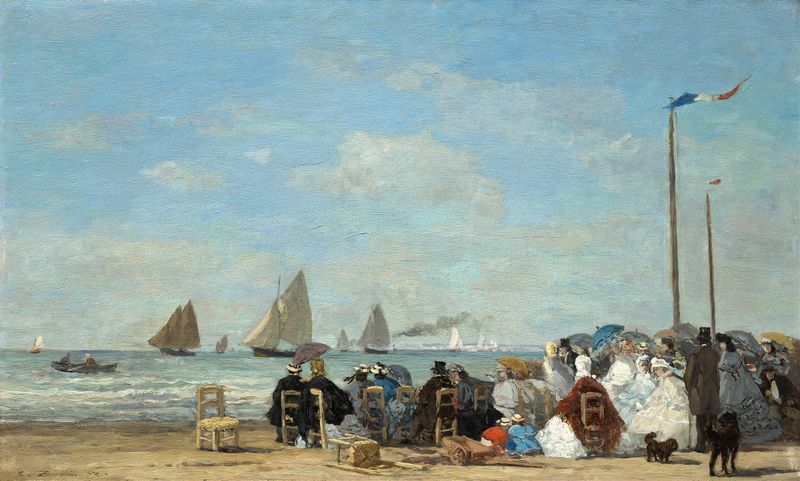
Beach Scene at Trouville
Eugène Boudin

Port aux environs d’Honfleur
Eugène Boudin

Le Faou, un coin du village
Eugène Boudin
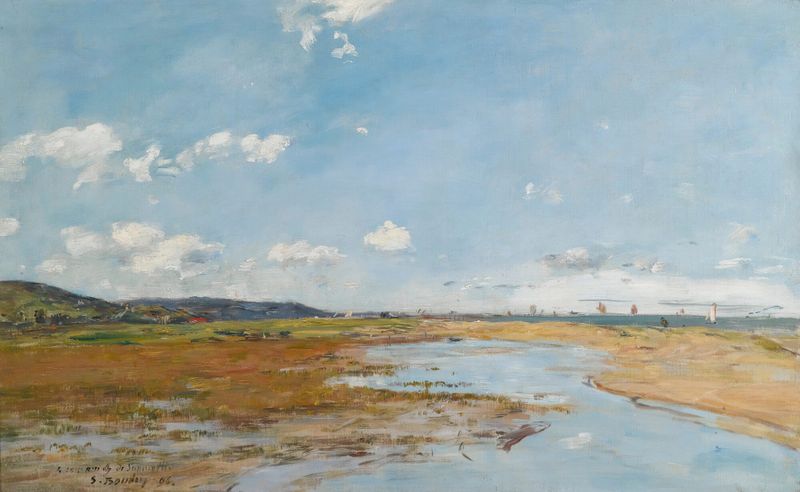
Deauville. Le Rivage
Eugène Boudin
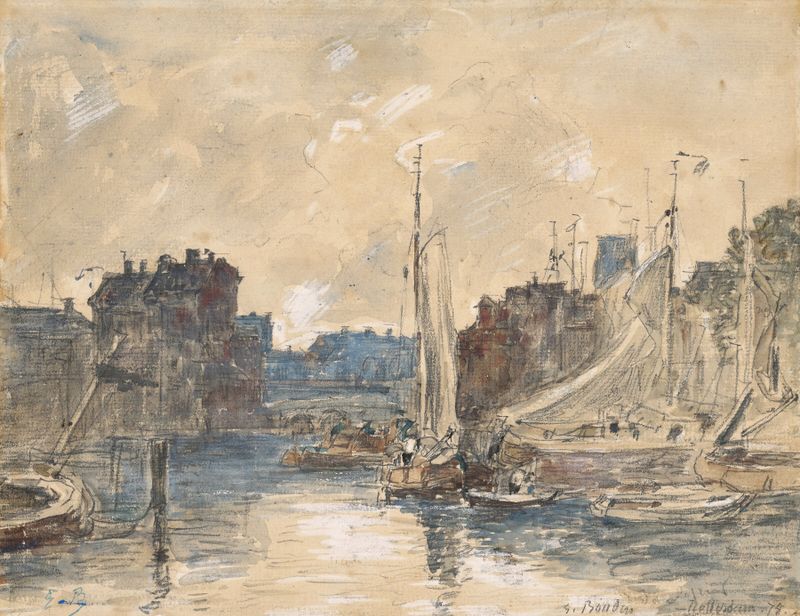
Port de Rotterdam
Eugène Boudin

View of Bordeaux, from the Quai des Chartrons
Eugène Boudin

Trouville, Scène De Plage
Eugène Boudin

Trouville, Le Port
Eugène Boudin





