
Esquisse pour l'escalier des fêtes de l'Hôtel de Ville de Paris , Mars — History & Facts
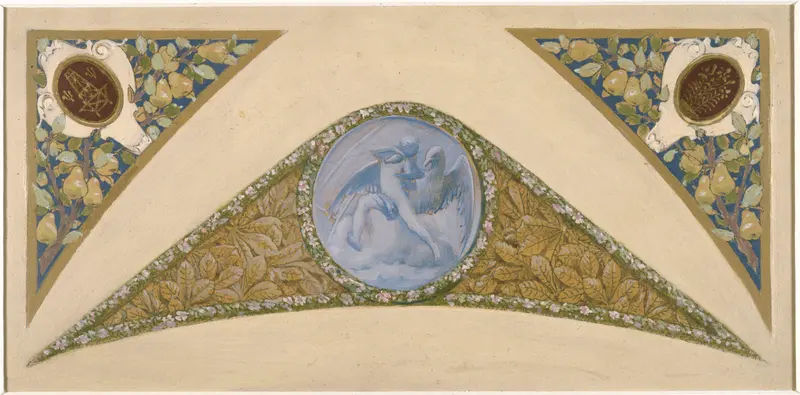
A ceiling becomes a stage for allegory in Esquisse pour l'escalier des fêtes de l'Hôtel de Ville de Paris, Mars by Luc-Olivier Merson. Here, the eye is drawn first to the geometric clarity of the design, a great X radiating from the center, dividing the surface into four ornate panels. Each quadrant is alive with classical figures in pale blue and earth tones, paired with cherubs and garlands that seem to tumble out of the architecture itself.
The palette is gentle, almost pastel, but the forms are crisp—each figure poised in a tableau that hints at myth or virtue, their gestures and attributes inviting the viewer to decode their meaning. The surrounding floral motifs soften the architectural rigor, while the empty center suggests a space waiting to be filled with light or festivity. Created between 1888 and 1898, this work belongs to a tradition of grand decorative schemes designed for public buildings in late nineteenth-century France, when artists like Merson were called upon to lend splendor and narrative to civic spaces. Such esquisses—preparatory sketches—were both proposals and promises, offering patrons a vision of how art could transform stone and plaster into a theater of ideals.
The Hôtel de Ville, rebuilt after the turmoil of the Paris Commune, became a showcase for artists to express the values of the new Republic through allegory and ornament. History has kept few traces of the fate of every sketch or commission, but the survival of this design in the Paris Musées collection lets us glimpse the ambitions and artistry of its age—inviting us to imagine the ceiling as it might have soared above the revelers below.
More Artworks by Luc-Olivier Merson

Esquisse pour l'escalier des fêtes de l'Hôtel de Ville de Paris , Bélier
Luc-Olivier Merson
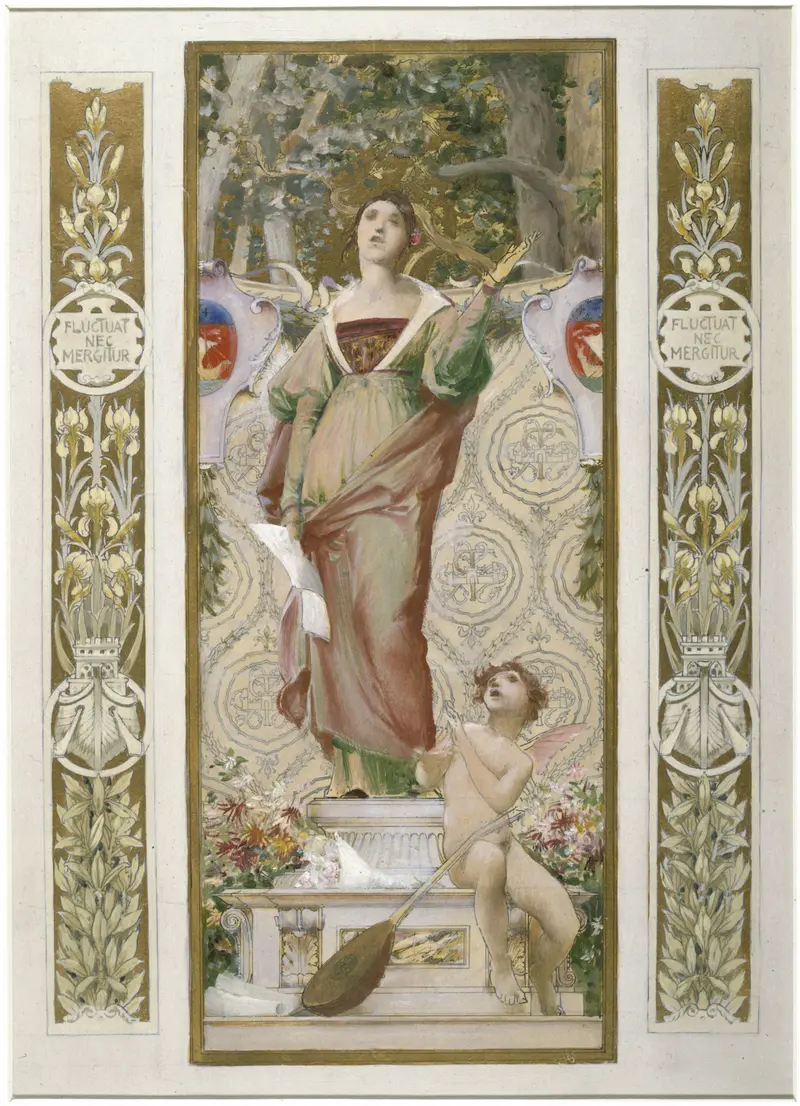
Esquisse pour l'escalier des Fêtes de l'Hôtel de Ville de Paris , Le Chant
Luc-Olivier Merson
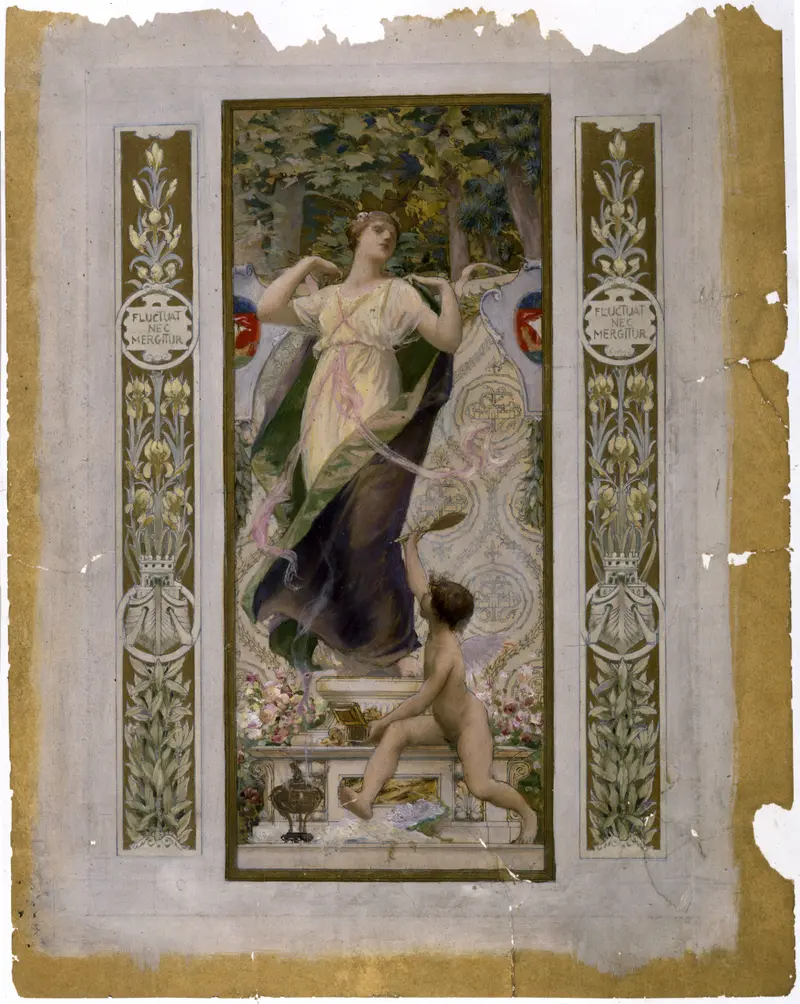
Esquisse pour l'escalier des Fêtes de l'Hôtel de ville de Paris , La Toilette féminine
Luc-Olivier Merson
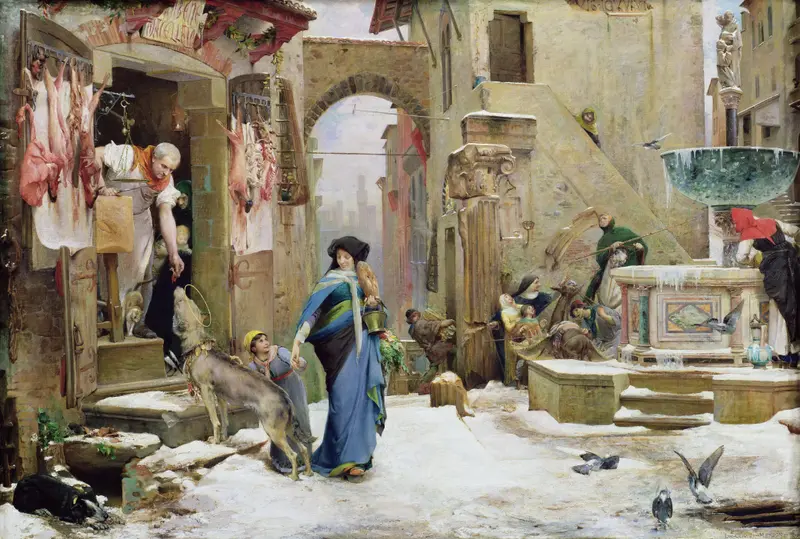
The Wolf of Gubbio
Luc-Olivier Merson
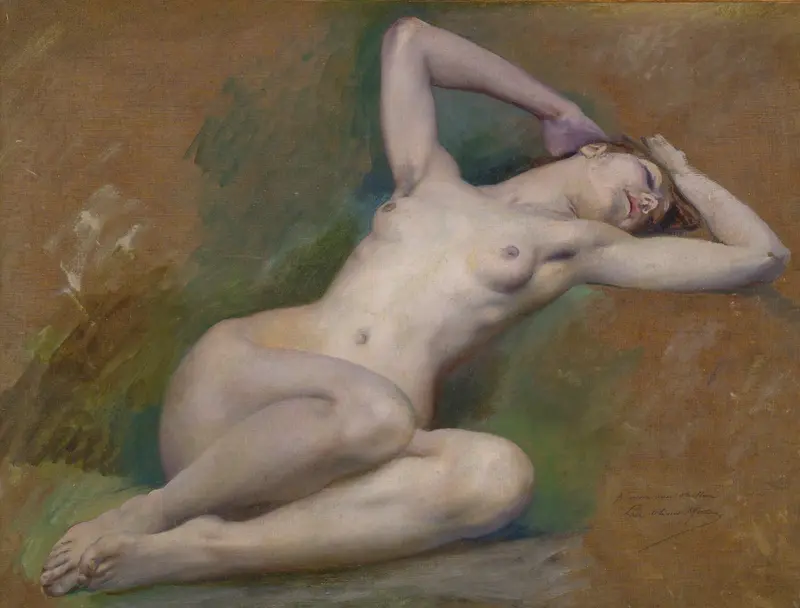
Luc Olivier Merson Study for the figure of Spring
Luc-Olivier Merson
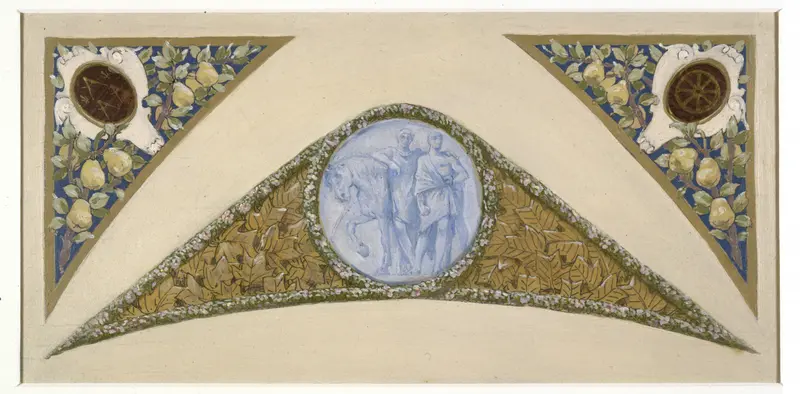
Esquisse pour l'escalier des Fêtes de l'Hôtel de Ville de Paris , Gémeaux
Luc-Olivier Merson
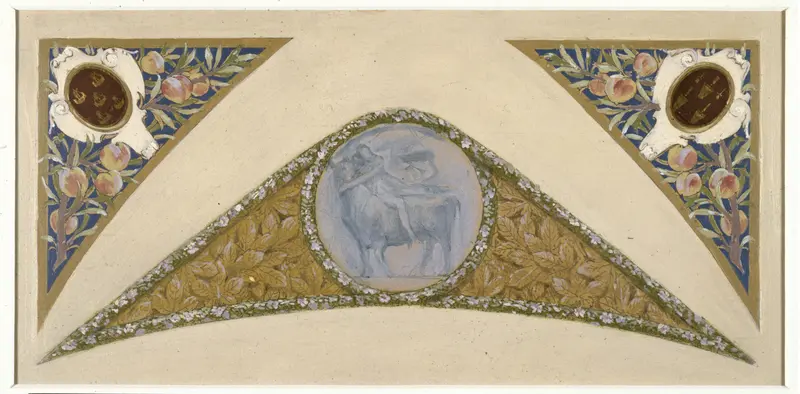
Esquisse pour l'escalier des Fêtes de l'Hôtel de Ville de Paris , Taureau
Luc-Olivier Merson
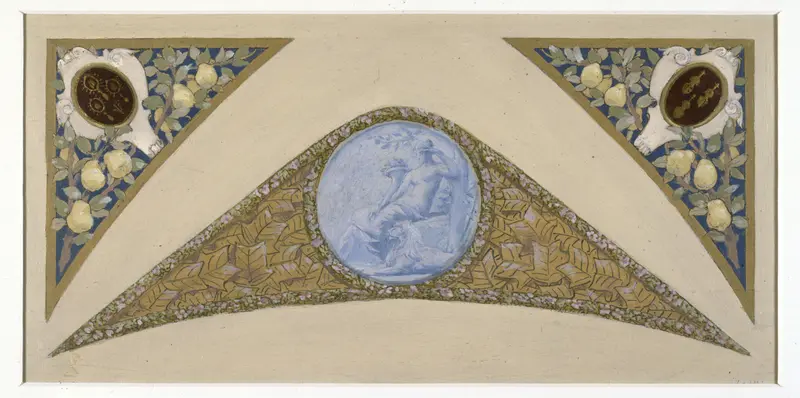
Esquisse pour l'escalier des Fêtes de l'Hôtel de Ville de Paris , Vierge
Luc-Olivier Merson
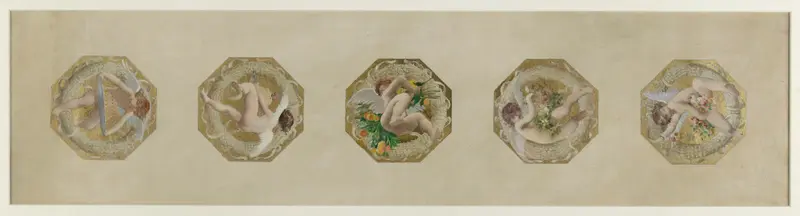
Esquisse pour l'Hôtel de Ville de Paris, escalier des Fêtes , les génies des fêtes
Luc-Olivier Merson
Esquisse pour l'escalier des Fêtes de l'Hôtel de Ville de Paris , Verseau
Luc-Olivier Merson





