
Esquisse pour l'escalier des Fêtes de l'Hôtel de Ville de Paris , Novembre — History & Facts
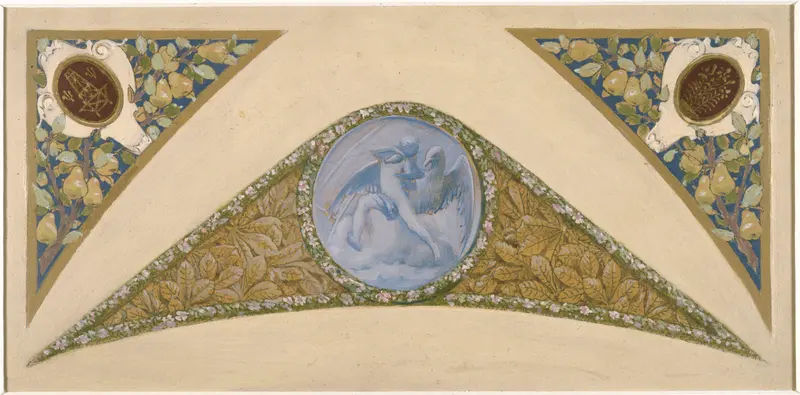
A ceiling like a stage set: the first thing that catches the eye in Esquisse pour l'escalier des Fêtes de l'Hôtel de Ville de Paris, Novembre is its theatrical symmetry, a world arranged for the viewer to look up and wonder. Four panels radiate from the center, each alive with allegorical figures—classical nudes half-veiled in pastel drapery, caught mid-motion as if summoned by the city’s festivities. The figures are not idle decorations; their gestures and the objects they hold—scrolls, torches, laurel branches—signal the ideals inscribed in the gilded cartouches: "Le Banquet," "Le Cirque," "Le Bal," "Les Conférences." The palette is delicate, almost dreamlike, with soft blues and pinks lending the scene an air of refined celebration, while garlands and floral swags tie the composition together, suggesting a city in perpetual bloom. Created between 1888 and 1889, this design belongs to a world where public buildings were showcases of civic pride, their interiors a visual manifesto for the values of the Third Republic.
Such esquisses—preparatory sketches—were often submitted to municipal competitions, each artist vying to leave a permanent mark on the city’s grandest spaces. Luc-Olivier Merson was part of a generation for whom allegory was both a language and a challenge, blending academic tradition with the decorative ambitions of the era. Now held by Paris Musées, this work is a rare survivor of a time when even a staircase ceiling could be a canvas for the ideals of a nation.
Look again, and imagine yourself beneath it, ascending into a world where art and civic life were inseparable.
More Artworks by Luc-Olivier Merson

Esquisse pour l'escalier des fêtes de l'Hôtel de Ville de Paris , Bélier
Luc-Olivier Merson
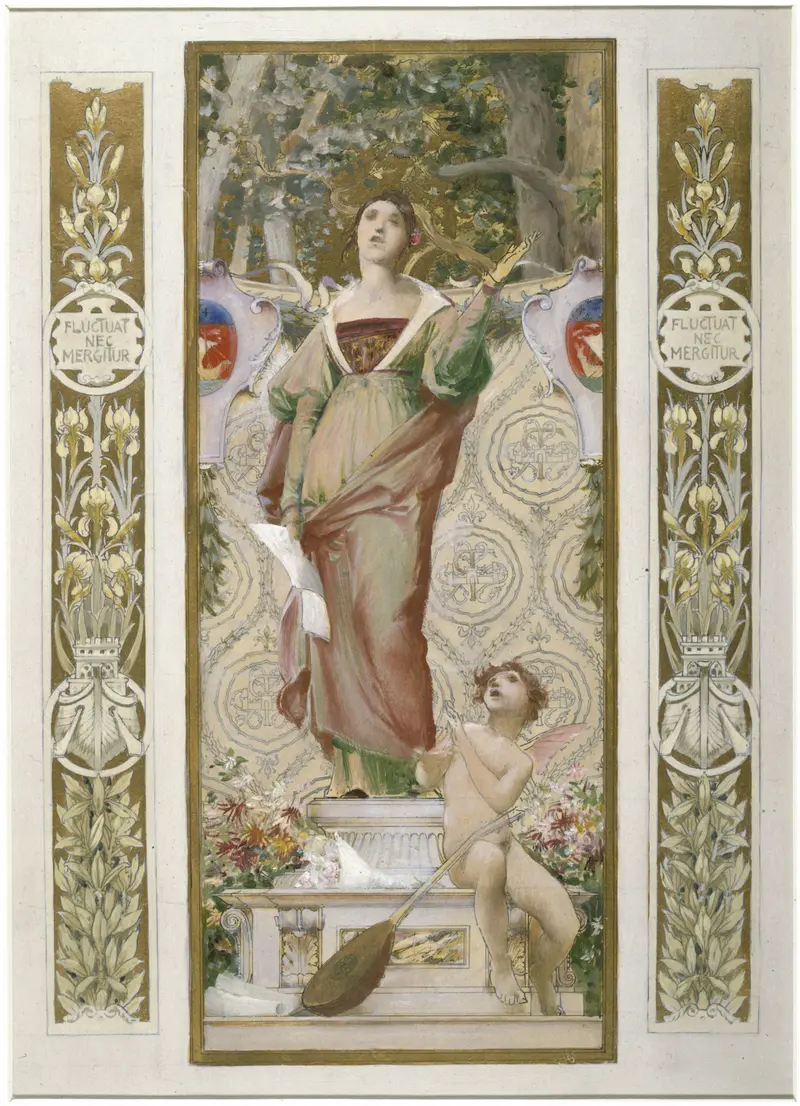
Esquisse pour l'escalier des Fêtes de l'Hôtel de Ville de Paris , Le Chant
Luc-Olivier Merson
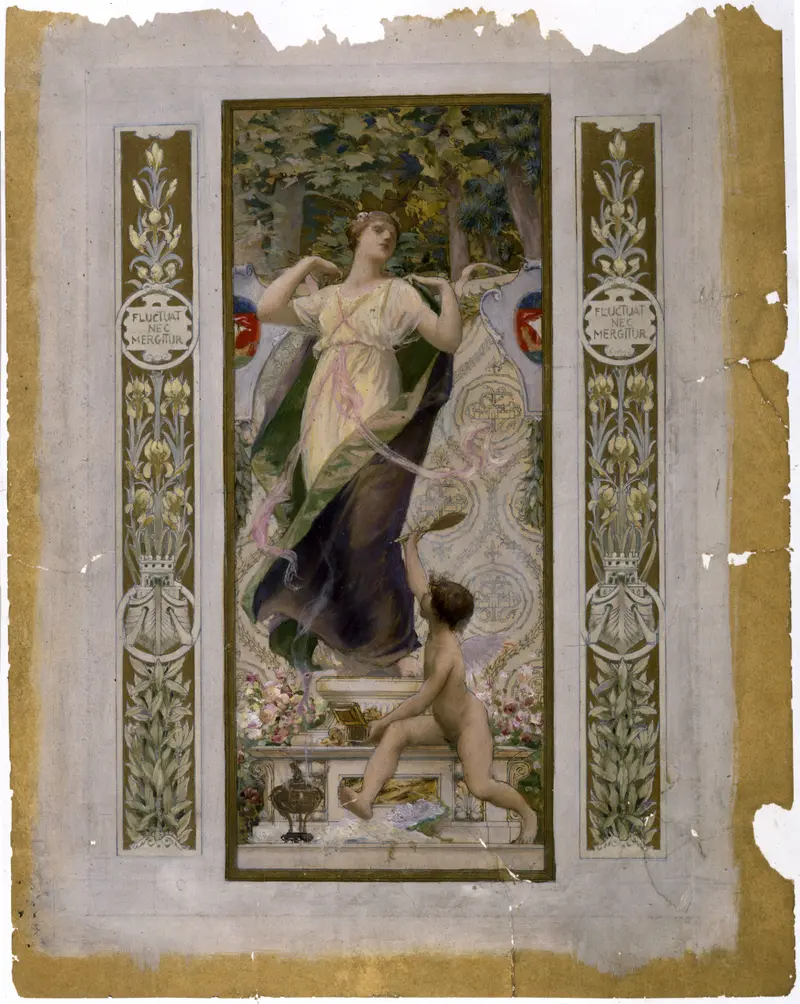
Esquisse pour l'escalier des Fêtes de l'Hôtel de ville de Paris , La Toilette féminine
Luc-Olivier Merson
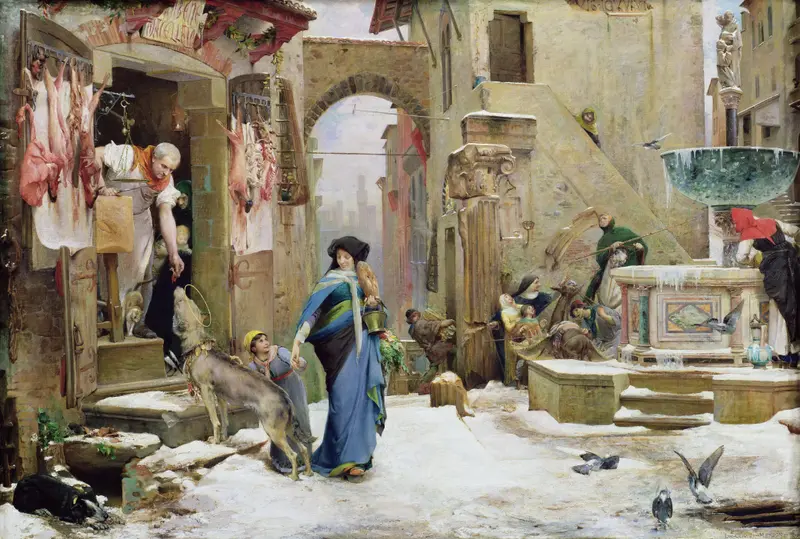
The Wolf of Gubbio
Luc-Olivier Merson
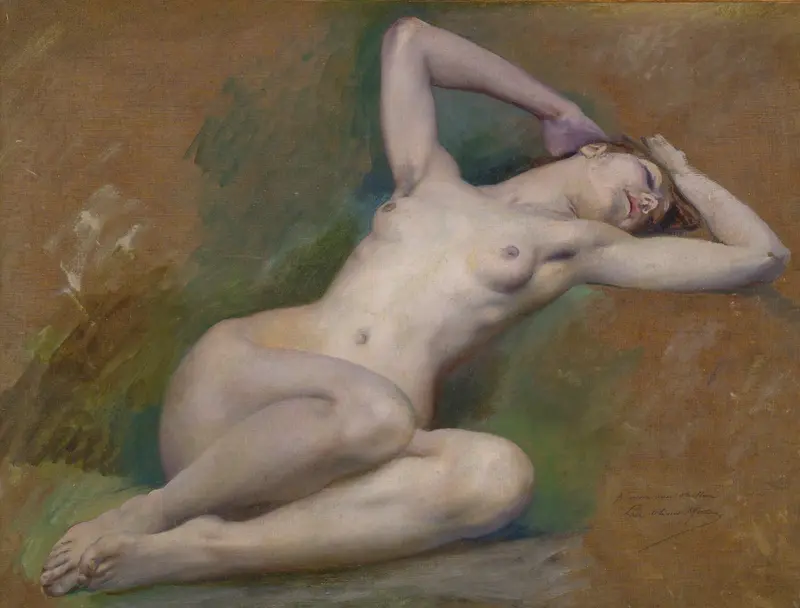
Luc Olivier Merson Study for the figure of Spring
Luc-Olivier Merson
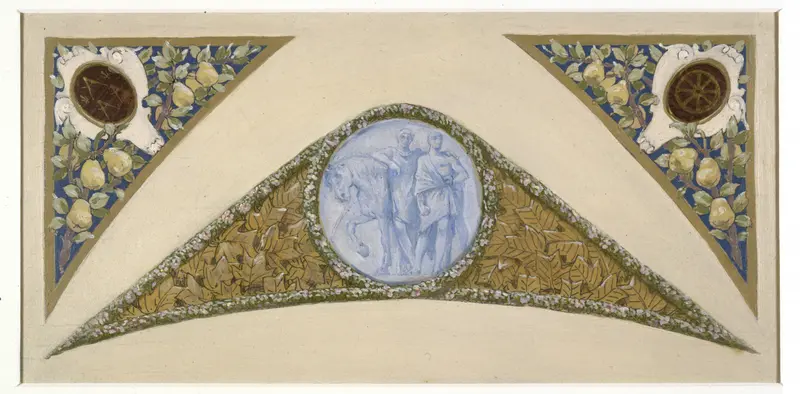
Esquisse pour l'escalier des Fêtes de l'Hôtel de Ville de Paris , Gémeaux
Luc-Olivier Merson
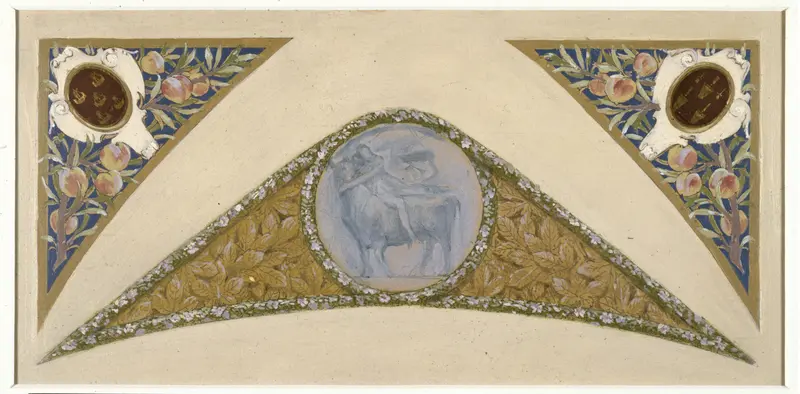
Esquisse pour l'escalier des Fêtes de l'Hôtel de Ville de Paris , Taureau
Luc-Olivier Merson
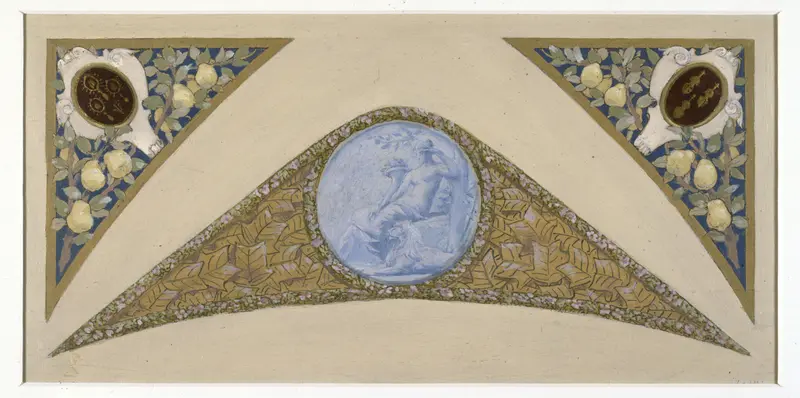
Esquisse pour l'escalier des Fêtes de l'Hôtel de Ville de Paris , Vierge
Luc-Olivier Merson
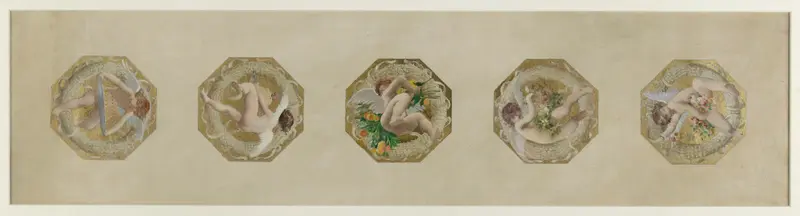
Esquisse pour l'Hôtel de Ville de Paris, escalier des Fêtes , les génies des fêtes
Luc-Olivier Merson
Esquisse pour l'escalier des Fêtes de l'Hôtel de Ville de Paris , Verseau
Luc-Olivier Merson





