
Esther knielt voor Ahasverus — History & Facts
Can paint confess what words never could? In Esther knielt voor Ahasverus, the tumult of emotions is captured in a single moment, where ecstasy and dread intertwine beneath the brush of Lucas van Leyden. Look closely at the central figures: Esther kneels, her poised elegance radiating strength amid vulnerability. Focus on the delicate fabric of her gown, the intricate patterns echoing her royal status, while her clasped hands convey reverence and desperation. Notice how the warm, golden light cascades from the left, illuminating the scene with a tender glow, casting shadows that hint at the brewing tension.
The composition draws your eye deeper into the narrative, inviting you to explore the nuances of this pivotal moment. Delve into the contrasts that give this work its emotional heft. The grandeur of the throne juxtaposes Esther’s humble posture, emphasizing her sacrifice for her people. The expressions of the onlookers reveal a spectrum of emotions—from curiosity to judgment—mirroring the internal conflict within Esther herself.
Each detail, from the opulence of the setting to the subtlety of Esther's gaze, adds layers to the overarching themes of power, courage, and devotion. Created in 1518 during the Northern Renaissance in Leiden, Holland, this piece emerged as the artist grappled with the innovations of humanism and the religious reforms reshaping Europe. Van Leyden was influenced by the burgeoning focus on individual experience and expression in art, striving to depict deep emotional narratives through meticulous attention to detail, bridging the gap between the sacred and the personal.
More Artworks by Lucas van Leyden
Browse all →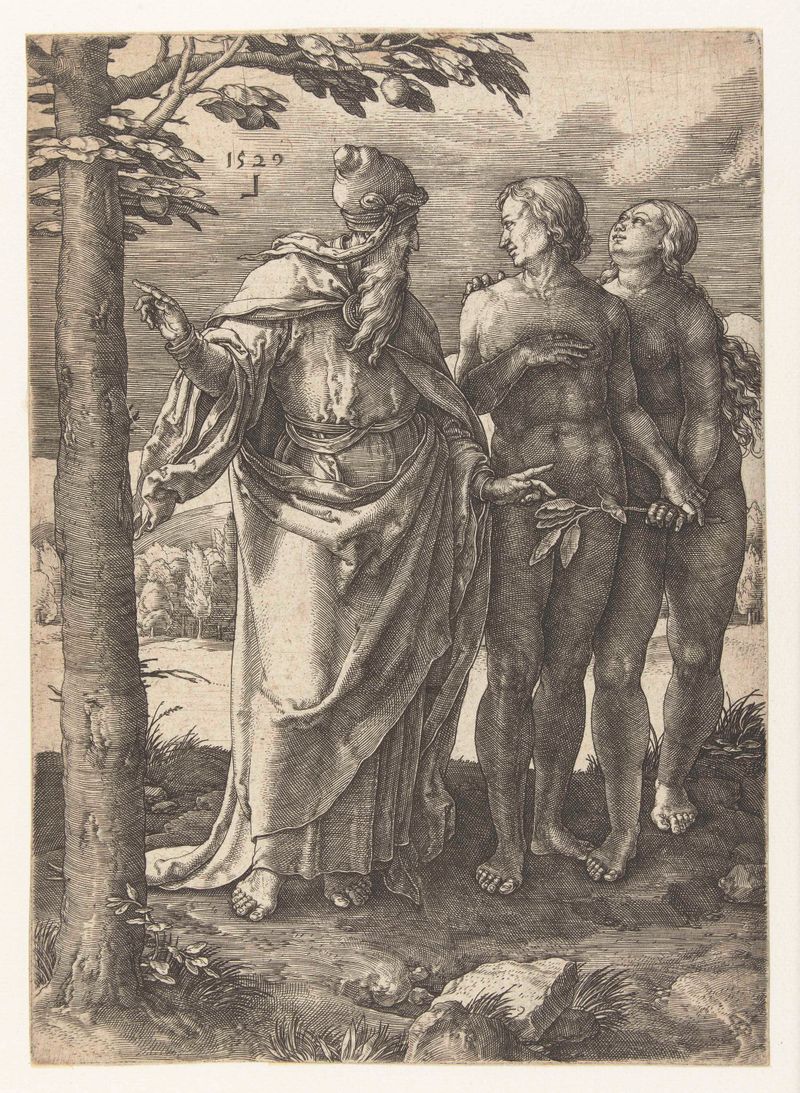
Het eerste verbod
Lucas van Leyden
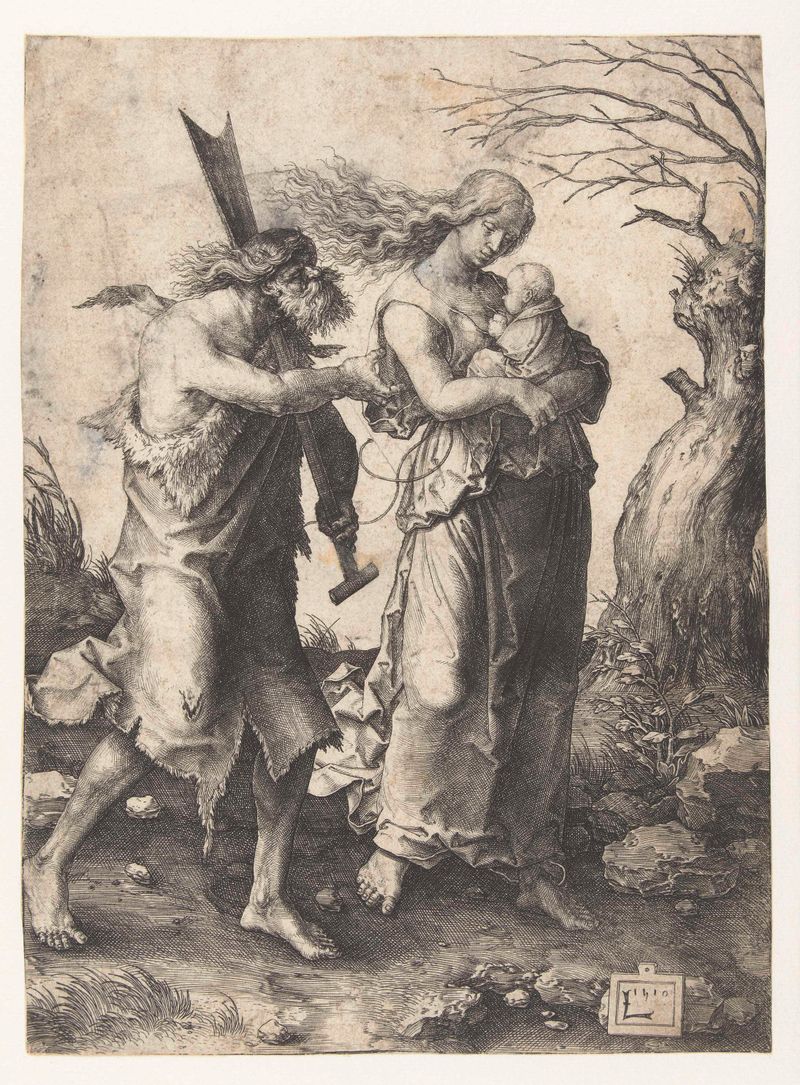
Adam en Eva na de verdrijving uit het paradijs
Lucas van Leyden
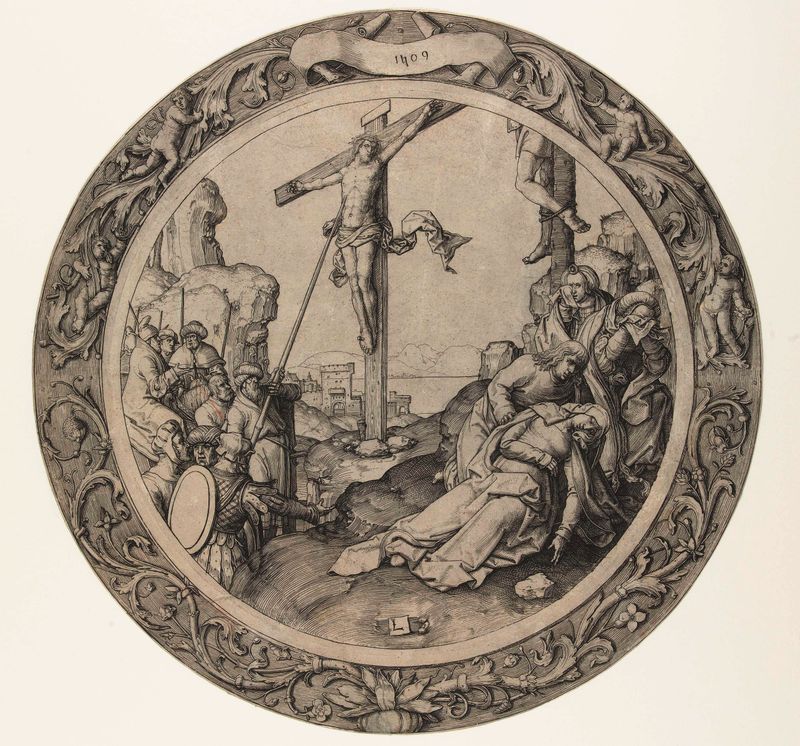
De kruisiging
Lucas van Leyden
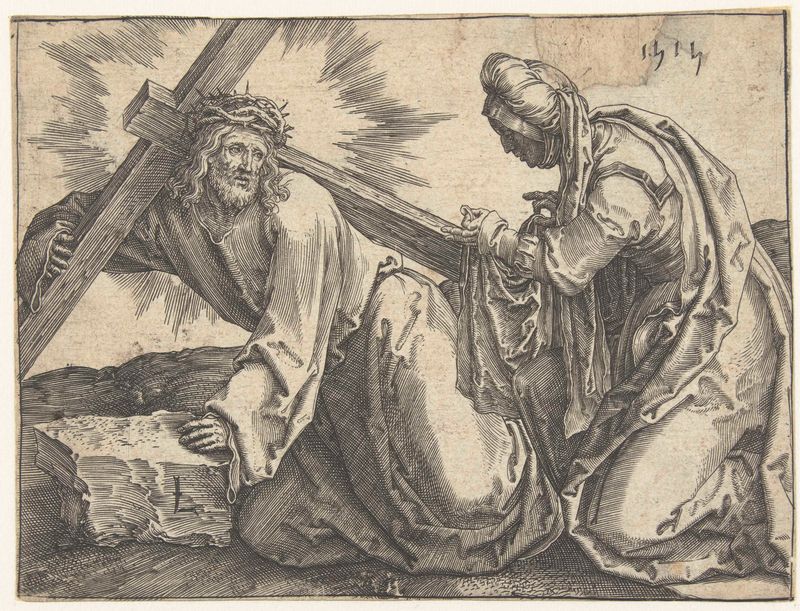
Kruisdraging
Lucas van Leyden
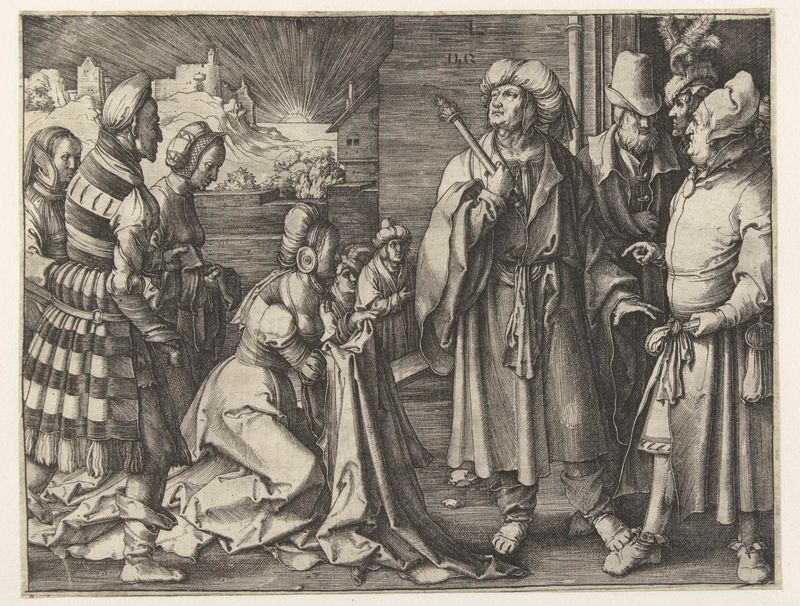
De vrouw van Potifar beschuldigt Jozef
Lucas van Leyden
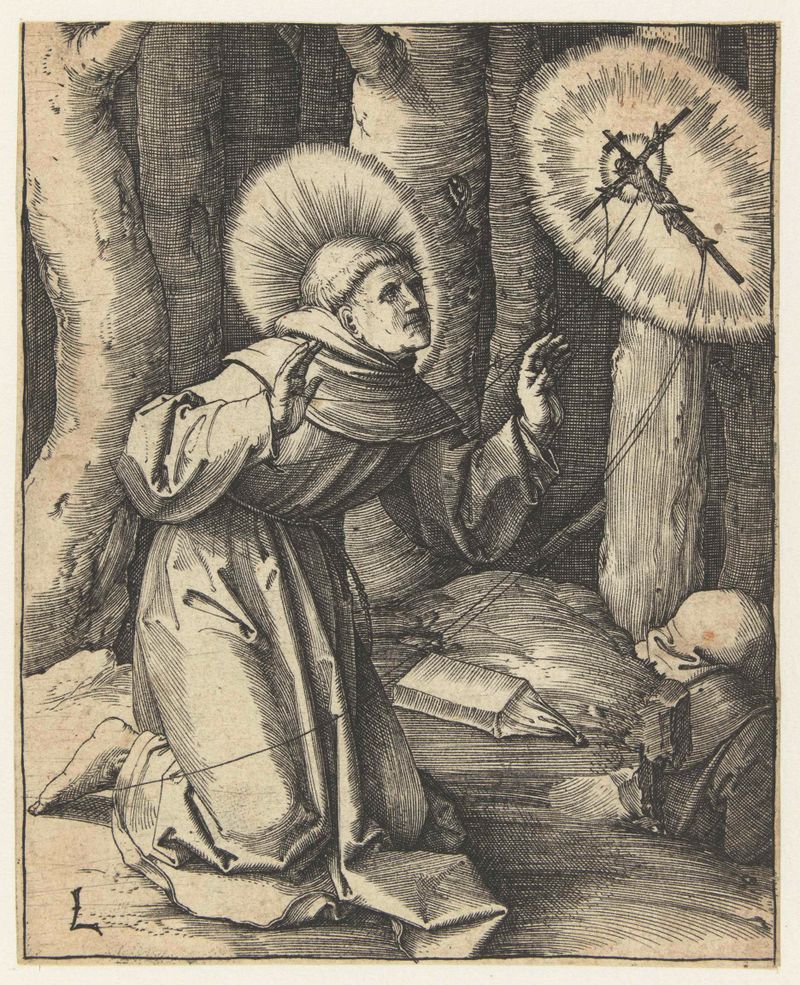
De stigmatisatie van de heilige Franciscus
Lucas van Leyden
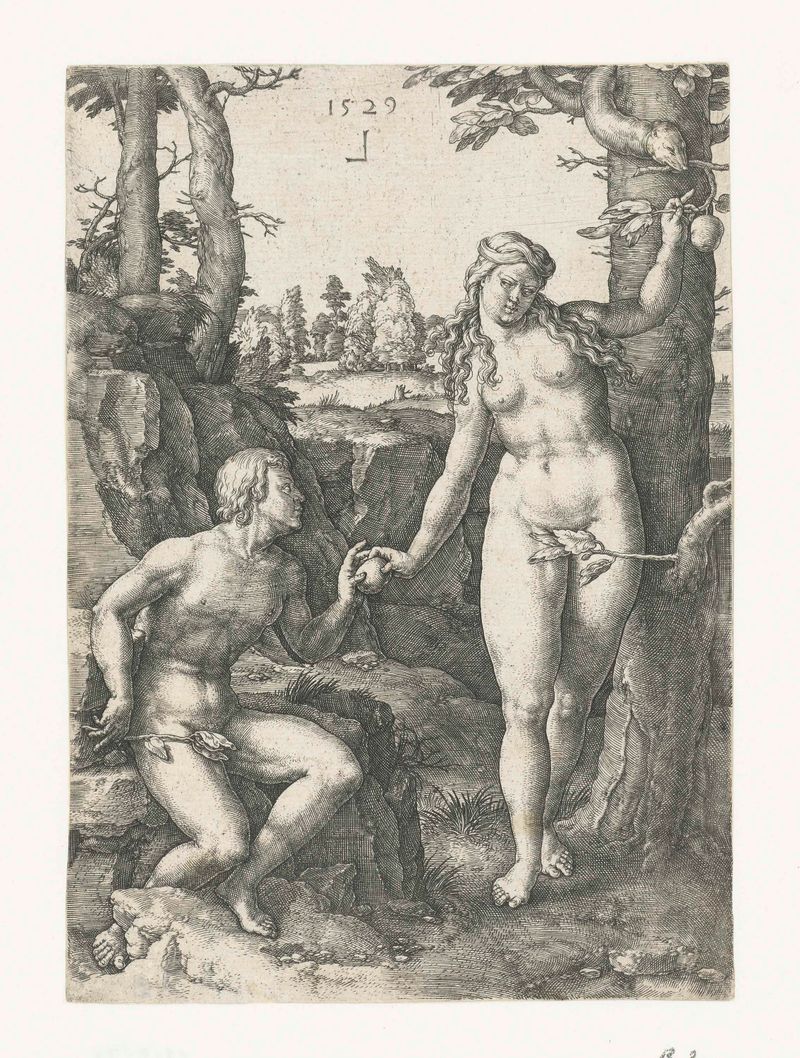
De zondeval
Lucas van Leyden
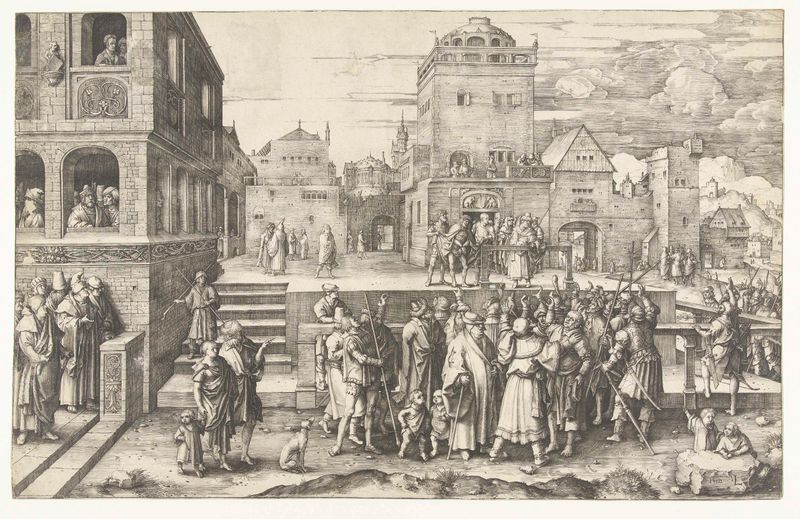
De grote Ecce Homo
Lucas van Leyden
Maria met kind
Lucas van Leyden

Doornenkroning
Lucas van Leyden
More Religious Art
Browse all →
The Return of the Prodigal Son
Rembrandt van Rijn

The Garden of Earthly Delights
El Bosco

Count Orgaz’ funeral
El Greco

The Hundred Guilder Print: the central piece with Christ preaching, the plate arched
Rembrandt van Rijn

The Descent from the Cross
Rogier van der Weyden

The return of the prodigal son
Rembrandt van Rijn