Eurasian Scops Owl — History & Facts
What first grips the eye in Eurasian Scops Owl is the drama of the hunt, frozen at its climax: one owl, wings splayed in a defensive arch, pins a butterfly beneath its talons, while its companion stands upright, gaze fixed and unblinking. The encounter is not just about predator and prey—it is about the tension of the moment, the silent communication between the two birds, and the watchful intelligence in those golden eyes. The careful rendering of the feathers, each line and shade, draws the viewer into the tactile reality of the scene, while the evergreen boughs and scattered red berries set a stage that is both wild and precise.
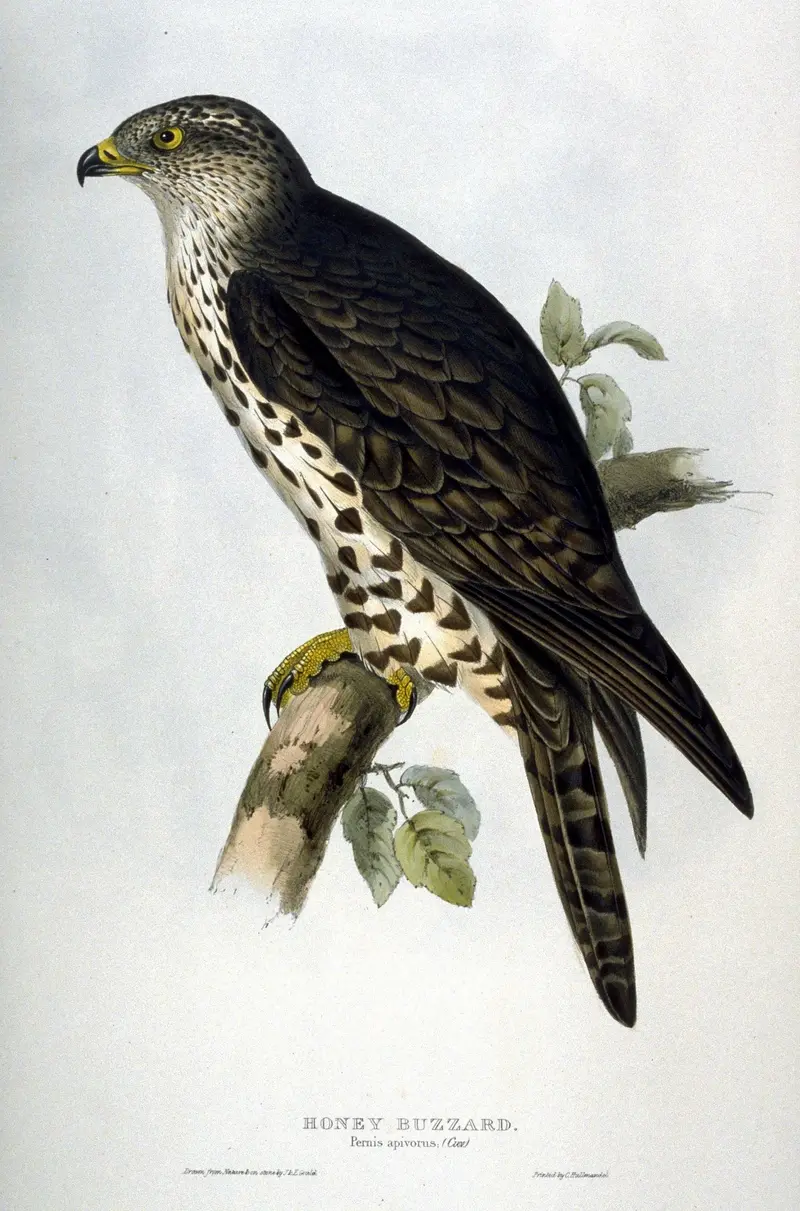
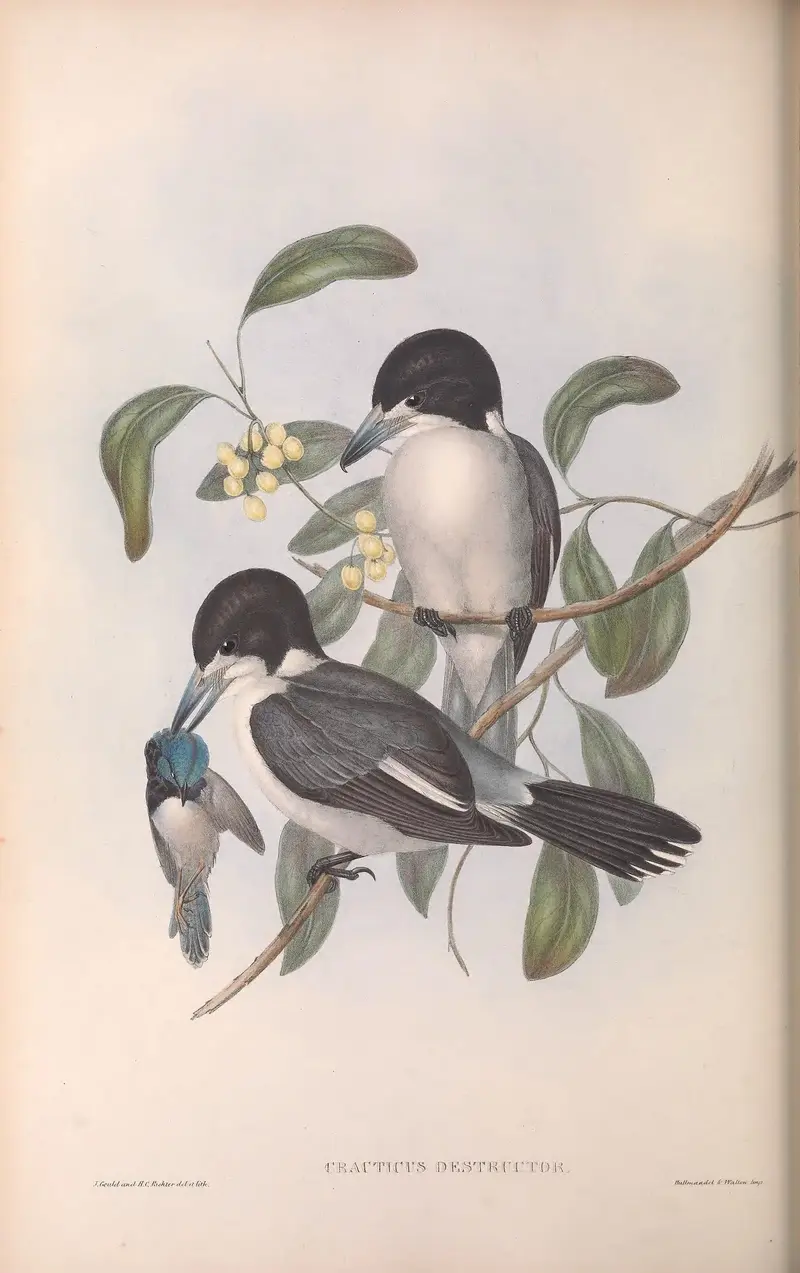
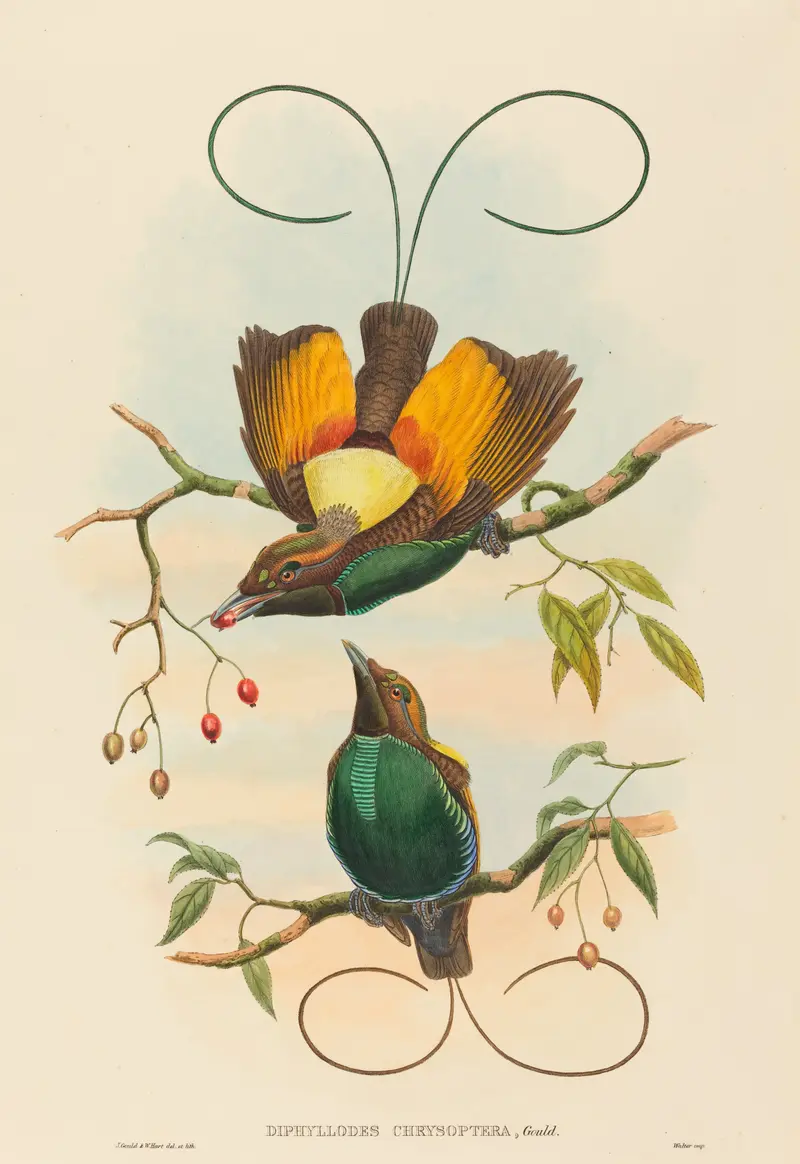
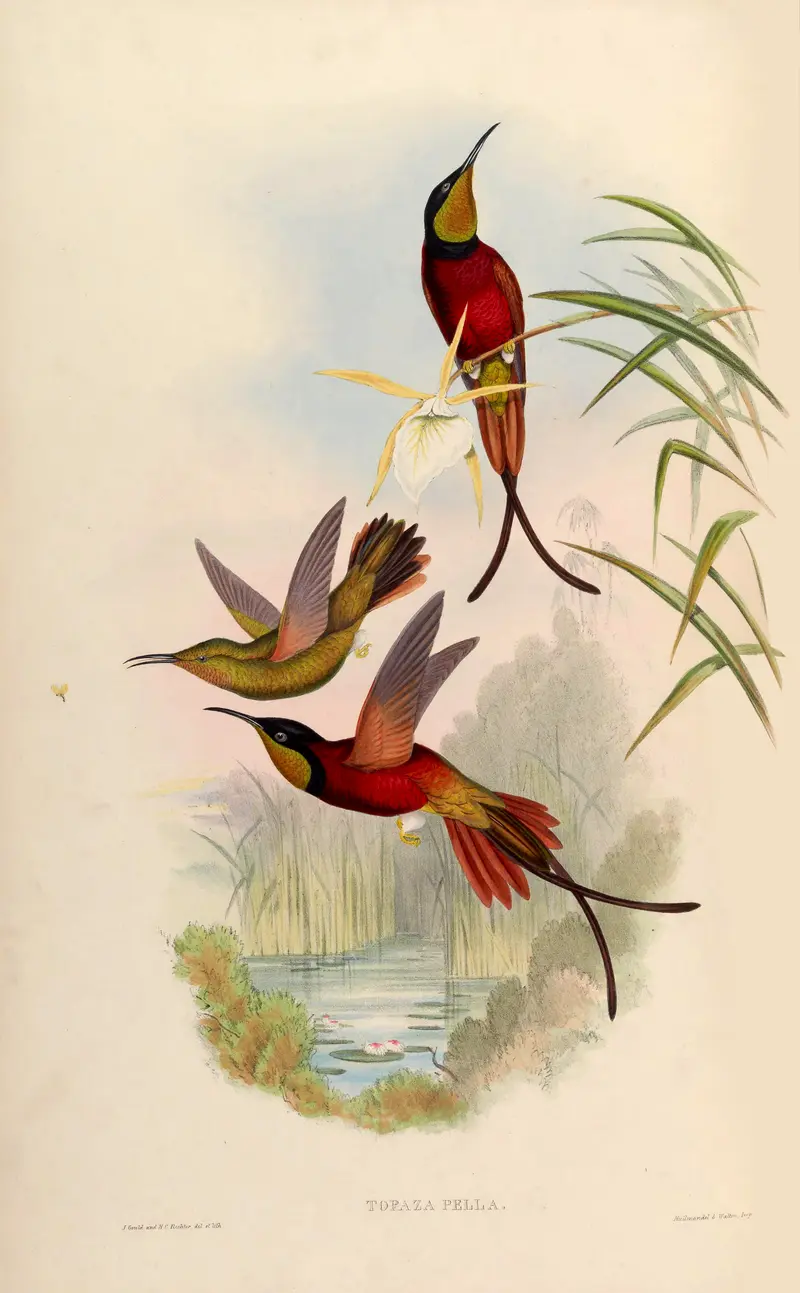
The palette is cool and restrained, letting the sudden burst of orange and black in the butterfly’s wings become a focal point, a flash of life and color that heightens the sense of immediacy. This illustration belongs to the world of nineteenth-century natural history, when artists like John Gould brought the wonders of British wildlife to a wider public through lavishly illustrated volumes. Published in London in 1873 as part of "The Birds of Great Britain," this work is both a scientific document and an aesthetic object, created for collectors, scholars, and enthusiasts eager to catalogue and admire the diversity of the natural world. In that era, such works were prized for their blend of accuracy and artistry, often produced in collaboration with skilled lithographers and colorists.
History has kept few traces of the individual journeys of these images, but their purpose remains vivid: to bring the viewer face-to-face with the quiet drama of nature, inviting a second, closer look.