
Evening game of kolf in a Dutch village — History & Facts
What first draws the eye in Evening game of kolf in a Dutch village is the quiet tension between leisure and labor: a trio of men, absorbed in their game, stand on a simple, boxed-in playing field, their dark figures outlined by the last golden light of day. The composition gently leads the viewer from the foreground, where the kolf balls and mallets rest, to the rustic thatched cottages and the tall, sheltering trees beyond. Each figure is caught in a moment of concentration—one poised to strike, another watching, a third waiting—while, to the left, a pair of villagers and a white dog add a note of domestic calm.
The palette is all soft browns and ochres, the fading daylight lending a hush to the scene, as if the world is pausing to watch this humble contest. Painted in 1649, this work belongs to a moment in Dutch art when scenes of everyday village life were prized for their familiarity and gentle humor. In the mid-seventeenth century, such paintings were often commissioned by prosperous burghers who sought reminders of rural roots or simple pleasures. The game of kolf, an ancestor of modern golf, was a popular pastime in the Netherlands, and artists like Aert van der Neer captured these moments not for grand history, but for the quiet drama of ordinary lives.
Little is recorded about the specific journey of this painting, but its survival speaks to the enduring appeal of scenes that invite us to linger, noticing the play of light, the shape of a tree, or the stillness before a swing. Look again at the players’ intent faces and the soft glow that bathes the village: this is a world both distant and instantly familiar.
More Artworks by Aert van der Neer

A Moonlit River Landscape With Figures Standing By A Gate, A Village Beyond
Aert van der Neer
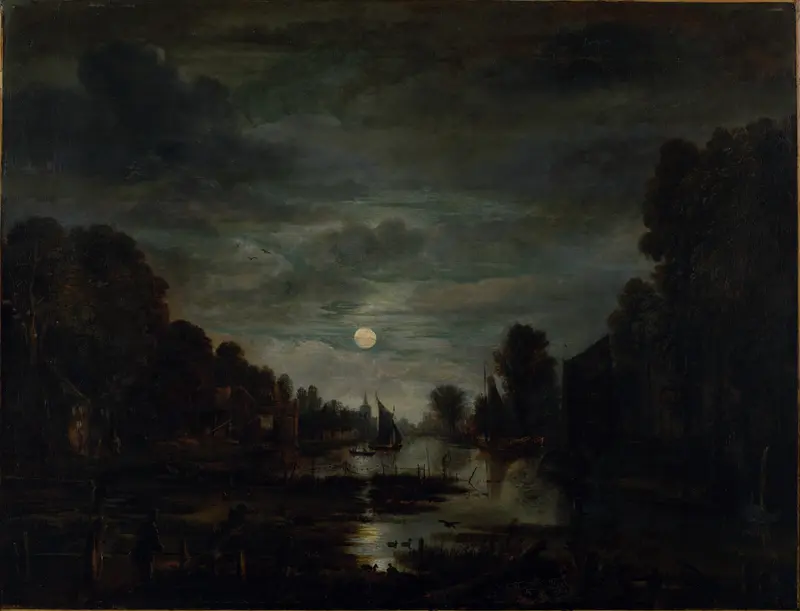
River Landscape in Moonlight
Aert van der Neer
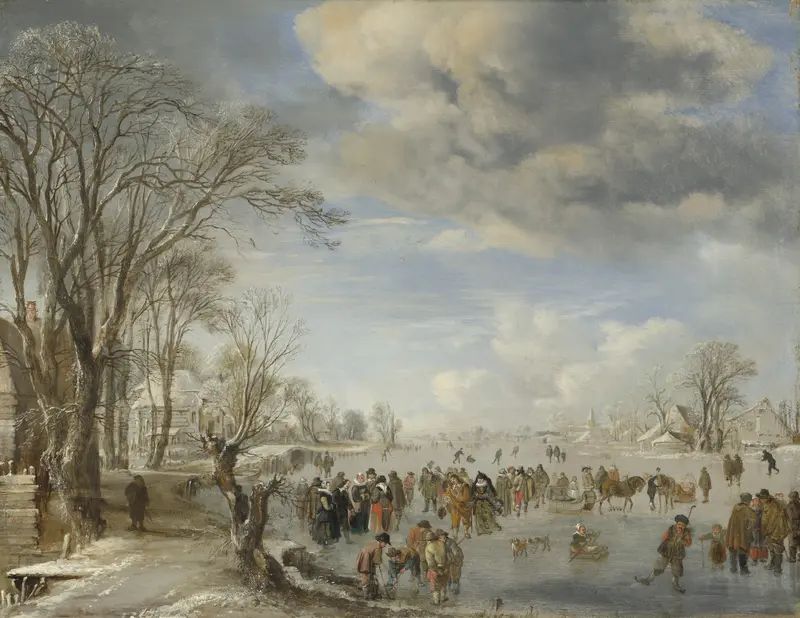
Winter in Holland – Skating Scene
Aert van der Neer

River Landscape
Aert van der Neer
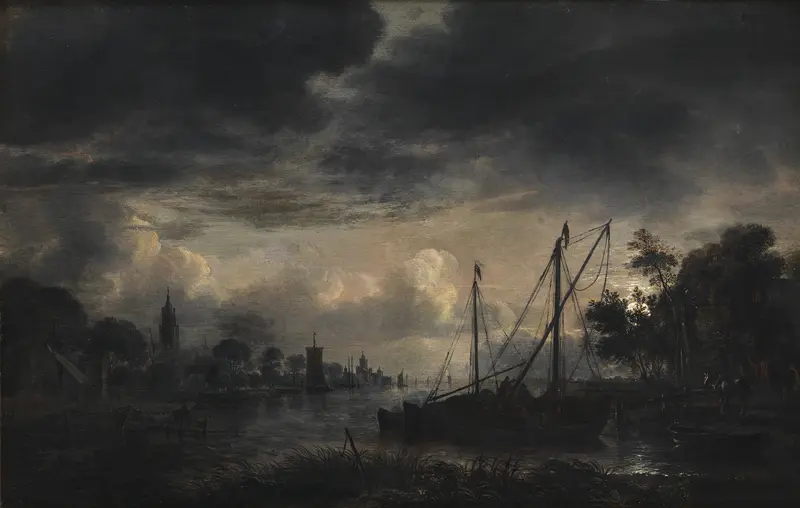
River Landscape in Moonlight
Aert van der Neer
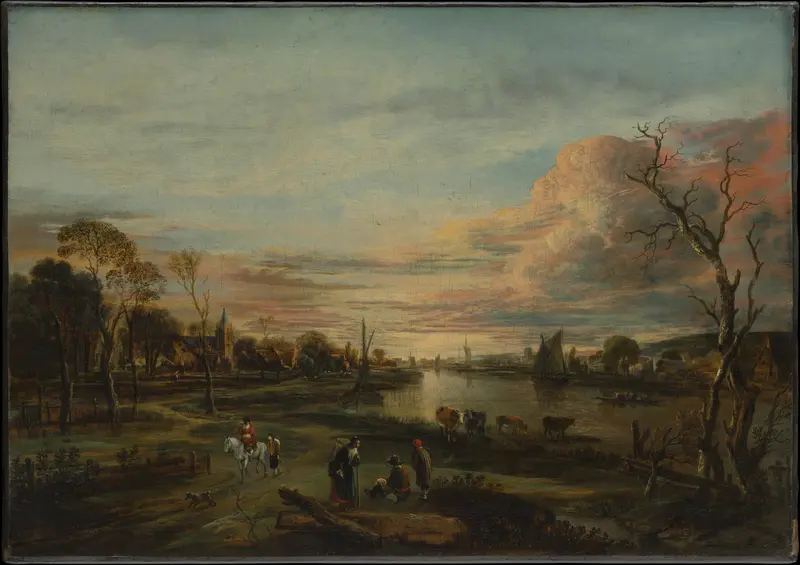
Landscape at Sunset
Aert van der Neer
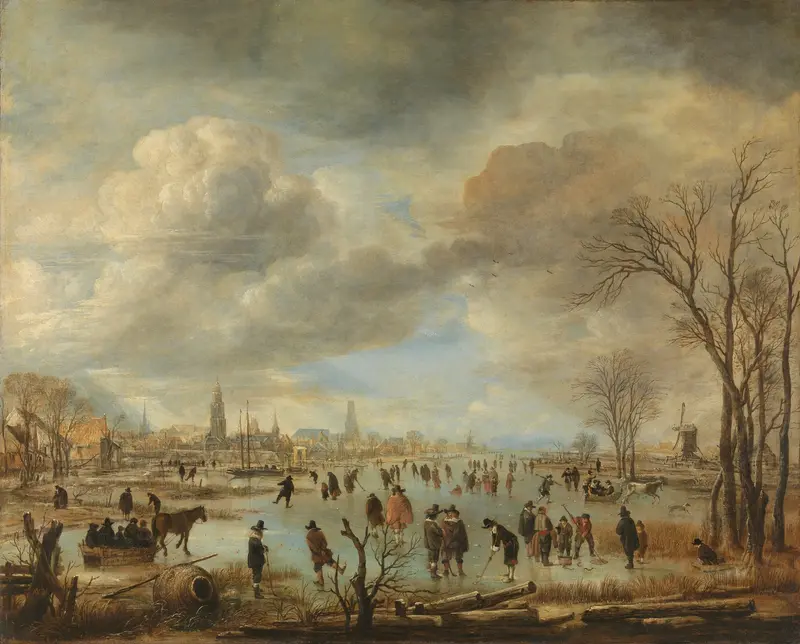
Winter Landscape near a Town with Kolf Players and Horse-Drawn Sleighs
Aert van der Neer

Winter Landscape with Skaters on a Frozen River
Aert van der Neer
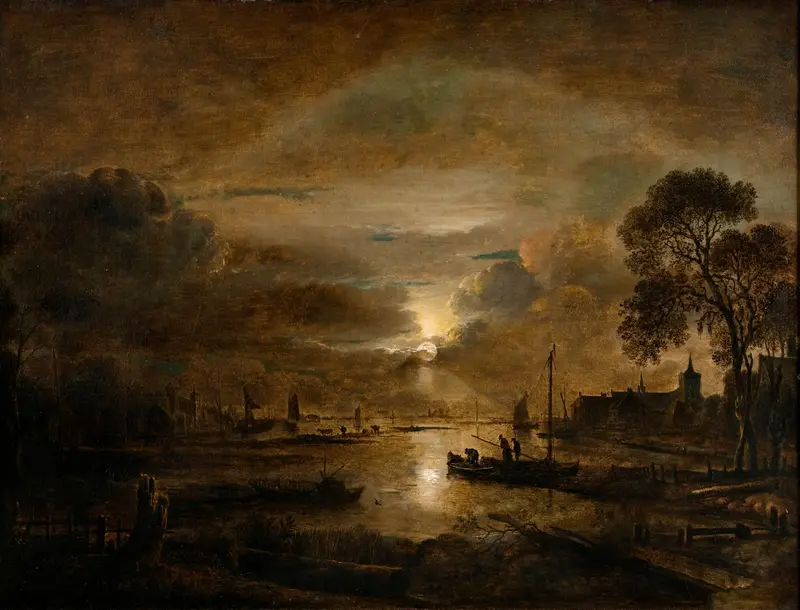
Moonlight at a Dutch River
Aert van der Neer
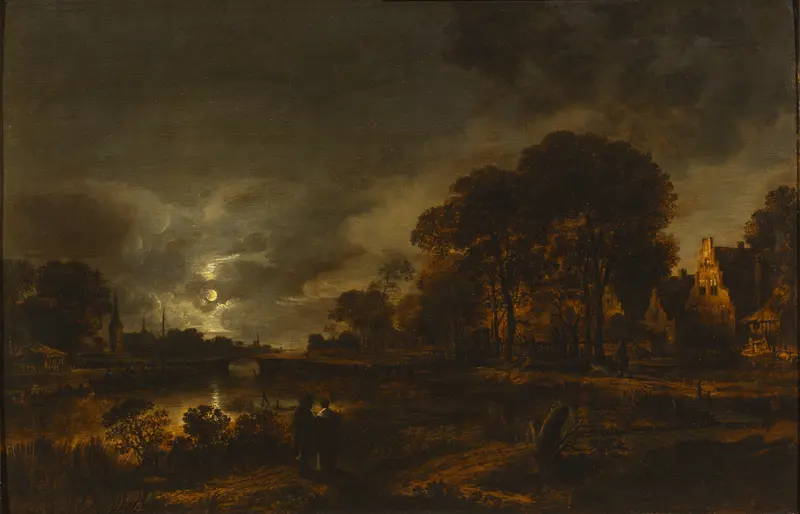
Moonlight Landscape
Aert van der Neer
More Genre Scene Art

Banquet of the Officers of the St George Civic Guard
Frans Hals

Rembrandt and Saskia in the Scene of the Prodigal Son
Rembrandt van Rijn

Bal du moulin de la Galette
Pierre-Auguste Renoir

Quadrille at the Moulin Rouge
Henri de Toulouse-Lautrec

A Burial at Ornans
Gustave Courbet

When Will You Marry?
Paul Gauguin