
Evening Glow — History & Facts
The eye is immediately drawn to the molten sun, low on the horizon, its reflection just brushing the edge of a still lake. The sky is a tapestry of gold, green, and burning orange, each hue layered so precisely that the air itself seems to shimmer. A stand of trees, their trunks delicate but resolute, forms a dark screen that both shelters and frames the view.
In the foreground, a solitary deer stands at the water’s edge, its silhouette pausing the scene in a moment of quiet watchfulness. The painting’s light is not merely a background effect—it is the subject, transforming the landscape into a stage for the fleeting, electric hush of dusk. Works like this, by Albert Bierstadt, belong to a moment in American art when landscape painting was both a celebration and a promise. The 19th century saw artists and patrons alike captivated by the vastness of the continent, and painters of the Hudson River School and beyond sought to capture the grandeur and possibility of the land.
While little is recorded about this specific painting, now in the collection of the Denver Art Museum and shared via Facebook, its mood and palette speak to the era’s fascination with nature’s drama and serenity. Such works were often commissioned or purchased by those eager to bring the American wilderness—untamed, luminous, and full of potential—into their homes. The deer, the hush, and the glow invite us to linger, as viewers once did, in the long pause between day and night.
More Artworks by Albert Bierstadt

A Storm in the Rocky Mountains, Mt. Rosalie
Albert Bierstadt
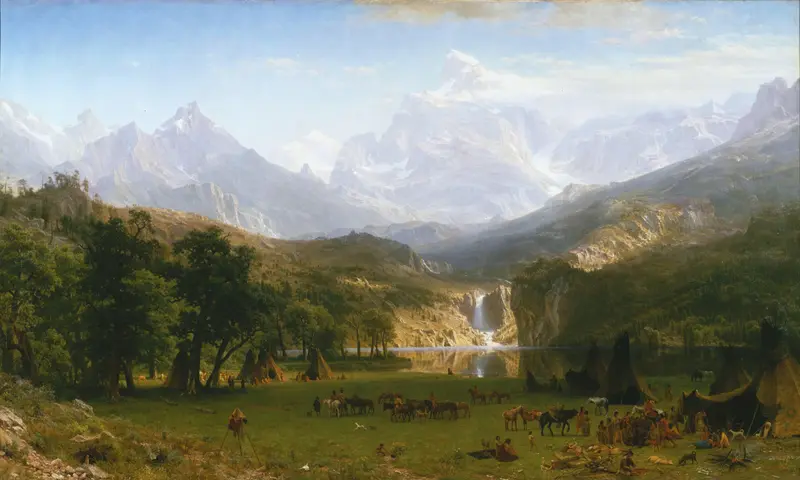
The Rocky Mountains, Lander's Peak
Albert Bierstadt
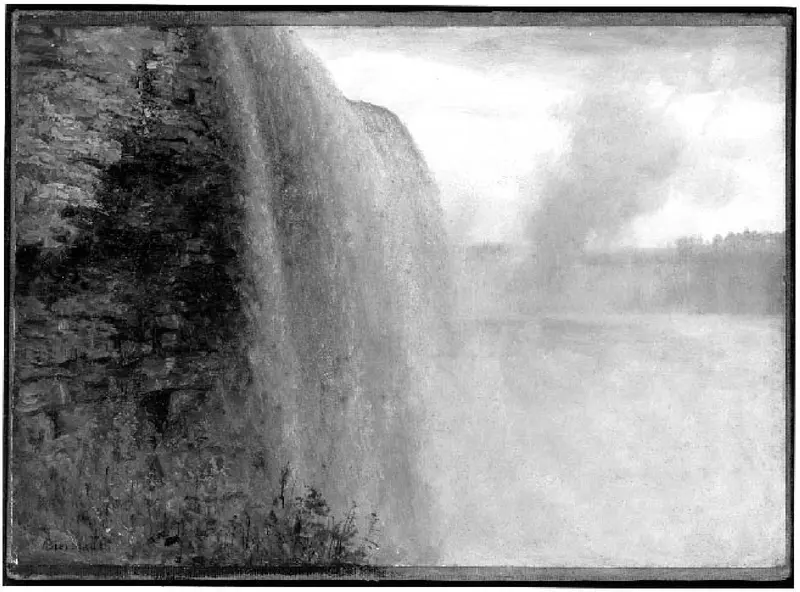
Niagara from the American Side
Albert Bierstadt
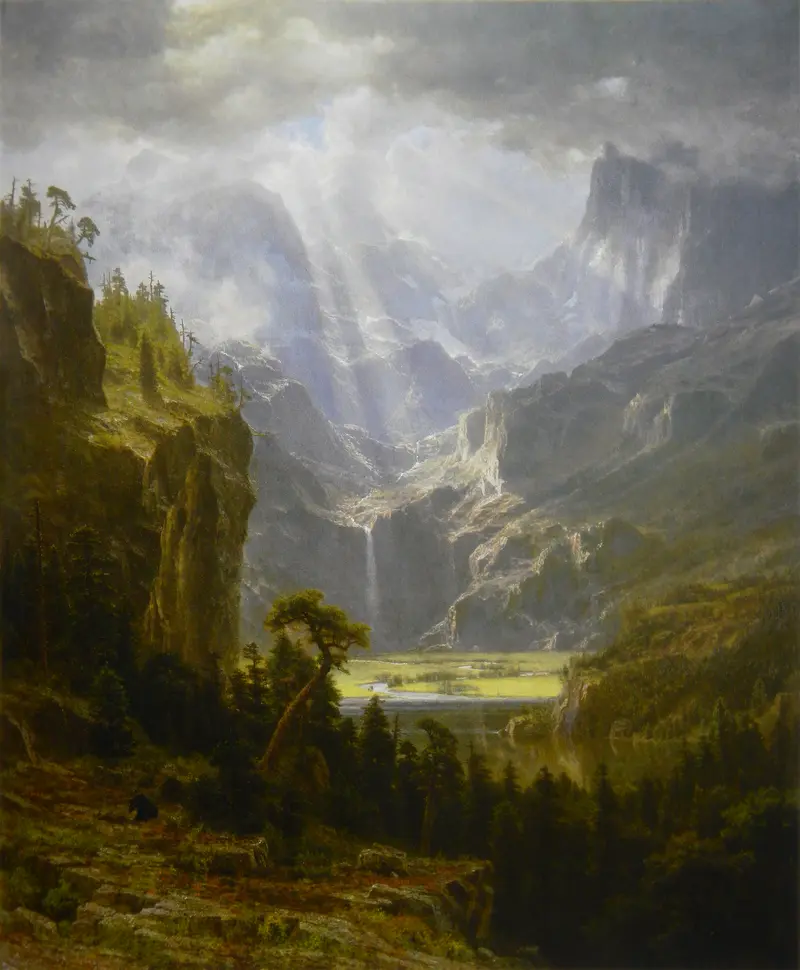
Rocky Mountains, Lander’s Peak
Albert Bierstadt

Valley of the Yosemite
Albert Bierstadt
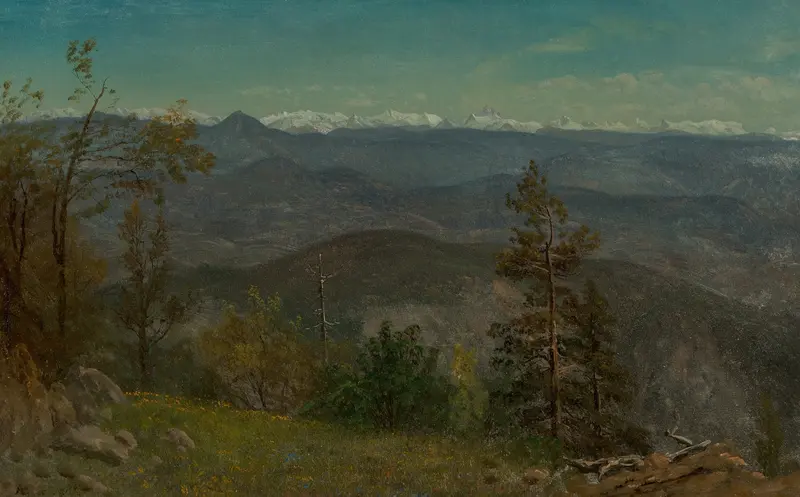
Yosemite Valley, California
Albert Bierstadt
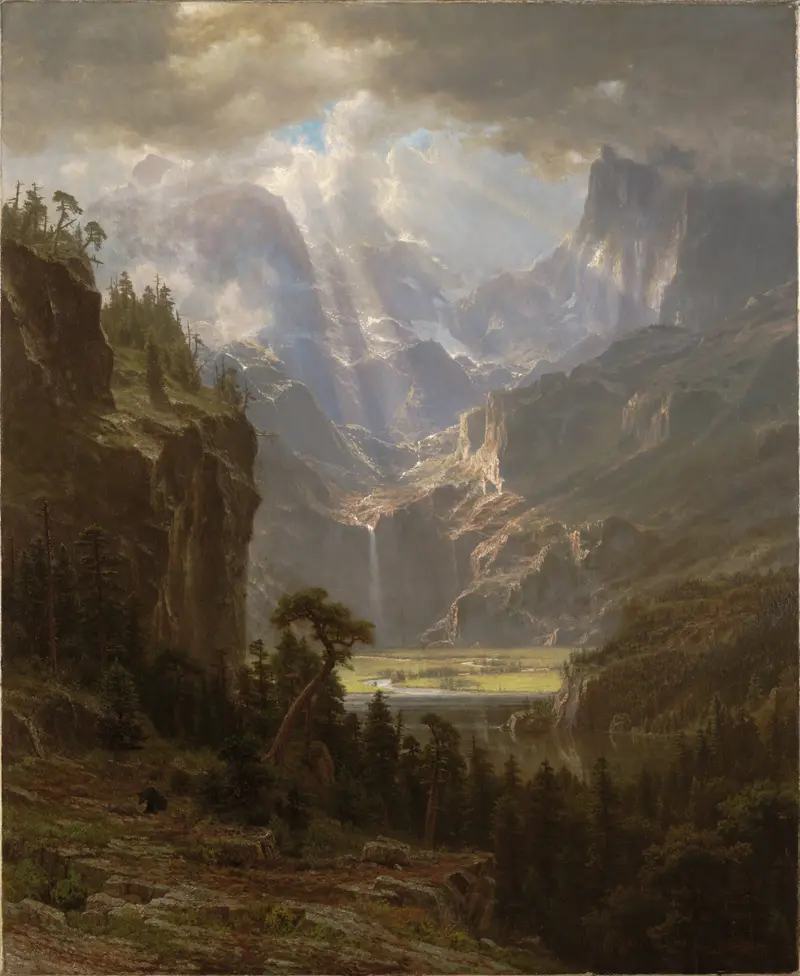
Rocky Mountains, "Lander's Peak"
Albert Bierstadt

Laramie Peak
Albert Bierstadt
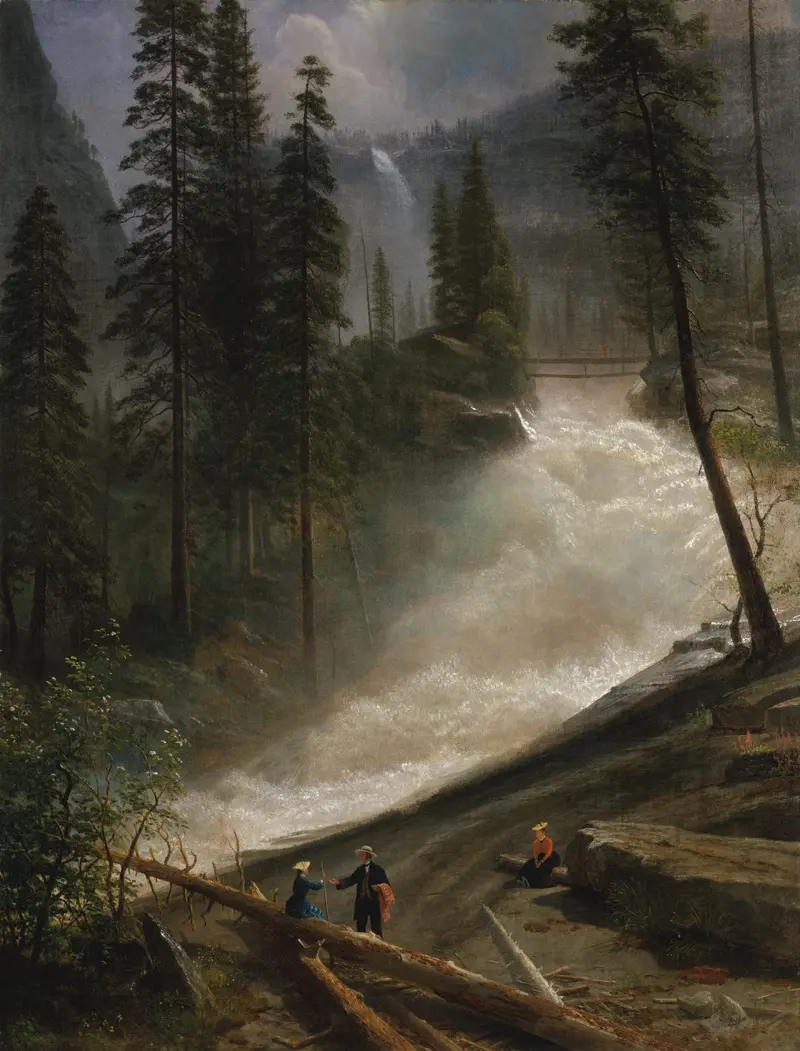
Nevada Falls, Yosemite
Albert Bierstadt
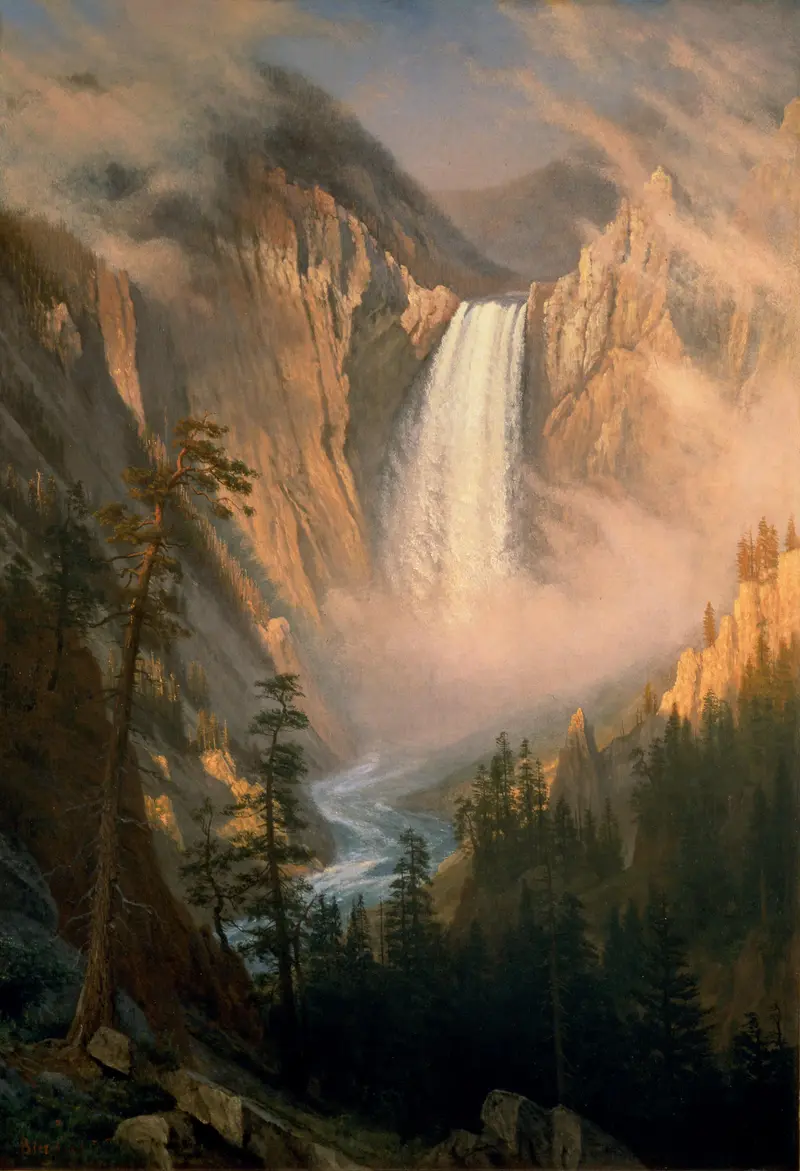
Yellowstone Falls
Albert Bierstadt
More Landscape Art

The Starry Night
Vincent van Gogh

View of Delft
Johannes Vermeer

Water Lilies
Claude Monet

The Grand Canal, Venice, looking north-west from the Ca' Corner to the Ca' Contarini degli Scrigni, with the campanile of Santa Maria della Carità
Canaletto

Windsor Castle
Canaletto

The Grand Canal looking North-East from the Palazzo Dolfin-Manin to the Rialto Bridge
Canaletto