
Evening in the Kempen — History & Facts
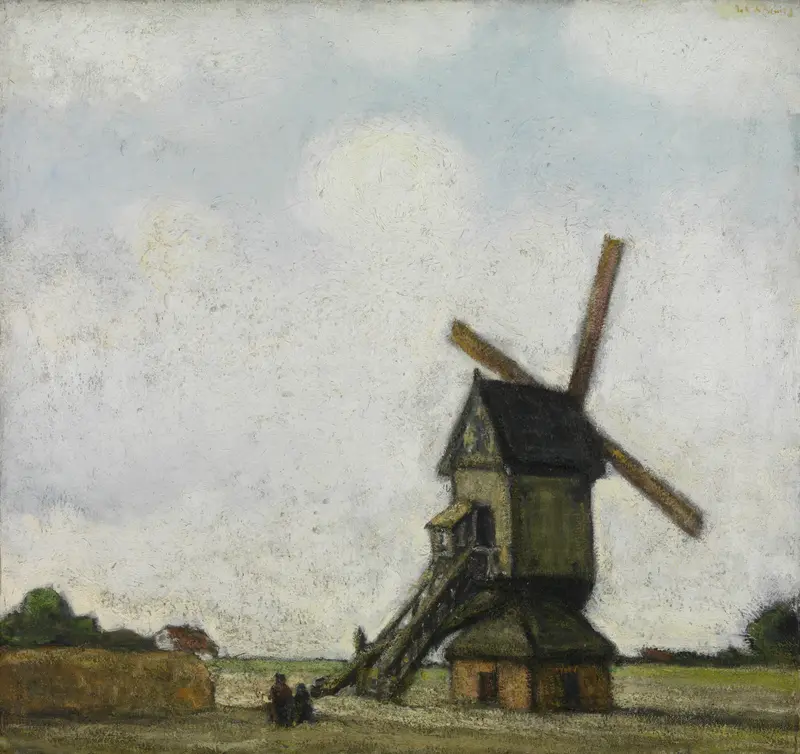
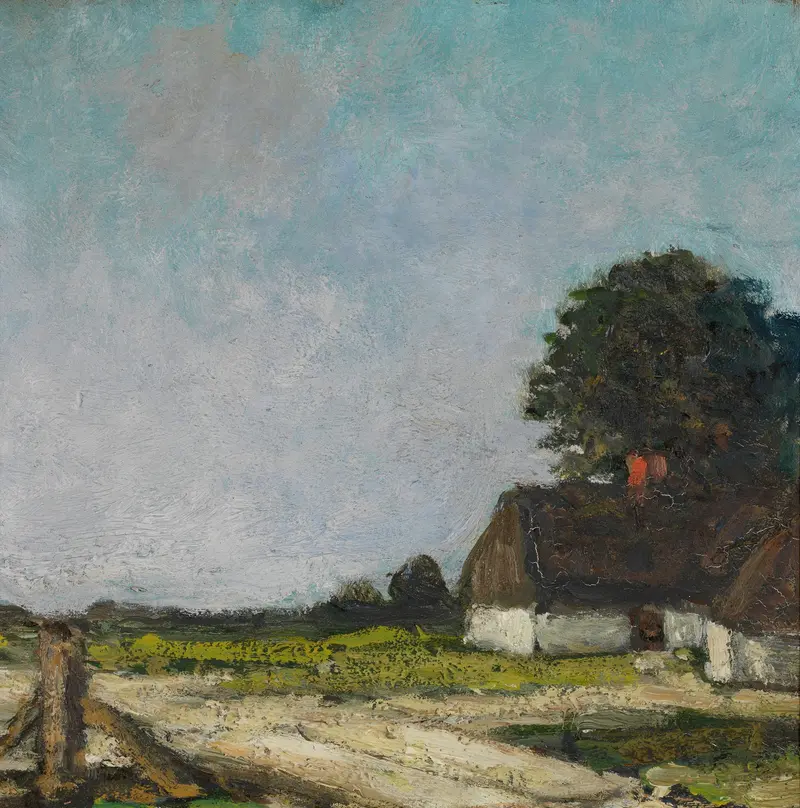
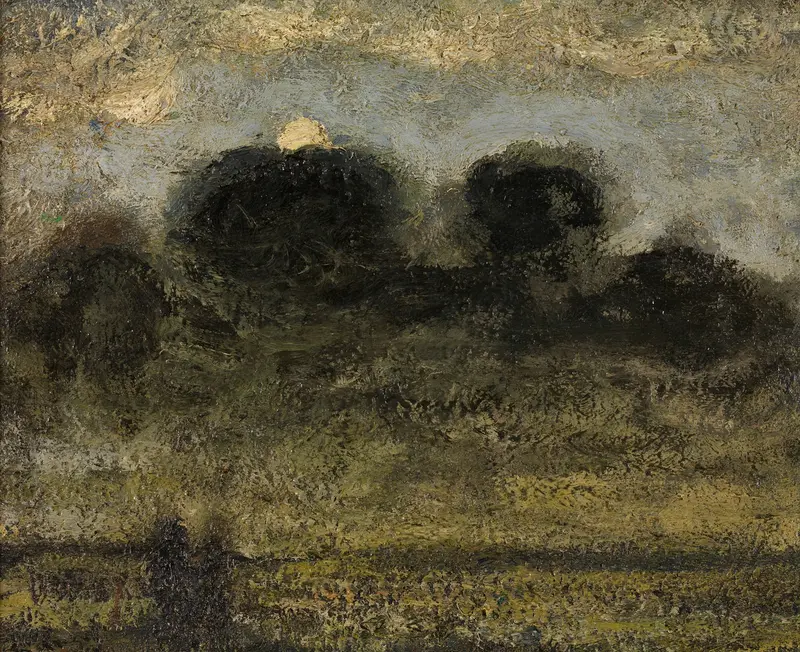
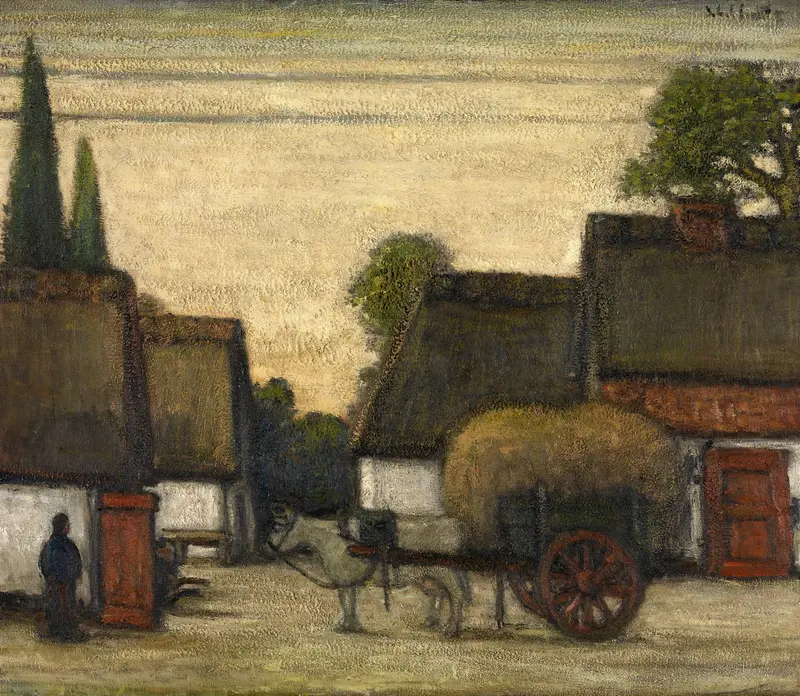
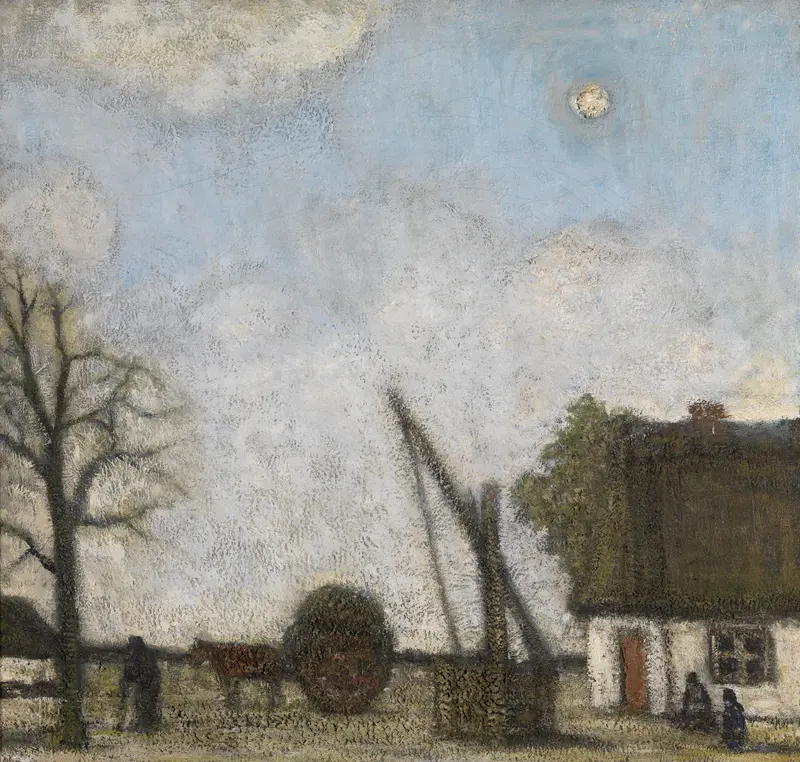
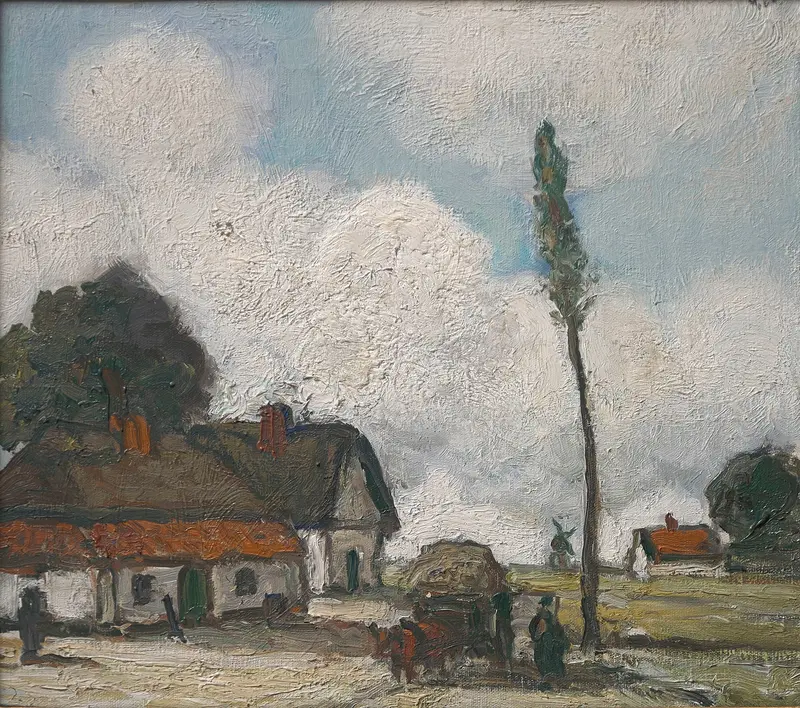
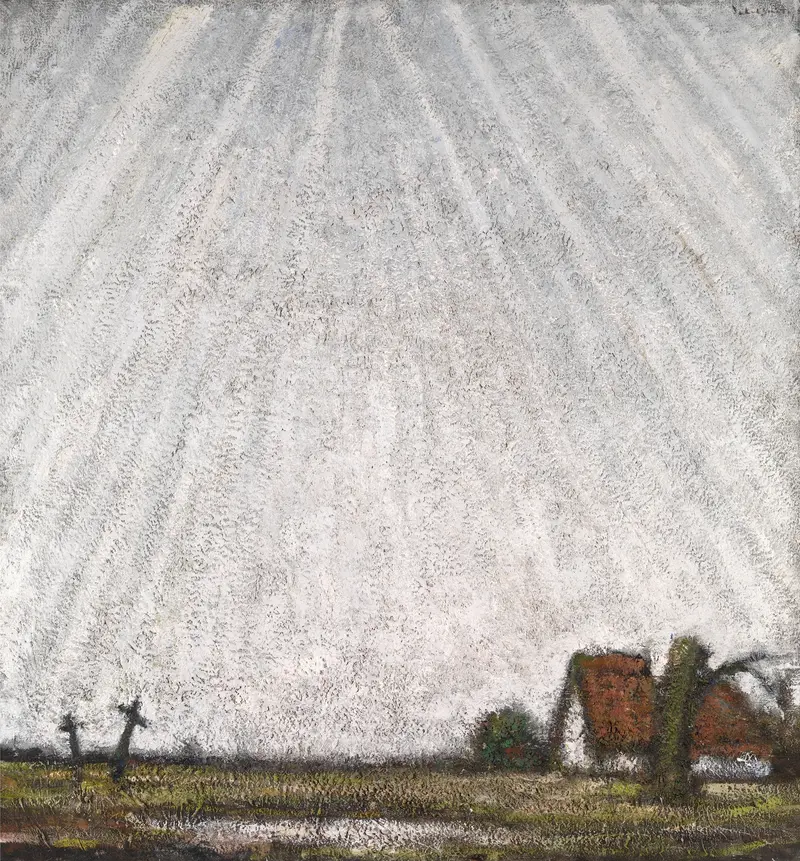
The interplay of light and shadow invites us to explore a realm where the ordinary transforms into the extraordinary. Look to the horizon where a soft, golden light spills across the landscape, casting a gentle glow on the rolling fields. The subtle palette of greens and browns perfectly encapsulates the tranquility of dusk, guiding your gaze along the undulating lines of the land. Each stroke blends harmoniously, allowing the viewer to feel the weight of the quiet evening air, instilling a sense of peace that seems to whisper secrets of the earth. Delve deeper into the painting, and you’ll find a serene contrast between the vibrant hues of nature and the stillness of the moment.
The distant trees stand resolute, their silhouettes creating a sacred boundary between the earthly and the divine. A lone figure in the foreground, perhaps a farmer or a dreamer, embodies an intimate connection to this landscape, suggesting humanity’s search for meaning amid life’s mundane rhythms. The delicate balance of these elements reflects an underlying tension between solitude and the collective experience of existence. Created in the late 19th century, the artist crafted this work during a period of rising interest in realism and naturalism in art.
Working in the Netherlands, he aimed to capture the rural beauty of his homeland while exploring the spiritual dimensions of everyday life. It was a time when many artists were seeking to connect deeply with their surroundings, prompting a renewed appreciation for the divine found within nature itself.
More Artworks by Jakob Smits

More Landscape Art

Starry Night
Vincent van Gogh

View of Delft
Johannes Vermeer

Water Lilies
Claude Monet

The Grand Canal, Venice, looking north-west from the Ca' Corner to the Ca' Contarini degli Scrigni, with the campanile of Santa Maria della Carità
Canaletto

Windsor Castle
Canaletto

The Grand Canal looking North-East from the Palazzo Dolfin-Manin to the Rialto Bridge
Canaletto