View in the Kempen with a Plank Bridge — History & Facts
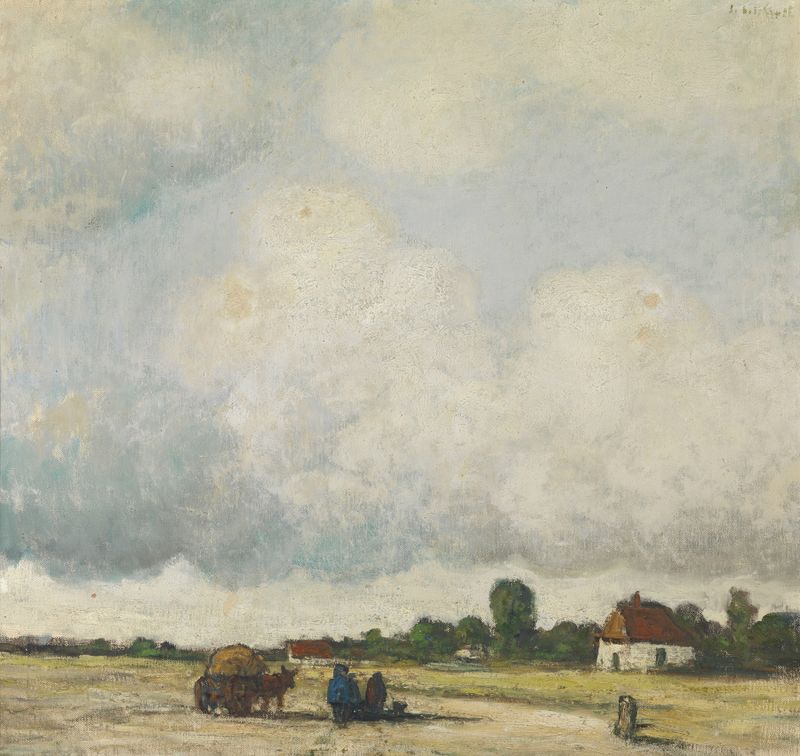
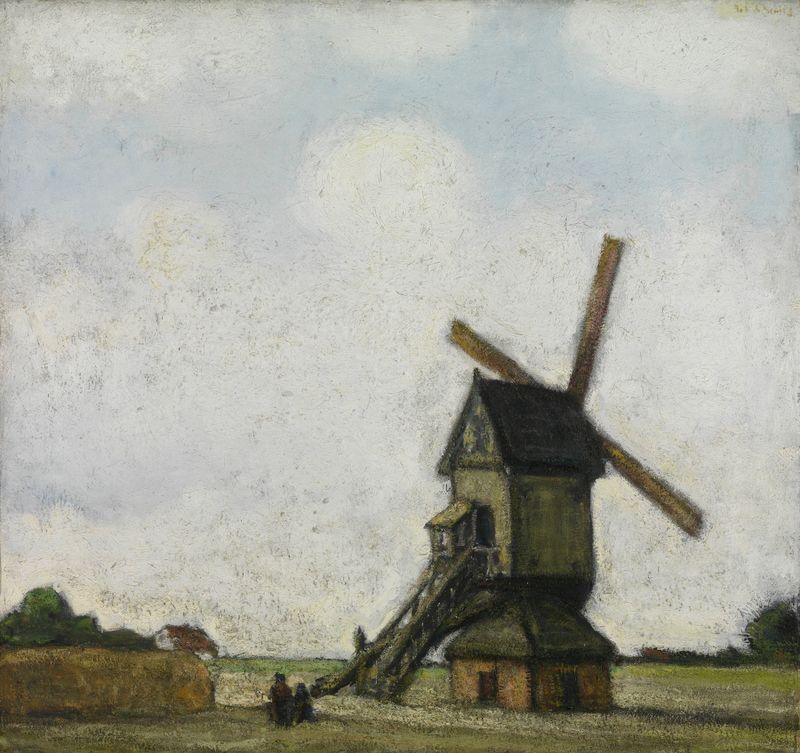
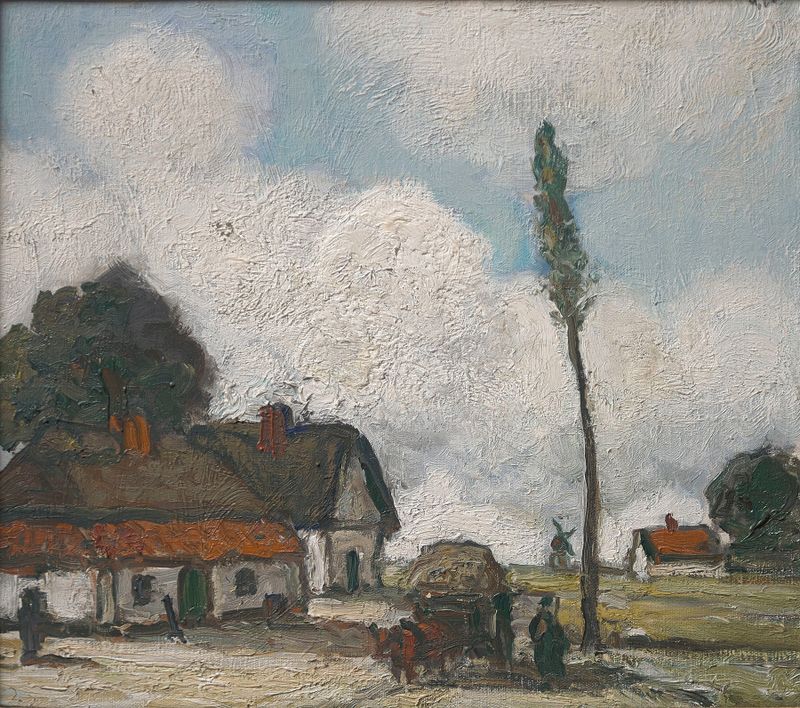
What if beauty was never meant to be finished? In the delicate balance of nature and artistry, serenity finds its home. Look to the left at the gently winding river, its surface shimmering under the soft embrace of sunlight that dances across the water. Notice how the vibrant greens of lush foliage contrast with the warm browns of the rustic plank bridge, drawing the viewer's eye toward the inviting path ahead. The sky, painted in gentle hues of blue, compliments the tranquil scene, while wisps of clouds add a layer of depth, inviting reflection.
Every stroke feels intentional, guiding us through the artist's vision of a peaceful landscape. Yet, within this idyllic tableau lies a quiet tension. The bridge, though inviting, suggests a journey that may never reach completion, representing the nature of life itself — a path that leads us into the unknown. The serenity of the scene contrasts with the underlying sense of longing; we yearn to explore the landscape beyond what is visible.
The harmony of colors and composition unites to create a moment suspended in time, where stillness captures both beauty and the fleeting nature of existence. Created during a period of artistic experimentation, this work reflects the 19th-century Dutch landscape tradition. Smits, influenced by both realism and impressionism, painted many serene vistas, capturing the world as he saw it. He crafted View in the Kempen with a Plank Bridge at a time when artists were increasingly drawn to the beauty of nature, seeking to evoke emotion and connection through their brush.