
Falaise Verte Et Mer — History & Facts
Where does light end, and longing begin? In the delicate strokes of the canvas, the essence of desire and the beauty of fleeting moments are captured, inviting us to immerse ourselves in a world both serene and distant. Look to the left at the vibrant green cliff, its textured surface alive with dappled sunlight, where soft brushwork evokes the rhythm of nature. Notice how the sea unfurls below, painted in serene blues and whites that ripple like whispers, perfectly contrasting the rich greens above. The sunlight dances across the scene, enhancing the sense of warmth and tranquility, while hints of lavender in the sky suggest an impending dusk, creating a harmonious balance between land, sea, and sky. The interplay of light and shadow captures a poignant yearning, perhaps for the simplicity of nature or the fleeting passage of time.
The juxtaposition of the solid, earthy cliff against the fluid, ever-changing ocean evokes a tension between permanence and transience. Each element in this landscape speaks to a longing for connection — to the land, to the moment, and perhaps to a deeper understanding of oneself. Painted in 1898, this work emerged during a transformative period for the artist as he navigated personal challenges and shifting artistic trends. Living in the south of France, Renoir was captivated by the beauty of the landscape and the light that painted it, even as he grappled with the changing dynamics of Impressionism.
This piece reflects both his ongoing evolution as an artist and his enduring affinity for nature's embrace.
More Artworks by Pierre-Auguste Renoir
Browse all →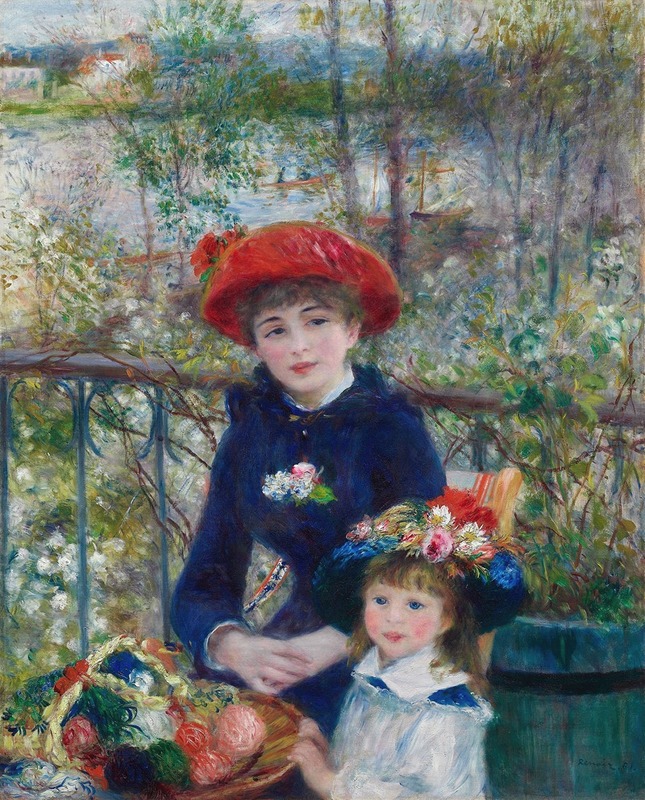
Two Sisters (On the Terrace)
Pierre-Auguste Renoir
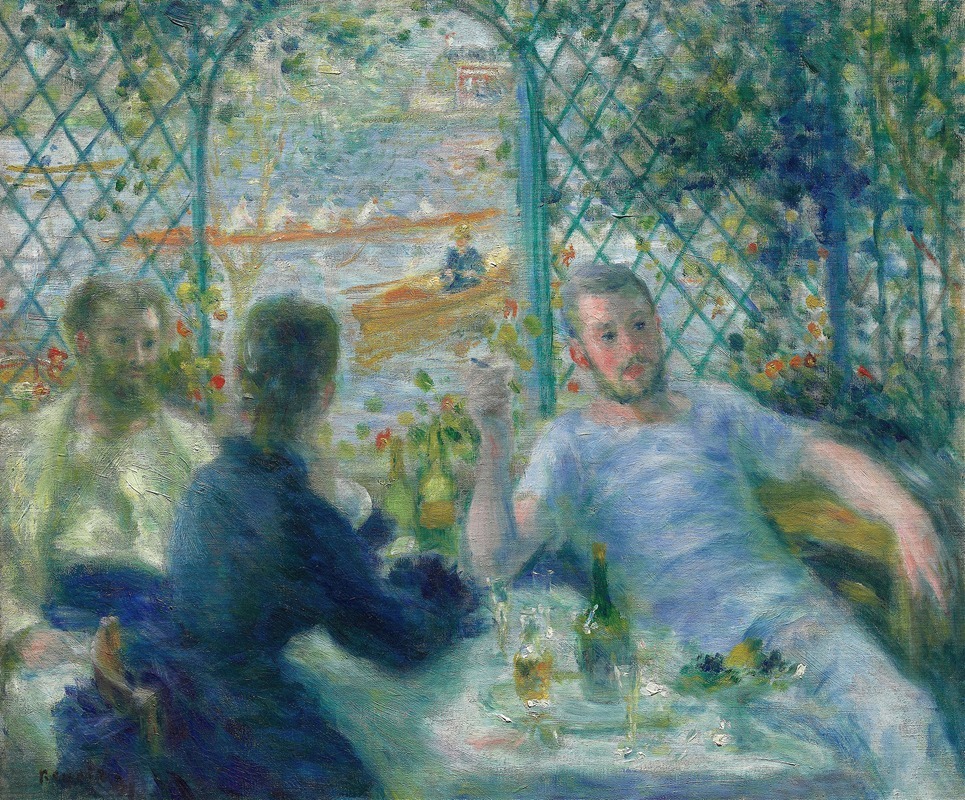
Lunch at the Restaurant Fournaise (The Rowers' Lunch)
Pierre-Auguste Renoir
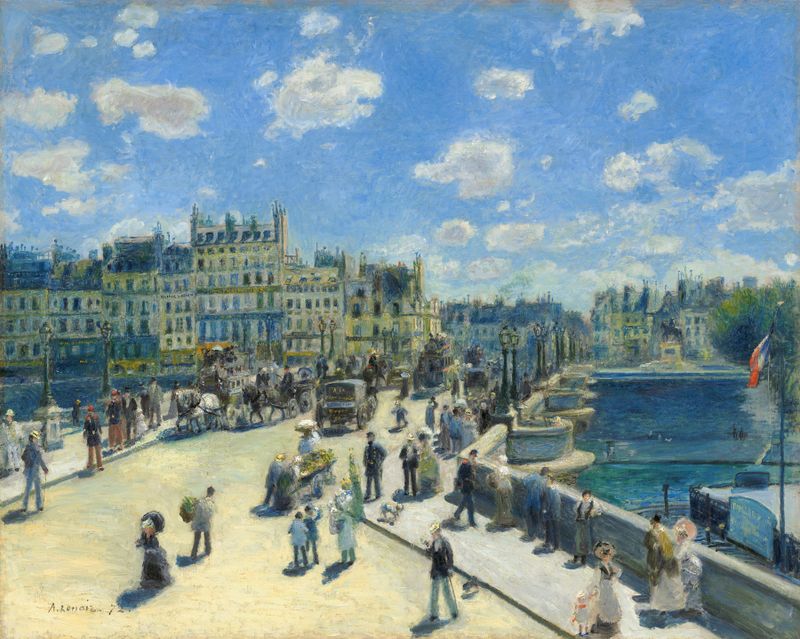
Pont Neuf, Paris
Pierre-Auguste Renoir
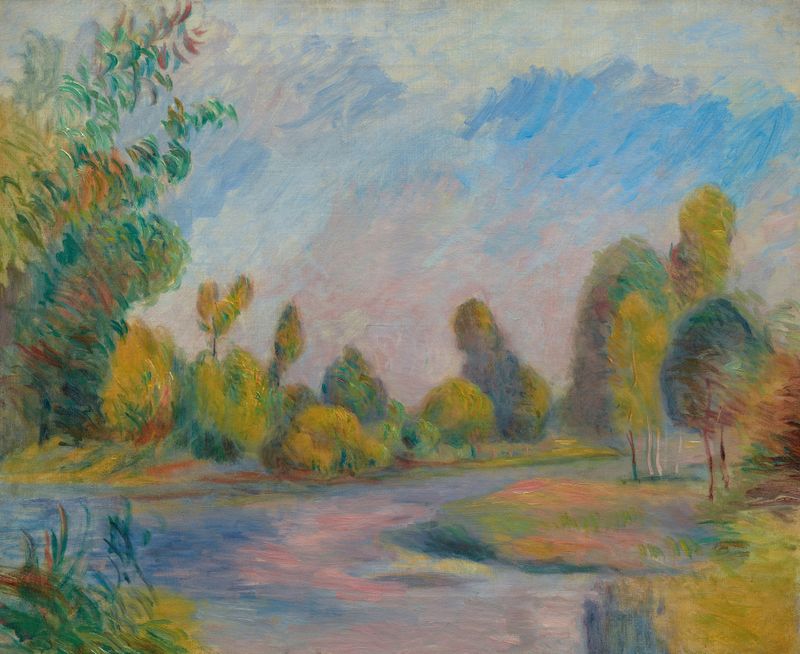
Au bord de la rivière
Pierre-Auguste Renoir

Near the Lake
Pierre-Auguste Renoir
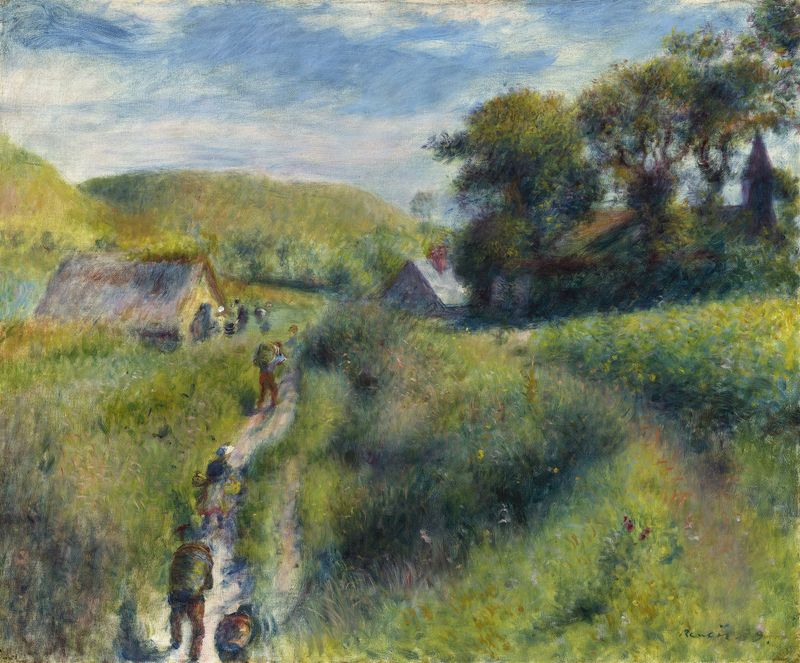
The Mussel Harvest
Pierre-Auguste Renoir

The Seine at Chatou
Pierre-Auguste Renoir
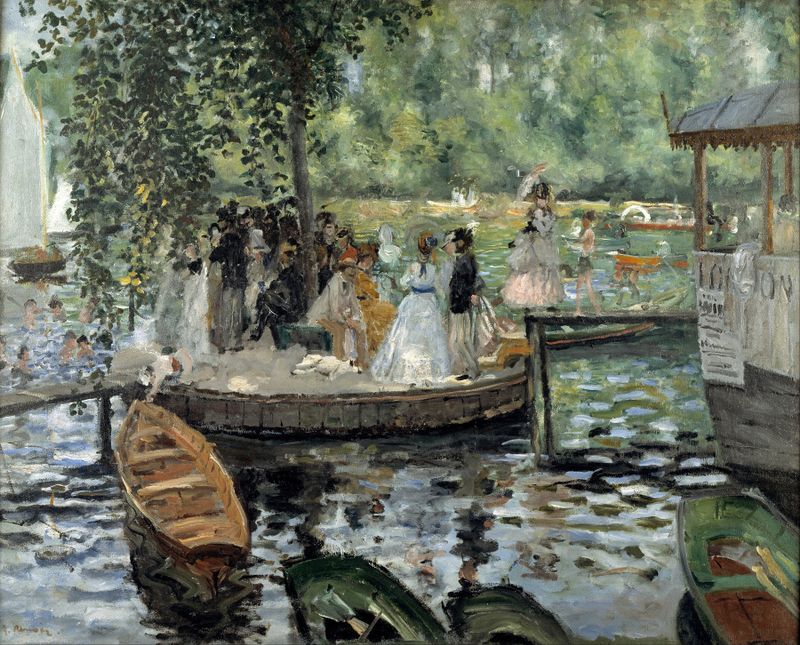
La Grenouillère
Pierre-Auguste Renoir
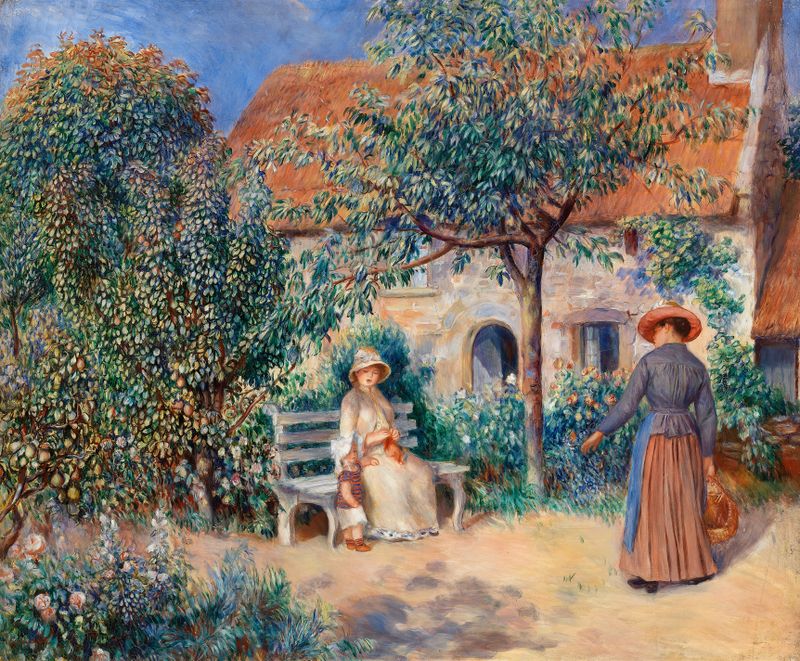
In Brittany (En Bretagne)
Pierre-Auguste Renoir
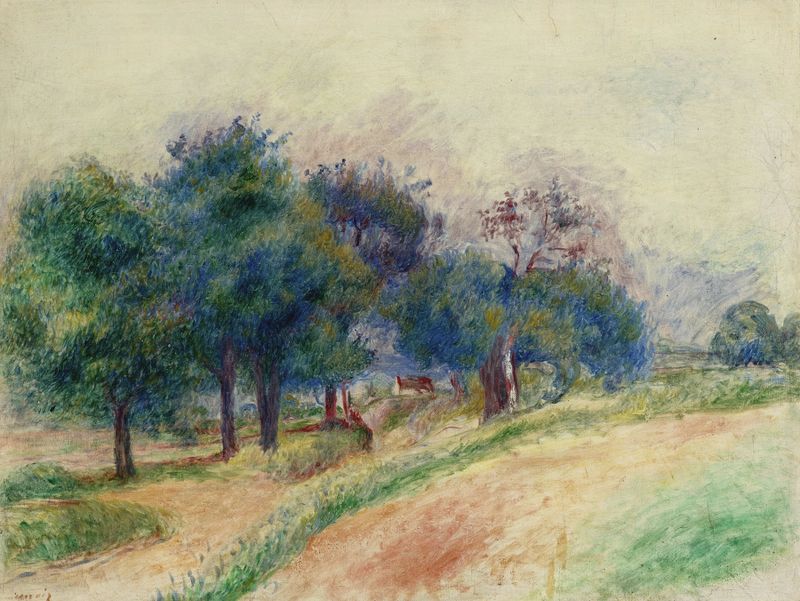
Paysage d’Essoyes
Pierre-Auguste Renoir





