
Falaises d’Étretat — History & Facts
In the realm of art, time becomes a silent observer, capturing moments that echo through eternity. The essence of a fleeting instant, crystallized in hues, invites us to reflect on the layers of existence. Look to the left at the massive, craggy cliffs that jut dramatically from the foamy sea, their textured surfaces revealing a rich palette of ochres and greens. The turbulent waves below clash against the rugged shoreline, while the soft azure of the sky casts a serene glow upon the scene.
Courbet’s brushwork, with bold strokes and nuanced detail, creates a sense of movement – the dynamic interplay of nature is palpable. Notice how the light dances on the water, illustrating a moment where tranquility and chaos coexist. Beneath this picturesque exterior lies a deeper commentary on the passage of time. The cliffs, steadfast and enduring, contrast with the ever-changing sea, hinting at the transitory nature of life.
The viewer senses an emotional tension: the cliffs stand as silent witnesses to countless sunsets, yet the relentless waves are a reminder of impermanence. This juxtaposition ignites a contemplation of stability versus change, urging us to embrace the fleeting beauty of our own experiences. Created in 1869, this work emerged during a pivotal moment in Courbet's career, as he sought to redefine realism and break away from traditional artistic conventions. Painted along the Normandy coast, where he found inspiration in the raw beauty of nature, Courbet’s Falaises d’Étretat embodies the artist's philosophy of observing the world with unfiltered honesty.
This period was marked by a growing appreciation for the natural landscape, placing him in the vanguard of a movement that would reverberate through the annals of art history.
More Artworks by Gustave Courbet
Browse all →
Marine
Gustave Courbet
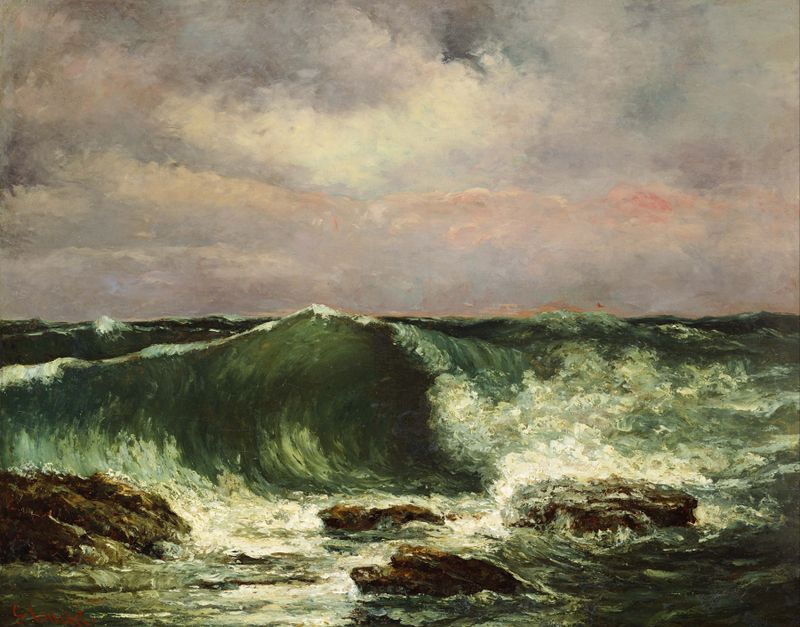
Waves
Gustave Courbet

Étretat; Les Falaises
Gustave Courbet
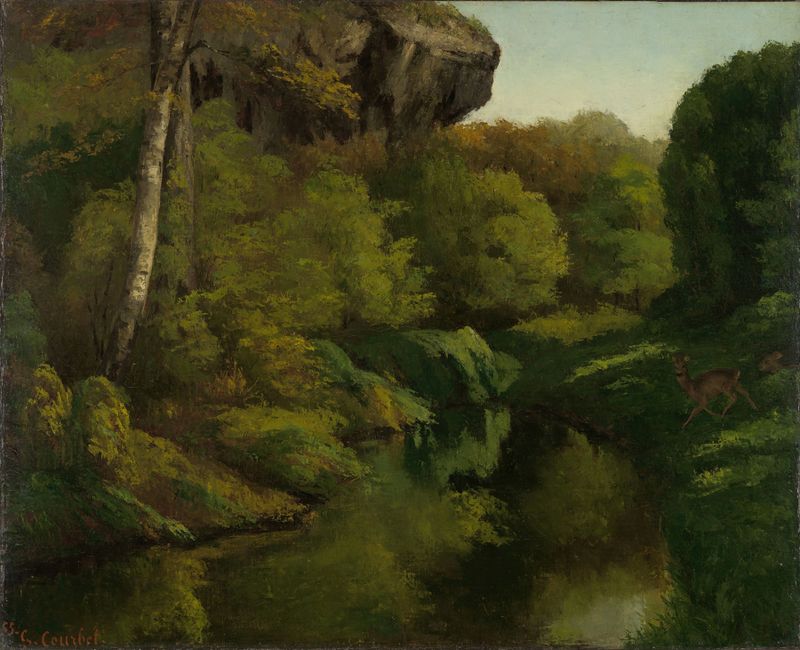
View in the Forest of Fontainebleau
Gustave Courbet
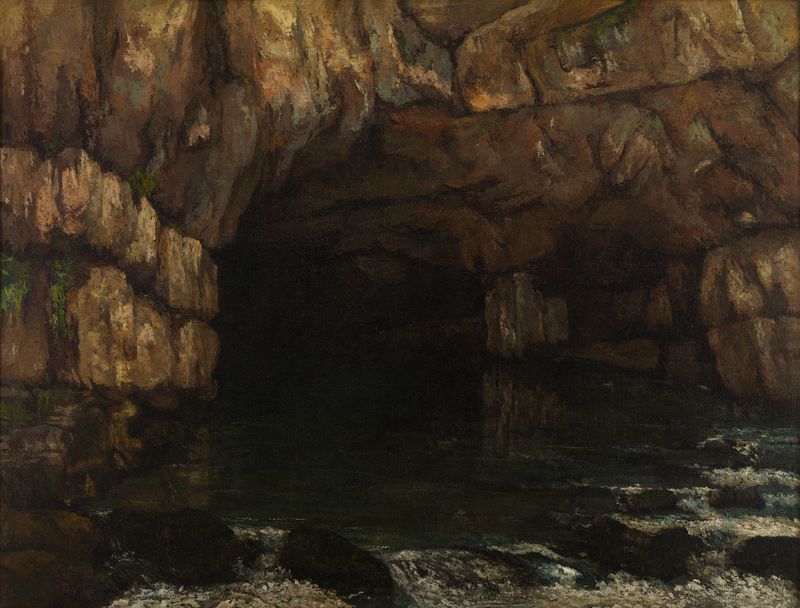
La source de la Loue (The Source of the Loue)
Gustave Courbet

Low Tide at Trouville
Gustave Courbet
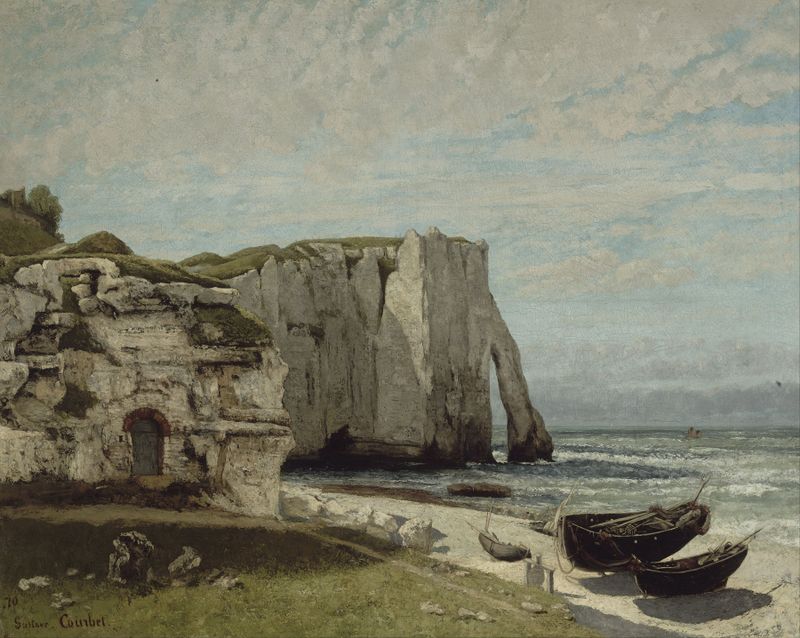
The Etretat Cliffs after the Storm
Gustave Courbet
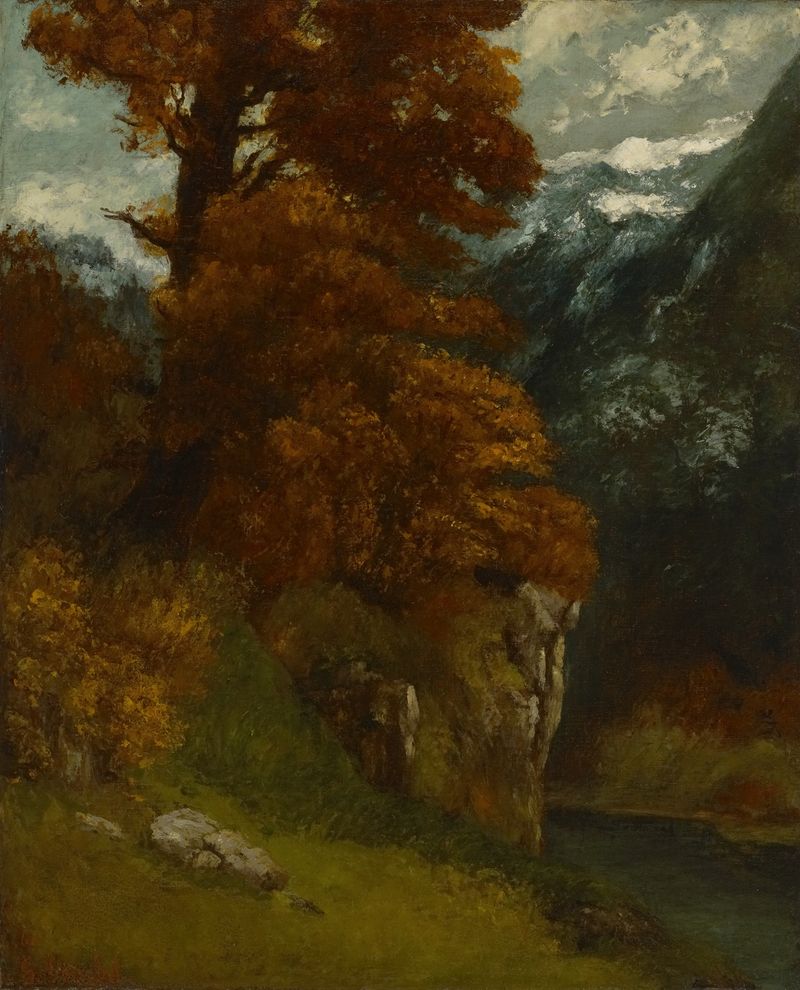
The Glen at Ornans (Bords du Doubs; Effet d’Automne)
Gustave Courbet
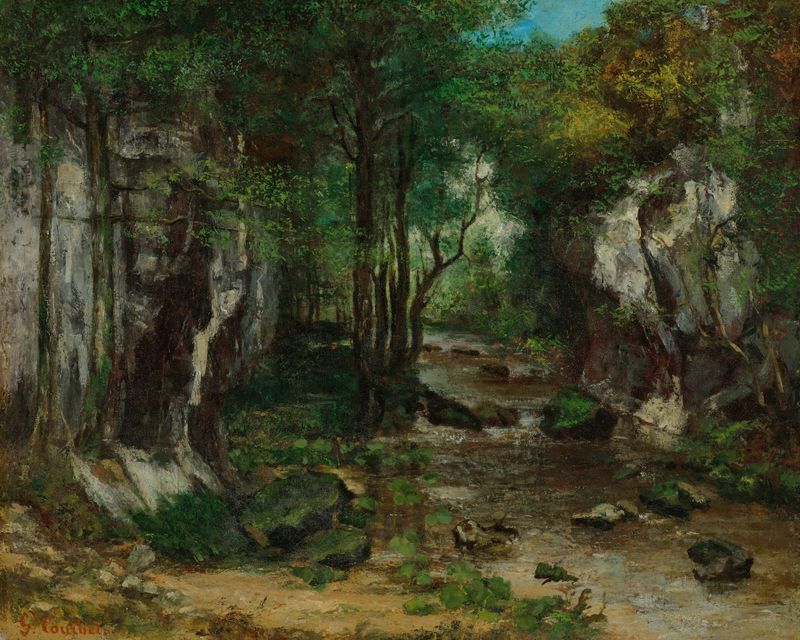
Le Ruisseau de Puits Noir
Gustave Courbet
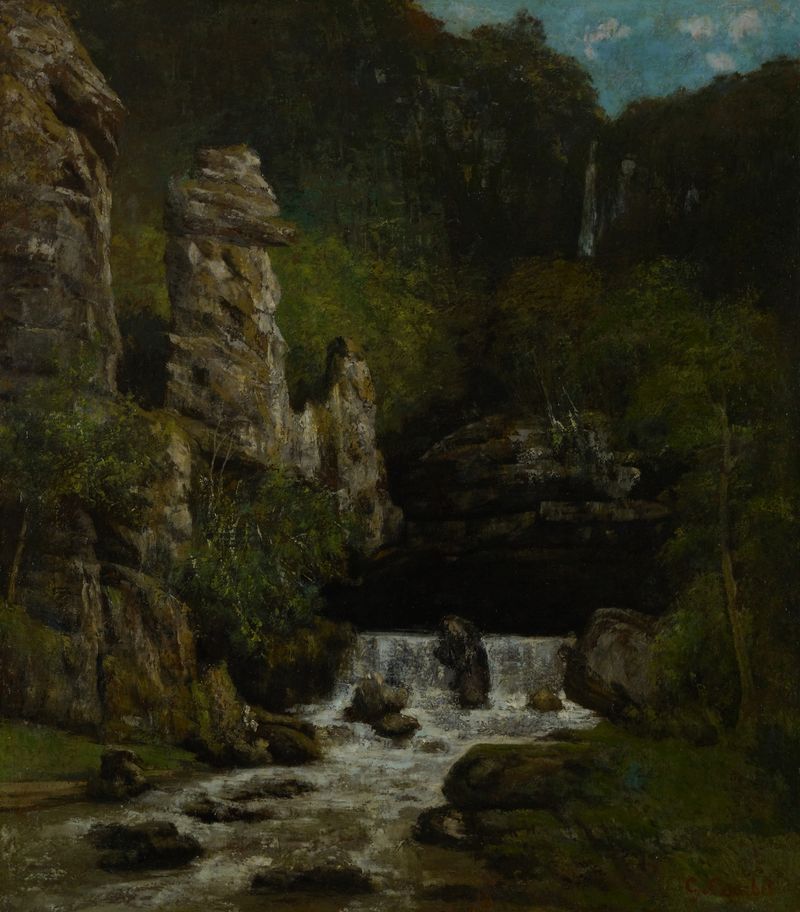
Landscape with a Waterfall
Gustave Courbet





