
Farmstead — History & Facts
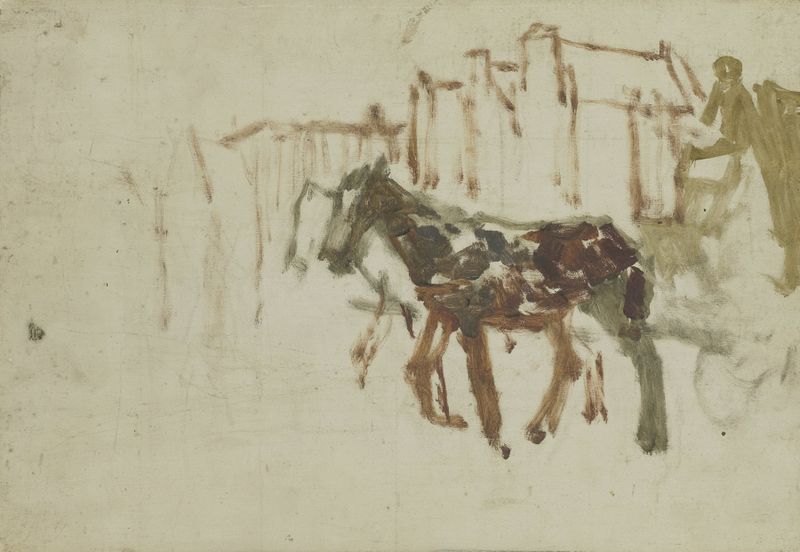
In a world often filled with frenetic energy, this piece captures an intimate emptiness that resonates profoundly. Look to the center of the canvas, where the stark outline of a barn emerges against an open sky. The muted tones of browns and grays create a sense of stillness, inviting the viewer to linger on the simple shapes that dominate the foreground. Notice how the light subtly dances across the weathered wood, lending texture and depth to the scene.
Beyond the barn, the horizon stretches out, painted with soft hints of lavender and gold, evoking a quiet promise of the day ahead. Within this tranquil landscape lies a tension between solitude and the promise of life. The empty space surrounding the barn speaks to the absence of human presence, yet hints at past activities and memories held within its walls. The contrast between the solidity of the structure and the ephemeral quality of the surrounding environment evokes feelings of nostalgia and contemplation, prompting reflections on what was, and what may yet come to be. During the early 20th century, Breitner painted Farmstead amid a rapidly changing world, as industrialization began to reshape rural landscapes.
Living in the Netherlands, he sought to document the beauty of quieter, pastoral scenes while engaging with the emerging modernist movements. This painting embodies a transitional moment—not just in the artist's life, but also in the very fabric of society itself, capturing a fleeting moment before the inevitable rush of progress.
More Artworks by George Hendrik Breitner
Browse all →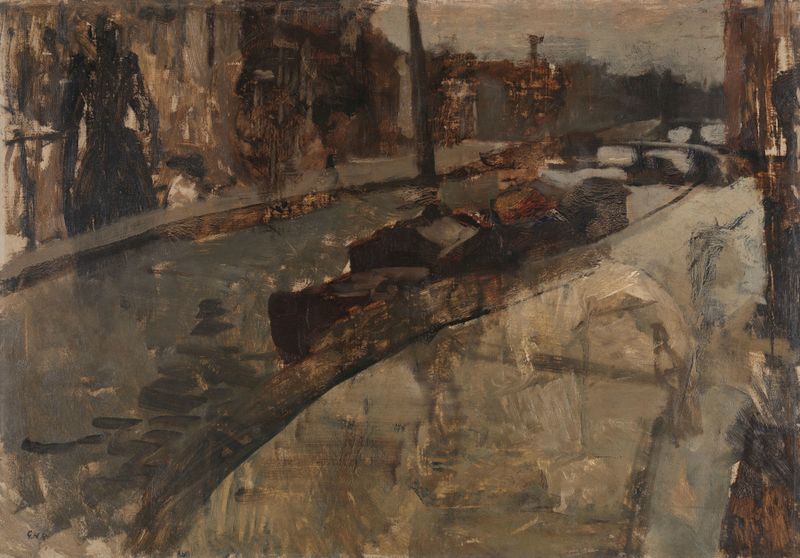
Prinsengracht near Lauriergracht, Amsterdam
George Hendrik Breitner
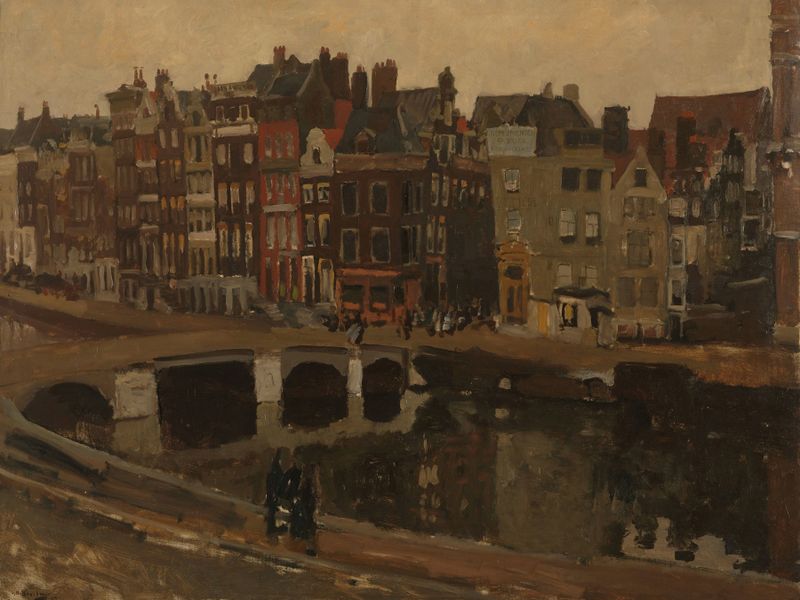
The Rokin, Amsterdam
George Hendrik Breitner

The Rokin, Amsterdam
George Hendrik Breitner
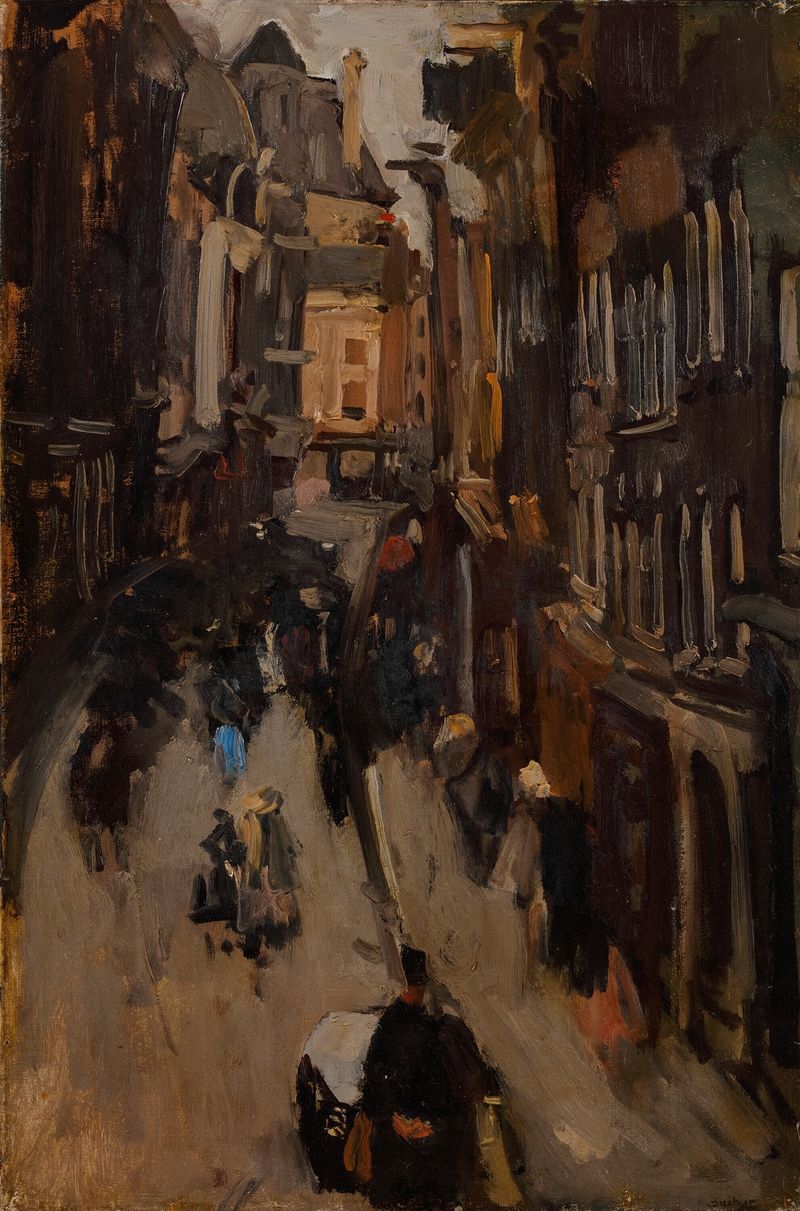
A busy day in the Kalverstraat, Amsterdam
George Hendrik Breitner

The Damrak, Amsterdam
George Hendrik Breitner
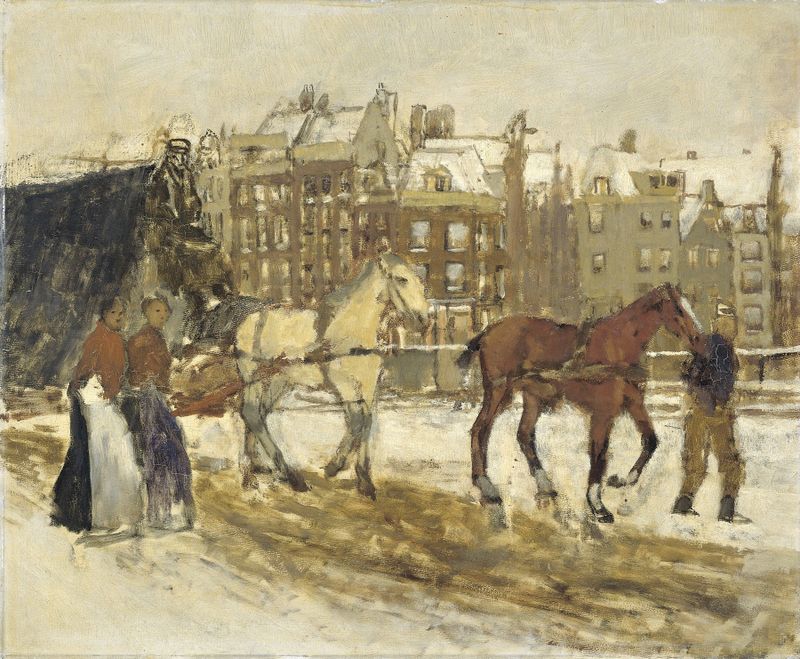
The Rokin, Amsterdam
George Hendrik Breitner

The Baanbrugsteeg looking from the Haarlemmerdijk towards the Vinkenstraat and the Brouwersgracht
George Hendrik Breitner

The Leidsegracht, Amsterdam
George Hendrik Breitner
The Rokin
George Hendrik Breitner

Gezicht op de Dam
George Hendrik Breitner





