
Field of Banana Trees — History & Facts
Is this a mirror — or a memory? In Field of Banana Trees, the lush greenery seems to whisper the sweet nostalgia of a sunlit moment, inviting viewers to lose themselves in its vibrant embrace. Look to the foreground, where the vibrant greens of banana leaves dance with dappled sunlight. Notice how the brushstrokes meld into a symphony of color, each stroke alive with energy, yet layered to create depth. The light filters through the leaves above, casting a kaleidoscope of shadow and brightness, guiding your gaze upward to the gentle arch of the trees that sway in a tranquil rhythm.
The softness of the brushwork conveys a sense of intimacy, as if the viewer is stepping into a serene sanctuary, apart from time. Beneath the surface of this idyllic scene lies a tension between nature's beauty and the fleeting nature of memory. The interplay of light and shadow creates a dreamlike quality, suggesting that these trees exist both in reality and in the artist's recollection. The vivid greens serve as a reminder of life’s vibrancy, while the soft edges evoke the inevitable passage of time, hinting at what may be lost or forgotten amidst beauty.
Renoir captures those moments where existence feels almost tangible yet elusive, urging contemplation of our own memories. In 1881, during his years in the south of France, Renoir created this piece amidst a vibrant artistic community exploring Impressionism's evolving language. At this time, he was increasingly drawn to landscapes, finding inspiration in the natural world around him. His focus on capturing light and color mirrored the changing perceptions within art, as he sought to convey emotion through the essence of scenes rather than mere representation.
More Artworks by Pierre-Auguste Renoir
Browse all →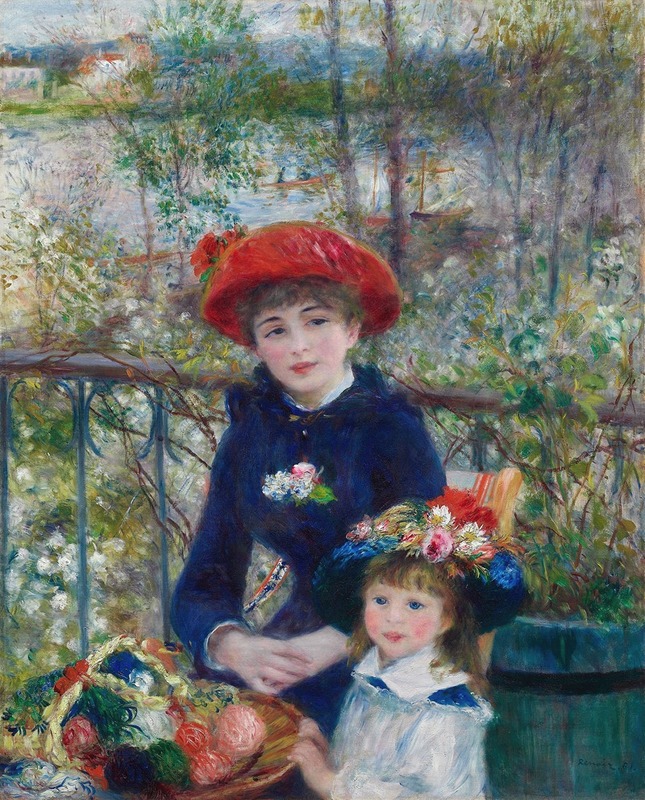
Two Sisters (On the Terrace)
Pierre-Auguste Renoir
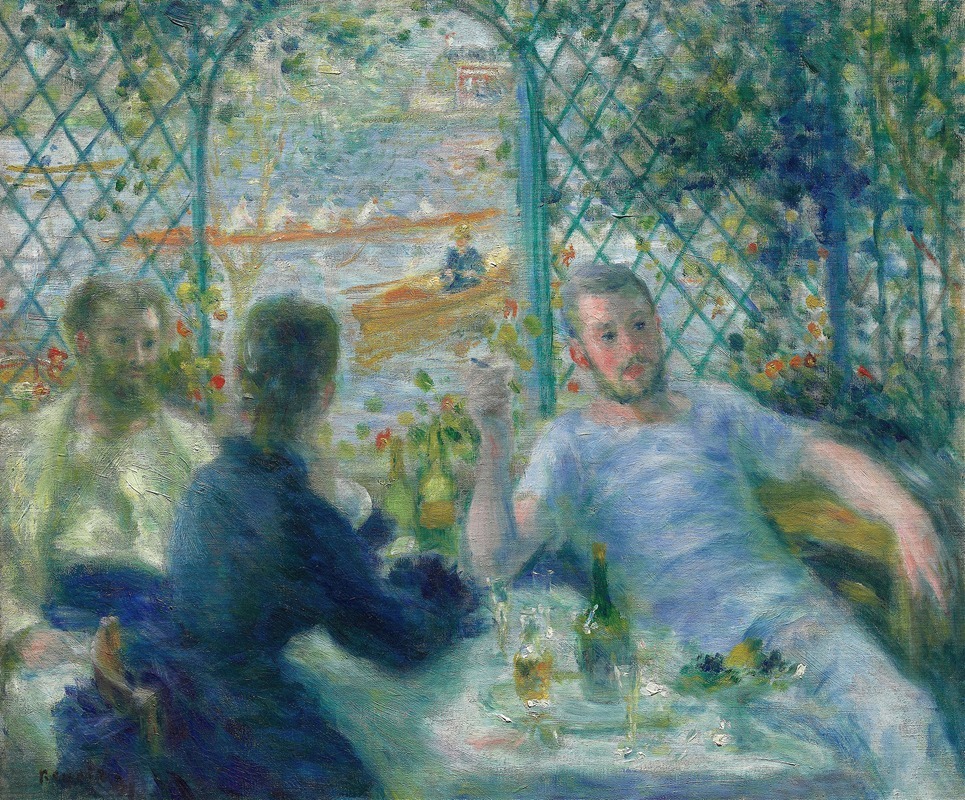
Lunch at the Restaurant Fournaise (The Rowers' Lunch)
Pierre-Auguste Renoir
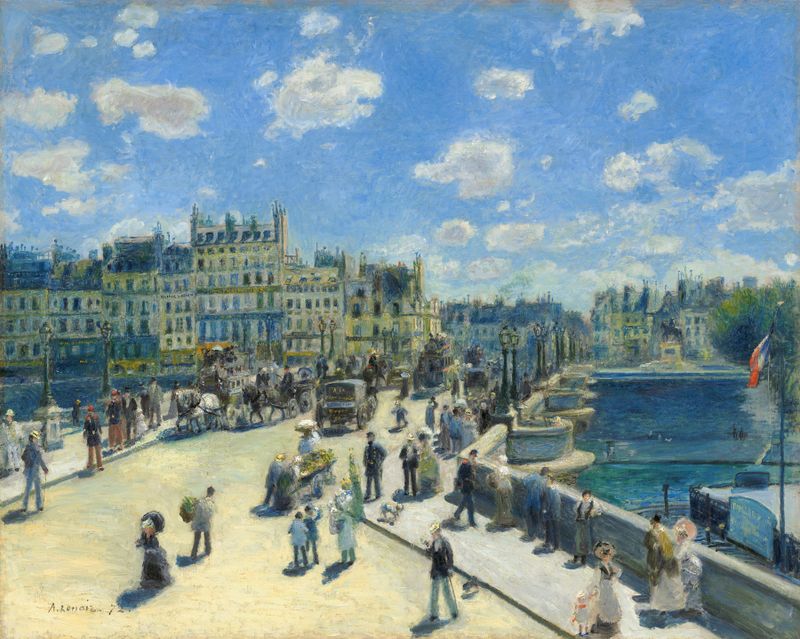
Pont Neuf, Paris
Pierre-Auguste Renoir
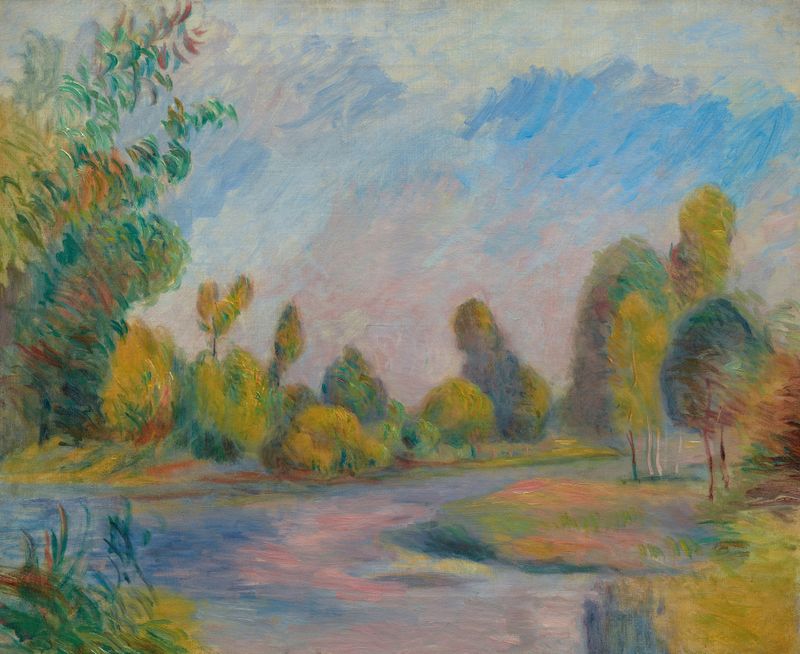
Au bord de la rivière
Pierre-Auguste Renoir

Near the Lake
Pierre-Auguste Renoir
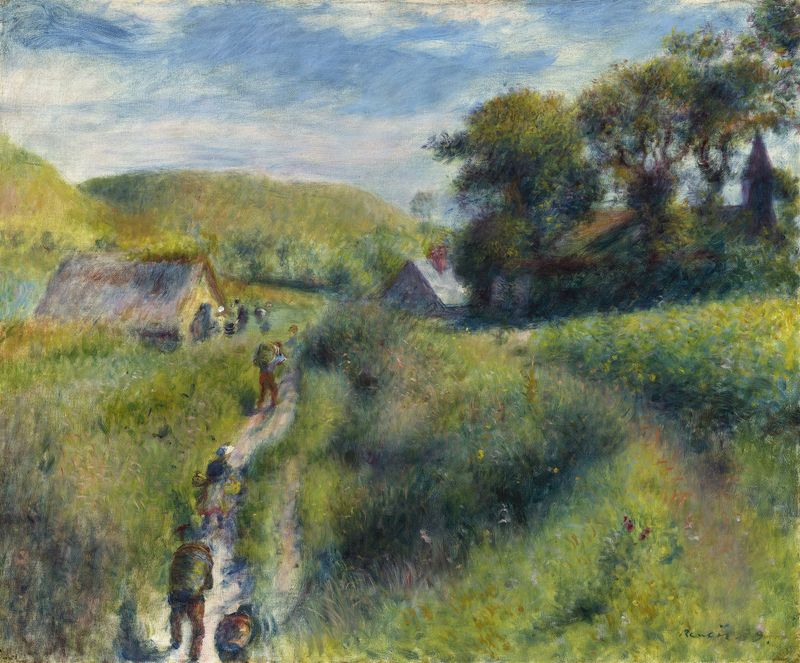
The Mussel Harvest
Pierre-Auguste Renoir

The Seine at Chatou
Pierre-Auguste Renoir
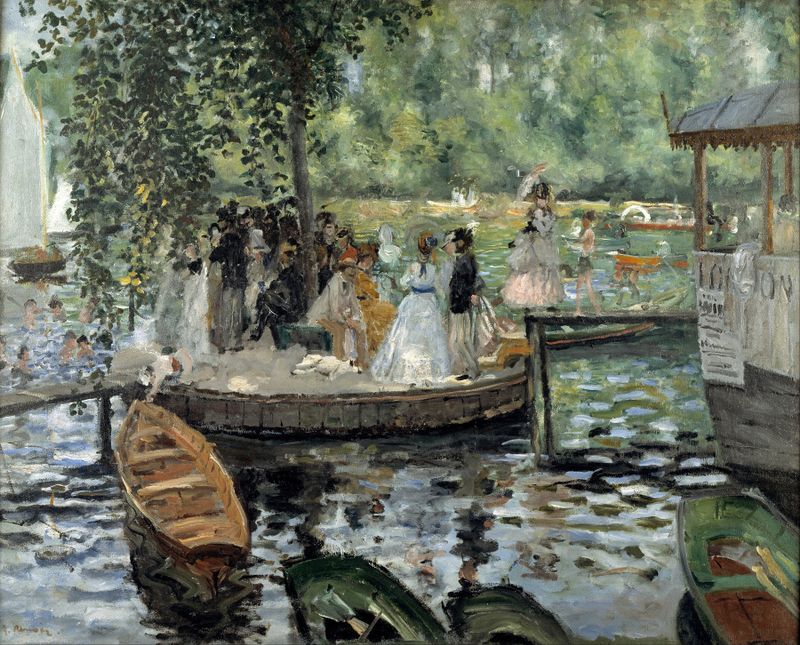
La Grenouillère
Pierre-Auguste Renoir
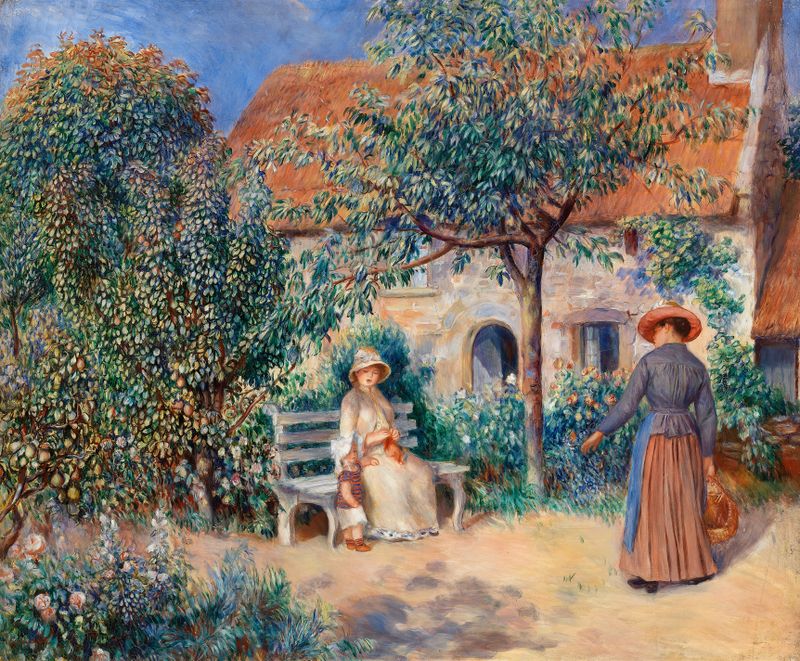
In Brittany (En Bretagne)
Pierre-Auguste Renoir
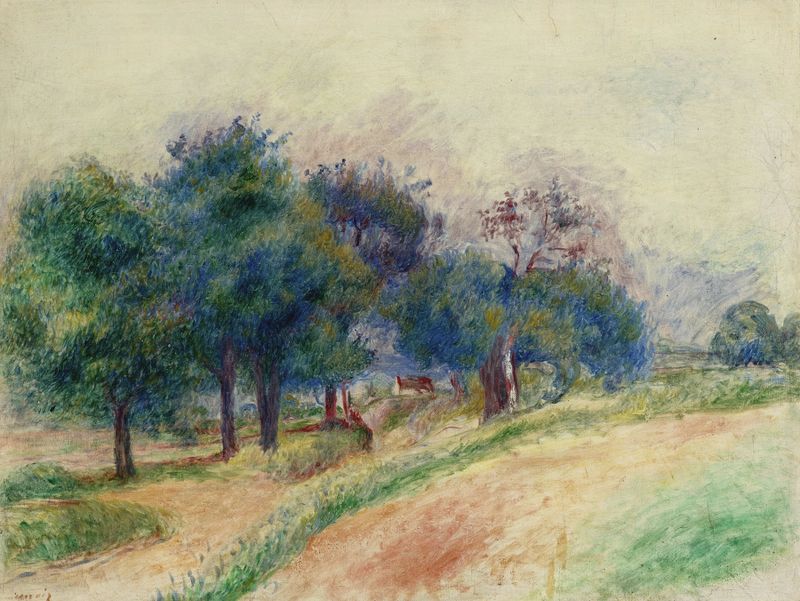
Paysage d’Essoyes
Pierre-Auguste Renoir





