
Figur Studies from Mora in Sweden — History & Facts
What first catches the eye in Figur Studies from Mora in Sweden is the quiet gravity with which everyday life is given center stage. The artist, Adolph Tidemand, divides the composition into two intimate portraits: a young woman intent on her knitting and a barefoot boy, lost in thought, seated on a sack. The woman’s vivid red apron anchors her in the foreground, her hands busy and precise, while the boy’s oversized hat and relaxed posture speak of a different rhythm—his gaze averted, his bare feet tucked up, he seems to drift into his own world.
The light falls gently on both figures, picking out the textures of linen, wool, and hair, and drawing the viewer into the hush of the moment. Created in 1852, this work belongs to a period when artists across Scandinavia turned their attention to rural life, seeking to preserve the customs and faces of communities on the cusp of change. Paintings like this were often made for collectors who wanted a window into the “authentic” folk traditions of the countryside, as industrialization and urbanization gathered pace. Tidemand was known for his ethnographic eye, and here he records not just costume, but attitude—the dignity of work and the introspection of youth.
Now held by the National Museum of Art, Architecture and Design, the painting stands as a quiet record of a world whose traces are mostly found in images such as this. Let your gaze linger on the details: the ball of yarn, the set of the boy’s jaw, the way each figure claims their own portion of the wooden panel.
More Artworks by Adolph Tidemand

Bridal Procession on the Hardangerfjord
Adolph Tidemand
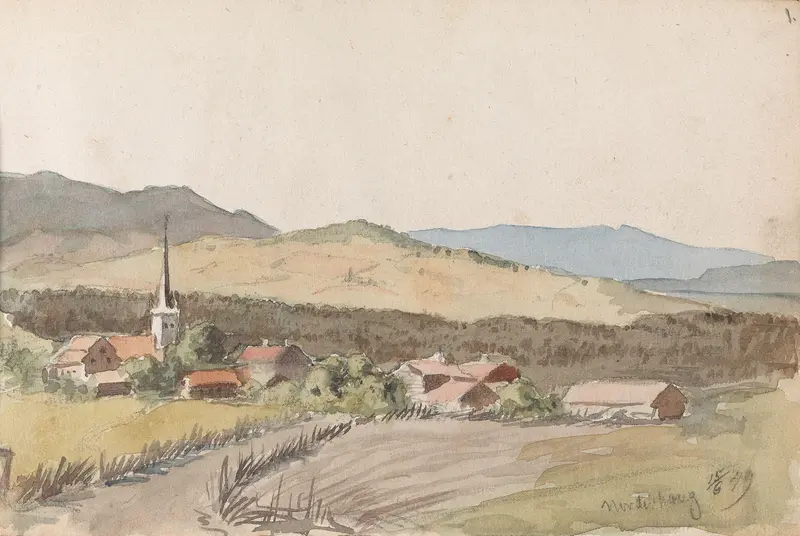
Fra Haugsbygd
Adolph Tidemand
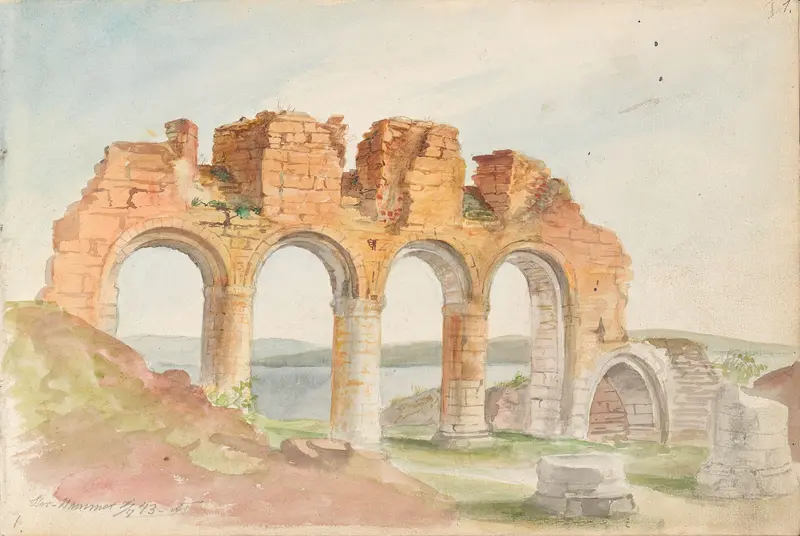
Domkirkeruinen, Hamar
Adolph Tidemand
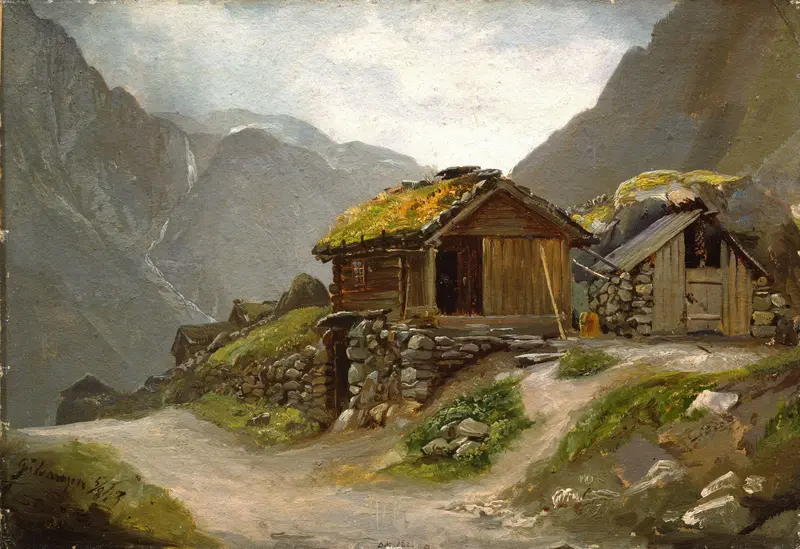
View from Gudvangen
Adolph Tidemand
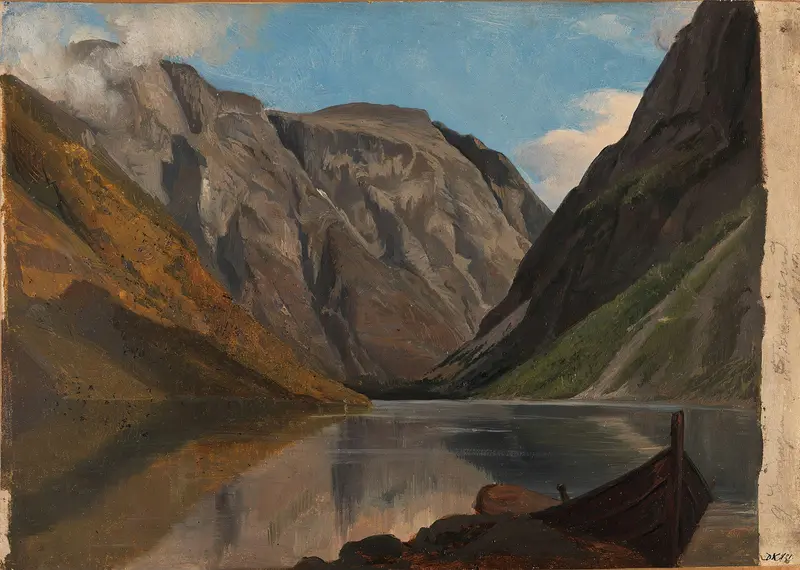
View of Gudvangen
Adolph Tidemand
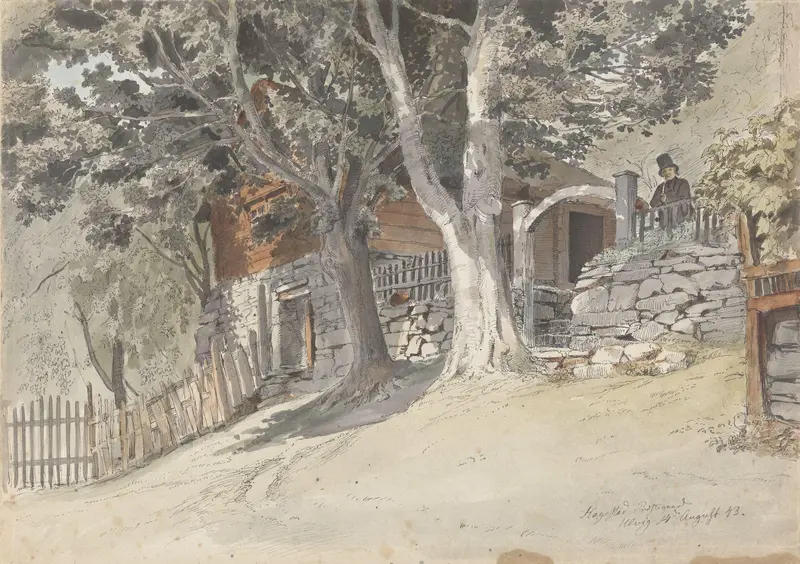
Hagestad prestegård, Ulvik i Hardanger
Adolph Tidemand
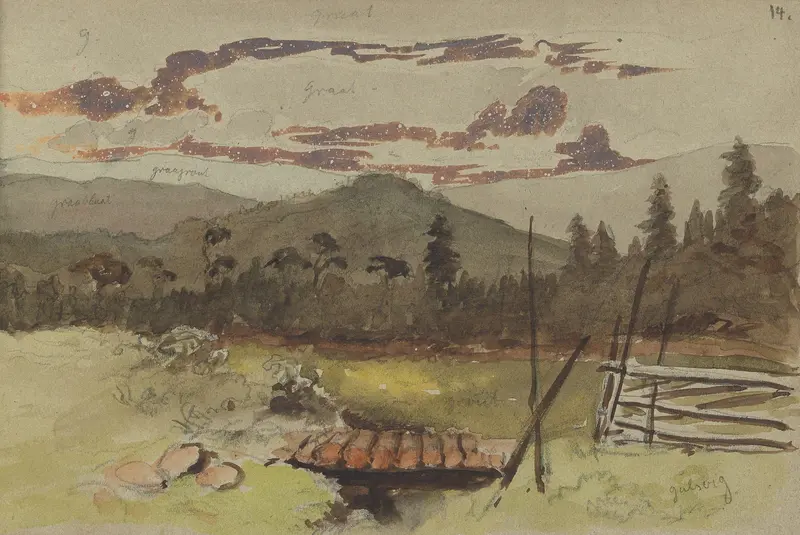
Fra Gulsvik
Adolph Tidemand
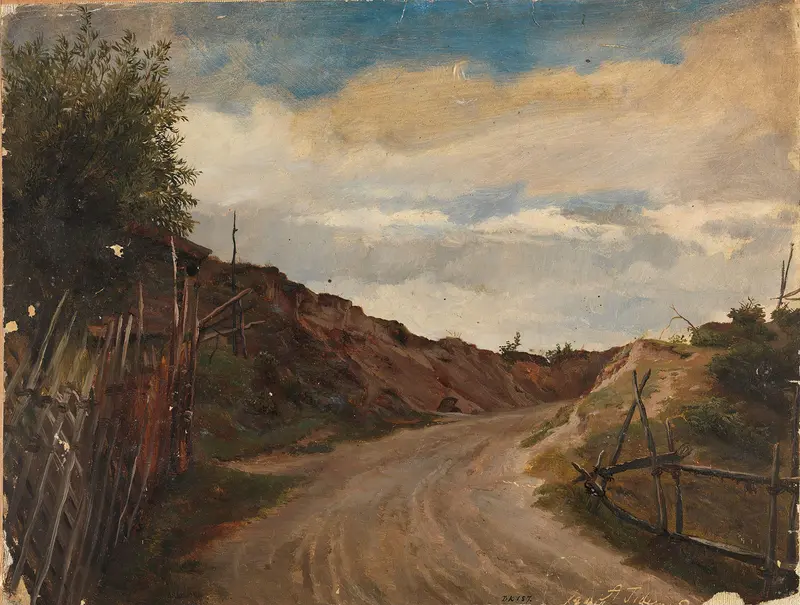
Country Road
Adolph Tidemand
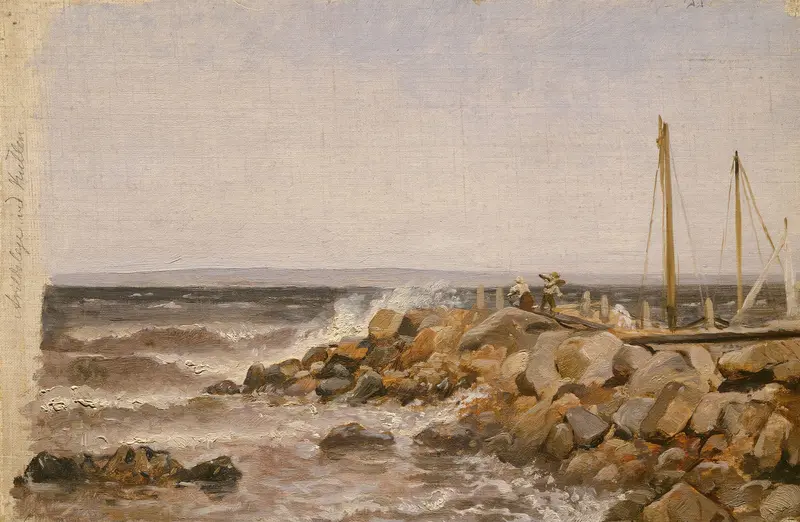
From Kullen in Sweden
Adolph Tidemand
Untitled
Adolph Tidemand
More Genre Scene Art

Banquet of the Officers of the St George Civic Guard
Frans Hals

Rembrandt and Saskia in the Scene of the Prodigal Son
Rembrandt van Rijn

Bal du moulin de la Galette
Pierre-Auguste Renoir

Quadrille at the Moulin Rouge
Henri de Toulouse-Lautrec

A Burial at Ornans
Gustave Courbet

When Will You Marry?
Paul Gauguin