
Figures at the Quai de Louvre, Paris — History & Facts
Did the painter know this moment would outlive them? In a world where time ebbs and flows, art captures the essence of fleeting beauty, even as it slowly decays. Look to the foreground where figures converge along the Quai de Louvre, their silhouettes gracefully framed against the soft, muted tones of a Parisian sunset. The delicate brushwork mimics the movement of the breeze and the gentle ripples on the water’s surface, inviting the viewer to step into this tranquil moment. Notice how the fading light casts elongated shadows, hinting at the passage of time that both enhances and erodes the scene’s vibrancy. The emotional tension lies in the juxtaposition of life and decay.
The lively figures, engaged in conversation and contemplation, contrast with the fading glory of the architecture behind them, suggesting a fleeting moment captured amid the inevitable decline. The use of warm ochres and cool blues not only harmonizes the composition but also speaks to the nostalgia that permeates the atmosphere, evoking a sense of longing for the past while acknowledging its impermanence. Created during the late 19th century, during a time of great change in Paris, this piece reflects Eugène Galien-Laloue's keen observation of urban life. While he painted these scenes, the city was undergoing modernization, and traditional ways of life were fading into memory.
Galien-Laloue's work, characterized by its impressionistic flair, sought to immortalize those precious moments, inviting viewers to reflect on the beauty of a world that is ever-changing.
More Artworks by Eugène Galien-Laloue
Browse all →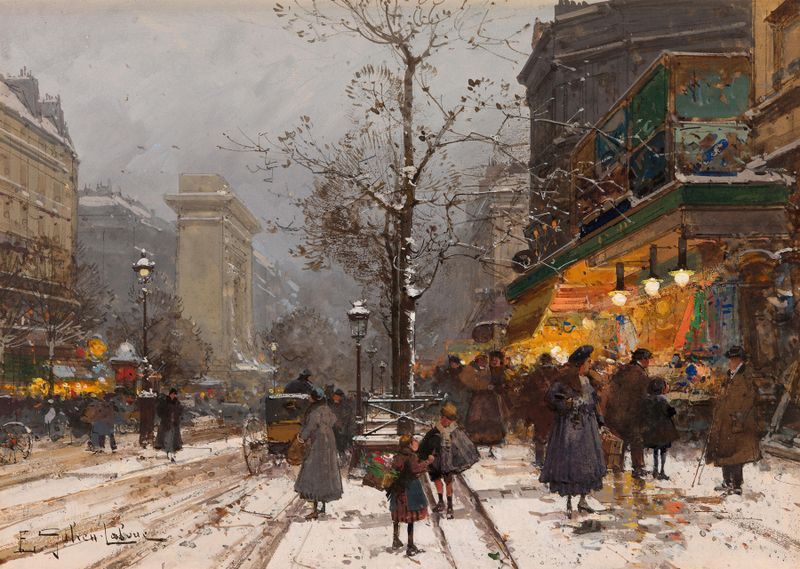
Boulevard Bonne – Nouvelle sous la neige
Eugène Galien-Laloue
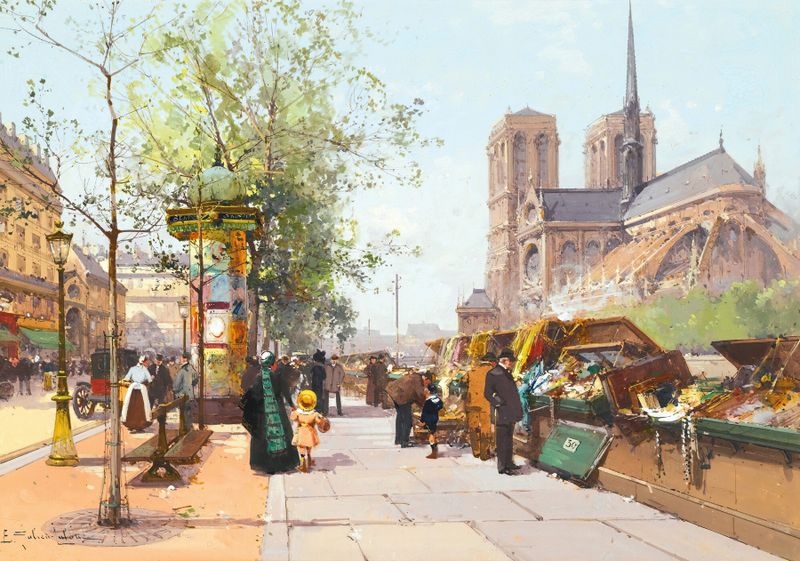
Notre Dame De Paris
Eugène Galien-Laloue
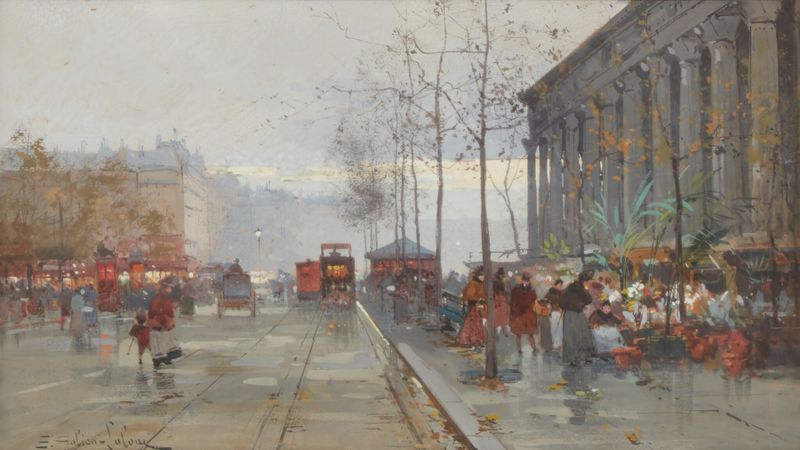
Le Marché aux fleurs de la Madeleine
Eugène Galien-Laloue
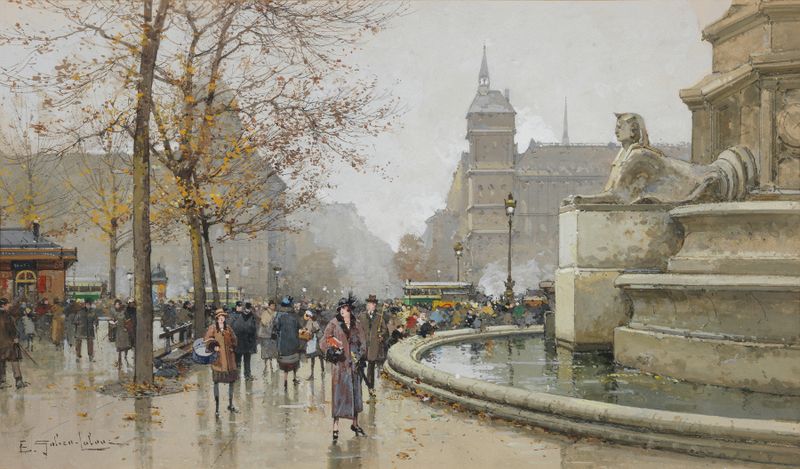
La fontaine du Palmier, place du Châtelet
Eugène Galien-Laloue
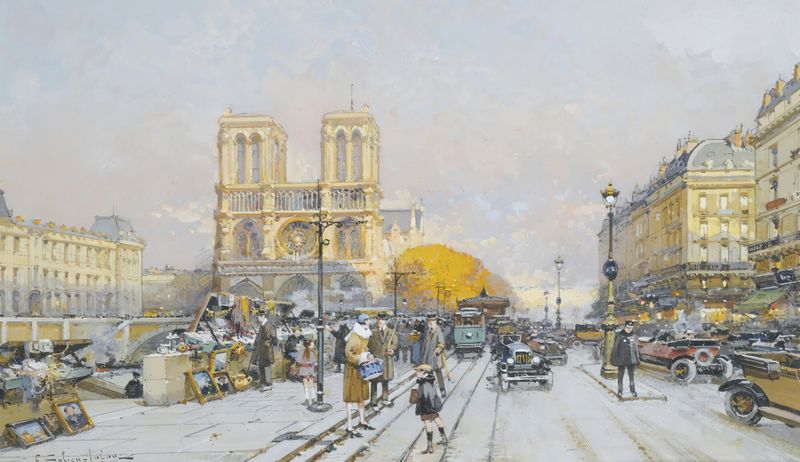
Notre Dame
Eugène Galien-Laloue
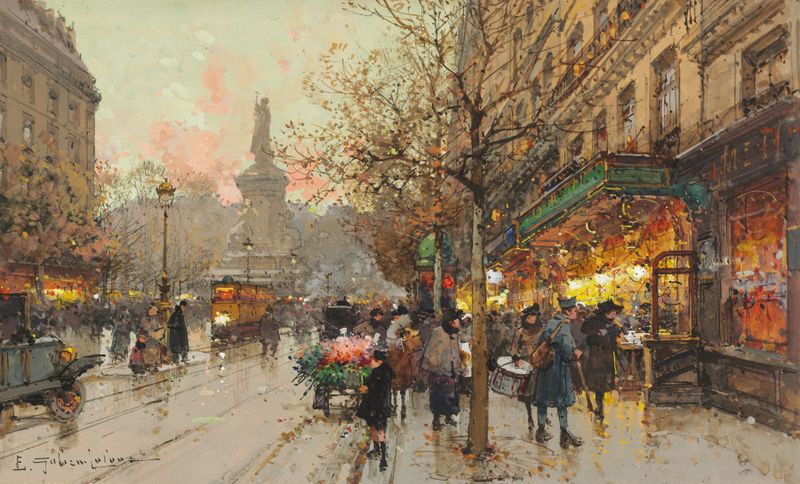
Place De La République
Eugène Galien-Laloue
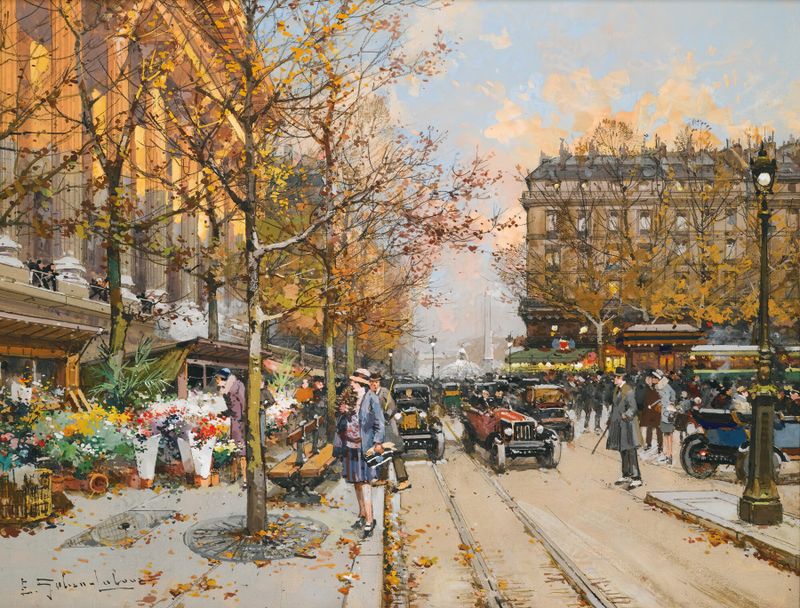
Place De La Madeleine
Eugène Galien-Laloue
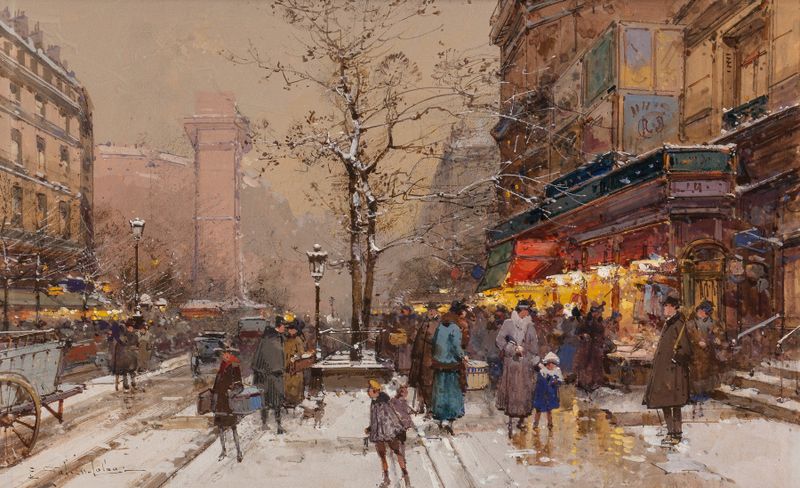
Porte Saint-Denis
Eugène Galien-Laloue
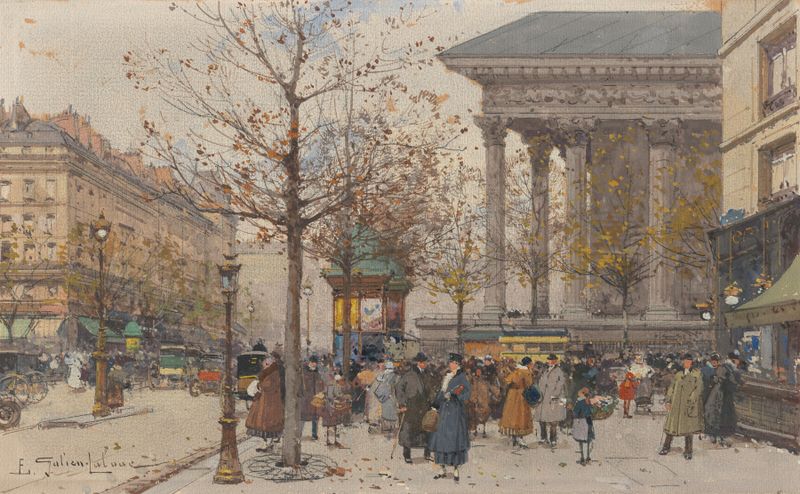
Vue animée de la Madeleine
Eugène Galien-Laloue
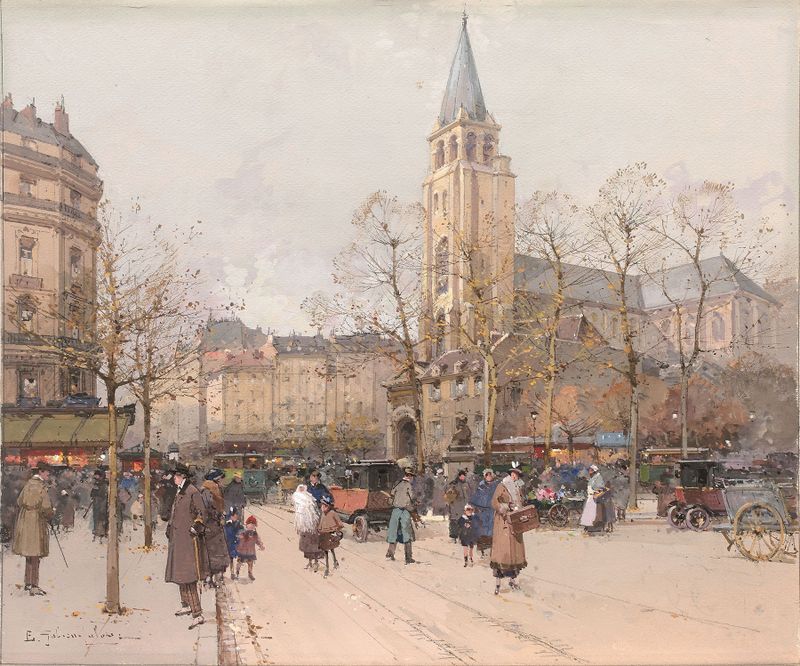
Vue des boulevards à Saint-Germain-des-Prés
Eugène Galien-Laloue





