
Fire in a Dutch city — History & Facts
What first grips the viewer in Fire in a Dutch city by Aert van der Neer is the sheer scale of human response to disaster, unfolding beneath a sky thick with smoke. The eye is drawn immediately to the dense, urgent crowd surging across the bridge, their faces turned toward the burning rooftops at left. The city’s gatehouse stands as a stoic sentinel, its towers catching the last light before the oncoming dusk, while the chaos behind it threatens to overwhelm the order of daily life.
Every figure seems caught in motion—some rushing toward the flames, others pausing in anxious conversation, all united by the drama playing out above their heads. This is a city on the edge, its fate uncertain. The painter’s mastery is evident in the way the fire’s glow pulses through the dense architecture, highlighting gabled roofs and silhouetting frantic figures. The river, calm and reflective, forms a boundary between the catastrophe and the ships moored quietly to the right, suggesting the ever-present link between Dutch towns and their waterways.
The palette, heavy with smoke and shadow, amplifies the sense of crisis, while the distant ships and spires remind us of the world beyond this moment. In the bustling foreground, dogs dart and carts roll, underscoring the everyday life that persists even as disaster unfolds—a tension that keeps the viewer searching every corner for new stories. Works like this flourished in the Dutch Golden Age, when cityscapes and dramatic nocturnes found eager patrons among the urban elite. Artists such as Aert van der Neer became renowned for their ability to capture not just the likeness of a place, but its atmosphere and the communal spirit of its inhabitants.
The painting’s date, between 1630 and 1677, places it squarely in a period of immense urban growth and frequent fire hazards—anxieties that were as real to its first viewers as the ships in their harbors. Now held in the Staatliche Museen zu Berlin, this scene stands as both a record of a vanished city and a testament to the enduring power of collective memory. Let your gaze linger on the bridge: in the press of bodies and the glow of fire, the past feels close enough to touch.
More Artworks by Aert van der Neer

A Moonlit River Landscape With Figures Standing By A Gate, A Village Beyond
Aert van der Neer
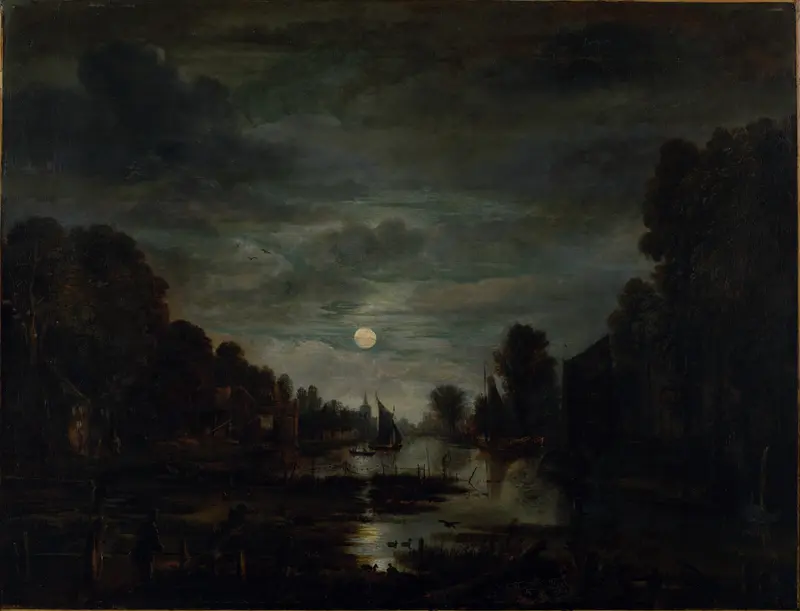
River Landscape in Moonlight
Aert van der Neer
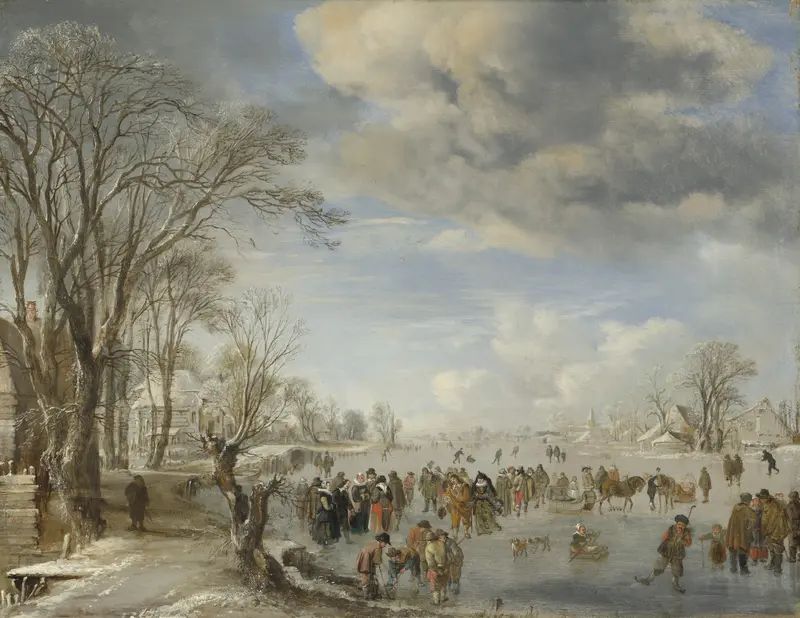
Winter in Holland – Skating Scene
Aert van der Neer

River Landscape
Aert van der Neer
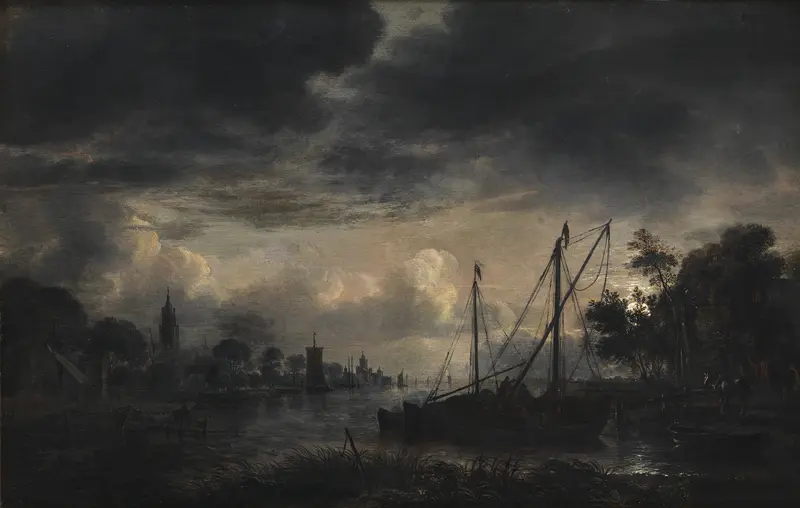
River Landscape in Moonlight
Aert van der Neer
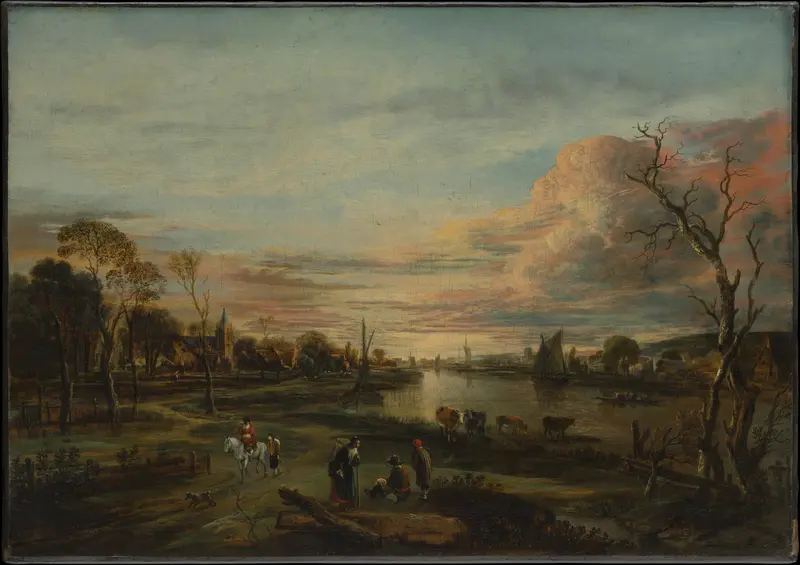
Landscape at Sunset
Aert van der Neer
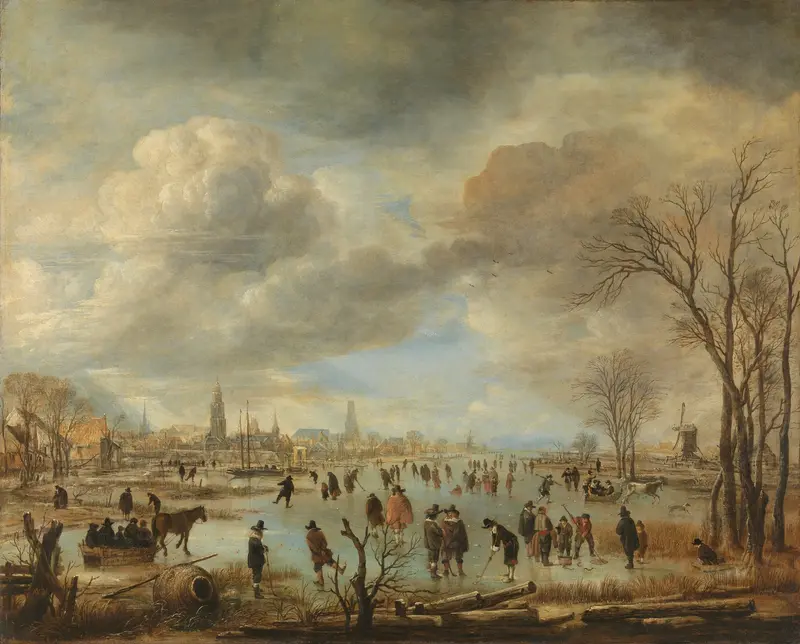
Winter Landscape near a Town with Kolf Players and Horse-Drawn Sleighs
Aert van der Neer

Winter Landscape with Skaters on a Frozen River
Aert van der Neer
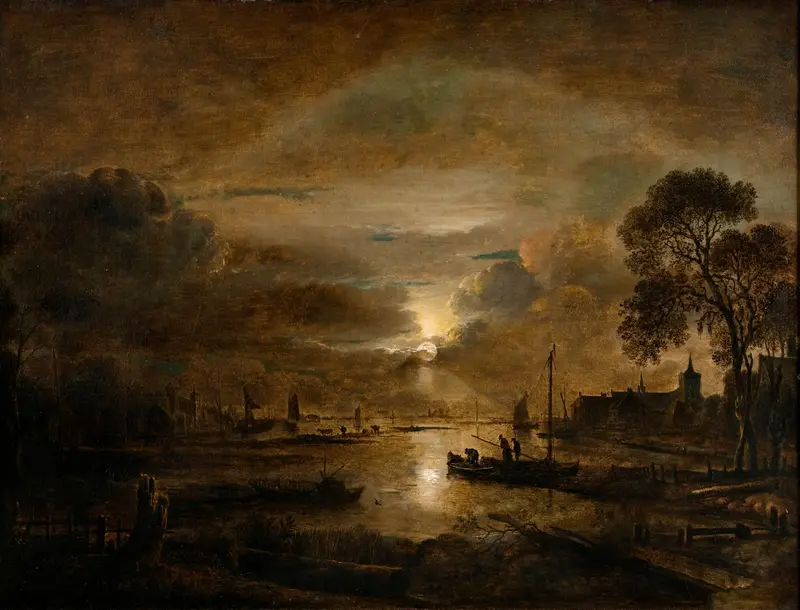
Moonlight at a Dutch River
Aert van der Neer
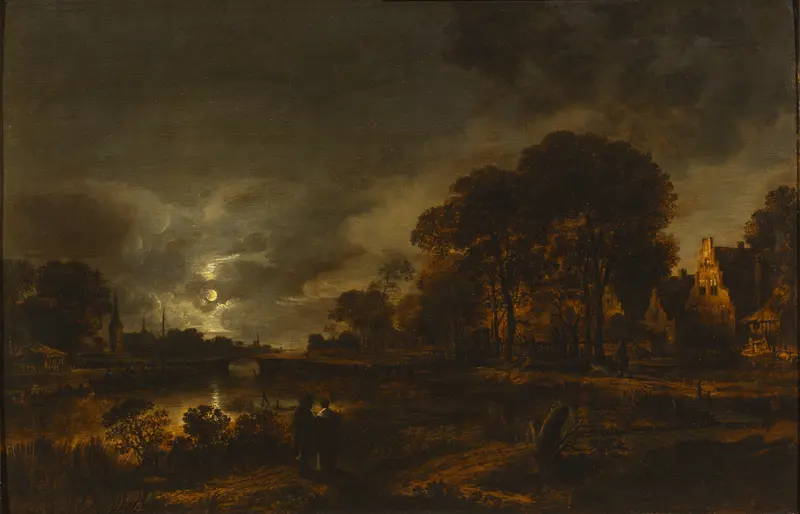
Moonlight Landscape
Aert van der Neer
More Genre Scene Art

Banquet of the Officers of the St George Civic Guard
Frans Hals

Rembrandt and Saskia in the Scene of the Prodigal Son
Rembrandt van Rijn

Bal du moulin de la Galette
Pierre-Auguste Renoir

Quadrille at the Moulin Rouge
Henri de Toulouse-Lautrec

A Burial at Ornans
Gustave Courbet

When Will You Marry?
Paul Gauguin