
Fisherman’s thatched cottage — History & Facts
Within its stillness lies an unspoken anxiety, a tremor that echoes through every brushstroke, hinting at the fragile nature of existence. The walls of the cottage, weathered by storms and time, whisper secrets of the fishermen who call it home, where the sea’s bounty is both a blessing and a burden. Look to the left at the thatched roof, its frayed edges telling tales of countless tempests faced by the inhabitants. The muted palette of earth tones contrasts starkly with the looming darkness of a brooding sky, evoking a sense of isolation and impending turmoil.
Notice how the light struggles to break through the gathering clouds, casting elongated shadows that seem to consume the cottage, suggesting both shelter and vulnerability. Within this scene, a poignant tension emerges between man and nature. The sturdy structure symbolizes resilience, while the encroaching darkness reflects the ever-present threat posed by the sea. This duality unveils a deeper existential fear—of loss, of the unpredictable forces of nature, and of the relentless passage of time.
The stillness belies a latent anxiety, hinting at the struggles of those who seek solace in a place fraught with uncertainty. In 1895, Félix Hilaire Buhot created this piece during a period of introspection, influenced by the burgeoning Impressionist movement that sought to capture the transient effects of light and atmosphere. Living in Paris, he engaged with themes of solitude and nature's duality, reflecting broader societal anxieties of the era, which found resonance in the lives of ordinary people. His work, rich in emotion and visual complexity, speaks to a profound understanding of humanity’s relationship with the world around it.
More Artworks by Félix Hilaire Buhot
Browse all →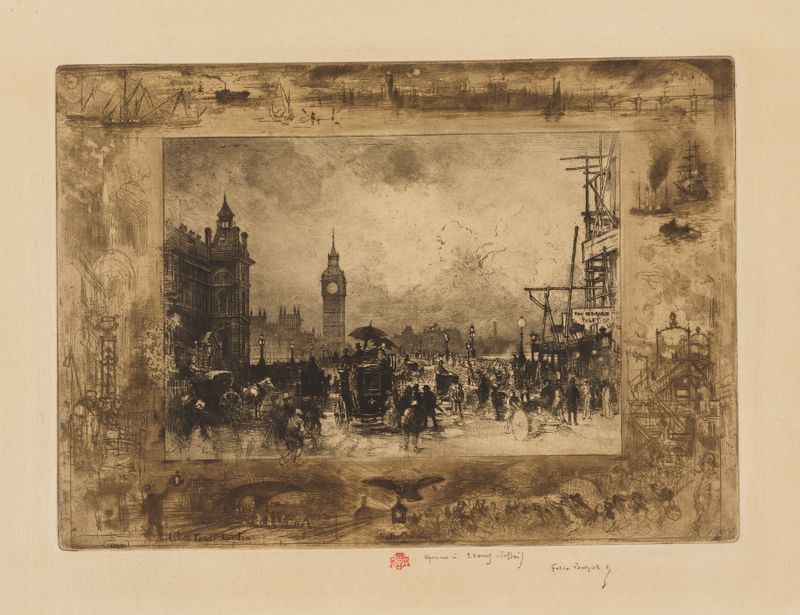
Westminster Bridge, or Westminster Clock Tower
Félix Hilaire Buhot
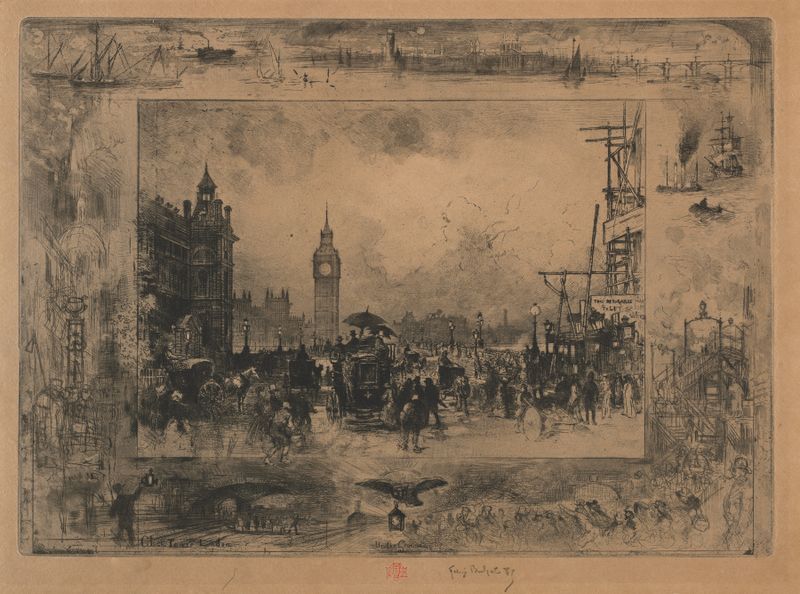
Westminster Bridge, or Westminster Tower
Félix Hilaire Buhot
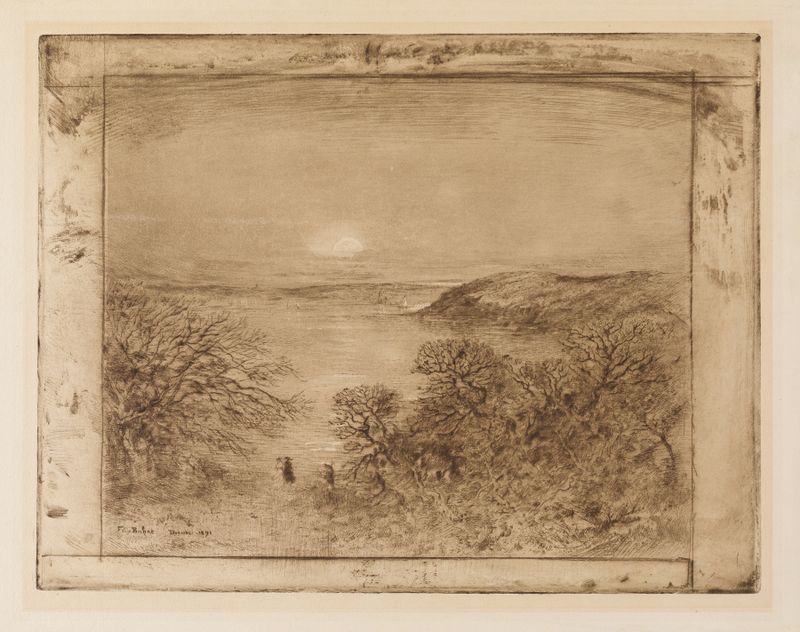
Moonrise at Dinard
Félix Hilaire Buhot
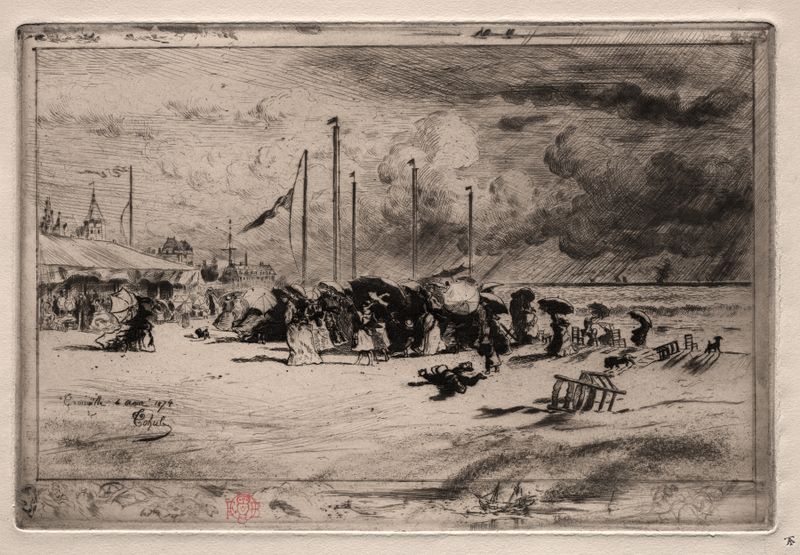
A Squall at Trouville
Félix Hilaire Buhot
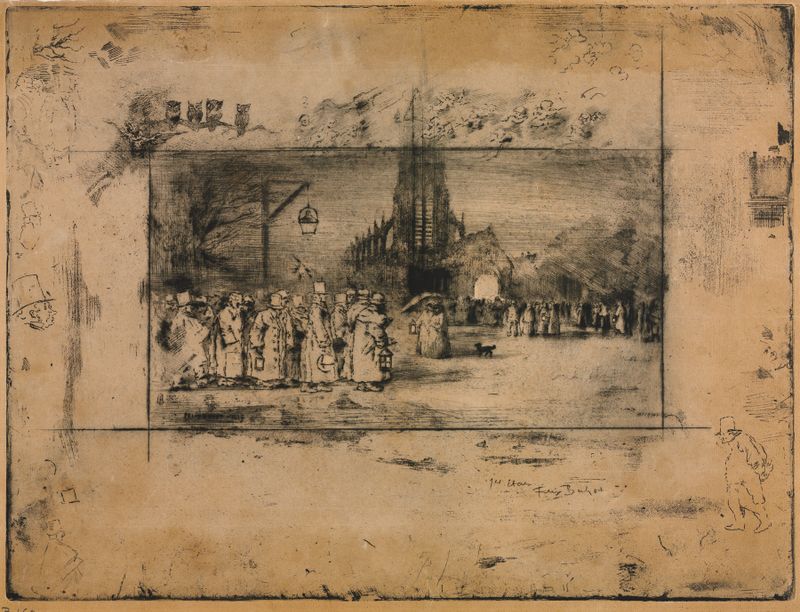
The Midnight Mass
Félix Hilaire Buhot
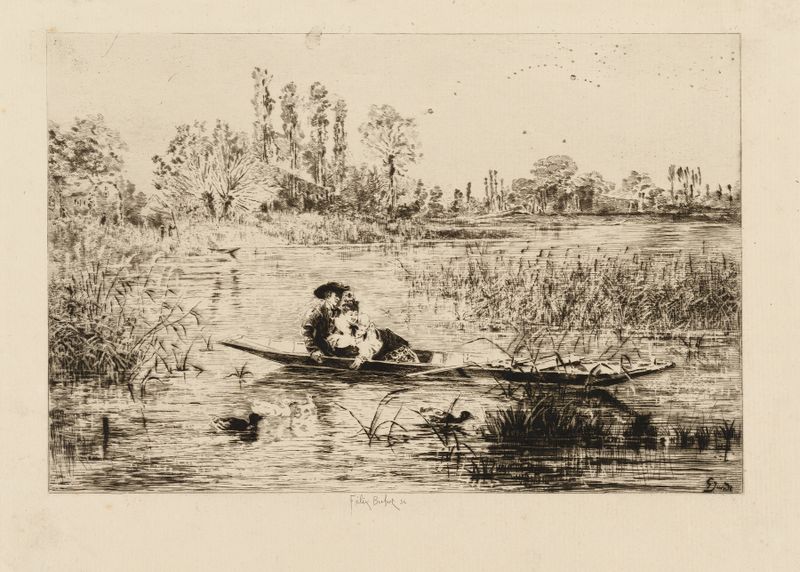
On the Thread of the Water
Félix Hilaire Buhot
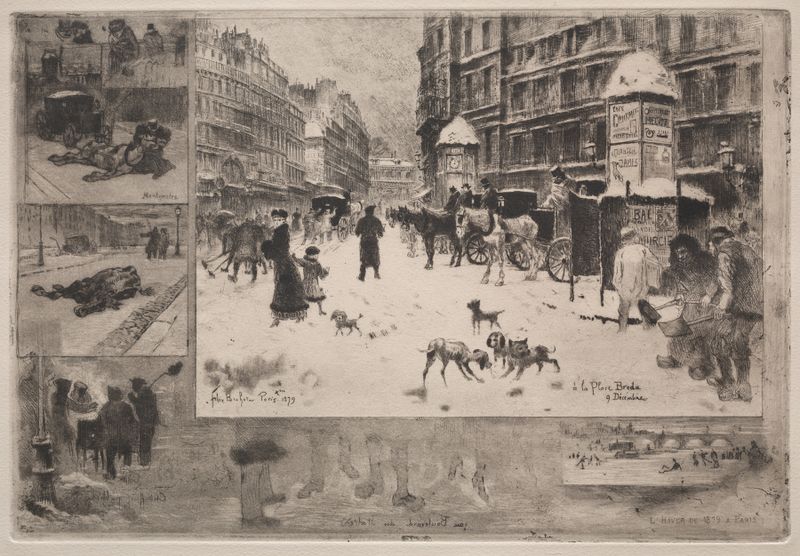
Winter in Paris
Félix Hilaire Buhot
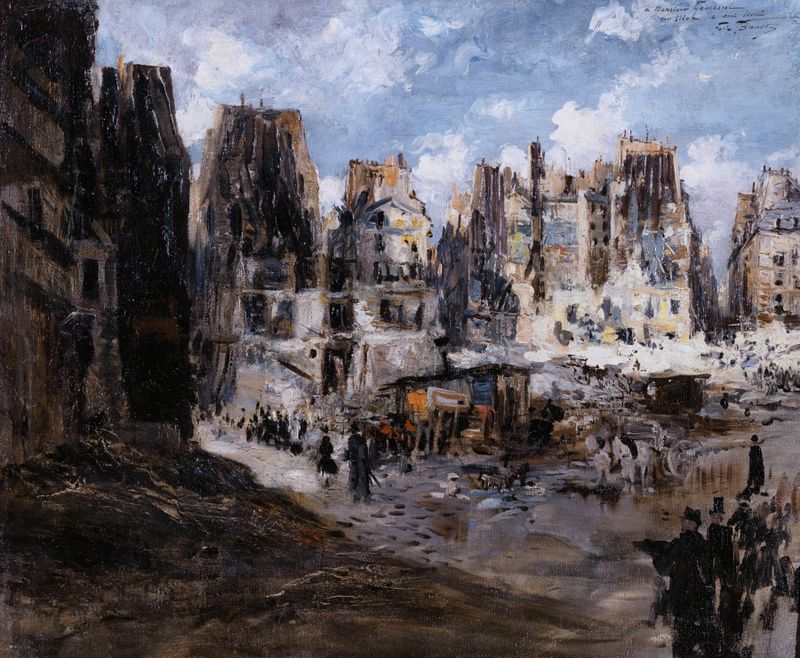
Le percement de l’avenue de l’Opéra.
Félix Hilaire Buhot
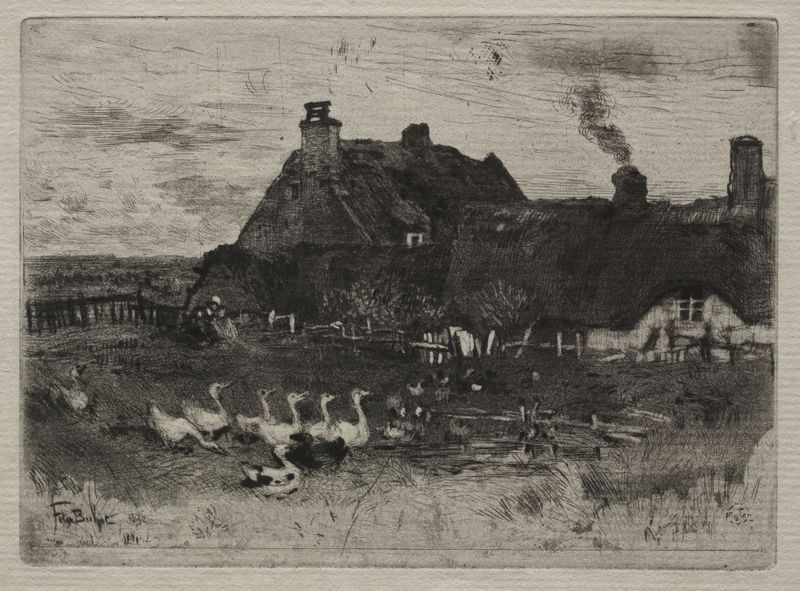
Thatched Cottages
Félix Hilaire Buhot
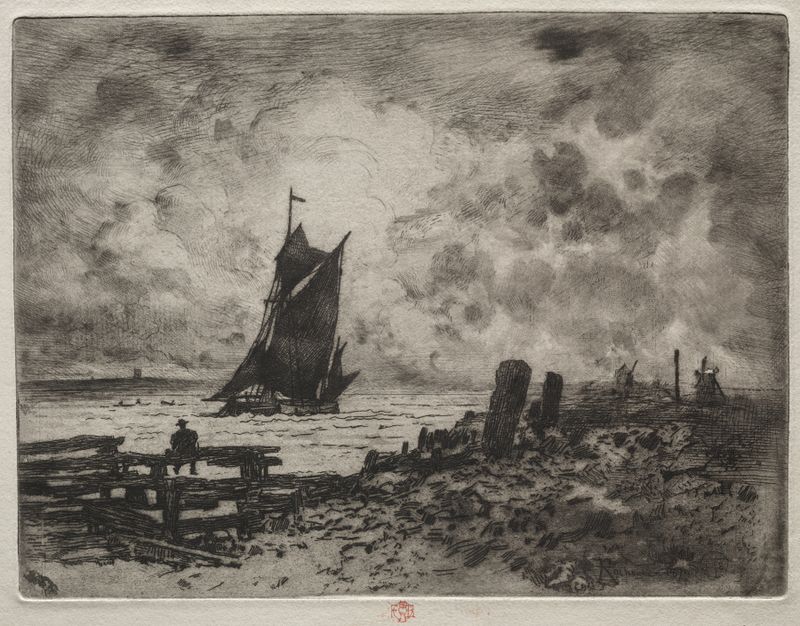
The Little Marine; Souvenir of Medway
Félix Hilaire Buhot
More Architecture Art
Browse all →
The statue of Liberty
Frédéric Auguste Bartholdi

View of Houses in Delft, Known as ‘The Little Street’
Johannes Vermeer

View of Houses in Delft, Known as ‘The Little Street’
Johannes Vermeer

The Cathedral in Rouen. The portal, Grey Weather
Claude Monet

The yellow house
Vincent van Gogh

The Church in Auvers-sur-Oise, View from the Chevet
Vincent van Gogh