
Fishing with a harpoon — History & Facts
A single boat glows like a lantern in the darkness, its fire-lit figures poised between water and sky. What first arrests the eye in Fishing with a harpoon is the drama of light: the blaze at the prow, licking upward, throws the fishermen into sharp relief against a world of shadow and moonlit cloud. The tallest figure stands, harpoon ready, his stance tense with anticipation while his companions lean forward, their faces illuminated by the fire’s orange flicker.
The moon, veiled by clouds, adds a second, colder light, silvering the water and outlining the distant trees—two worlds of night, one human and urgent, the other vast and indifferent. This is a scene built on contrasts: fire and moon, action and stillness, the intimacy of shared labor against the immensity of the northern landscape. The artist, Adolph Tidemand, chooses not the moment of triumph but the breath before it—the harpoon raised, the fish unseen, all eyes fixed on the water’s surface. The composition draws us in: the fire’s smoke blurs the boundary between boat and sky, while the reeds in the foreground anchor us on the shore.
This is not a generic night, but a specific, lived experience, rendered with the careful observation of mid-19th century realism. Painted in 1851, and now held by the National Museum of Art, Architecture and Design, the work invites us to linger, to feel the weight of the harpoon and the hush before the strike.
More Artworks by Adolph Tidemand

Bridal Procession on the Hardangerfjord
Adolph Tidemand
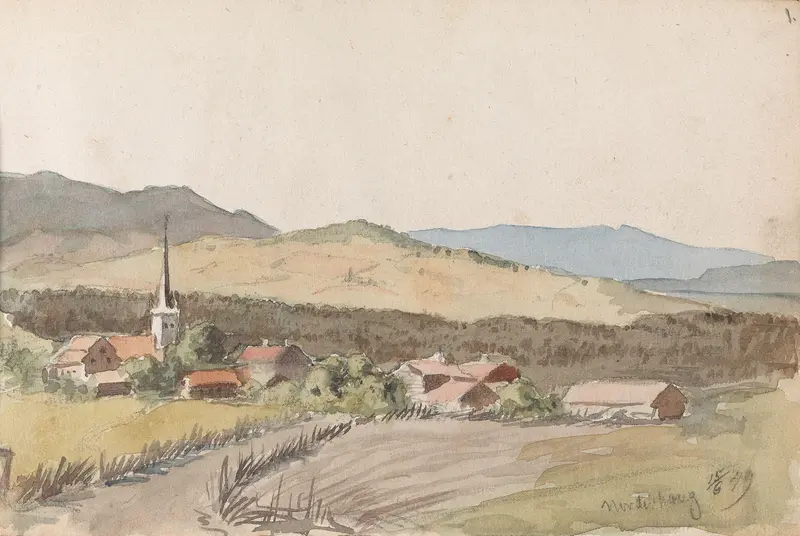
Fra Haugsbygd
Adolph Tidemand
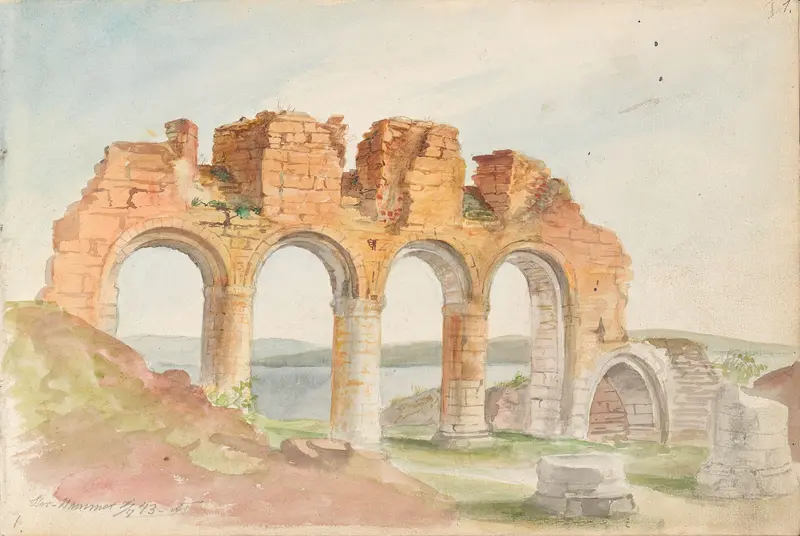
Domkirkeruinen, Hamar
Adolph Tidemand
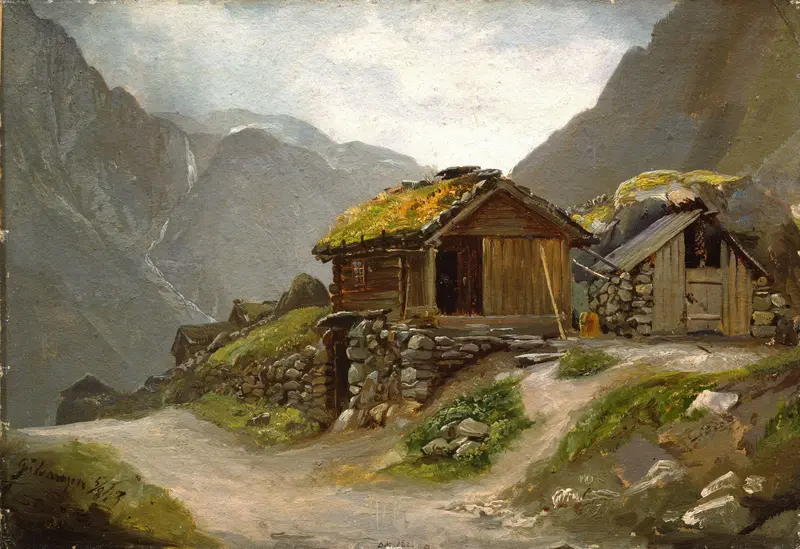
View from Gudvangen
Adolph Tidemand
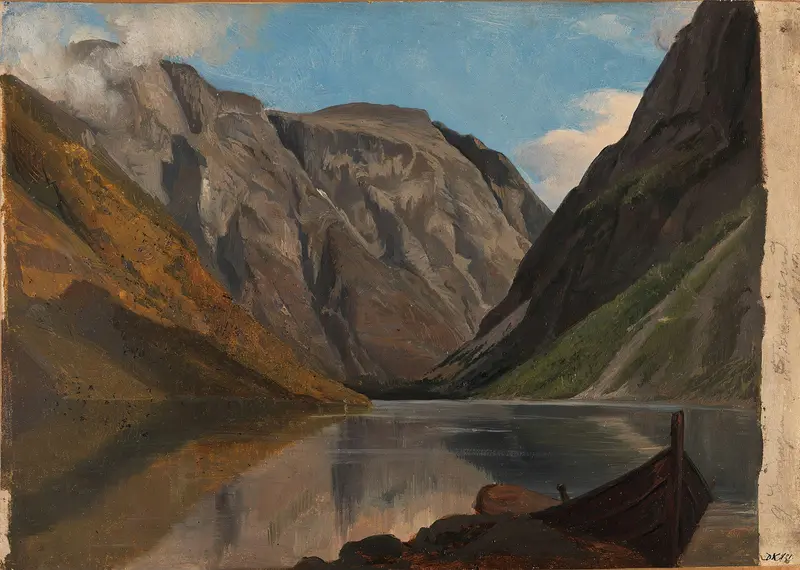
View of Gudvangen
Adolph Tidemand
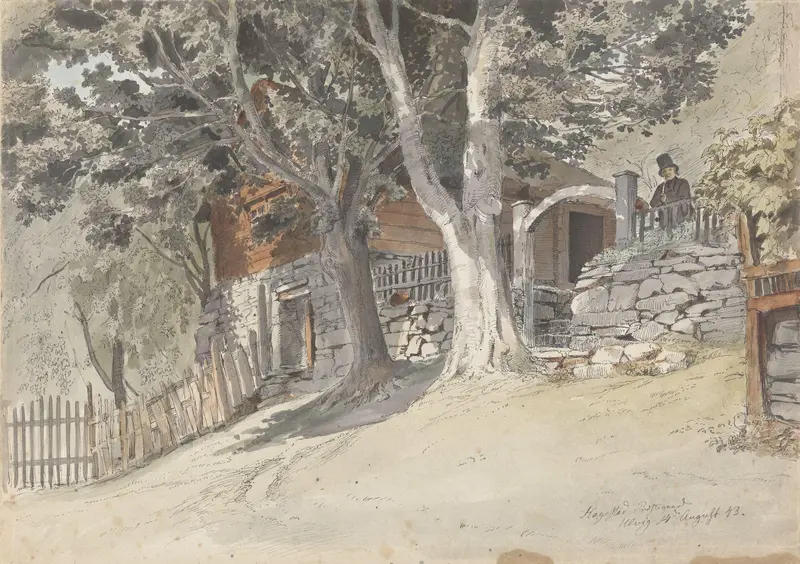
Hagestad prestegård, Ulvik i Hardanger
Adolph Tidemand
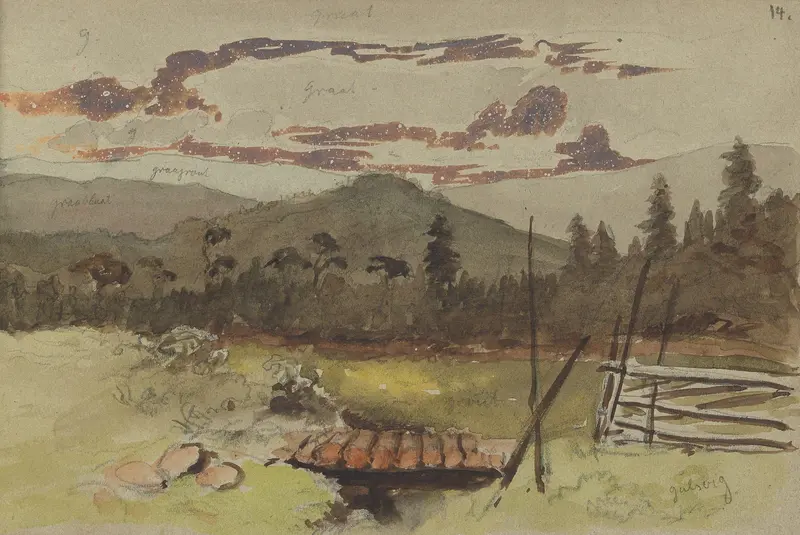
Fra Gulsvik
Adolph Tidemand
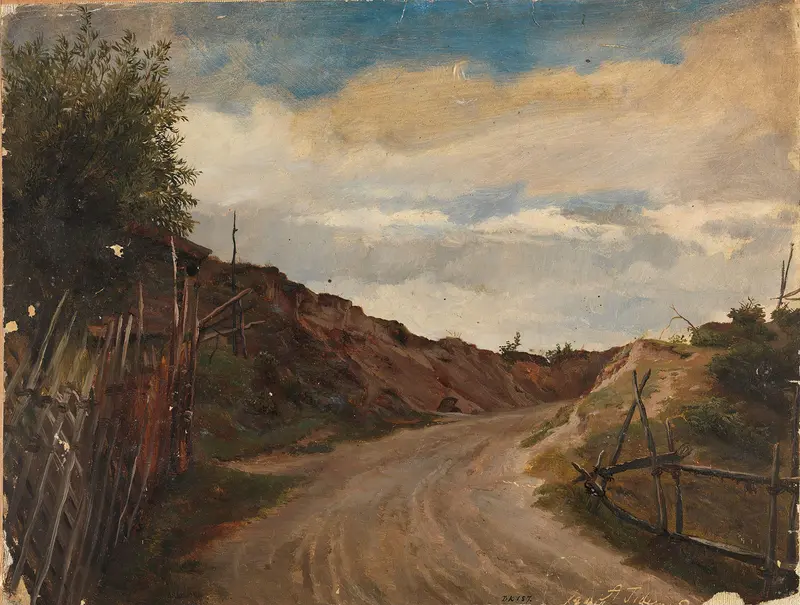
Country Road
Adolph Tidemand
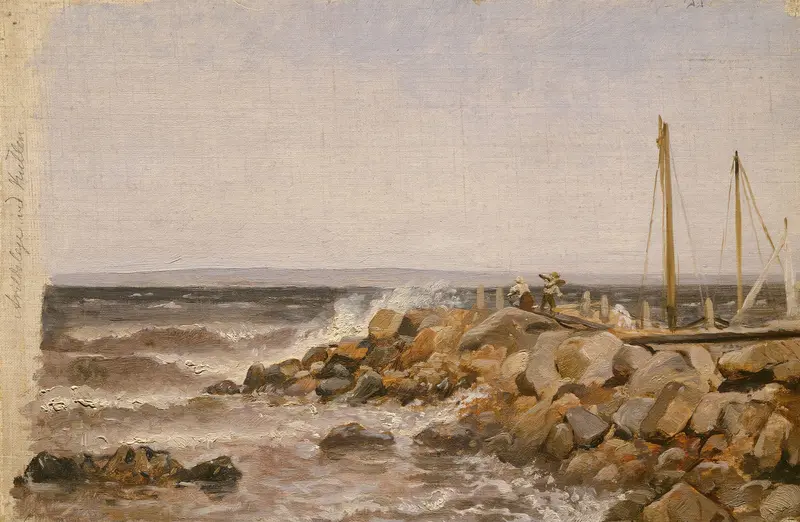
From Kullen in Sweden
Adolph Tidemand
Untitled
Adolph Tidemand





