
Forum from E — History & Facts
Can beauty exist without sorrow? The confluence of both weaves through the essence of this masterpiece, inviting contemplation on life's dualities. Look to the soft, rolling hills that cradle the foreground, where gentle strokes of green and gold suggest an early morning light. The sky above, ablaze with hues of pink and orange, draws your eye upward, creating a harmonious balance between earth and sky. Notice the subtle textures that Burr employs to depict the foliage, each brushstroke breathing life into the landscape, while the delicate interplay of light and shadow evokes a fleeting moment suspended in time. Within this tranquil vista lies the tension of impermanence.
The luminous sky hints at the promise of a new day, yet carries the weight of what has been left behind—the shadows creeping into the corners speak of the inexorable passage of time. The horizon invites both hope and melancholy, suggesting that beauty is often intertwined with the remnants of loss, an echo of fleeting moments that linger in our memories. In 1900, the artist found himself immersed in the burgeoning American tonalist movement, painting primarily in a secluded studio in New York. This period marked a growing appreciation for the natural environment, as artists sought to express their connection to the landscape.
Burr’s work during this time reflects a shift toward capturing not just the physical beauty, but also the emotional resonance of nature, a response to the changing world and a reflection of his own experiences.
More Artworks by George Elbert Burr
Browse all →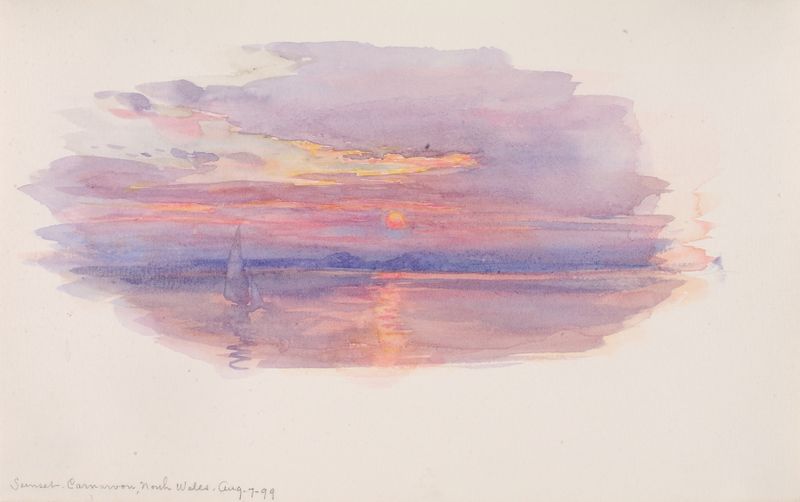
Sunset, Caernarvon, North Wales
George Elbert Burr
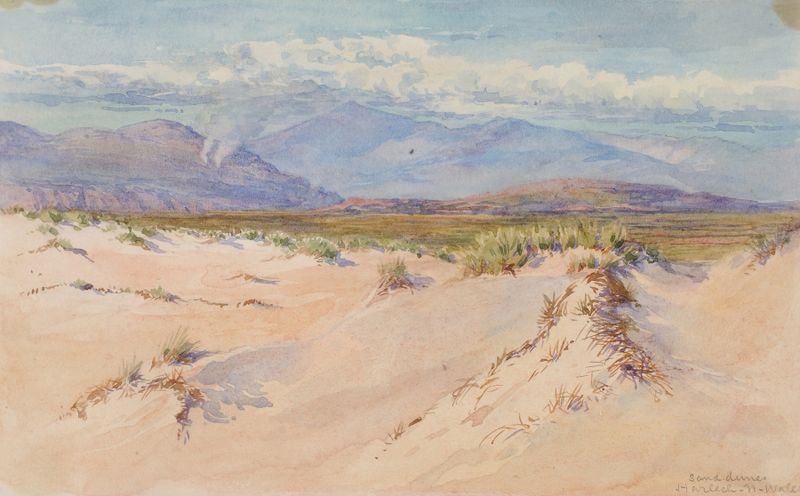
Sand Dunes, Harlech, North Wales
George Elbert Burr

From Pincio, Rome
George Elbert Burr

The Wye near Ross
George Elbert Burr

Venice
George Elbert Burr
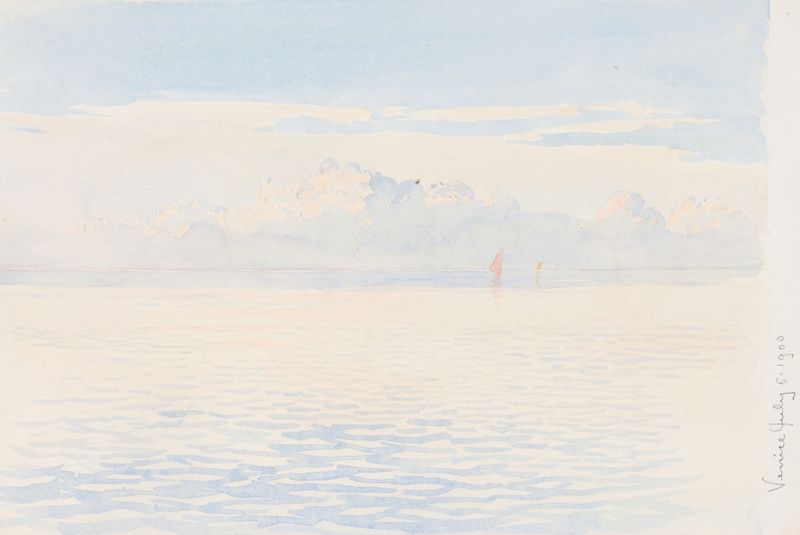
Venice II
George Elbert Burr

Shore at Pwllheli, N. Wales
George Elbert Burr

The Wye at Wilton Castle (Wales)
George Elbert Burr

Venice
George Elbert Burr

Criccieth, N. Wales II
George Elbert Burr





