Fotograaf in zijn studio die een bruidspaar fotografeert — History & Facts
The first thing that pulls the viewer in is the charged stillness at the heart of the room: a bride and groom, frozen in their finest, stand side by side under the glass roof, surrounded by family and the paraphernalia of a 19th-century photographic studio. The photographer, hunched behind his great camera, is as much a performer as the couple themselves, orchestrating a moment that is both intimate and staged. Light pours in from above, illuminating the white of the bride’s dress and veil, making her the anchor of the composition.
Around her, the guests wait—some perched on chairs, others standing or tending to children—each caught between anticipation and the awkwardness of holding a pose. Even the clutter of hats and coats on the table, the patterned carpet, and the sign above the door add to the sense of a real, bustling place, where the extraordinary event of a wedding portrait is layered over the ordinary business of daily life. Created in 1879 by Auguste Lepère, this print captures a world in transition, when photography was becoming a fixture of middle-class ritual and memory. Studios like the one depicted here were both businesses and small theaters, offering families a way to mark milestones with a new kind of image—mechanically precise, yet carefully arranged.
The print’s inclusion in a periodical hints at its role as both reportage and social observation, documenting the customs of its time for a wider audience. Little is recorded about the specific commission or journey of this sheet, now held by the Rijksmuseum, but its very ordinariness is its power: it invites us to look closer at the rituals, technologies, and aspirations that shaped everyday lives in late 19th-century France. If you linger, you may find yourself wondering about the stories behind each face, and about the unseen moment just after the shutter clicks.
More Artworks by Auguste Lepère

Le Pont-Neuf (Paris)
Auguste Lepère
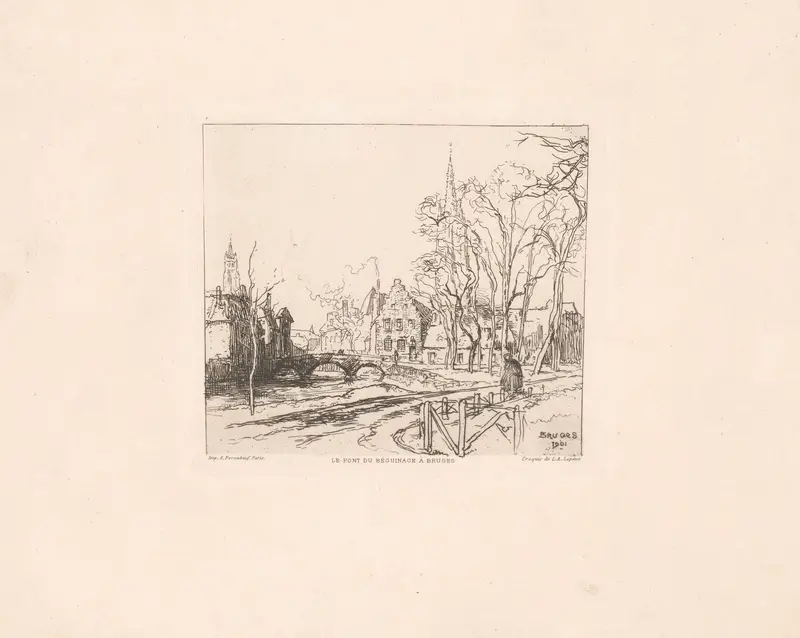
Le pont du Beguinage à Bruges
Auguste Lepère
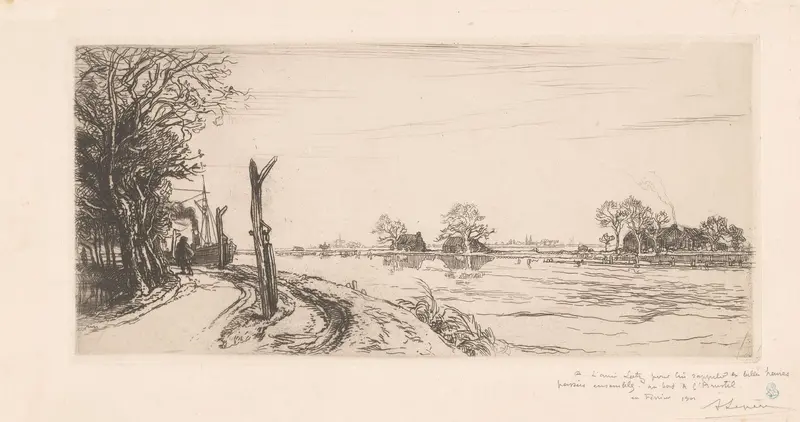
Au bord de l’Amstel
Auguste Lepère
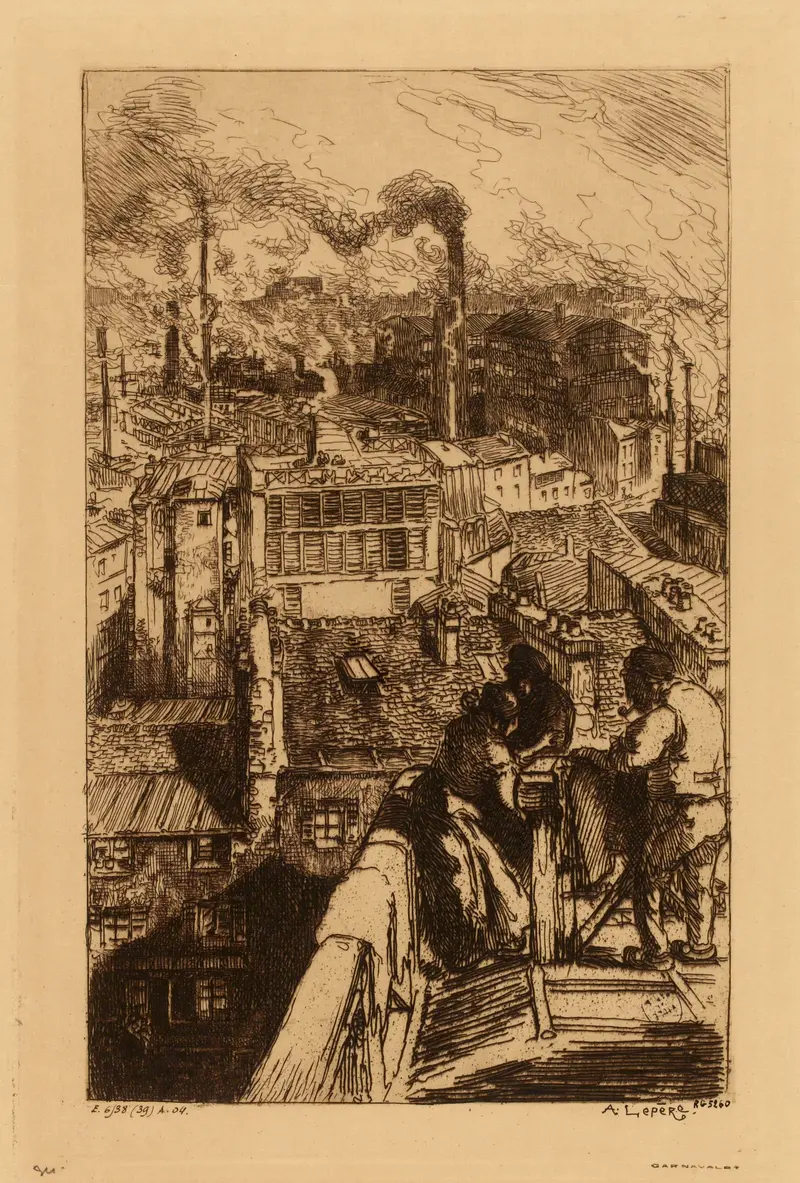
Le quartier des Gobelins
Auguste Lepère
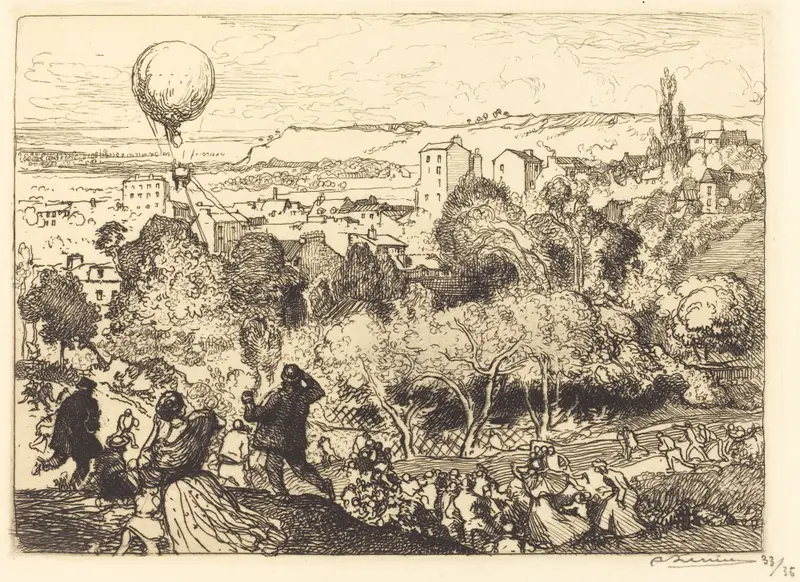
The Falling Balloon, in Pre-Saint-Gervais (Lebaloon qui tombe, au Pre-Saint-Gervais)
Auguste Lepère
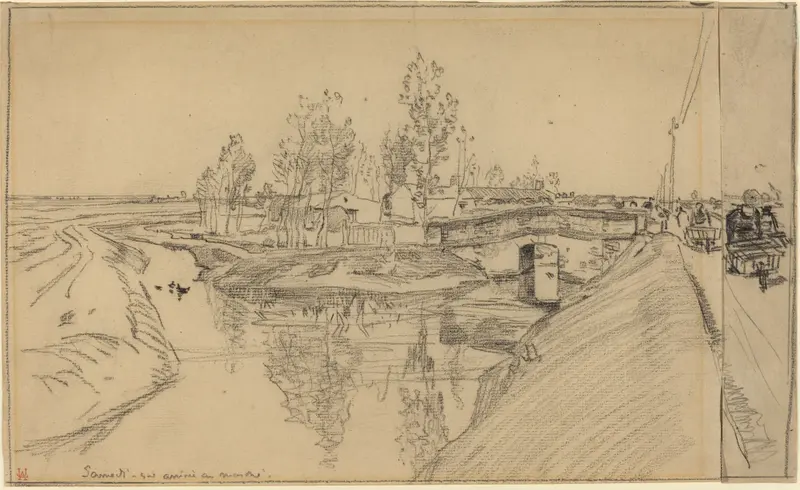
Arrivee au Marche
Auguste Lepère
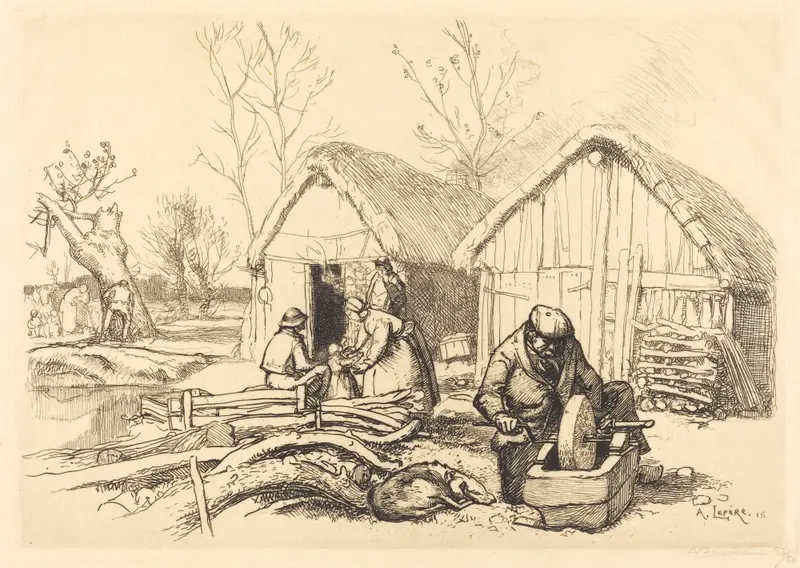
The House of the Woodcutter, Vendee (La maison du bucheron, Vendee)
Auguste Lepère
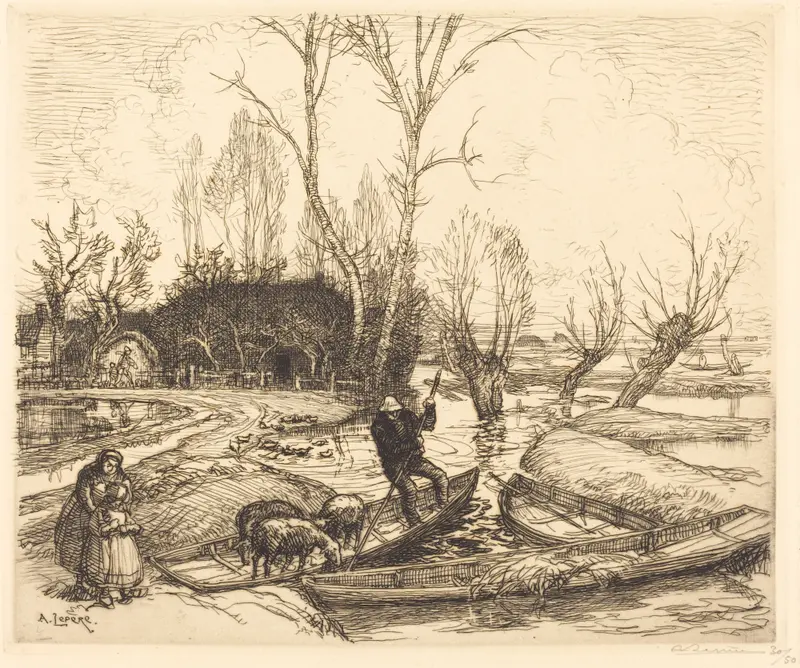
In the Deluged Marsh - The Shepherd (Au marais inonde - Le berger)
Auguste Lepère
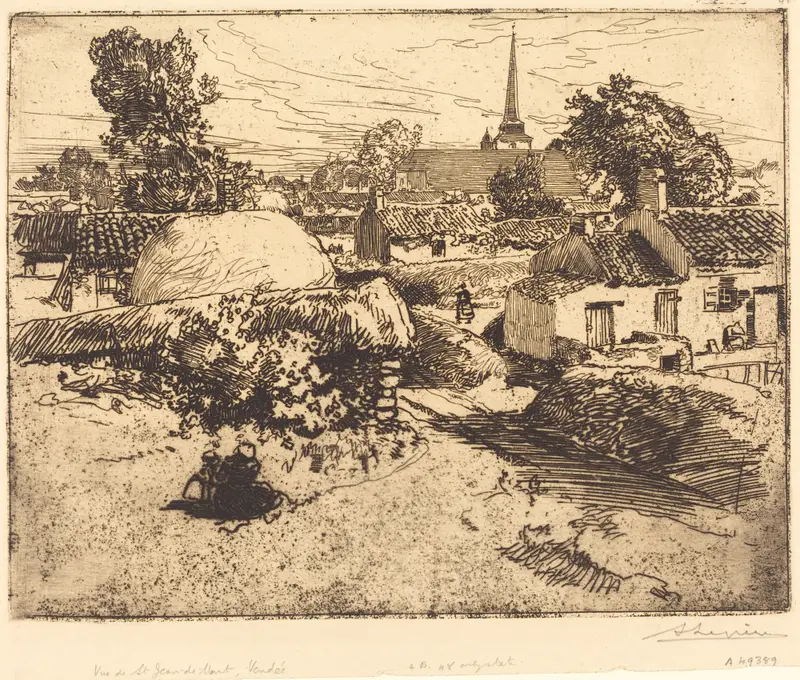
View of St.-Jean-de-Mont, Vendee (Vue de St.-Jean-de-Mont, Vendee)
Auguste Lepère
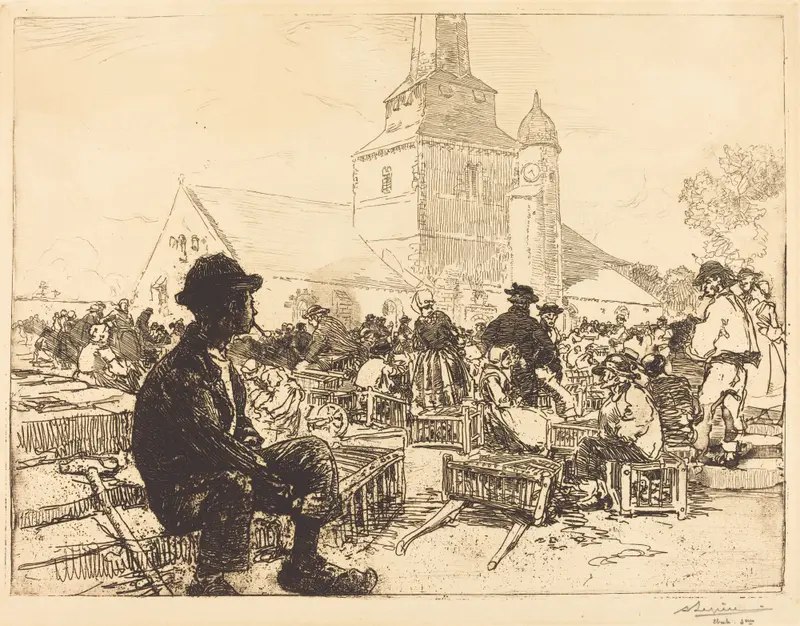
Poultry Market at St.-Jean-de-Mont (Marche a la volaille, a St.-Jean-de-Mont)
Auguste Lepère