From Vestre Aker — History & Facts
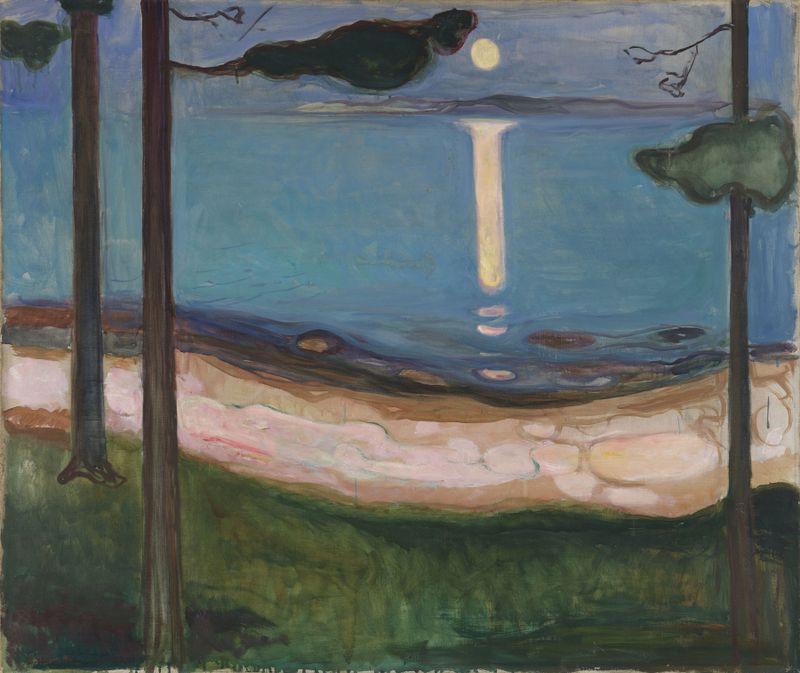
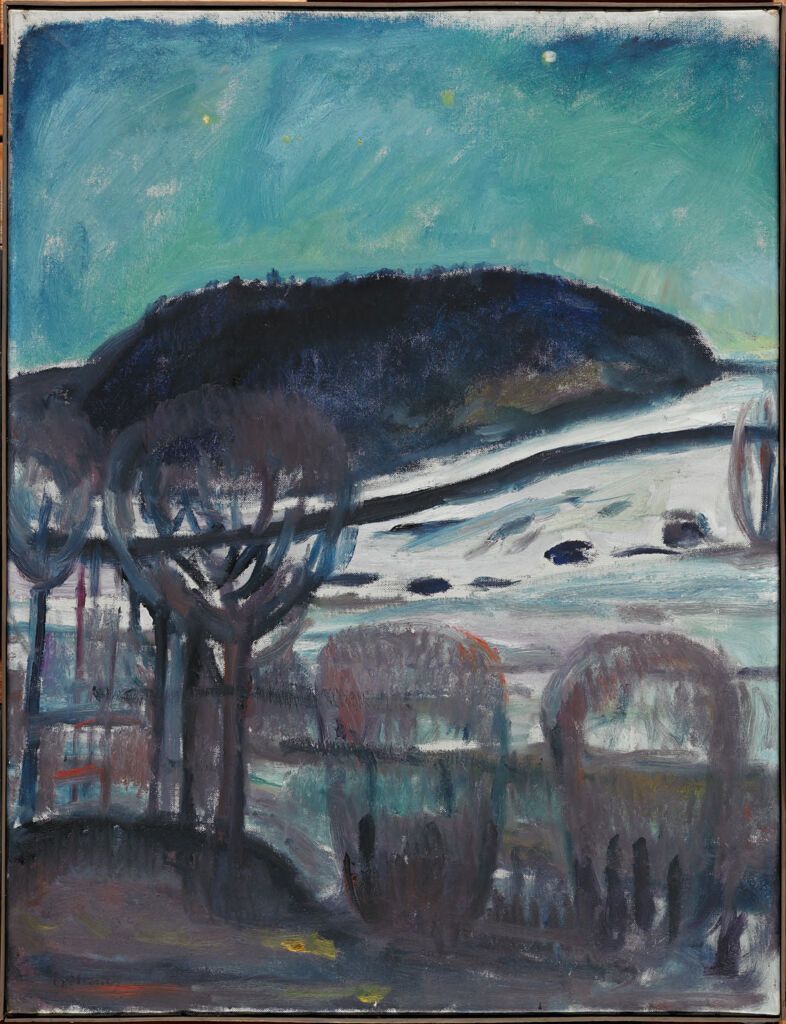
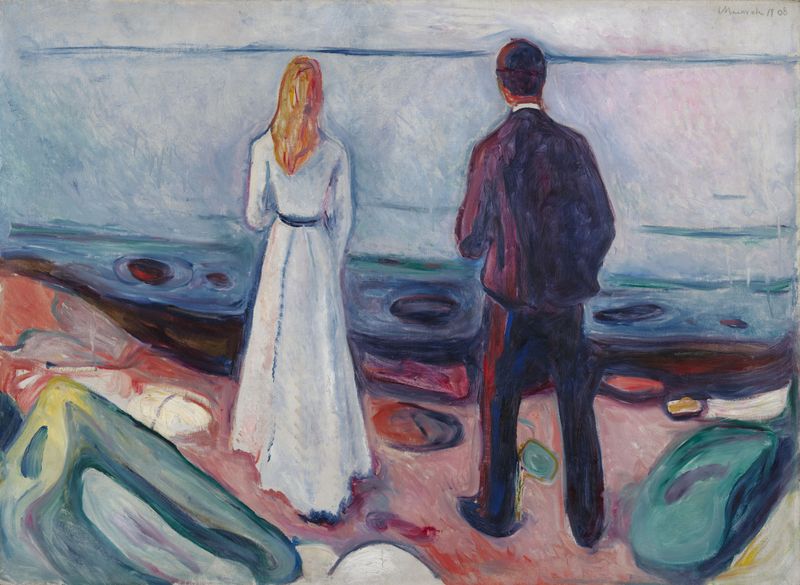
Could a single brushstroke hold eternity? In From Vestre Aker, emptiness becomes a canvas for contemplation, inviting viewers to reflect on the weight of solitude and the quiet ache of existence. Look to the left at the horizon where muted hues of blue and gray converge, suggesting a somber twilight sky. The landscape unfolds with soft, sweeping strokes that create a sense of distance, leading your gaze toward the remote, almost melancholic, Norwegian hills. Notice how the trees stand like sentinels against the vastness, their sparse outlines echoing the emotional barrenness of the scene, while a muted palette envelops the viewer in introspection. Delve deeper into the subtleties of this work, where the starkness of the landscape resonates with a feeling of longing.
The sparse detailing of the foreground contrasts strikingly with the expansive sky, evoking a sense of isolation that transcends mere geography. Each stroke seems to breathe life into the emptiness, capturing the universal experience of searching for connection amid the vastness of existence. Created in 1881, this piece emerged during a pivotal time in Edvard Munch's life, when he was grappling with personal loss and existential themes. Living in Oslo, he was beginning to forge his unique style, influenced by Symbolism and the earlier Impressionists.
This blend of emotional depth and compositional innovation marked a significant moment in the evolution of modern art, reflecting not only his inner turmoil but also the broader cultural shifts of the late 19th century.