
Gähnender Herr im Eisenbahncoupé — History & Facts
What first grips the viewer in Gähnender Herr im Eisenbahncoupé by Adolph von Menzel is the sheer intimacy—and almost comic candor—of a moment stolen from modern life. The man’s yawn is not heroic, not posed, but so unguarded that one feels caught in the act of staring. His eyes squeeze shut, mouth wide open, as if the fatigue of travel has stripped away all social masks.
The soft, almost sketch-like handling of the medium captures the fleetingness of the instant, while the close cropping of the scene presses us into the cramped compartment, shoulder to shoulder with the subject. Every detail here is in service of character and mood: the heavy, wrinkled gloves bunched in his lap, the glint of a watch chain, the rumpled shirt catching the light. The brown and blue palette is subdued, echoing the drabness of train interiors in the mid-19th century, but a streak of blue curtain hints at the world rushing by just out of sight. Menzel’s focus is psychological, not narrative—the yawn is both a physical reflex and a social equalizer, breaking down the boundaries of class and decorum.
Created in 1859, at a time when train travel was transforming European life, this image belongs to a new genre of observation: the unvarnished study of everyday existence. The anonymity of the sitter and the informality of the pose invite us to linger, to imagine the stories that begin with a single, unguarded yawn.
More Artworks by Adolph von Menzel
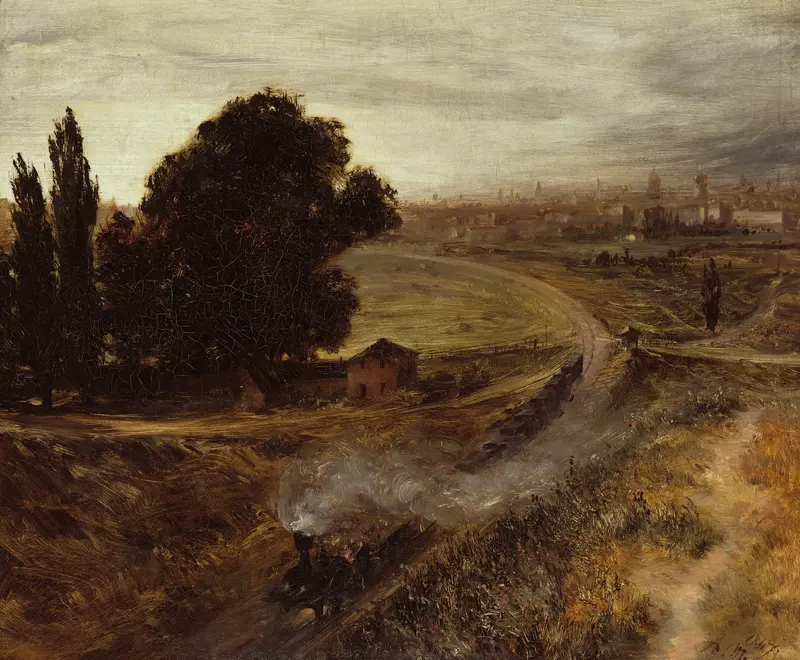
The Berlin-Potsdam Railway
Adolph von Menzel
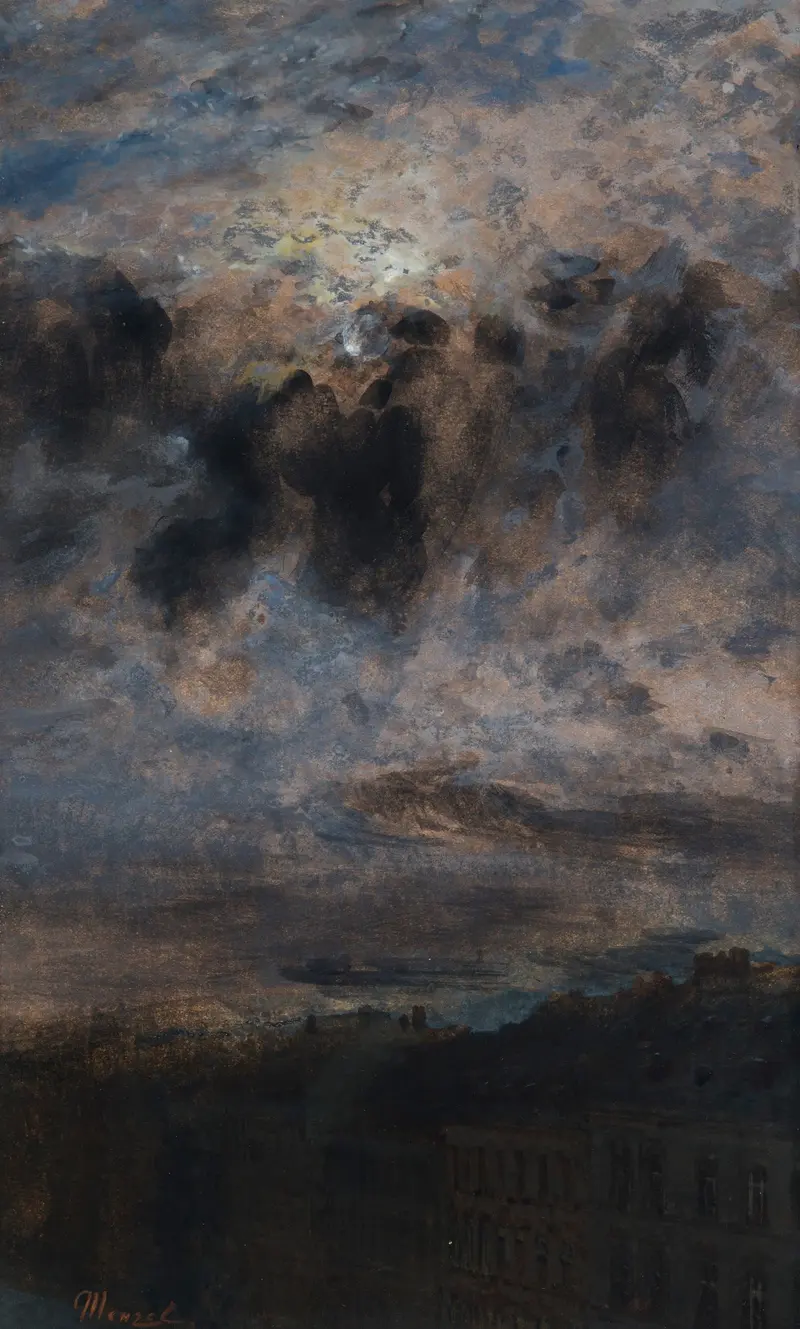
Mondschein über den Dächern von Berlin
Adolph von Menzel
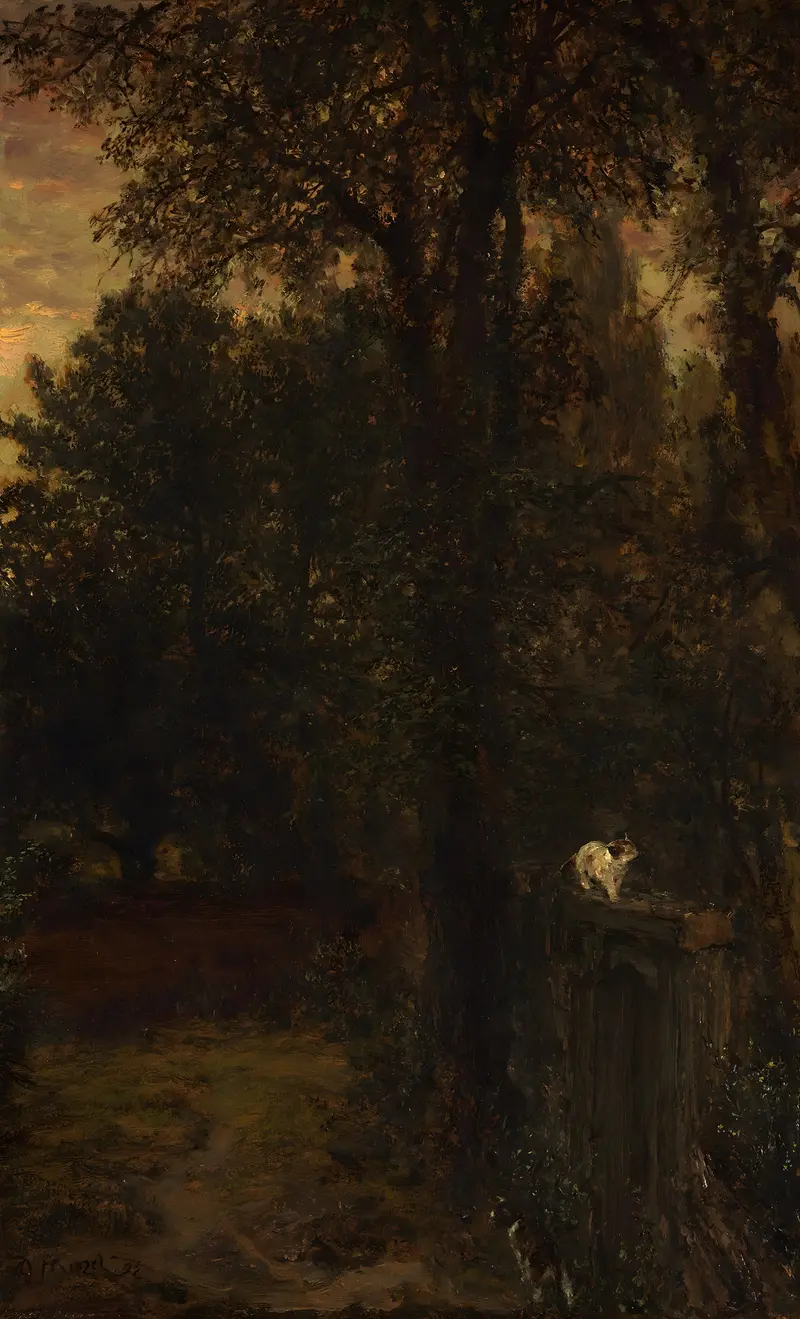
Landscape
Adolph von Menzel
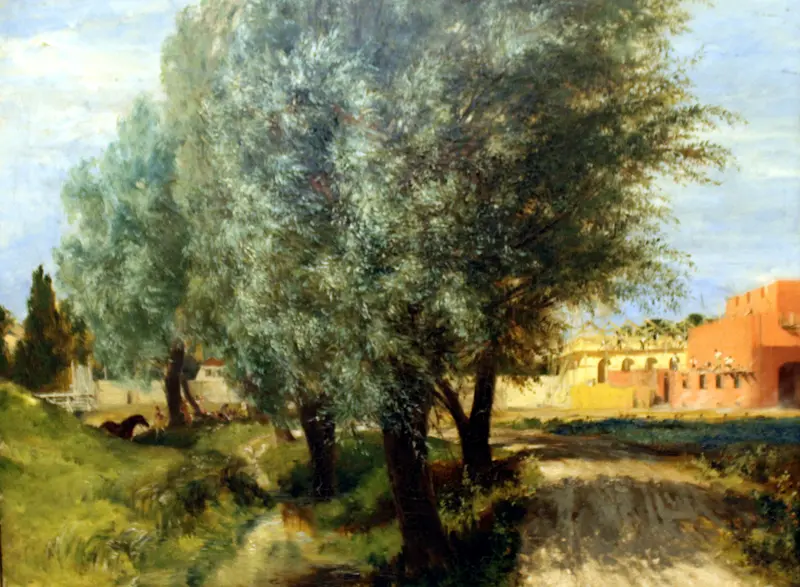
Building Site with Willows
Adolph von Menzel
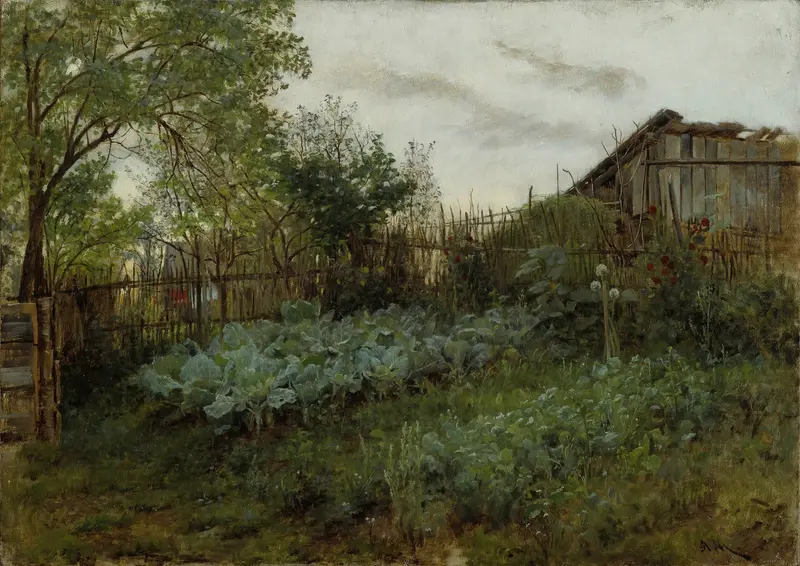
The Back Garden
Adolph von Menzel
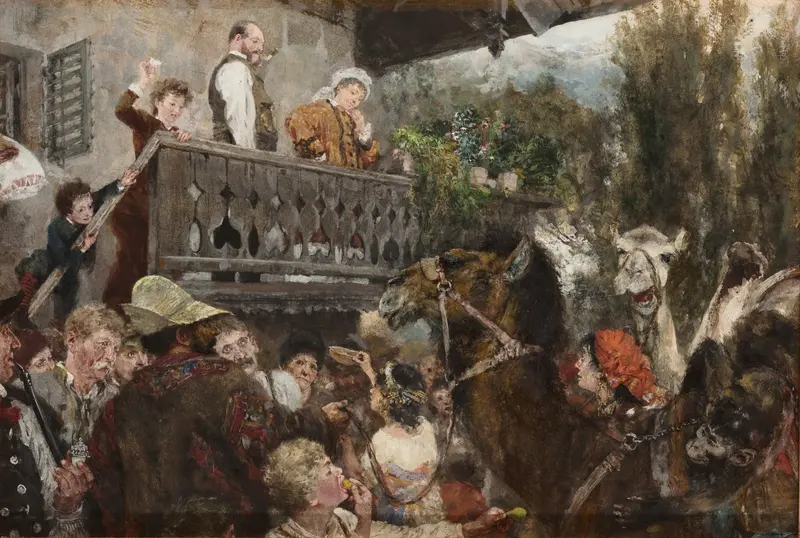
The wandering circus (Camel drivers in Partenkirchen)
Adolph von Menzel
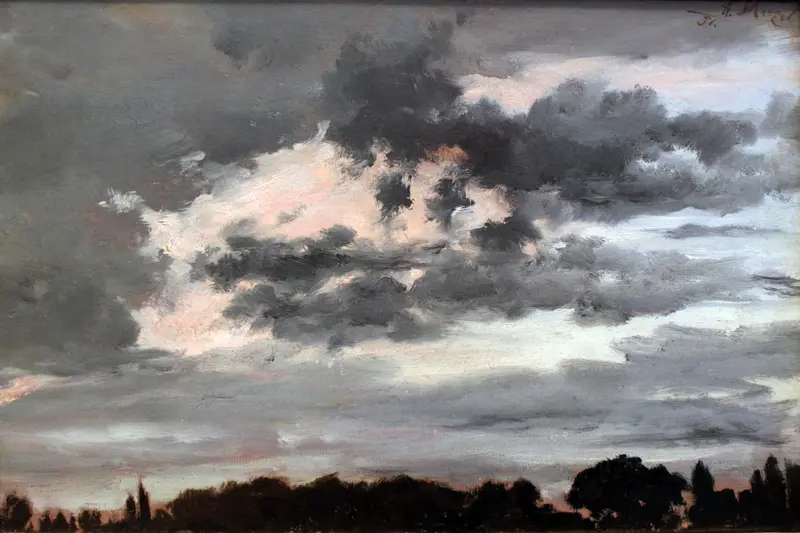
Cloud Study
Adolph von Menzel
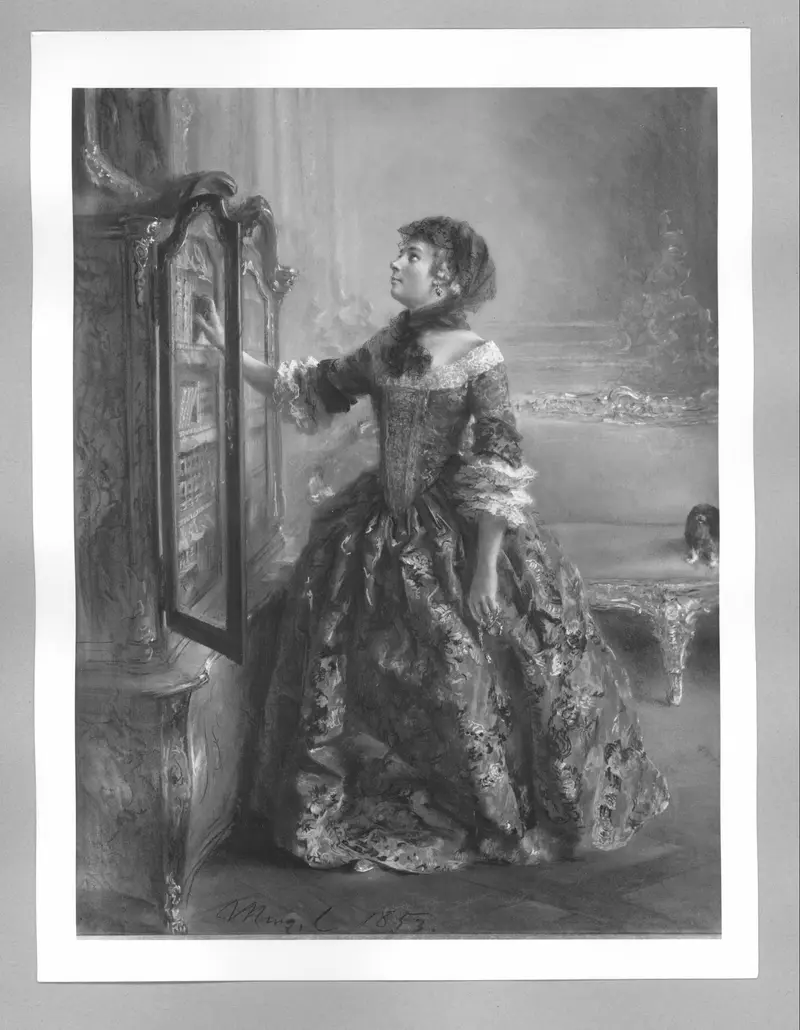
Adolf Friedrich Erdmann Menzel Dame in Rokoko Kostüm vor einem Bücherschrank (Prinzessin Amalie von Hohenzollern) 2320 Führermuseum
Adolph von Menzel
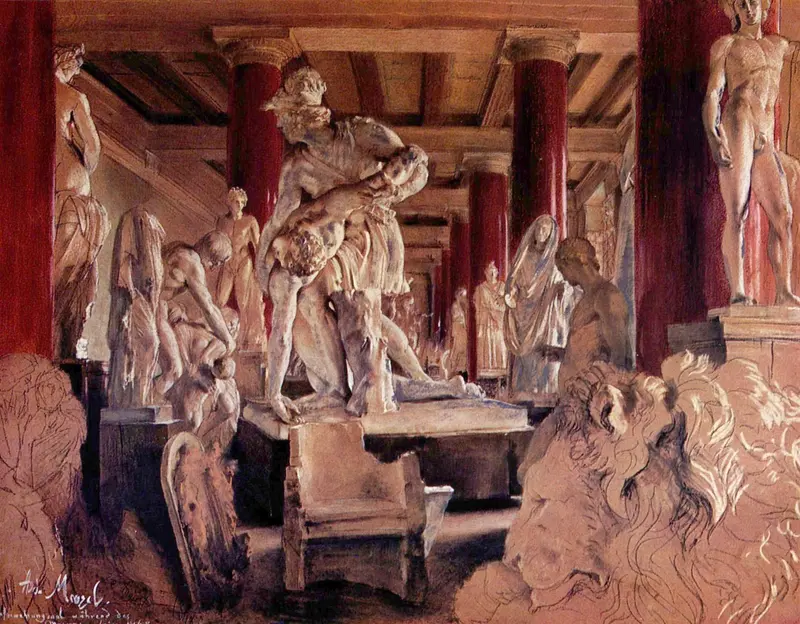
Aufbewahrungssaal während des Museumsumbaus Adolf Friedrich Erdmann von Menzel (Alte Nationalgalerie, Berlin)
Adolph von Menzel
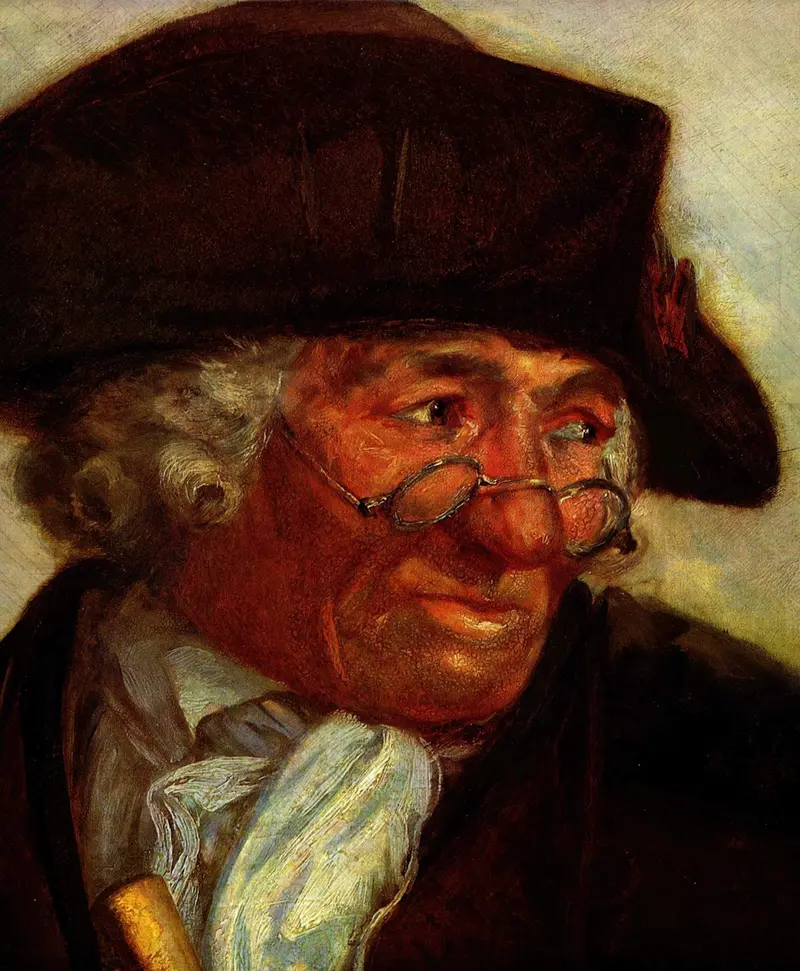
Chodowiecki on the Jannowitz Bridge
Adolph von Menzel
More Genre Scene Art

Banquet of the Officers of the St George Civic Guard
Frans Hals

Rembrandt and Saskia in the Scene of the Prodigal Son
Rembrandt van Rijn

Bal du moulin de la Galette
Pierre-Auguste Renoir

Quadrille at the Moulin Rouge
Henri de Toulouse-Lautrec

A Burial at Ornans
Gustave Courbet

When Will You Marry?
Paul Gauguin