
Gezicht in de omgeving van Bentheim — History & Facts
What if beauty was never meant to be finished? In the serene landscape of Gezicht in de omgeving van Bentheim, a moment unfolds, inviting the viewer to linger in the tender embrace of nature’s rebirth. Look to the foreground, where a gentle stream meanders, its crystalline waters reflecting the soft hues of the sky. The vivid greens of the grass contrast with the muted earth tones of the distant hills, creating a harmonious balance. Notice how the light falls upon the trees, casting playful shadows that dance across the ground, suggesting life and movement in a tranquil setting.
The composition draws your eye into the distance, where a small group of figures appears engaged in their daily activities, their presence breathing life into the stillness of the landscape. Beneath the surface, the painting resonates with themes of renewal. The rich palette symbolizes the cyclical nature of life, with vivid greens signifying growth and rebirth, while the tranquil waters evoke a sense of reflection and calm. The figures, seemingly small against the expansive backdrop, represent humanity’s connection to nature, reminding us that we are but a part of this continuous cycle of life.
Each brushstroke contributes to a sense of peace while hinting at the impermanence that underlies every moment of beauty. In 1743, Isaac de Moucheron worked on this piece during a period marked by the European art movement focused on landscapes. Living in the Netherlands, he was influenced by the natural beauty surrounding him. This work reflects the growing appreciation for picturesque views, resonating with the era’s fascination with capturing the sublime essence of rural life and the tranquility found in harmonious landscapes.
More Artworks by Isaac de Moucheron
Browse all →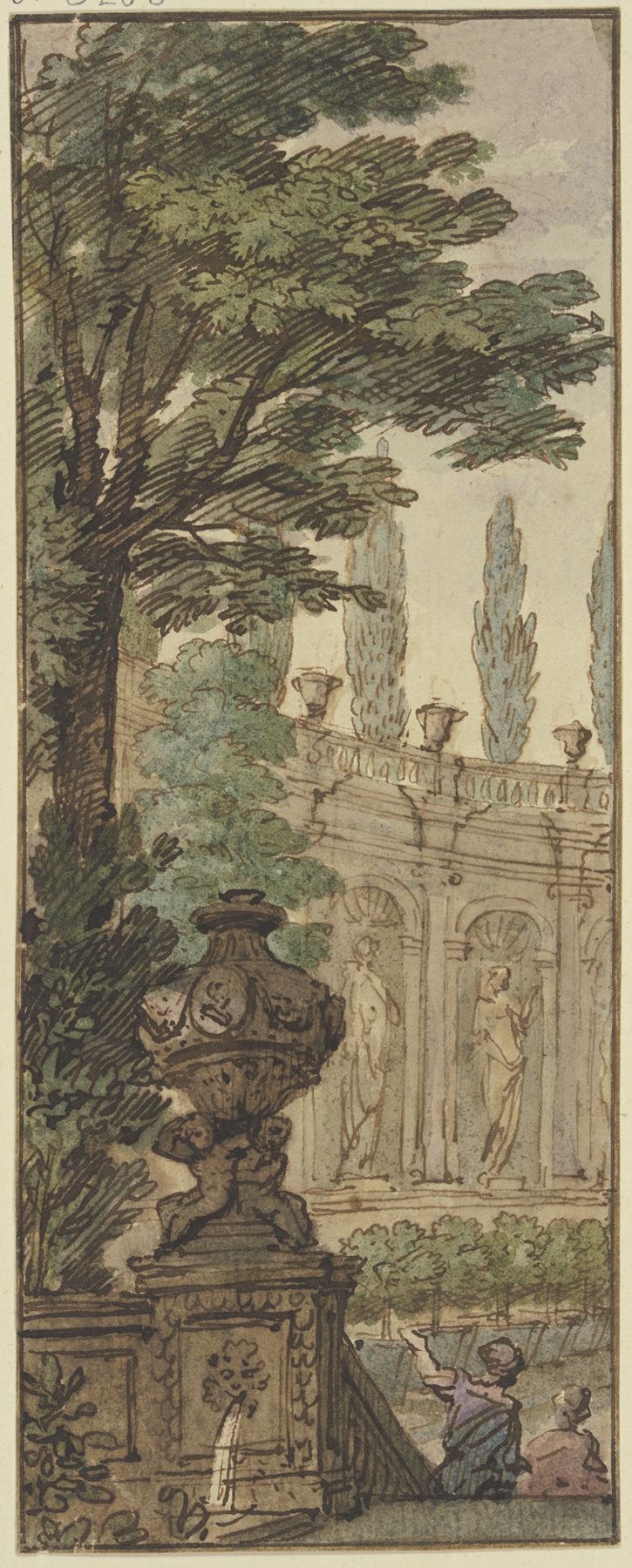
Panneau, im Vordergrund eine Vase, im Hintergrund ein Orangeriegebäude
Isaac de Moucheron
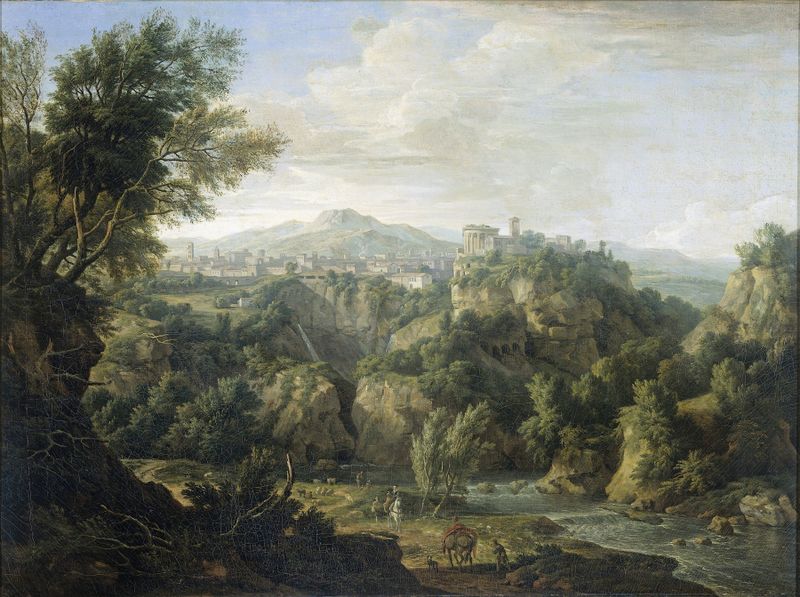
View of Tivoli
Isaac de Moucheron
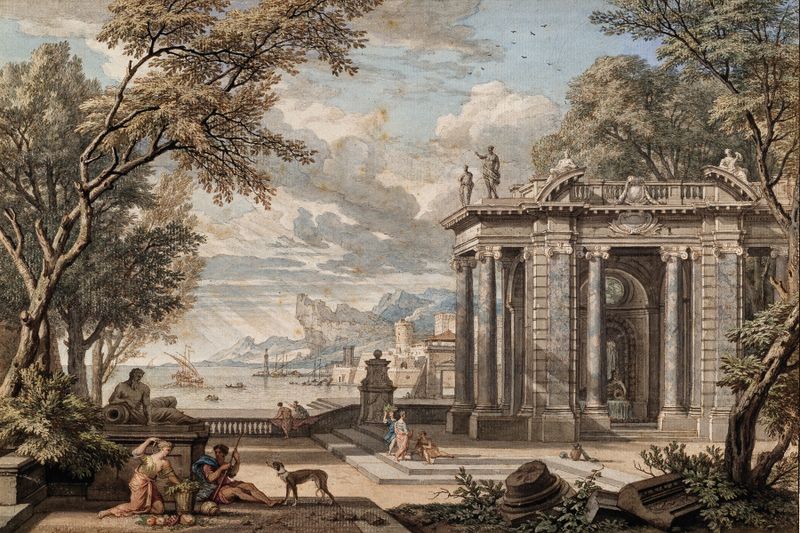
Arcadisch landschap
Isaac de Moucheron
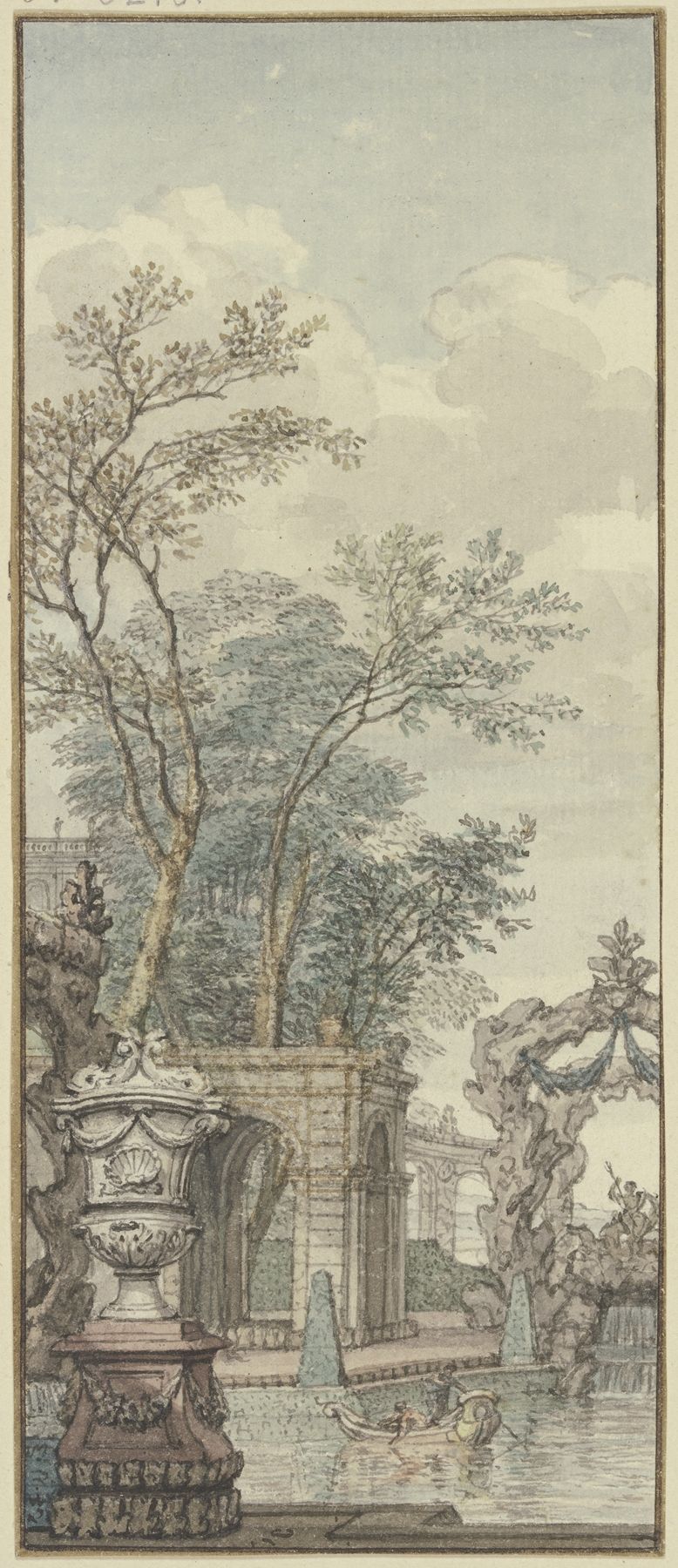
Panneau, Parkansicht mit Wasserwerken und künstlichem Felsen
Isaac de Moucheron

Gezicht op het kasteel van Bentheim
Isaac de Moucheron

Paysage classique animé de personnages
Isaac de Moucheron
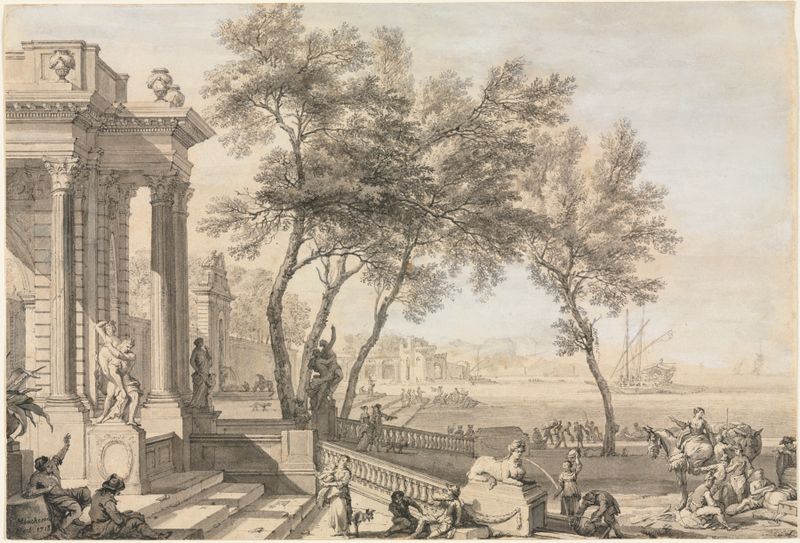
Fantastic Harbor Scene with Architecture and Figures
Isaac de Moucheron

Panneau, im Vordergrund eine Vase, im Hintergrund ein Orangeriegebäude.
Isaac de Moucheron
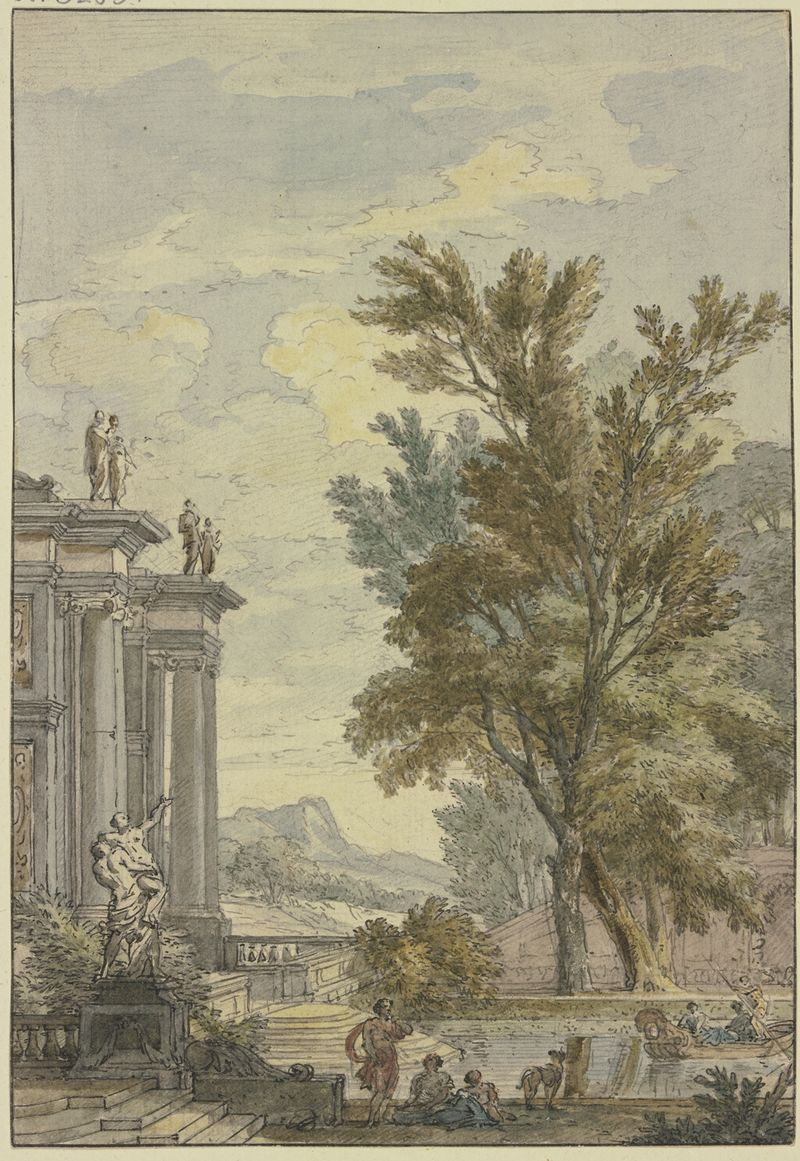
Parkansicht, links ein Gebäude mit Säulen und Statuen, davor ein Bassin, auf welchem eine Gondel fährt
Isaac de Moucheron

An Italianate Garden with a Parrot,a Poodle,and a Man
Isaac de Moucheron





