
Gezicht op de brug bij het Begijnhof te Brugge — History & Facts
A narrow bridge draws the eye into the heart of Bruges, where the delicate tracery of bare trees stands sentinel over quiet water and gabled facades. In Gezicht op de brug bij het Begijnhof te Brugge, Auguste Lepère captures a moment of stillness that feels both intimate and public: a solitary figure lingers on the path, dwarfed by the architecture and the winter branches, while the bridge itself becomes a gentle threshold between the city’s past and present. The fine, almost trembling lines of the etching invite the viewer to linger on each detail—the curve of the canal, the rhythm of windows, the spire that anchors the skyline—while the open space in the foreground draws us forward, as if we too might cross. This print belongs to a tradition of urban views that flourished in the late nineteenth and early twentieth centuries, when artists and collectors alike were gripped by nostalgia for the old cities of Europe.
Bruges, with its medieval streets and air of quiet endurance, was a favorite subject for artists seeking to record what modernity threatened to erase. Auguste Lepère was known for his technical brilliance and his affection for everyday scenes, and here he uses the etching medium to its full advantage: the play of light and shadow, the suggestion of movement in the trees, the sense of a city both lived-in and eternal. Though history has kept few traces of this particular print’s journey, its survival in the Rijksmuseum collection is a testament to the enduring fascination with places that seem to hold time at bay—inviting us, even now, to step onto the bridge and look again.
More Artworks by Auguste Lepère

Le Pont-Neuf (Paris)
Auguste Lepère
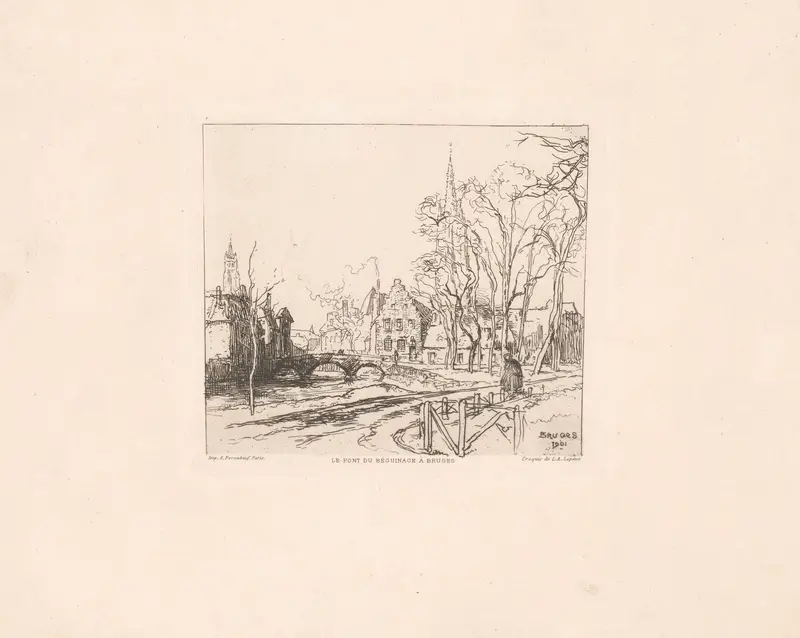
Le pont du Beguinage à Bruges
Auguste Lepère
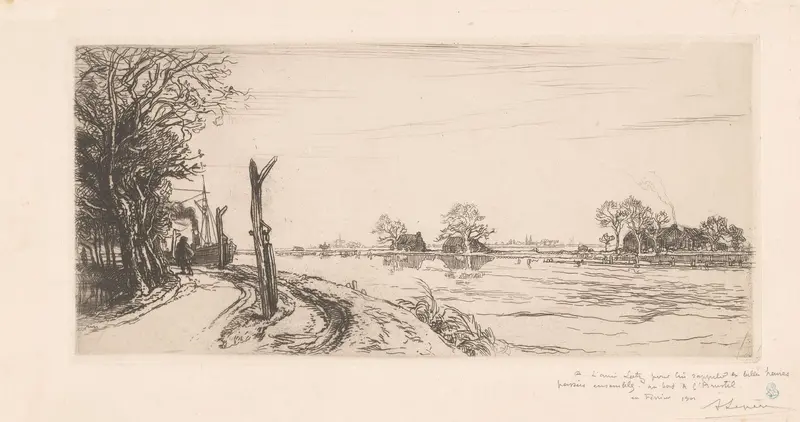
Au bord de l’Amstel
Auguste Lepère
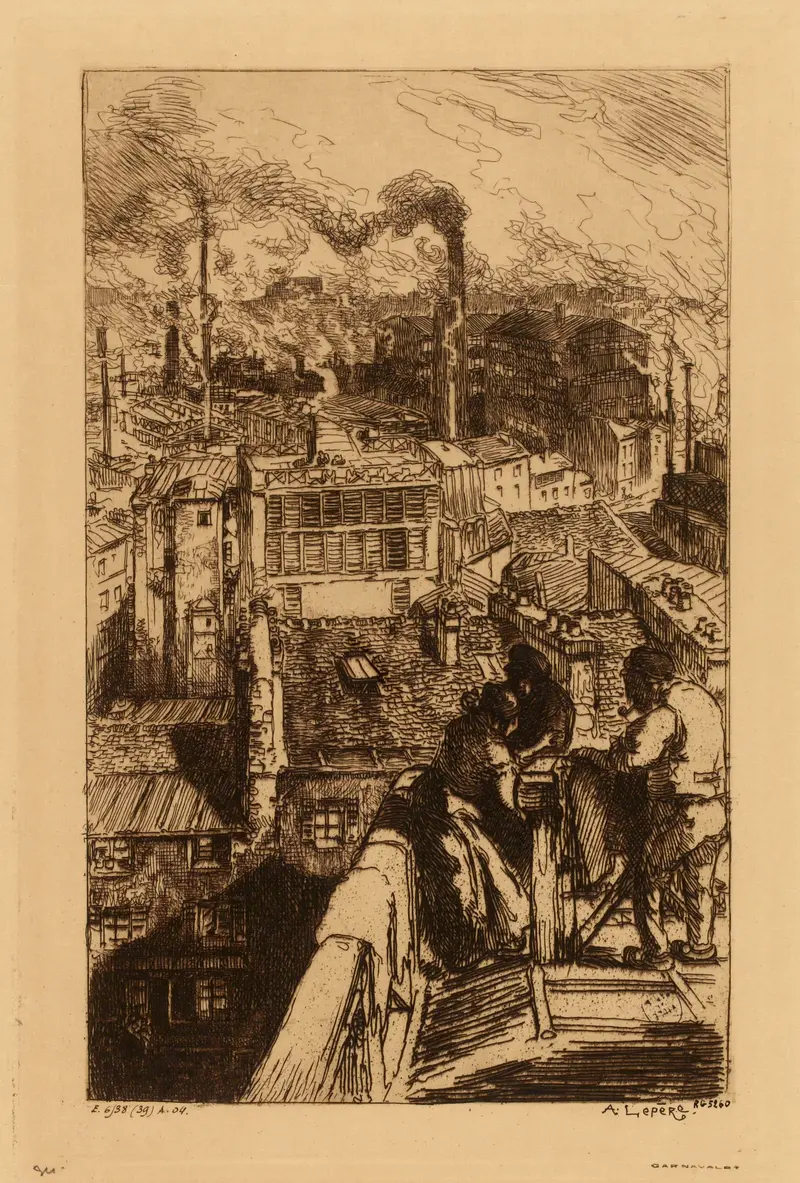
Le quartier des Gobelins
Auguste Lepère
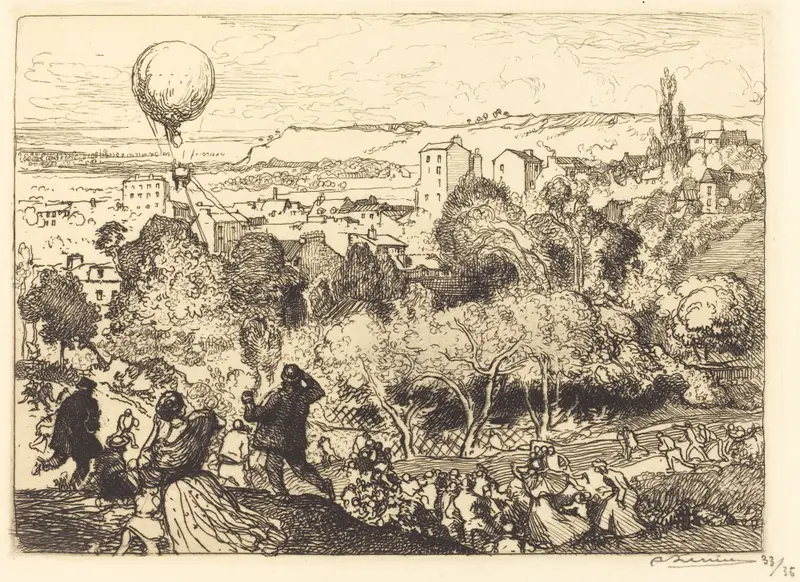
The Falling Balloon, in Pre-Saint-Gervais (Lebaloon qui tombe, au Pre-Saint-Gervais)
Auguste Lepère
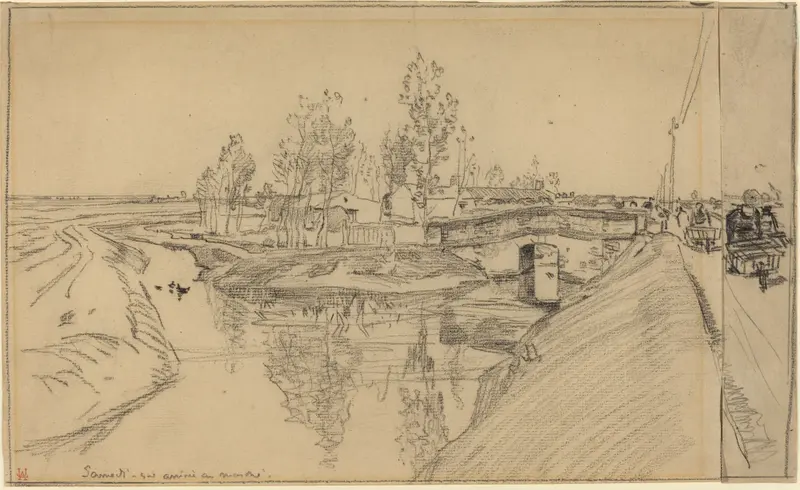
Arrivee au Marche
Auguste Lepère
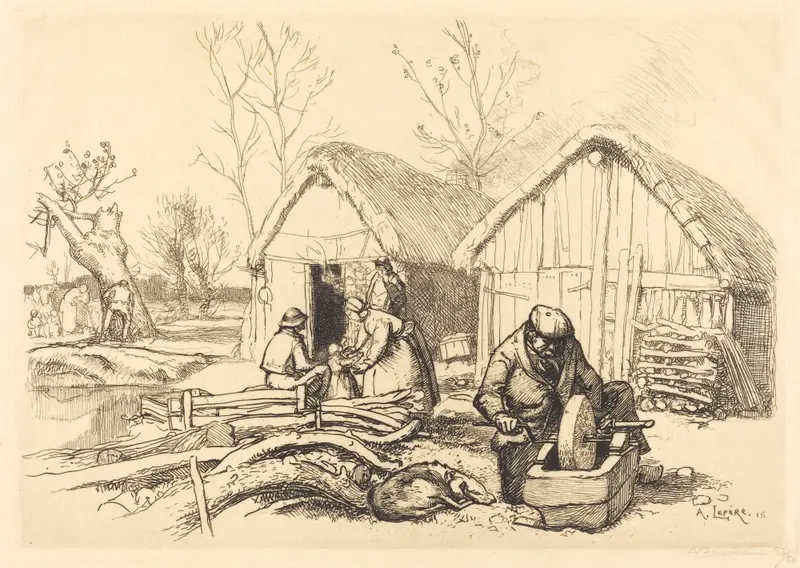
The House of the Woodcutter, Vendee (La maison du bucheron, Vendee)
Auguste Lepère
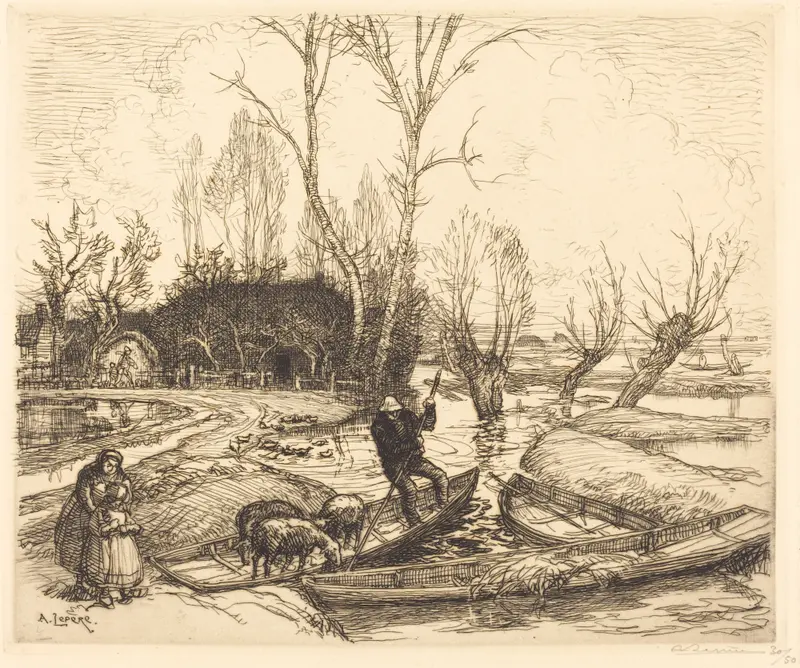
In the Deluged Marsh - The Shepherd (Au marais inonde - Le berger)
Auguste Lepère
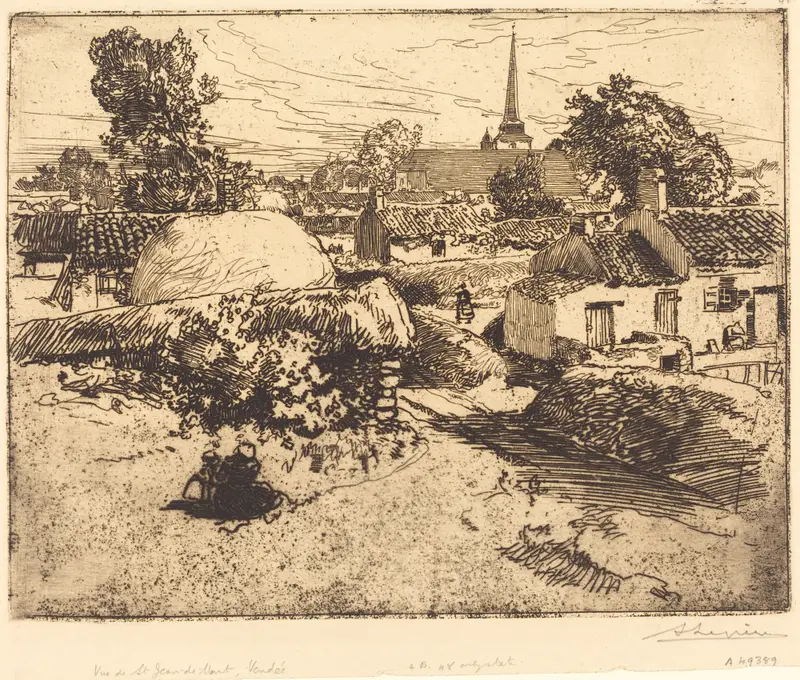
View of St.-Jean-de-Mont, Vendee (Vue de St.-Jean-de-Mont, Vendee)
Auguste Lepère
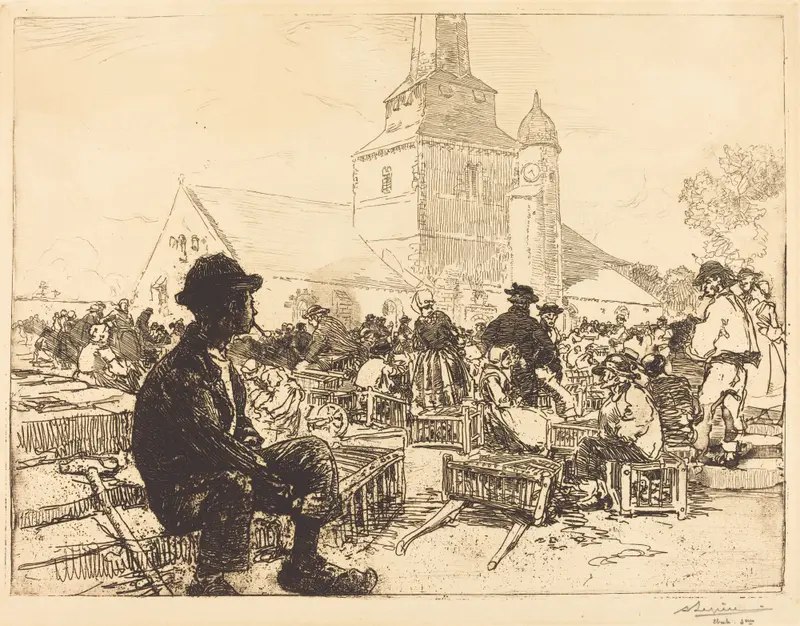
Poultry Market at St.-Jean-de-Mont (Marche a la volaille, a St.-Jean-de-Mont)
Auguste Lepère
More Landscape Art

The Starry Night
Vincent van Gogh

View of Delft
Johannes Vermeer

Water Lilies
Claude Monet

The Grand Canal, Venice, looking north-west from the Ca' Corner to the Ca' Contarini degli Scrigni, with the campanile of Santa Maria della Carità
Canaletto

Windsor Castle
Canaletto

The Grand Canal looking North-East from the Palazzo Dolfin-Manin to the Rialto Bridge
Canaletto