Gezicht op de Pont Marie met figuren in de Seine — History & Facts
What first draws the eye is the choreography of daily labor along the Seine: horses wade into the river, men guide them, women bend to their washing, and the Pont Marie arches quietly in the distance. The print’s composition leads the viewer from the shaded foreground, where figures cluster in work and conversation, across the busy water to the luminous bridge and the city’s leafy edge. The gentle curves of the horses and the sweep of the river soften the geometry of Paris’s stone, while the smoke from distant chimneys curls into the sky, hinting at the city’s ceaseless activity.
Every gesture here is purposeful—a man’s stance as he steadies his animal, the careful attention of washerwomen—each detail anchoring the scene in the rhythms of early twentieth-century urban life. Auguste Lepère was celebrated for his ability to capture the pulse of modern Paris with the tools of traditional printmaking. In the early 1900s, artists like Lepère turned their attention to the city’s working class, finding dignity and beauty in the routines of labor that shaped the metropolis. Prints such as this were prized by collectors eager for images of a changing Paris, and they often circulated among the city’s burgeoning middle class.
While history has kept few traces of the individual stories behind these scenes, the print survives as a vivid record of both the city and the artistic curiosity that defined Lepère’s era. Step closer, and you may find yourself tracing the same lines of movement that once animated the banks of the Seine.
More Artworks by Auguste Lepère

Le Pont-Neuf (Paris)
Auguste Lepère
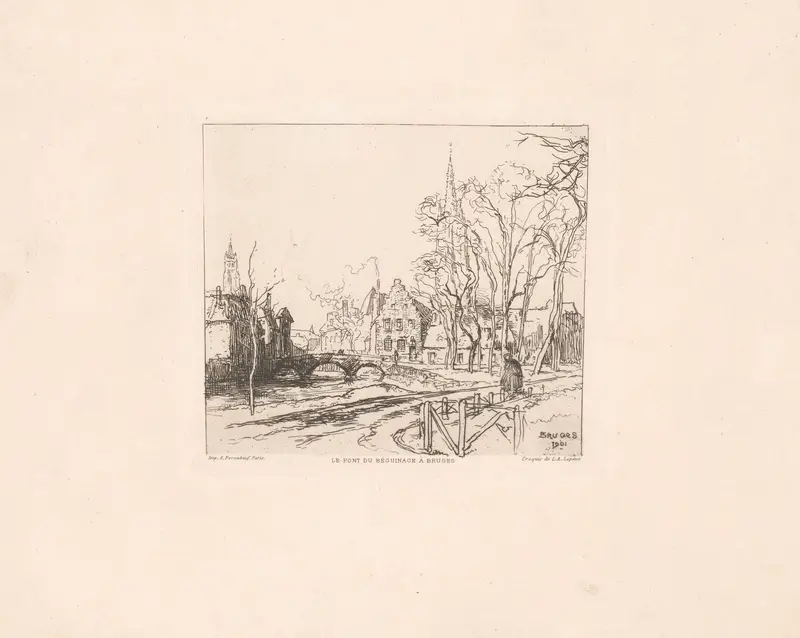
Le pont du Beguinage à Bruges
Auguste Lepère
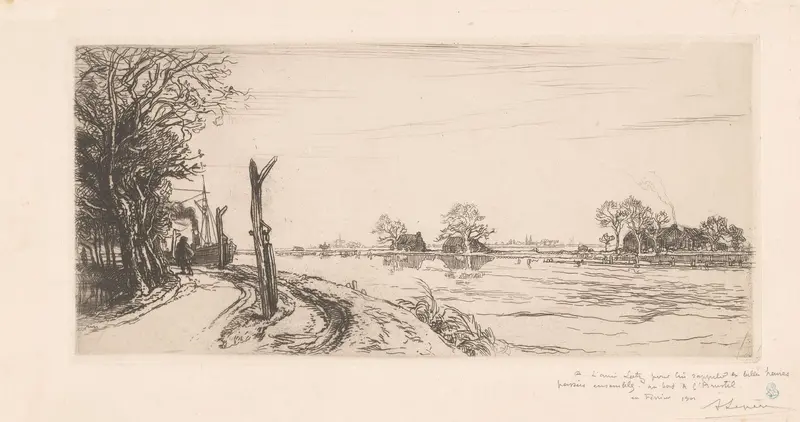
Au bord de l’Amstel
Auguste Lepère
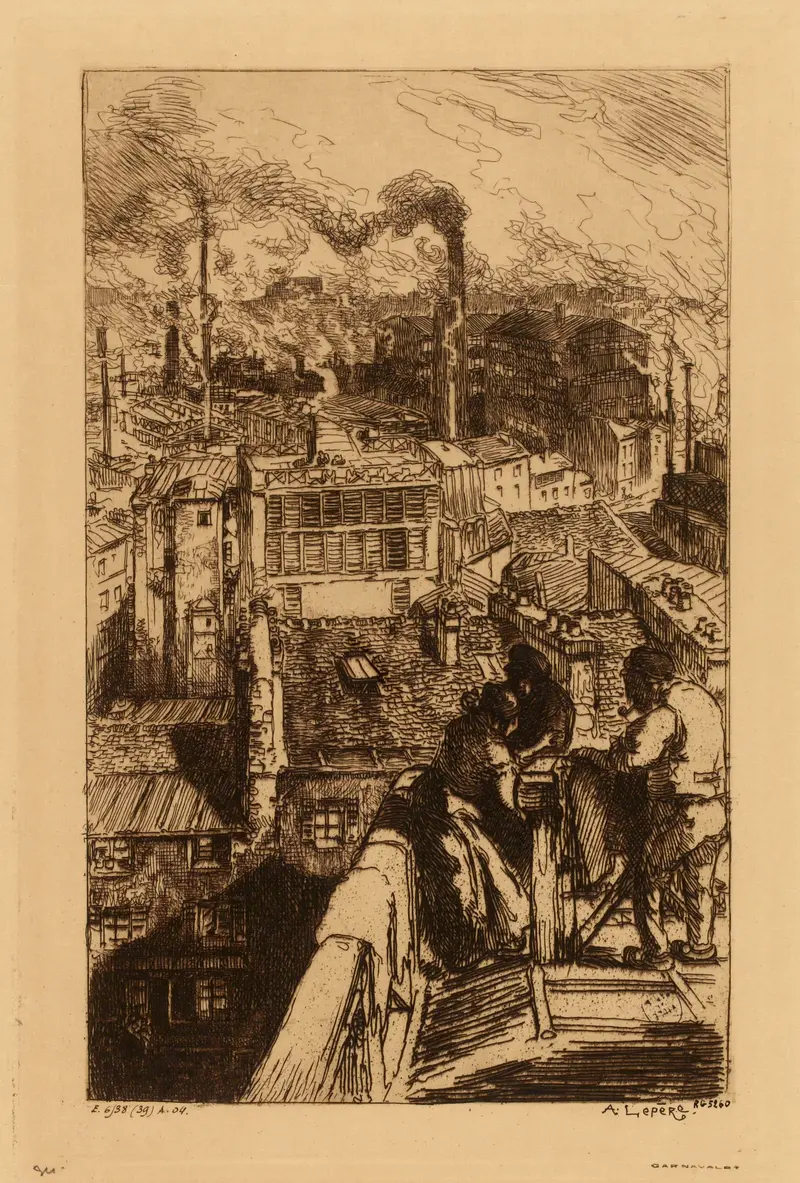
Le quartier des Gobelins
Auguste Lepère
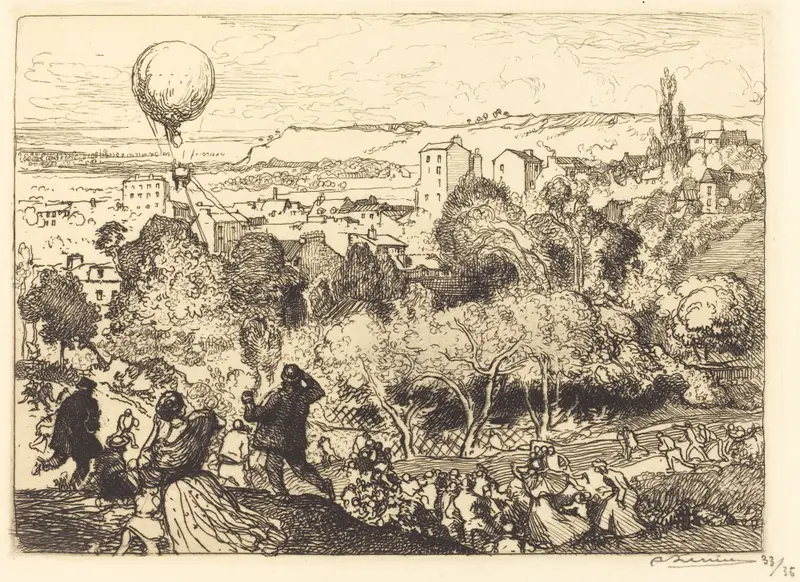
The Falling Balloon, in Pre-Saint-Gervais (Lebaloon qui tombe, au Pre-Saint-Gervais)
Auguste Lepère
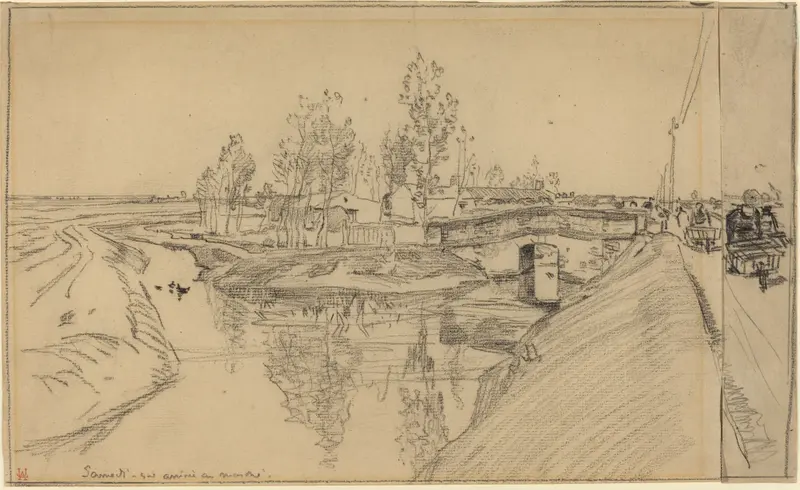
Arrivee au Marche
Auguste Lepère
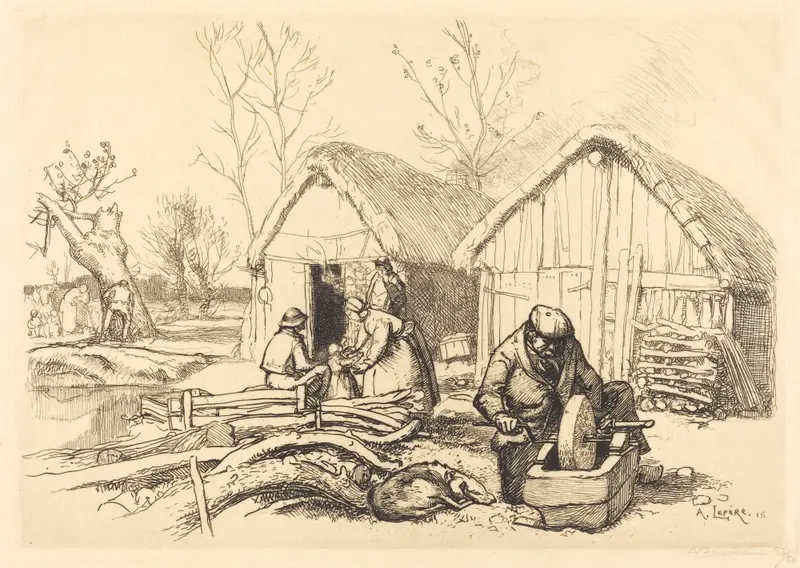
The House of the Woodcutter, Vendee (La maison du bucheron, Vendee)
Auguste Lepère
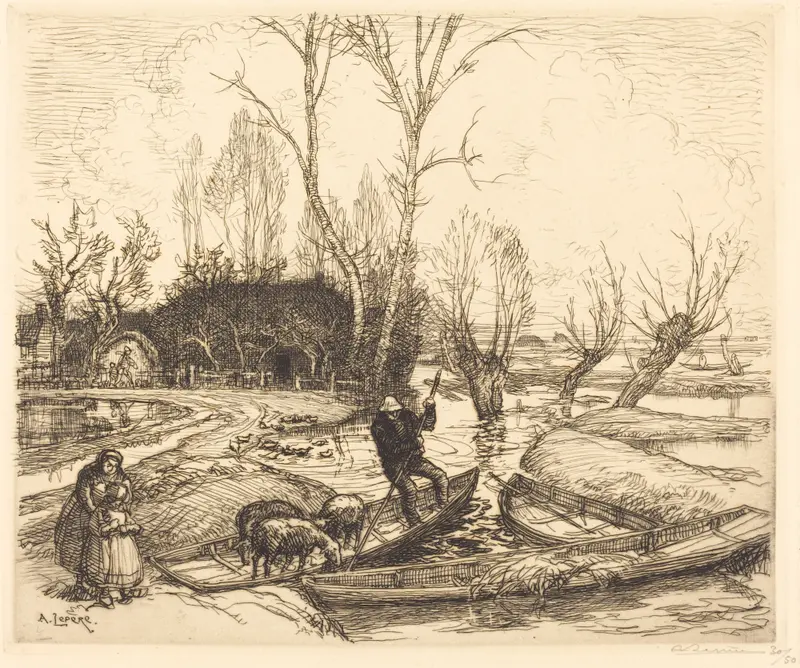
In the Deluged Marsh - The Shepherd (Au marais inonde - Le berger)
Auguste Lepère
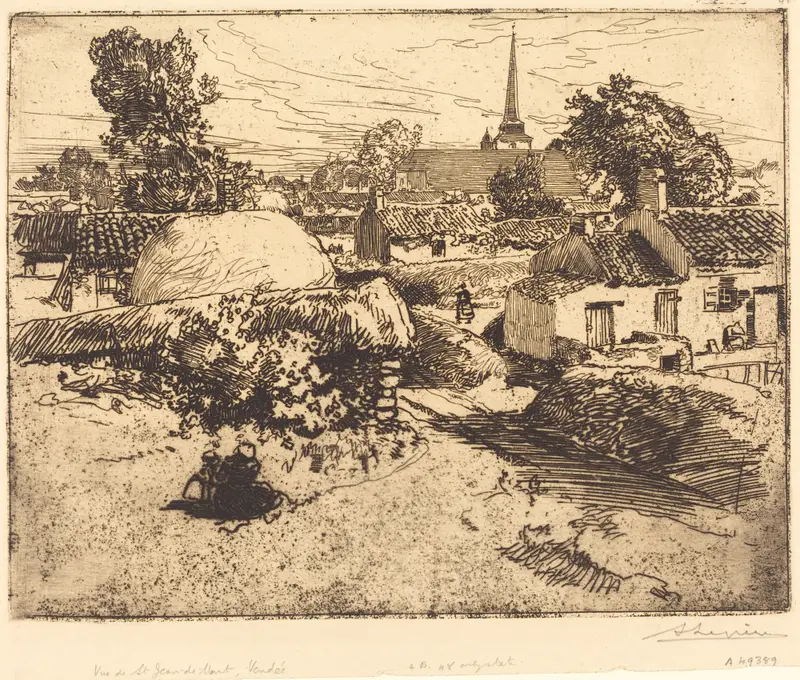
View of St.-Jean-de-Mont, Vendee (Vue de St.-Jean-de-Mont, Vendee)
Auguste Lepère
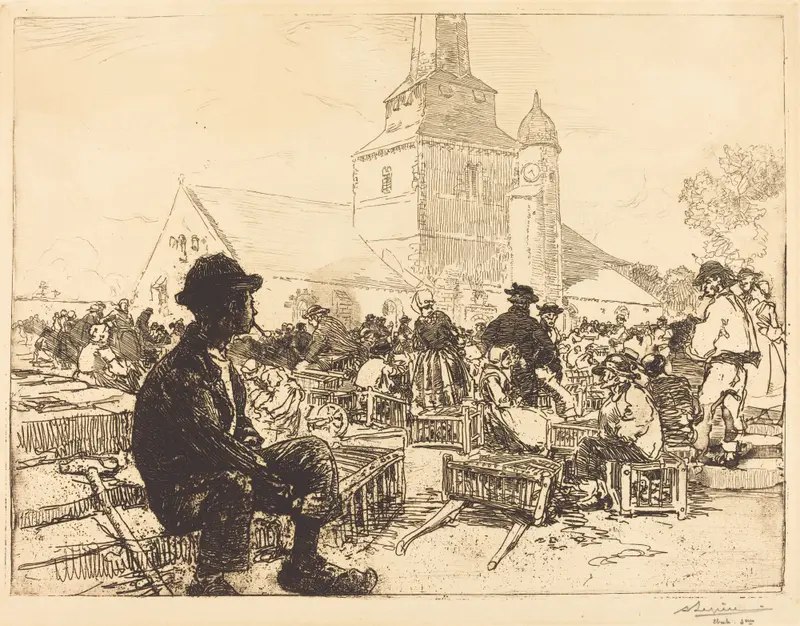
Poultry Market at St.-Jean-de-Mont (Marche a la volaille, a St.-Jean-de-Mont)
Auguste Lepère