
Gezicht te Lienz — History & Facts
What secret hides in the quiet of the canvas? Each stroke whispers the promise of destiny, beckoning the viewer to unravel its mysteries. Look to the left, where the rolling hills cradle a quaint village, their soft green hues awash in the gentle glow of morning light. The artist’s meticulous brushwork captures a serene atmosphere, guiding your eyes along the winding river that snakes through the landscape, reflecting the sky’s delicate blue. Notice how the clouds, softly brushed in pallid whites and grays, enhance the sense of tranquility, while the warm ochers of the rooftops create a harmonious connection with the earth below. Yet, amidst this idyllic scene, there lies an undercurrent of tension.
The vibrant greens of the trees contrast sharply with the stillness of the water, suggesting a world ready to awaken from slumber. The distant mountains loom as silent witnesses, hinting at the inevitability of change, perhaps a storm, just beyond the horizon. This juxtaposition of peace and foreboding invites contemplation of what lies ahead, illuminating the unpredictability of fate. In 1875, Franz Alt painted Gezicht te Lienz during a time of personal evolution, as he sought to establish his place in the Austrian landscape tradition.
Living in a period where Romanticism was in full swing, he embraced the natural world around him while also reflecting a longing for a deeper connection to the sublime. This work signifies not only his dedication to capturing beauty but also his ambition to explore the narrative potential of landscapes.
More Artworks by Franz Alt
Browse all →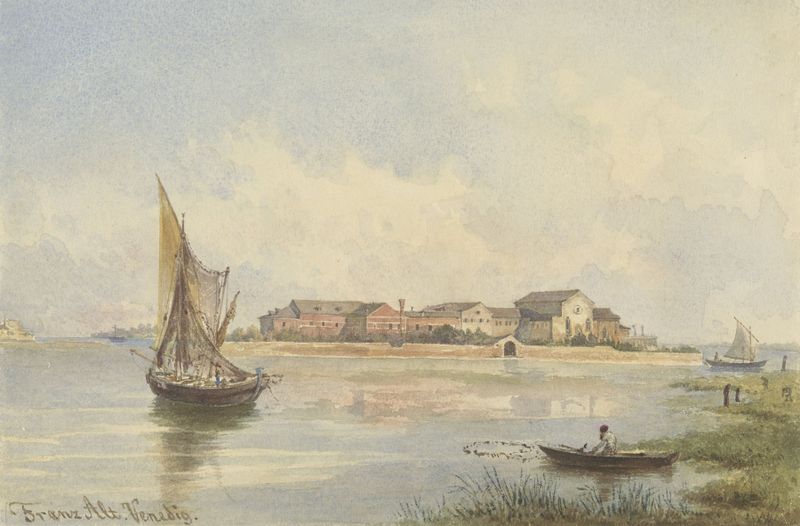
Gezicht op de Lagune te Venetië
Franz Alt
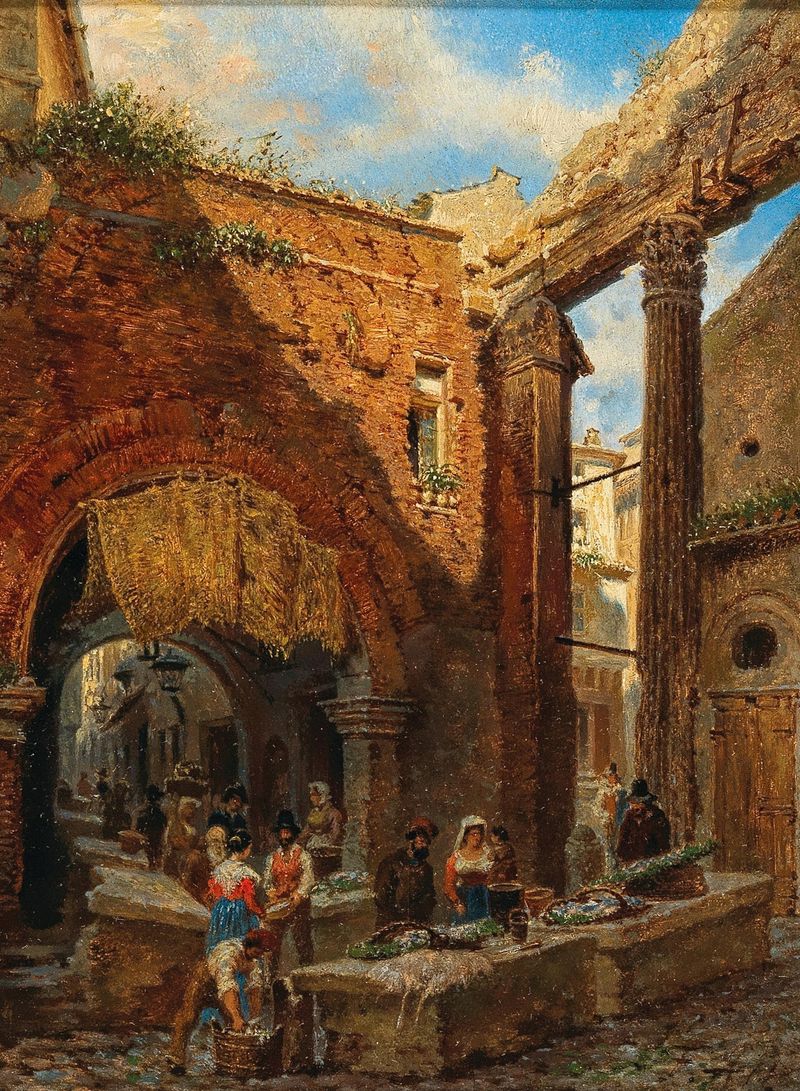
Rom Portico di Ottavia mit dem alten Fischmarkt
Franz Alt
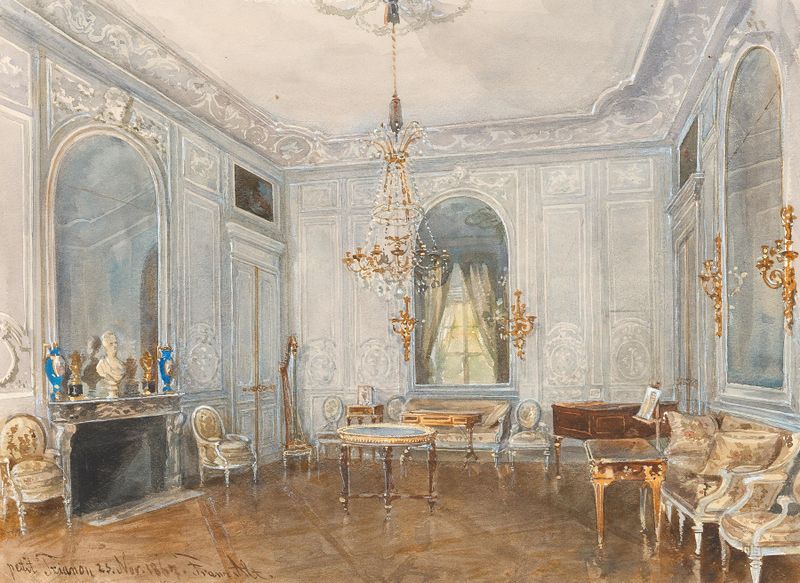
The dining room in the Petit Trianon, Versailles
Franz Alt

Blick in den Mailänder Dom
Franz Alt

Galerie d’Apollon in the Louvre, Paris
Franz Alt
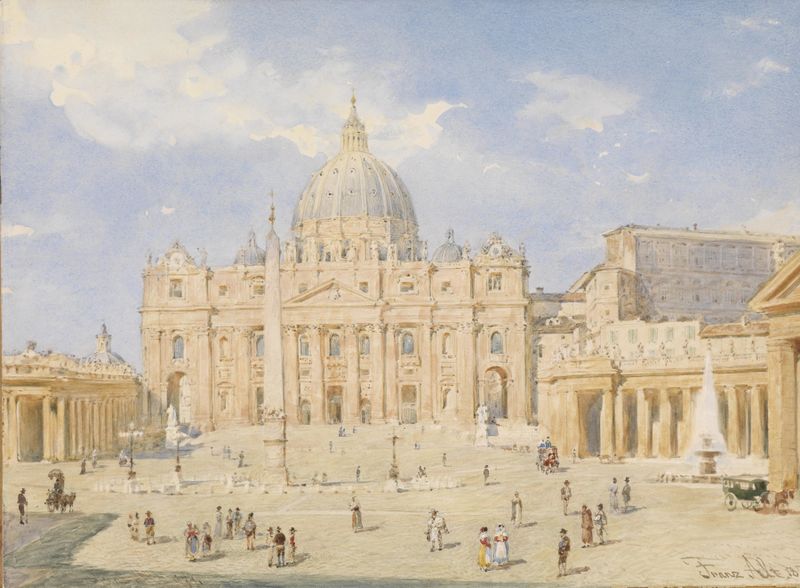
Petersplatz Rom
Franz Alt

Rome, a View of the Portico di Ottavia with the Old Fish Market
Franz Alt
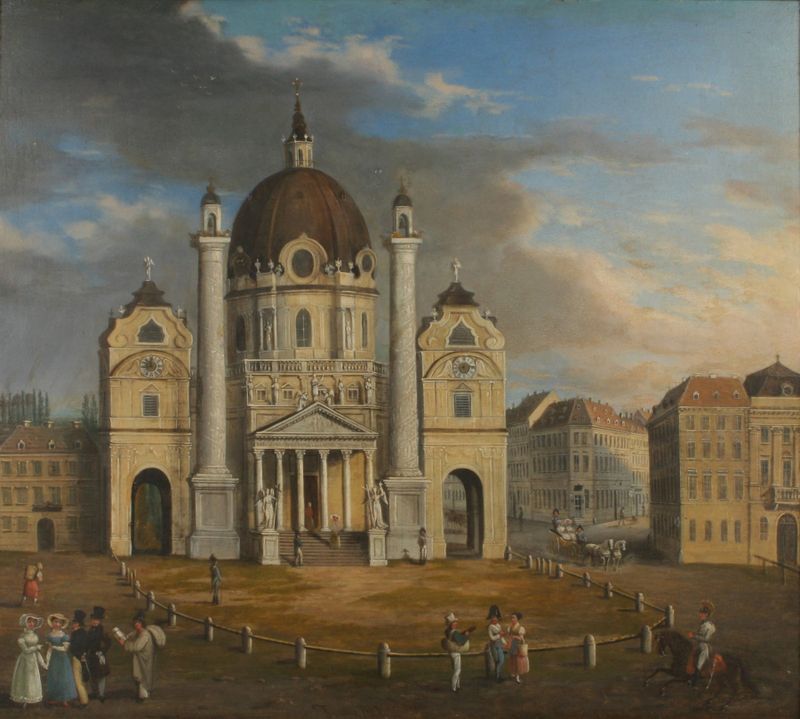
Blick auf die Karlskirche
Franz Alt

Dresden Stiege zur Brühlschen Terrasse
Franz Alt
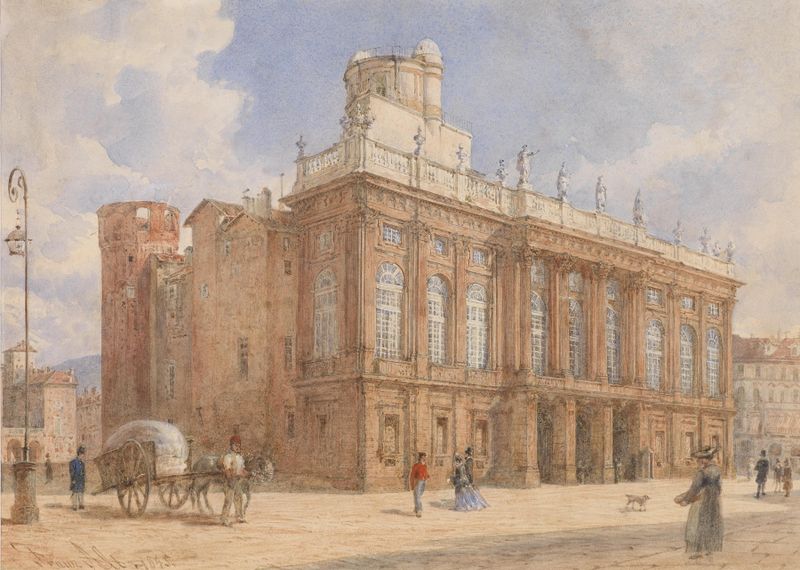
Castello Reale in Turin
Franz Alt





