
Gosnold at Cuttyhunk — History & Facts
What draws the eye first in Gosnold at Cuttyhunk is the way the morning light pours across the tranquil water, catching on the backs of grazing deer and the sails of a distant ship. The scene is alive with quiet anticipation: a ship anchored just offshore, its passengers—tiny against the vastness—gathering on the beach, while the land itself seems undisturbed, lush, and almost untouched. Bierstadt guides us from the shadowed foreground, where wildlife drinks at the water’s edge, toward the luminous horizon, where human figures are dwarfed by nature’s scale.
The low vantage point and sweeping sky invite viewers to linger, tracing the delicate interplay between the wild and the newly arrived. Painted in 1858, this work belongs to a moment in American art when landscapes were charged with the hopes and anxieties of a nation expanding westward. Artists like Albert Bierstadt became known for their grand, detailed vistas, often commissioned or eagerly collected by patrons fascinated with the idea of discovery and settlement. While little is recorded about the specific journey of this painting, it stands as a testament to the era’s fascination with exploration and the encounter between old worlds and new.
The painting’s careful balance—between the serenity of the land and the subtle arrival of change—invites viewers to step closer, searching for their own place in the unfolding story.
More Artworks by Albert Bierstadt

A Storm in the Rocky Mountains, Mt. Rosalie
Albert Bierstadt
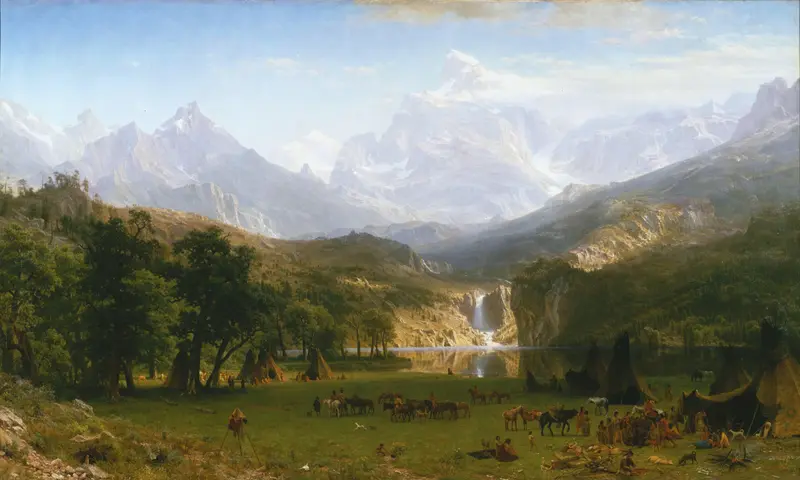
The Rocky Mountains, Lander's Peak
Albert Bierstadt
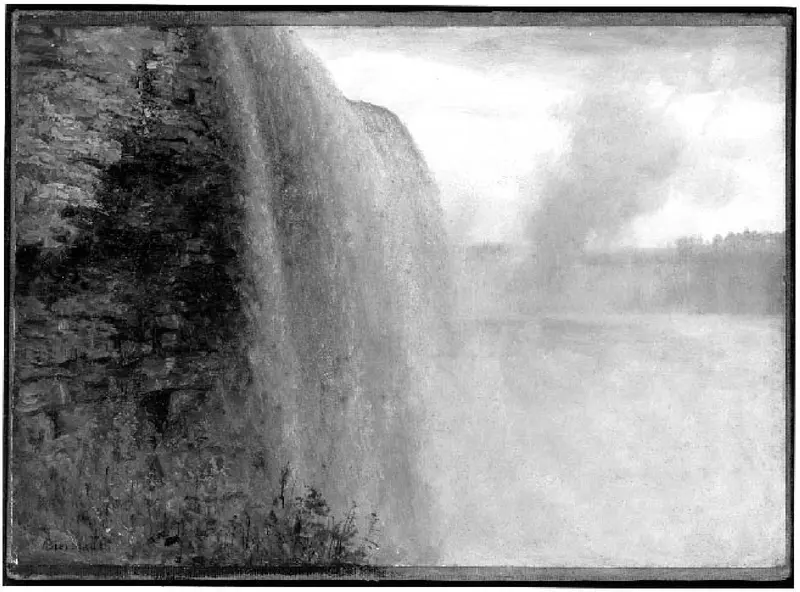
Niagara from the American Side
Albert Bierstadt
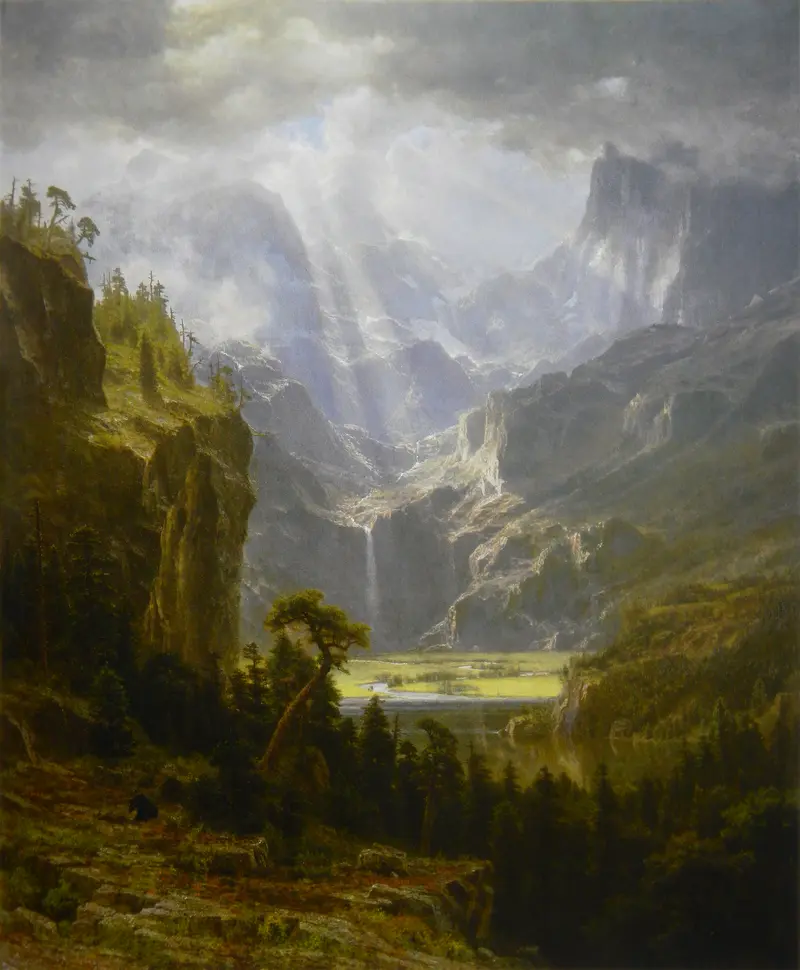
Rocky Mountains, Lander’s Peak
Albert Bierstadt

Valley of the Yosemite
Albert Bierstadt
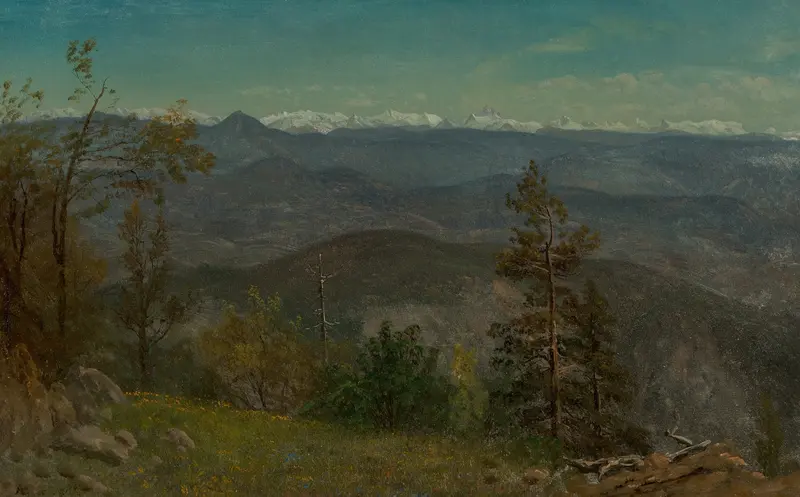
Yosemite Valley, California
Albert Bierstadt
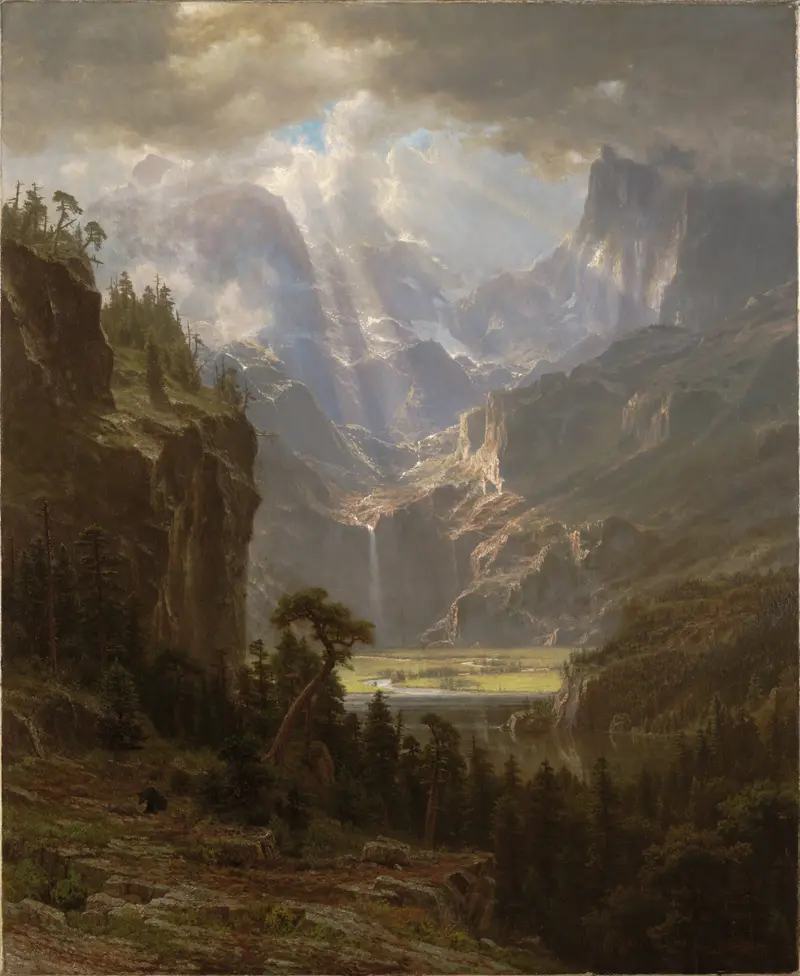
Rocky Mountains, "Lander's Peak"
Albert Bierstadt

Laramie Peak
Albert Bierstadt
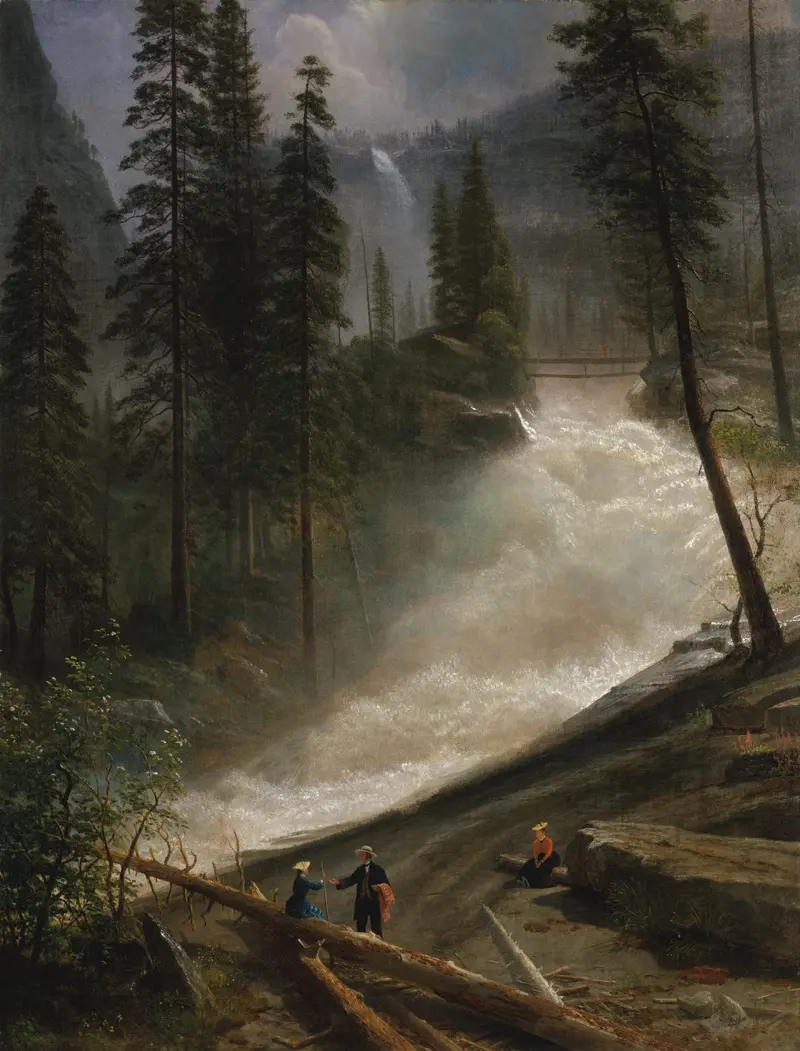
Nevada Falls, Yosemite
Albert Bierstadt
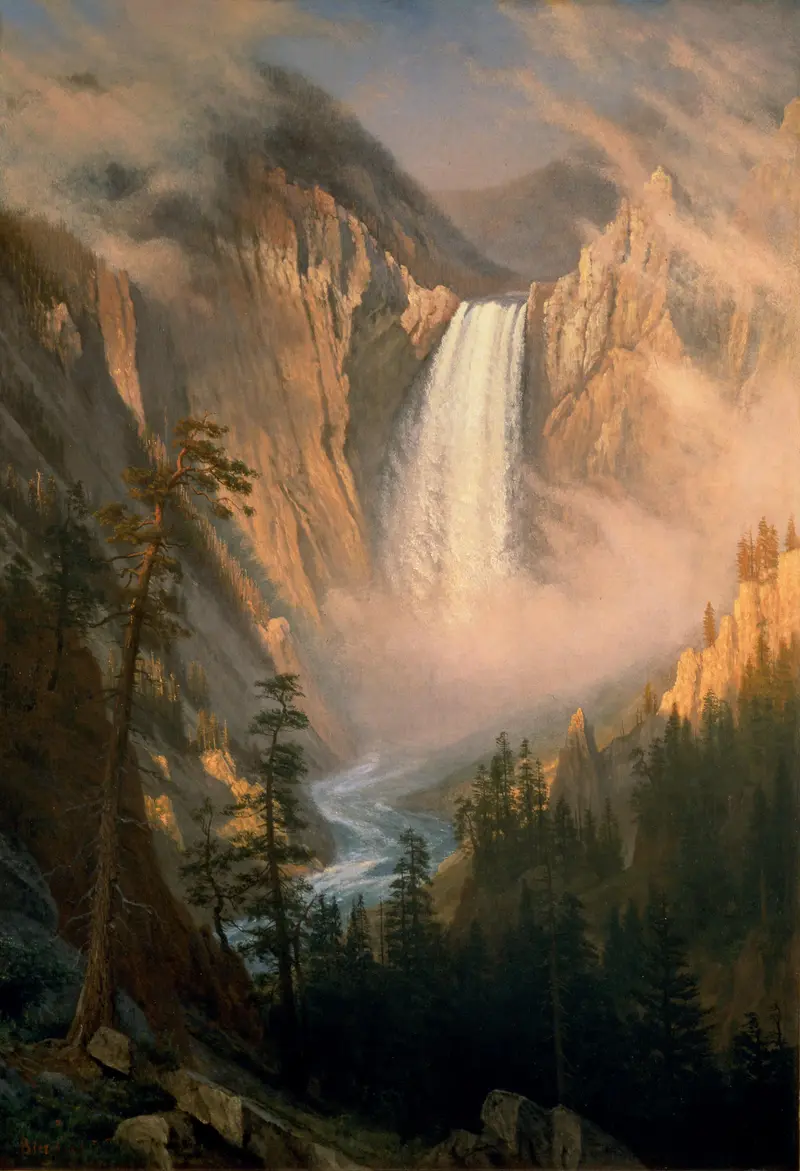
Yellowstone Falls
Albert Bierstadt
More Landscape Art

The Starry Night
Vincent van Gogh

View of Delft
Johannes Vermeer

Water Lilies
Claude Monet

The Grand Canal, Venice, looking north-west from the Ca' Corner to the Ca' Contarini degli Scrigni, with the campanile of Santa Maria della Carità
Canaletto

Windsor Castle
Canaletto

The Grand Canal looking North-East from the Palazzo Dolfin-Manin to the Rialto Bridge
Canaletto