Gracht in Amsterdam mit Brücke — History & Analysis
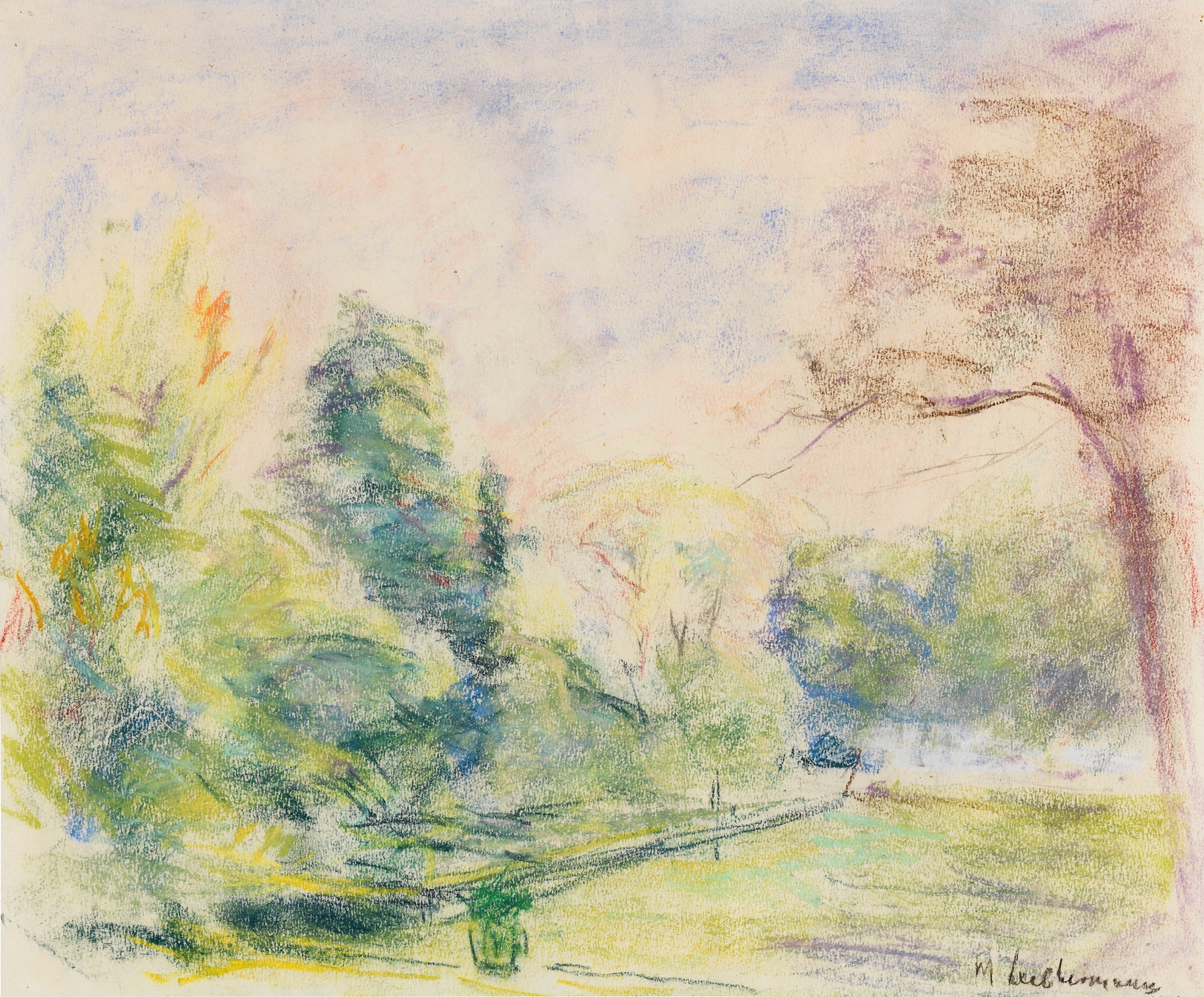
Is this a mirror — or a memory? The reflection of a serene canal in Amsterdam invites contemplation, echoing the quietude of a moment frozen in time. The gentle ripples hint at the passage of life, capturing the delicate balance between reality and reminiscence. Focus on the left side, where the dappled light dances on the water's surface, creating a mosaic of gold and azure.
The arching bridge stands sentinel above, framed by lush trees that spill their verdant hues into the scene. Notice how Liebermann employs soft brushstrokes to convey the ephemeral quality of light, enhancing the sense of tranquility that envelops the viewer. Beneath the calm facade lies a tension between permanence and transience. The bridge, a sturdy structure, contrasts with the fluidity of the water, suggesting the interplay of human intervention against nature's constant flow.
The muted palette evokes nostalgia, while the crisp outlines of the buildings reflect the clarity of memory, urging us to ponder what is lasting amidst the inevitable changes of life. In 1906, the artist created this work during a period of personal and artistic exploration in Amsterdam. At this time, he was deeply influenced by the Impressionist movement, and his focus on natural elements signified both a departure from traditional techniques and a connection to contemporary themes of modernity and impression.