Guiyun Shrine — History & Facts
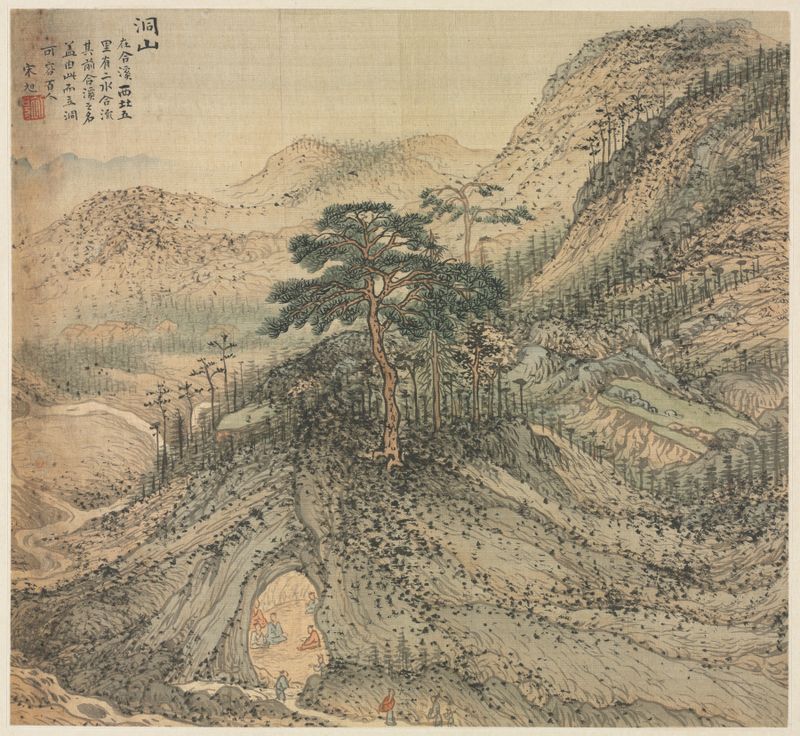
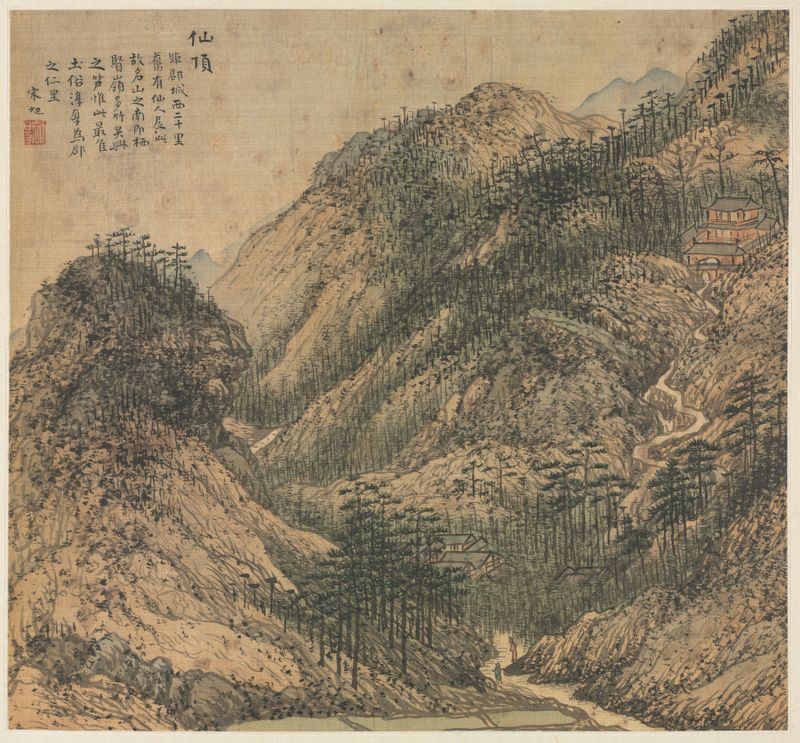
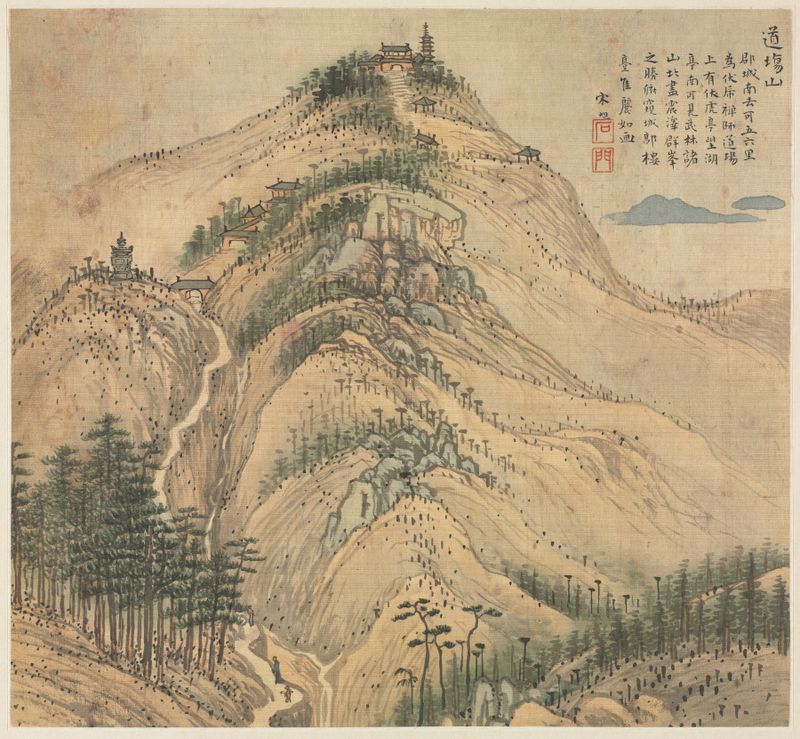
Can beauty exist without sorrow? In Guiyun Shrine, Song Xu invites us to ponder this profound question as we engage with the tranquility of nature amidst the haunting echoes of violence. Look closely at the intricate brushstrokes that depict the serene landscape, where mountains rise majestically in the background. Notice how the delicate strokes of green and blue blend seamlessly to create a sense of depth, drawing your eye toward the tranquil waters below. The juxtaposition of the lush foliage against the stark, rugged terrain highlights the duality of nature — both nurturing and violent in its power.
The soft light filtering through the trees casts gentle shadows, enhancing the painting's contemplative atmosphere. Beneath the surface, hidden meanings emerge. The sanctuary depicted is a refuge, yet it stands as a reminder of the tumultuous world that surrounds it. The artist's choice of vibrant colors contrasts with the underlying darkness of history, evoking a sense of longing for peace amid chaos.
The shrine symbolizes hope, yet the landscape resonates with the reverberations of conflict, suggesting that beauty often coexists with the remnants of pain and strife. In the late 16th century, while Song Xu was painting this masterpiece, China was in the throes of the Ming Dynasty, a time marked by both cultural flourishing and political unrest. Xu, immersed in the scholarly traditions of his time, sought to capture not just the external beauty of landscapes but also the internal reflections of his tumultuous era, aiming to convey a profound narrative that transcends the visual.