Xintang (Immortal’s Peak) — History & Facts
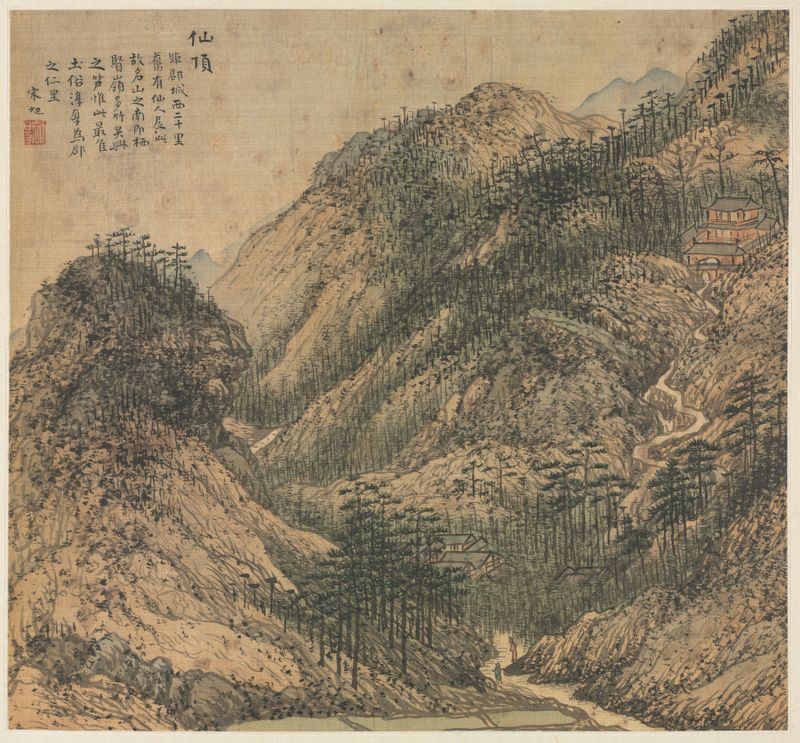
In Xintang (Immortal’s Peak), transformation becomes palpable—the metamorphosis of nature, time, and spirit interwoven in a tapestry of quiet majesty. Look to the sweeping mountains, their peaks painted in undulating layers of green and blue, as if they echo the very essence of life itself. The mist swirls delicately at the base, inviting you to contemplate the journey upwards toward the luminous heights. Notice how light dances across the textured surfaces, revealing not only the contours of the landscape but also the subtle interplay of shadow and illumination, embodying the passage of time that shapes our surroundings. As you explore this work, consider the duality of permanence and change captured within it.
The towering mountains symbolize endurance, while the ethereal mist signifies the transient beauty of existence. A solitary figure, almost lost within the grandeur, underscores an emotional tension between the individual and the vastness of nature, suggesting both solitude and connection. Every element in the scene speaks to the perpetual cycle of transformation, reminding us that every moment is both fleeting and eternal. Created around 1588, this masterpiece emerged during the Ming Dynasty in China, a period marked by artistic flourishing and philosophical exploration.
Song Xu, an accomplished artist of his time, painted in an era when landscapes served not merely as representations but as reflections of human experience and emotion. In a world increasingly focused on the individual, this work acts as a bridge between personal introspection and the majesty of the natural world, inviting viewers to embark on their own journey of transformation.