Mt. Daochang — History & Facts
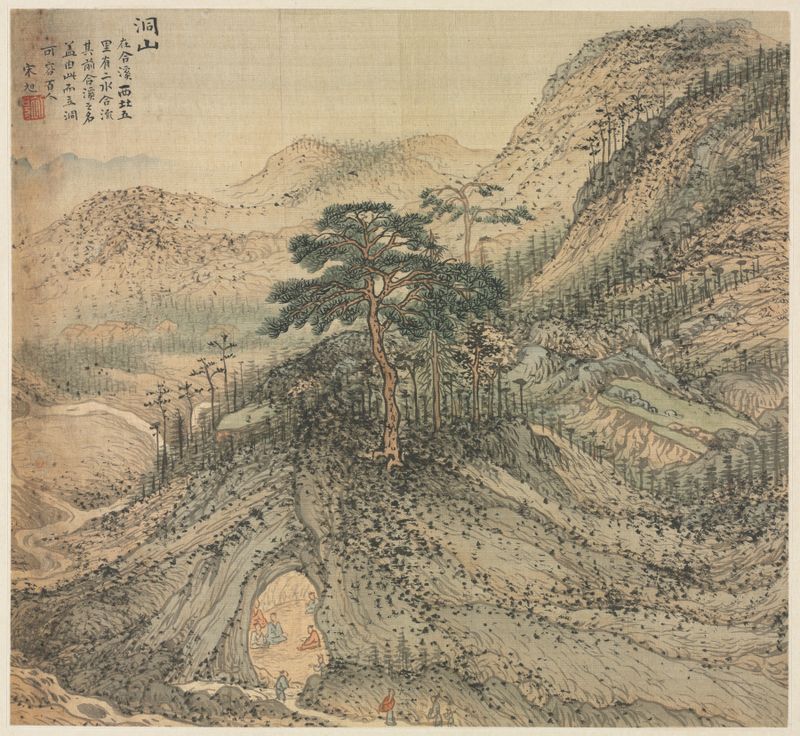
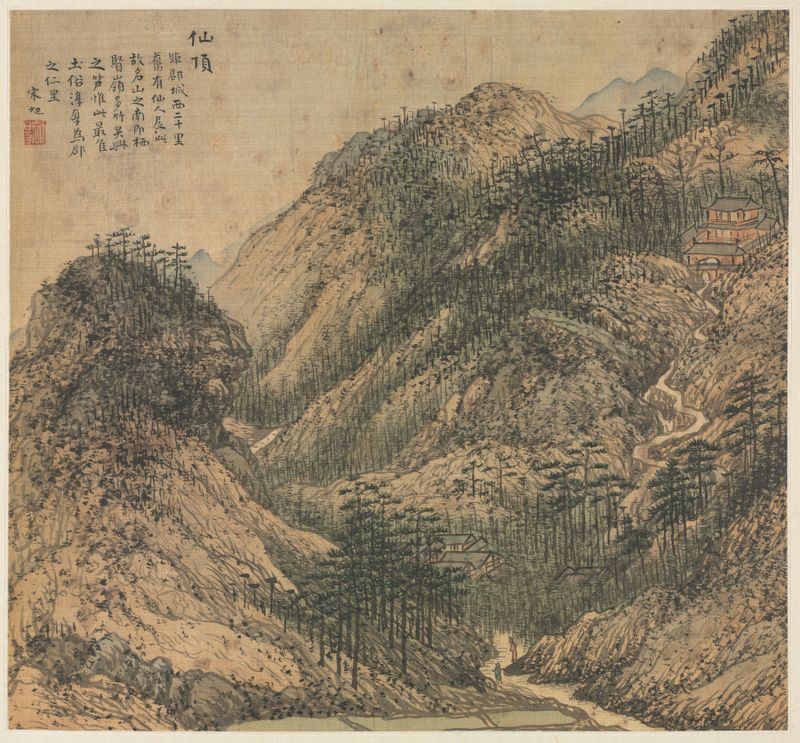
Can beauty exist without sorrow? The ethereal landscape unfurls like a whisper, inviting contemplation on the divine and the human experience intertwined in nature's embrace. Look to the left at the majestic peaks of Mt. Daochang, rising steeply against a delicate wash of sky. The artist employs a skillful blend of ink and color, allowing soft hues to merge seamlessly, creating an atmosphere that feels both serene and haunting.
Notice how the clouds gently cradle the mountaintop, a reminder of the spirit world hovering just out of reach, while the textured brushstrokes evoke the ruggedness of stone, grounding the ethereal beauty in tangible reality. Hidden within the tranquil composition lies a tension between the celestial and the earthly. The towering mountains symbolize divine aspiration, yet their shadowy valleys may hint at the sorrows and struggles that accompany such elevation. The flowing water at the base serves as a lifeline, connecting the heavens to the earth, while the subtle reflections suggest an introspective nature, inviting the viewer to ponder their own journey through beauty and pain. During the late 16th century, Song Xu painted *Mt.
Daochang* amidst a flourishing period for Chinese landscape painting, characterized by an emphasis on harmony and spiritual elevation. Residing in the culturally rich milieu of the Ming dynasty, he sought to capture the essence of nature not just as a visual subject, but as a vital connection to the divine. This work exemplifies the era’s philosophical contemplation on nature’s duality, reflecting Xu's own mastery and introspection as an artist.