
Hadley’s Falls — History & Facts
What if beauty was never meant to be finished? In Hadley’s Falls, the viewer is drawn into a world where nature’s majesty meets the fleeting touch of human presence. Look to the left at the cascading waterfall, its water tumbling over rugged rocks, glistening with a soft sheen that reflects the delicate play of light. Notice how the artist employs a rich palette of greens and browns, invoking the depth of the forest that envelops the scene. The brushstrokes are both meticulous and free, creating a sense of movement that breathes life into the foliage while the tranquil water contrasts with the dynamic landscape, inviting contemplation. There is an emotional tension in this painting, captured in the interplay of light and shadow.
The gentle illumination highlights the serenity of the falls, yet the darker, unseen corners of the forest hint at the mysteries beyond the frame. Additionally, the lone figure, dwarfed by nature’s grandeur, suggests both the insignificance of humanity and our innate desire to seek solace in the natural world. This duality of awe and solitude forms the heart of the composition. Created between 1821 and 1822, the work marks a significant time in John Hill's career as an artist and engraver in America.
Living in a period of growing interest in natural landscapes, he sought to evoke a sense of wonder that aligned with the burgeoning Romantic movement. This was a time when artists began to delve deeper into their emotional responses to the environment, capturing both beauty and sublimity in their works.
More Artworks by John Hill
Browse all →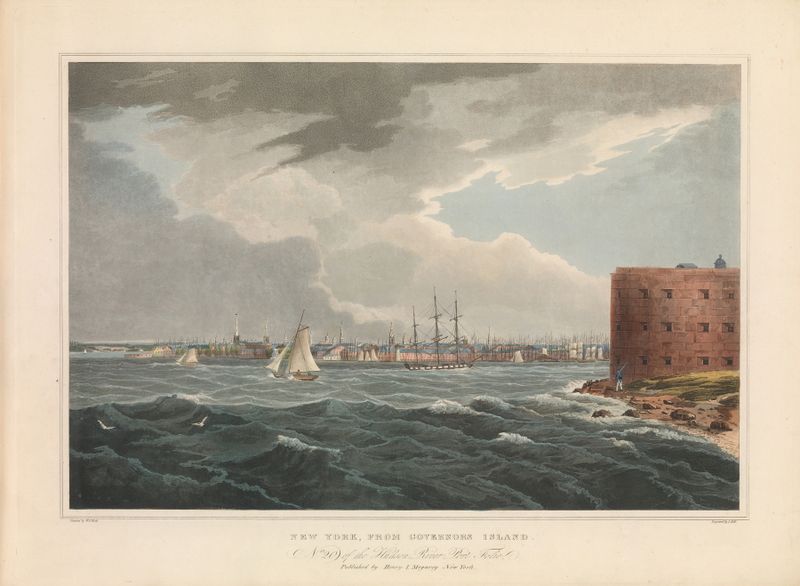
New York from Governor’s Island
John Hill

West Point
John Hill
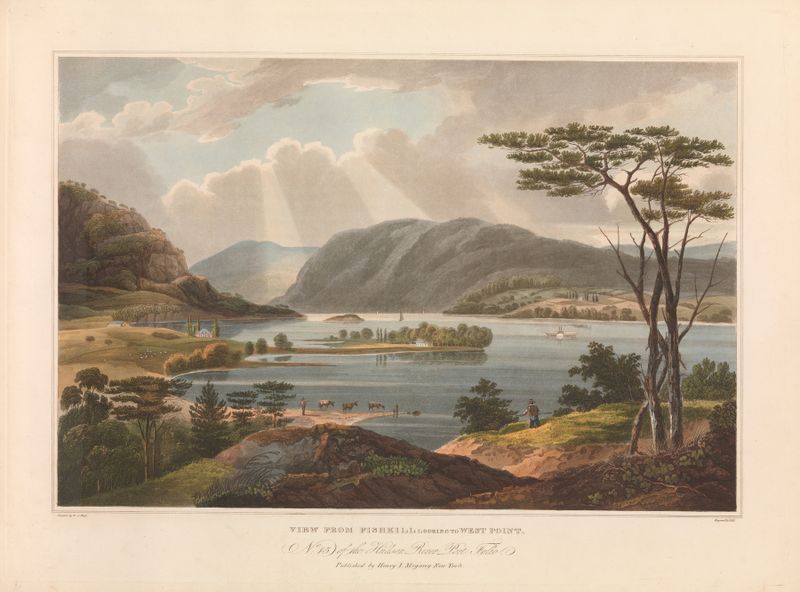
View from Fishkill Looking To West-Point
John Hill

View Near Hudson
John Hill
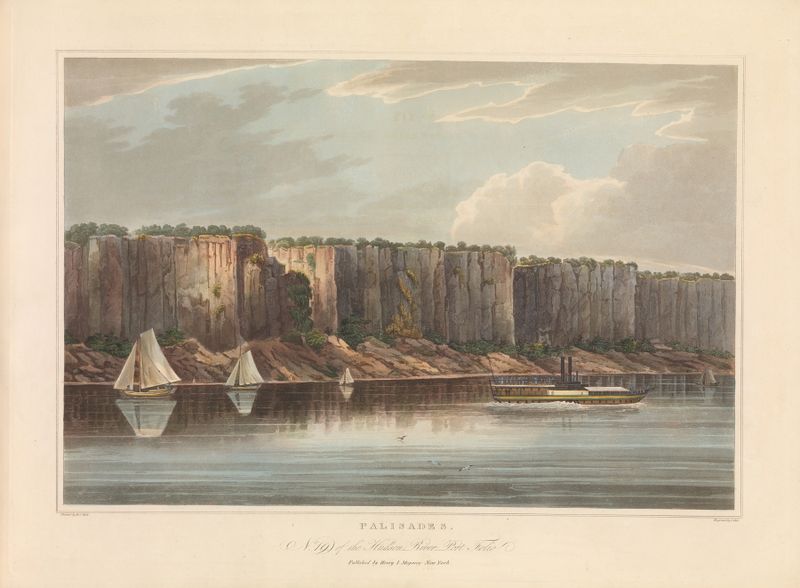
The Palisades
John Hill
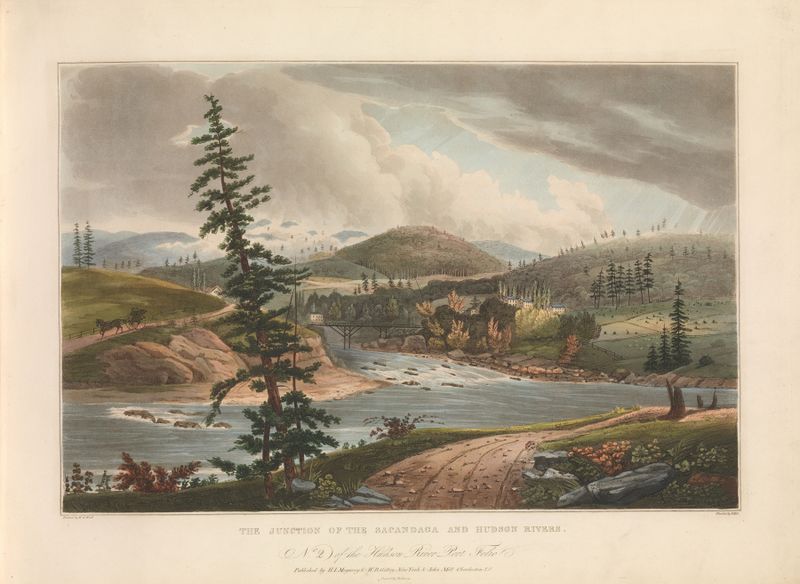
Junction of the Sacandaga and Hudson Rivers
John Hill
City Hall
John Hill

North-West Front, Cassiobury
John Hill

Glenns Falls
John Hill

His Majesty’s Frigate ‘Endymion’
John Hill





