
Fisherman and his Maiden — History & Facts
What draws the eye first in Fisherman and his Maiden by August Hagborg is the quiet, almost conspiratorial space between the two figures: a young woman perched on a driftwood beam, her gaze cast downward, and a barefoot fisherman resting beside her, his posture open and intent. The painter leads us gently into their world with the soft, diffused light of a northern sky, which bathes the scene in a gentle clarity. The maiden’s pink sleeves and yellow scarf are the only bursts of warmth against the cool, muted sands and silvery water, suggesting a moment of private conversation or silent understanding.
The empty basket at their feet hints at a pause in their daily labor, while the fisherman’s relaxed pose and the maiden’s intertwined fingers speak of familiarity, perhaps even longing. Every detail—their bare feet, the distant sail, the subtle play of light on their faces—invites the viewer to linger and wonder what words, if any, have just passed between them. Works like this emerged from the late nineteenth-century fascination with rural and coastal life, when artists such as August Hagborg found poetry in the rhythms of ordinary people. Oil paintings of fisherfolk and villagers were often sought after by urban collectors, eager for scenes that seemed to promise honesty and simplicity in a rapidly industrializing world.
This canvas, measuring just over 80 by 86 centimeters, would have fit comfortably in a middle-class home, a window onto a quieter existence. Though the precise history of this particular painting is little recorded—its current appearance on Liveauctioneers.com is one of the few documented traces—it stands as a testament to the era’s hunger for the dignity and intimacy of everyday life. The longer you look, the more the silence between these two figures seems to fill with possibility.
More Artworks by August Hagborg
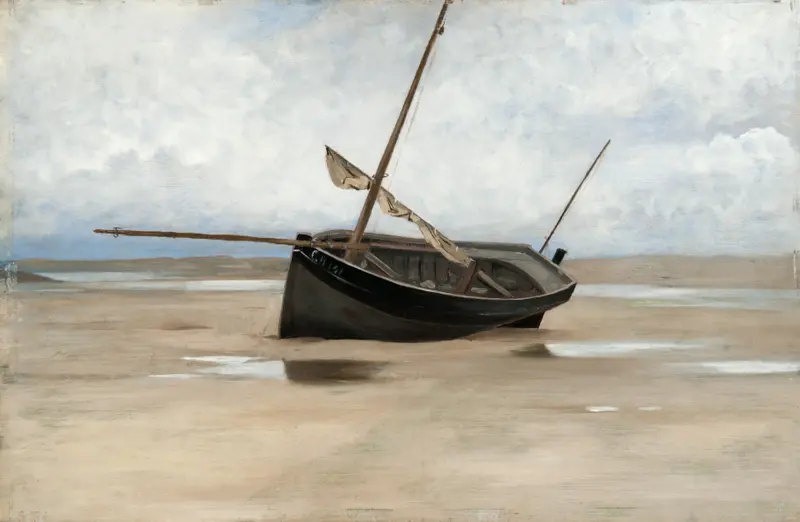
Boat on Shore
August Hagborg
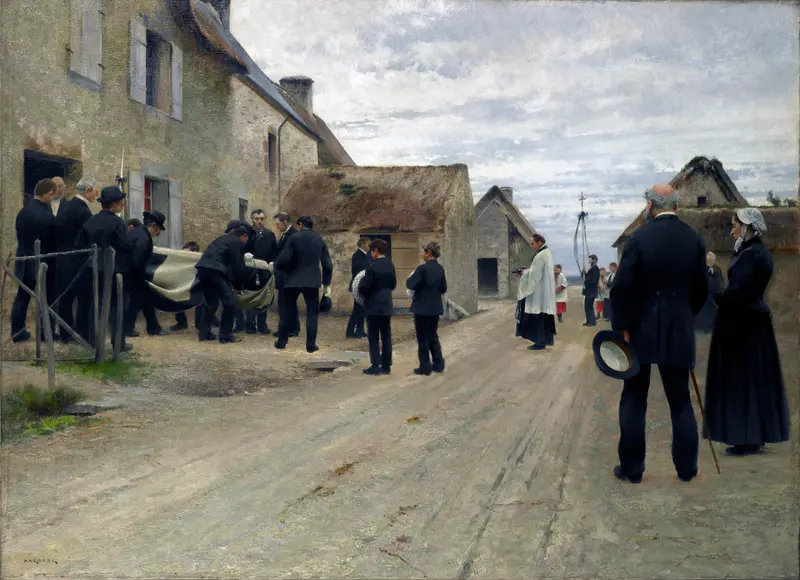
Burial of a Sailor in a Manche Village
August Hagborg
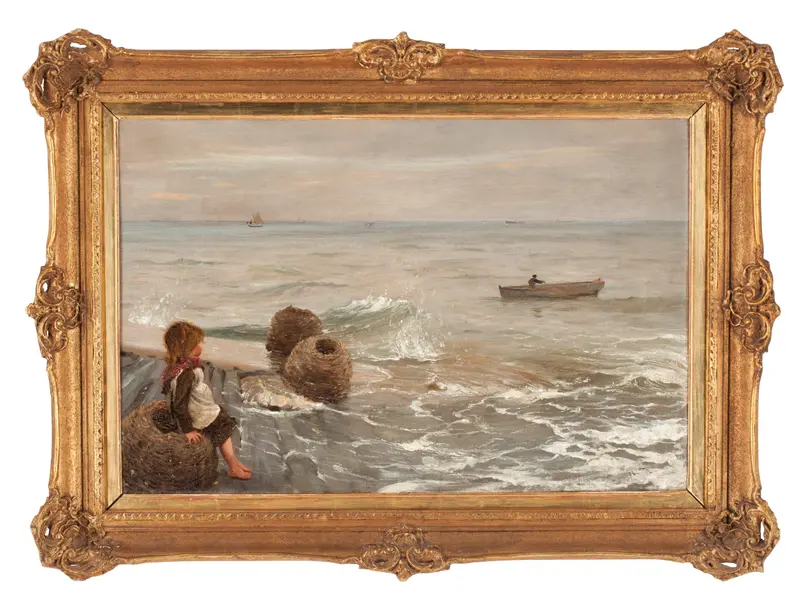
Flicka vid kaj
August Hagborg
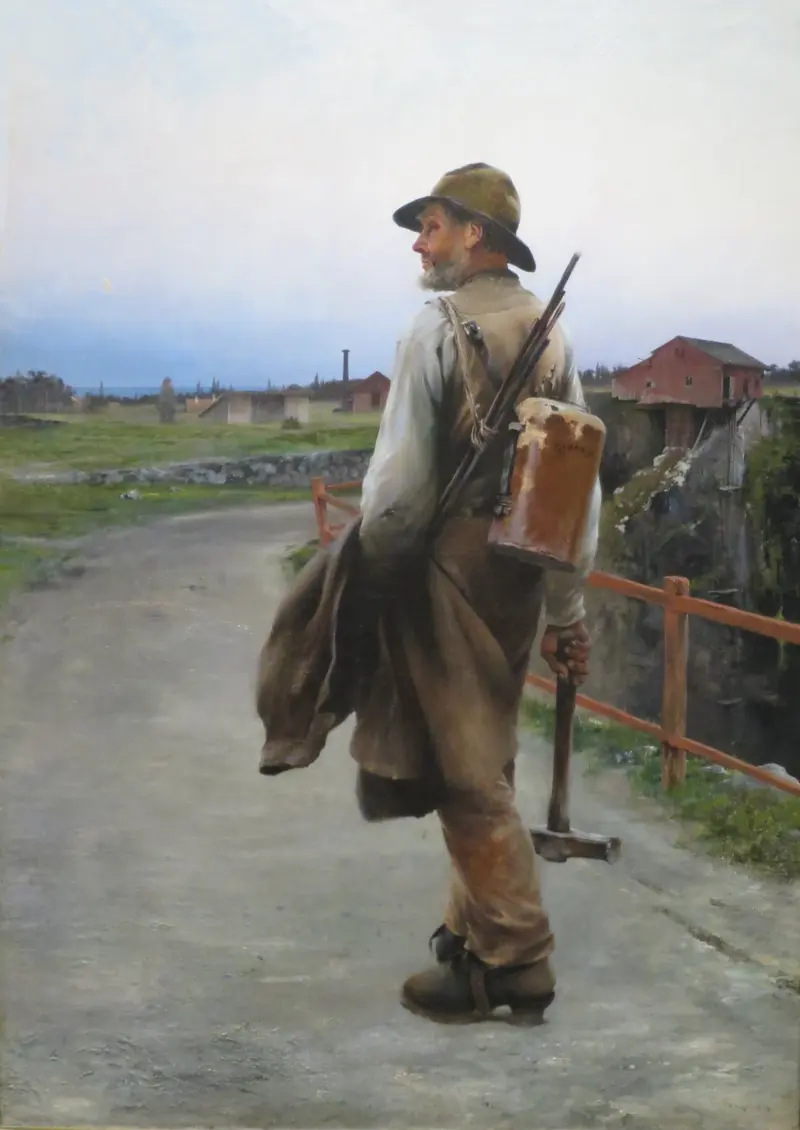
A Miner
August Hagborg
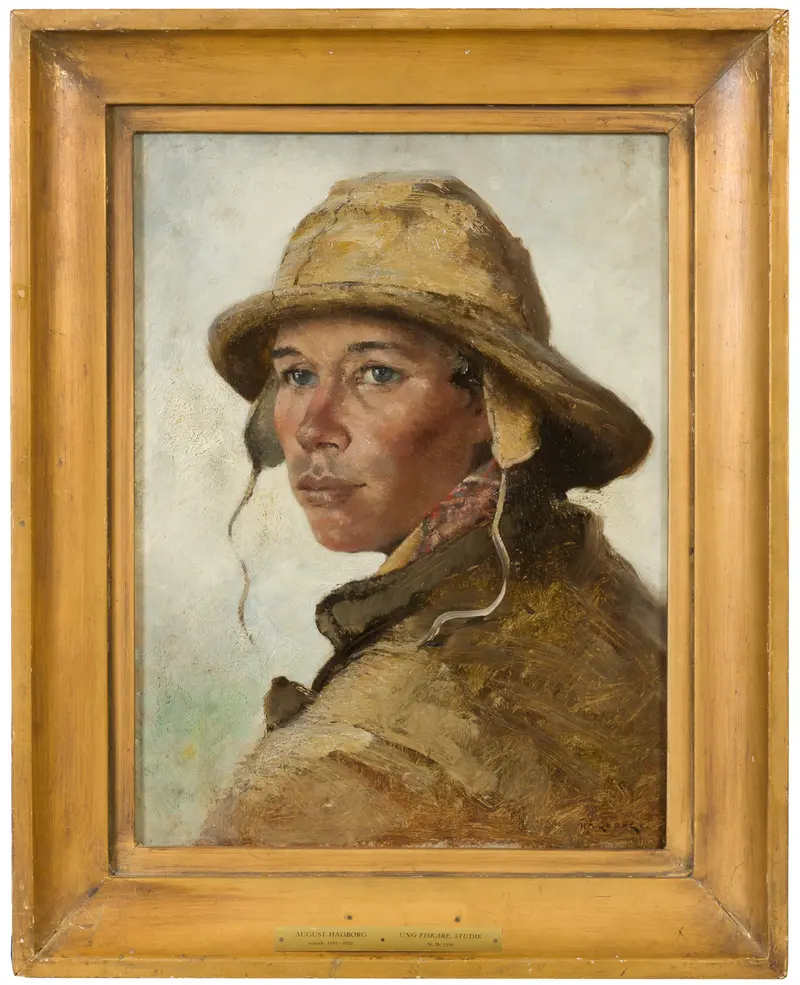
Head of a Young Fisherman. Study
August Hagborg
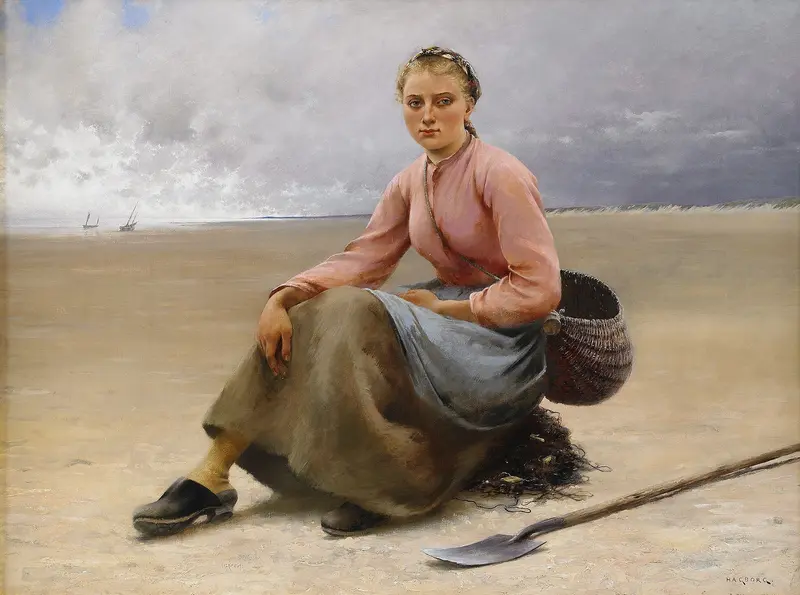
Ostronplockerska Bretagne
August Hagborg
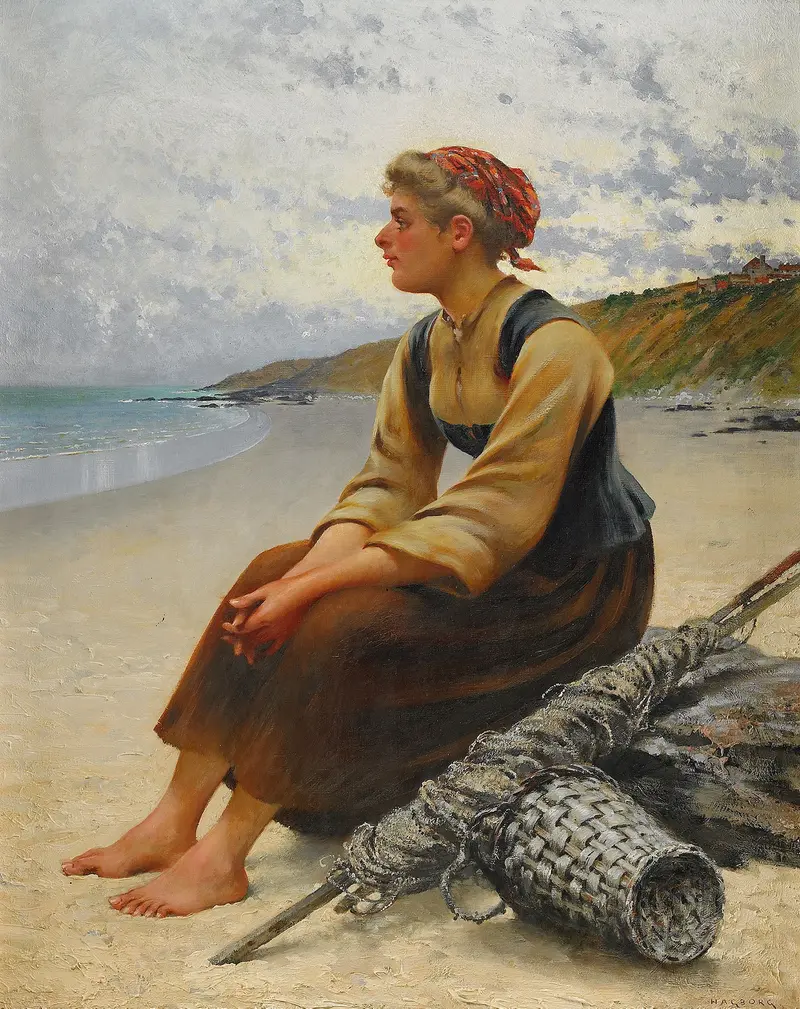
Ostronplockerska på stranden
August Hagborg
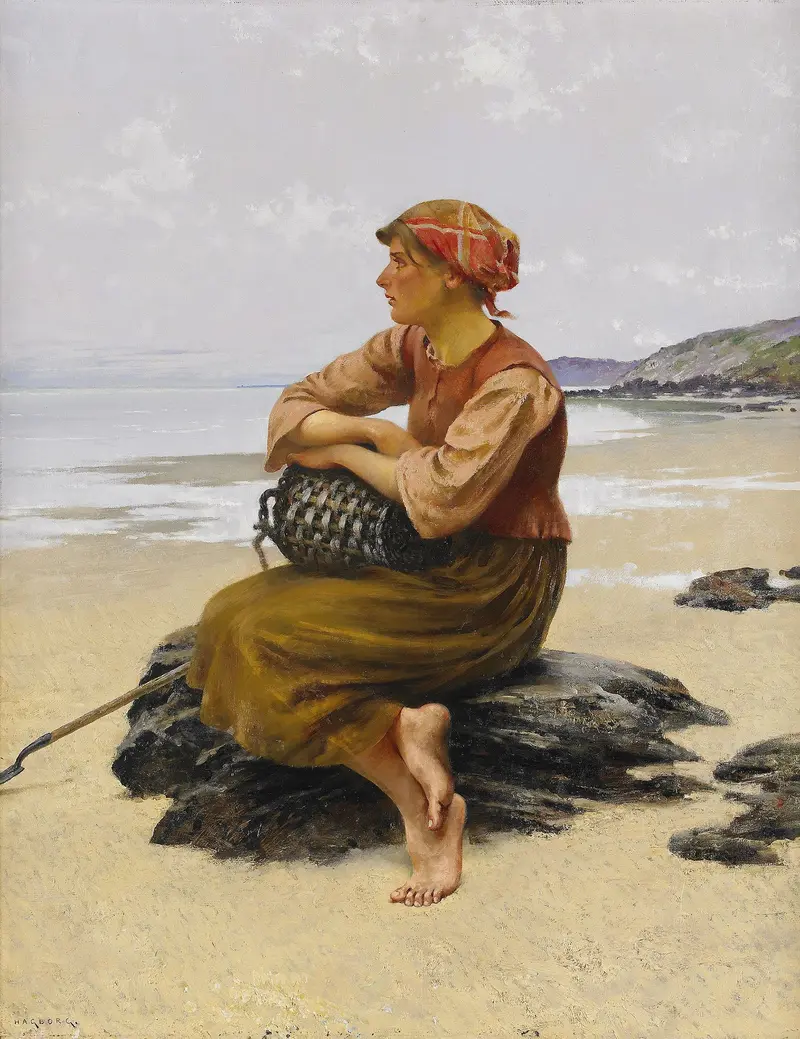
Sittande ostronplockerska på stranden
August Hagborg
The Cemetery at Tourville
August Hagborg
Sea in Sunset
August Hagborg
More Genre Scene Art

Banquet of the Officers of the St George Civic Guard
Frans Hals

Rembrandt and Saskia in the Scene of the Prodigal Son
Rembrandt van Rijn

Bal du moulin de la Galette
Pierre-Auguste Renoir

Quadrille at the Moulin Rouge
Henri de Toulouse-Lautrec

A Burial at Ornans
Gustave Courbet

When Will You Marry?
Paul Gauguin