
Sittande ostronplockerska på stranden — History & Facts
What first catches the eye in Sittande ostronplockerska på stranden is the quiet dignity of a woman at rest, her gaze cast out to sea, basket in her lap, as if weighing the morning’s labor against the endless horizon. The artist, August Hagborg, chooses a moment of stillness rather than toil, inviting us to linger with her in the hush between tides. The light, gentle but unsparing, falls across her sun-browned arms and bare feet, emphasizing both the hardship and the resilience of her daily work.
Her red kerchief and rough skirt are rendered with a care that elevates her from anonymous laborer to the quiet heroine of her own story. The low horizon and wide expanse of sky give the scene a sense of openness, yet the woman’s posture—arms folded, body turned inward—suggests a world of thought and memory contained within. Works like this, painted in the late nineteenth century, belong to a tradition that found poetry in the ordinary lives of coastal villagers. Artists such as Hagborg were drawn to fishing communities in France and Scandinavia, documenting their customs at a time when industrialization threatened to sweep such scenes away.
These paintings were often sought after by urban collectors, hungry for images of a simpler, more “authentic” existence. This particular work, now in the collection of Auktionsverket Stockholm, is a testament to that fascination. History has kept few traces of the individual sitters in such paintings, but the strength and solitude of this oyster gatherer endure—her story still unfolding in the quiet space between sea and sky.
More Artworks by August Hagborg
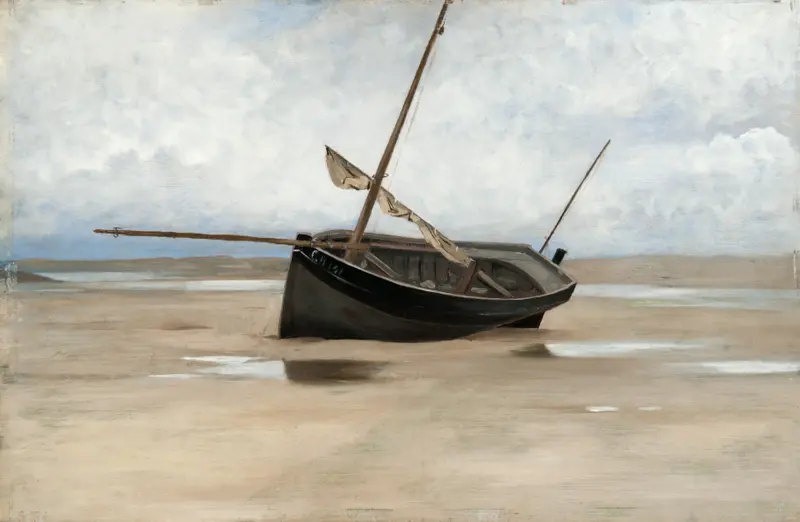
Boat on Shore
August Hagborg
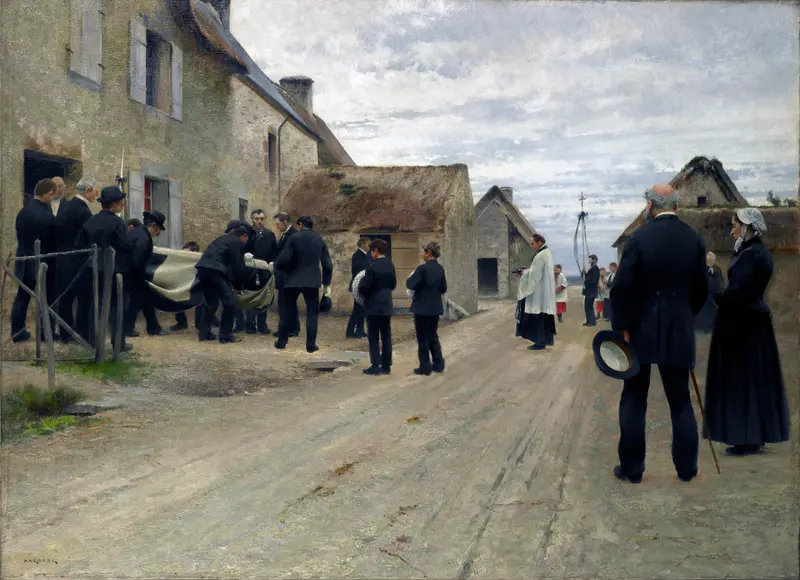
Burial of a Sailor in a Manche Village
August Hagborg
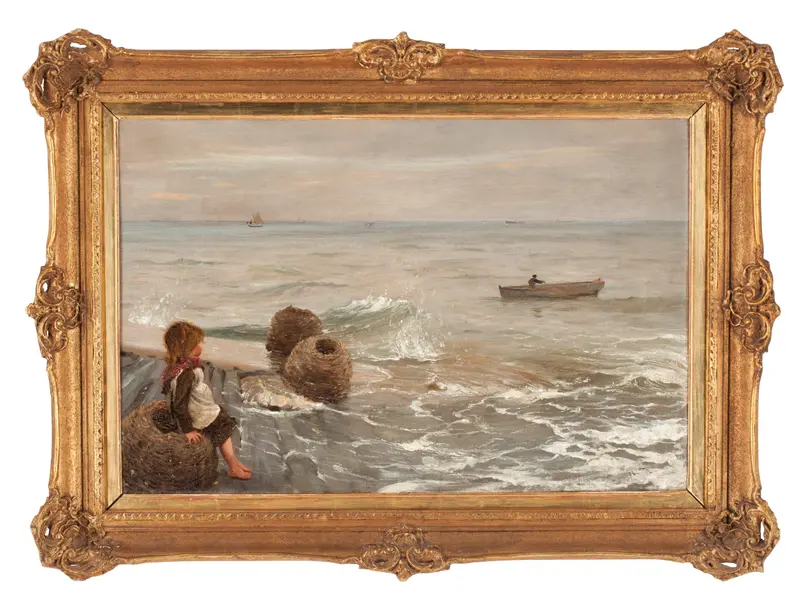
Flicka vid kaj
August Hagborg
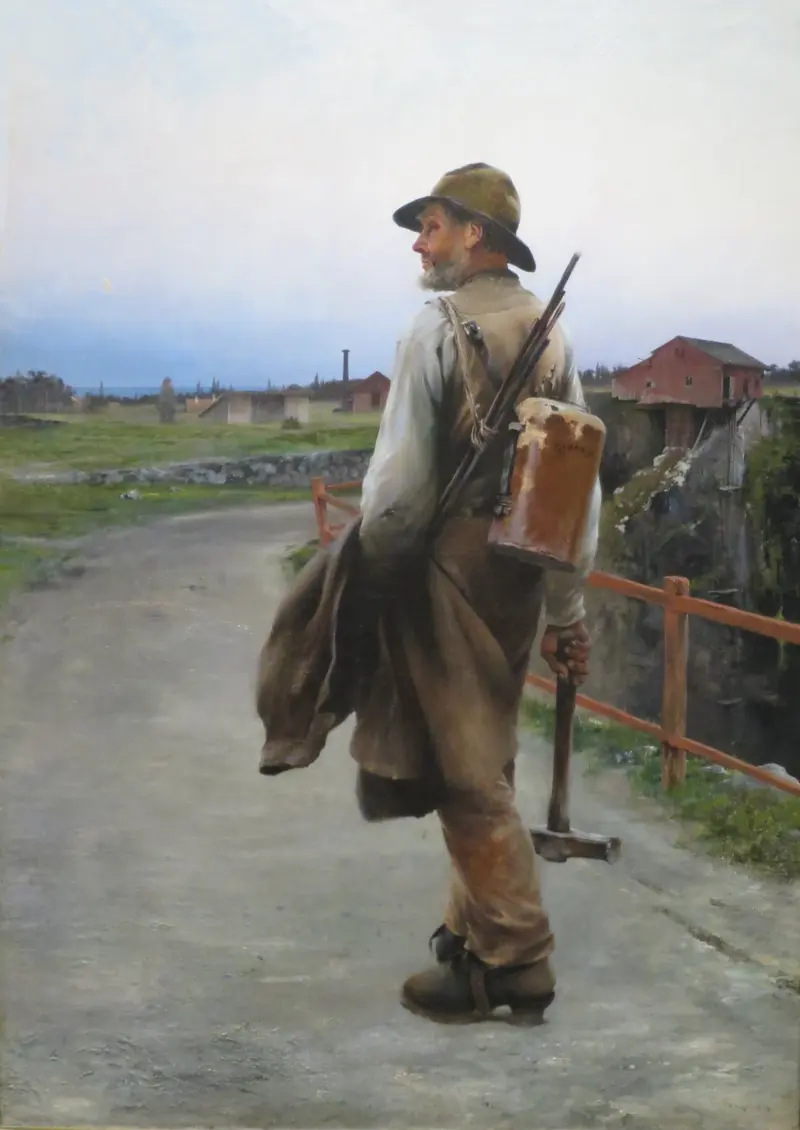
A Miner
August Hagborg
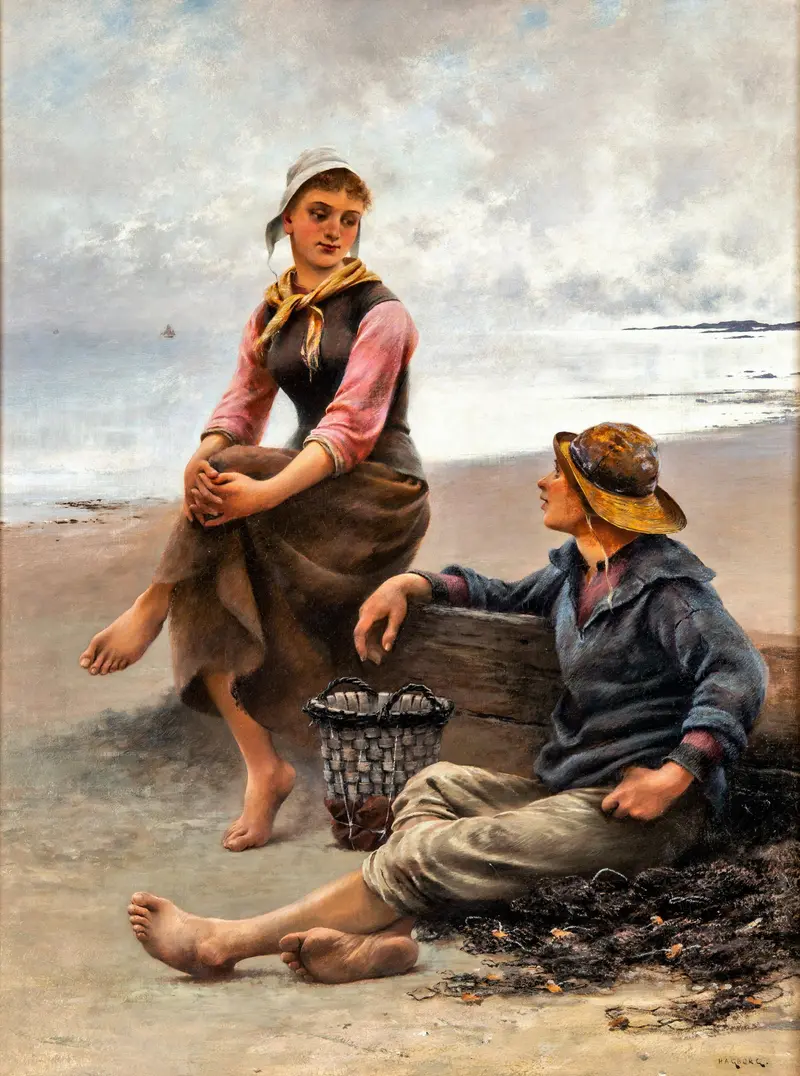
Fisherman and his Maiden
August Hagborg
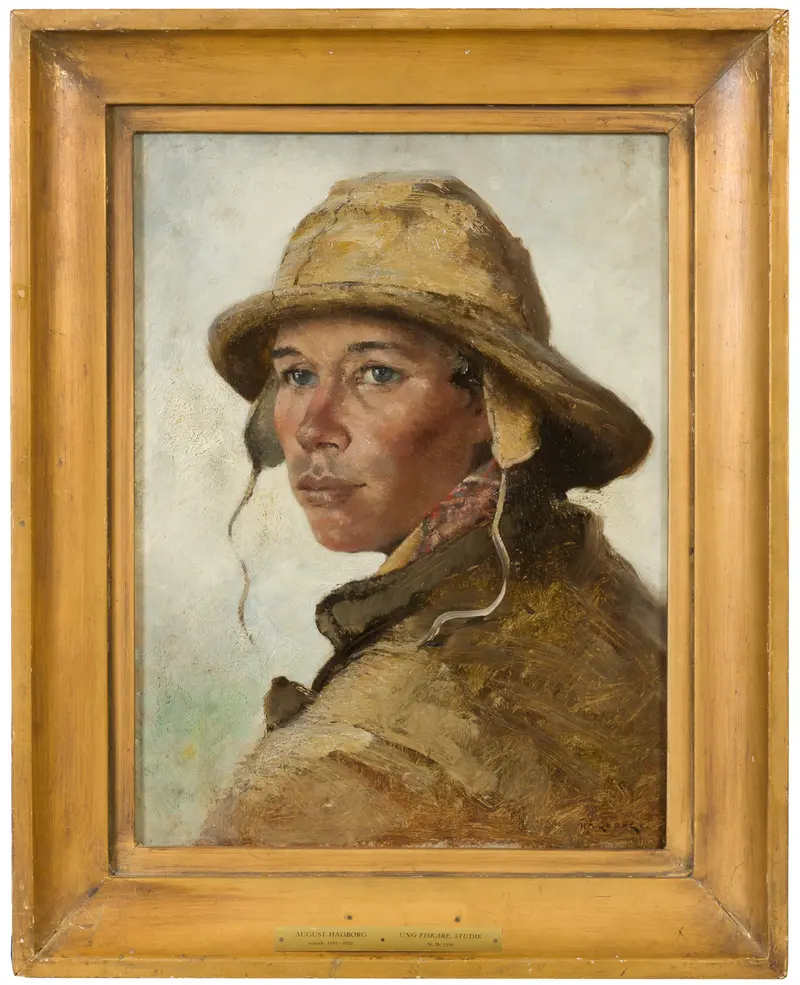
Head of a Young Fisherman. Study
August Hagborg
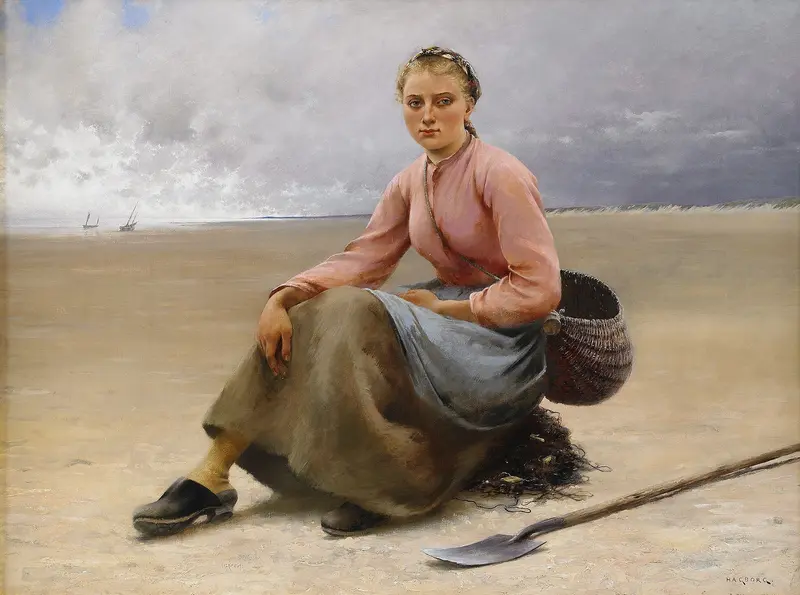
Ostronplockerska Bretagne
August Hagborg
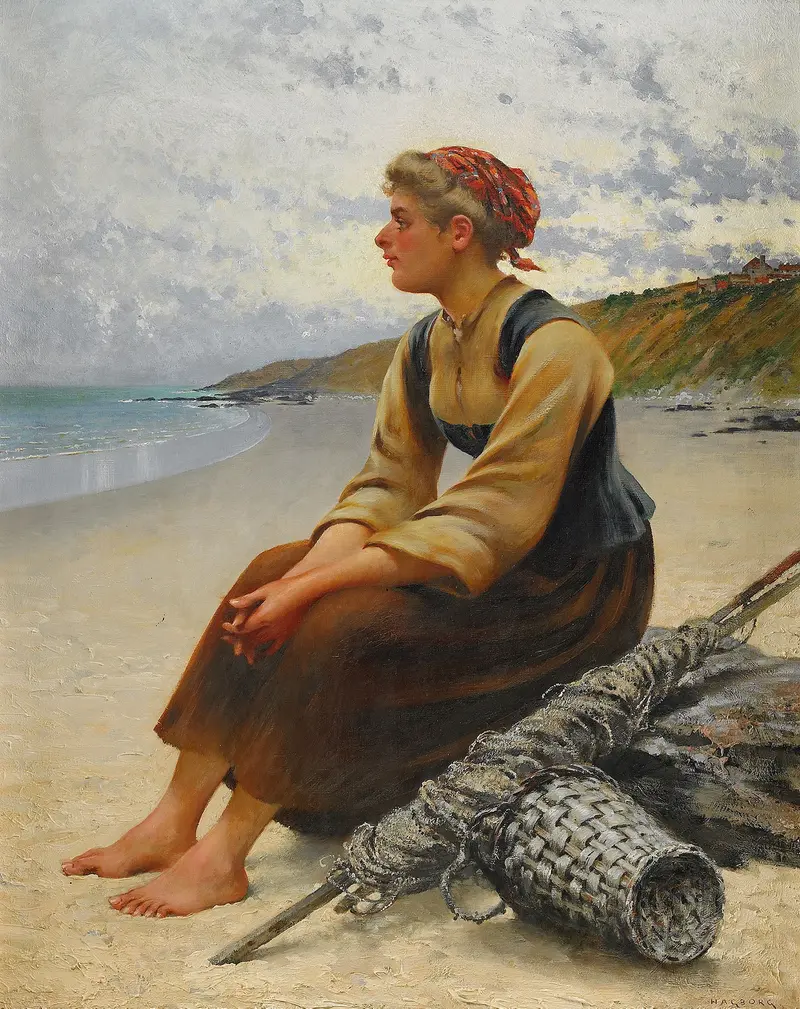
Ostronplockerska på stranden
August Hagborg
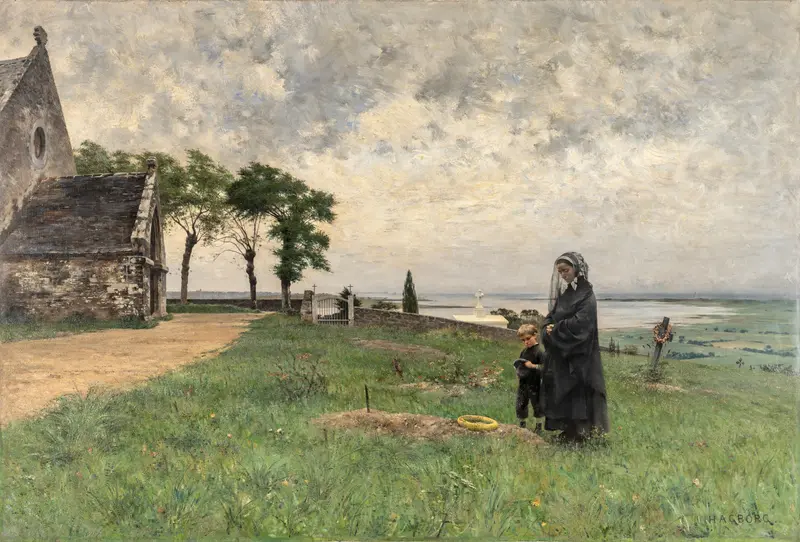
The Cemetery at Tourville
August Hagborg
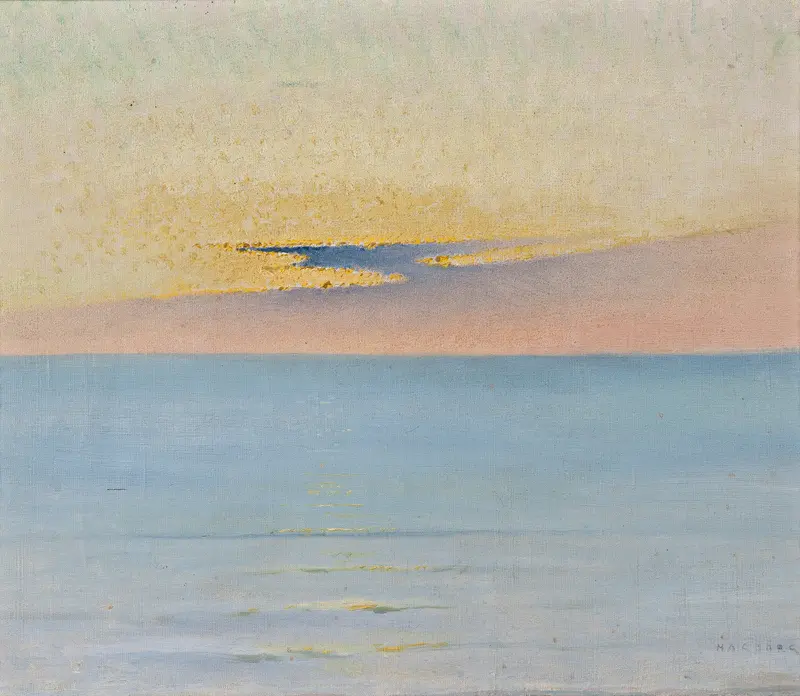
Sea in Sunset
August Hagborg
More Genre Scene Art

Banquet of the Officers of the St George Civic Guard
Frans Hals

Rembrandt and Saskia in the Scene of the Prodigal Son
Rembrandt van Rijn

Bal du moulin de la Galette
Pierre-Auguste Renoir

Quadrille at the Moulin Rouge
Henri de Toulouse-Lautrec

A Burial at Ornans
Gustave Courbet

When Will You Marry?
Paul Gauguin