
Burial of a Sailor in a Manche Village — History & Facts
The hush of a village street becomes the stage for a ritual as old as the sea itself. In Burial of a Sailor in a Manche Village, August Hagborg draws the viewer into a moment of communal farewell, where the subdued palette and careful arrangement of figures speak volumes about loss and belonging. The eye is led from the somber cluster of men bearing a shrouded form, past the silent witnesses in dark attire, toward the distant priest and choirboys waiting beneath a sky heavy with cloud.
Every gesture is measured: the bowed heads, the clasped hands, the respectful distance kept by those who watch. The light falls evenly, refusing drama, instead granting dignity to each participant and emphasizing the collective nature of grief in this small community. This painting belongs to a tradition of late 19th- and early 20th-century realism, where artists like Hagborg turned their attention to the rituals of everyday life, especially in rural and coastal France. Such works were often intended for regional museums or civic collections, serving as both documentation and commemoration of local customs.
The Musée des Beaux-Arts de Rouen, where this painting resides, holds many such testaments to the rhythms of provincial existence. History has kept few traces of this particular event or its subject, but the painting’s careful observation and restraint invite us to linger over the details: the weathered stone, the modest procession, the sense of a village gathered in quiet solidarity. Look again, and notice how the painting honors not just a sailor, but the fragile bonds that tie a community together.
More Artworks by August Hagborg
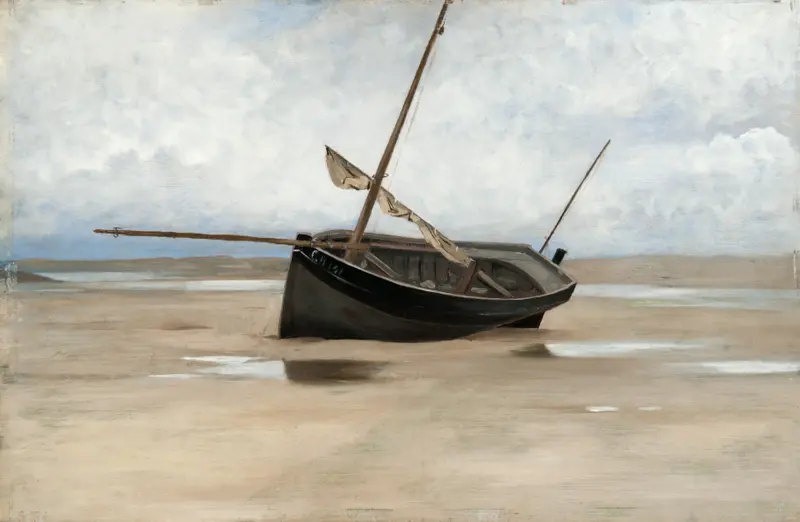
Boat on Shore
August Hagborg
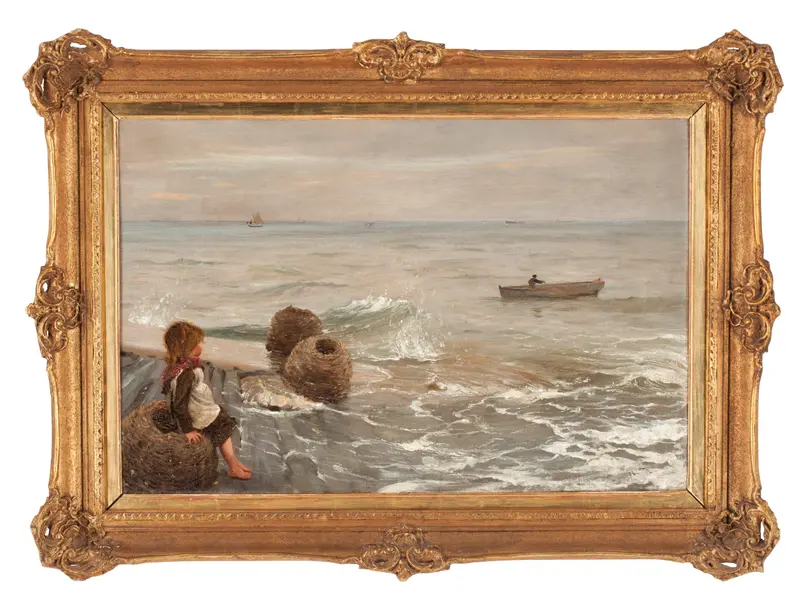
Flicka vid kaj
August Hagborg
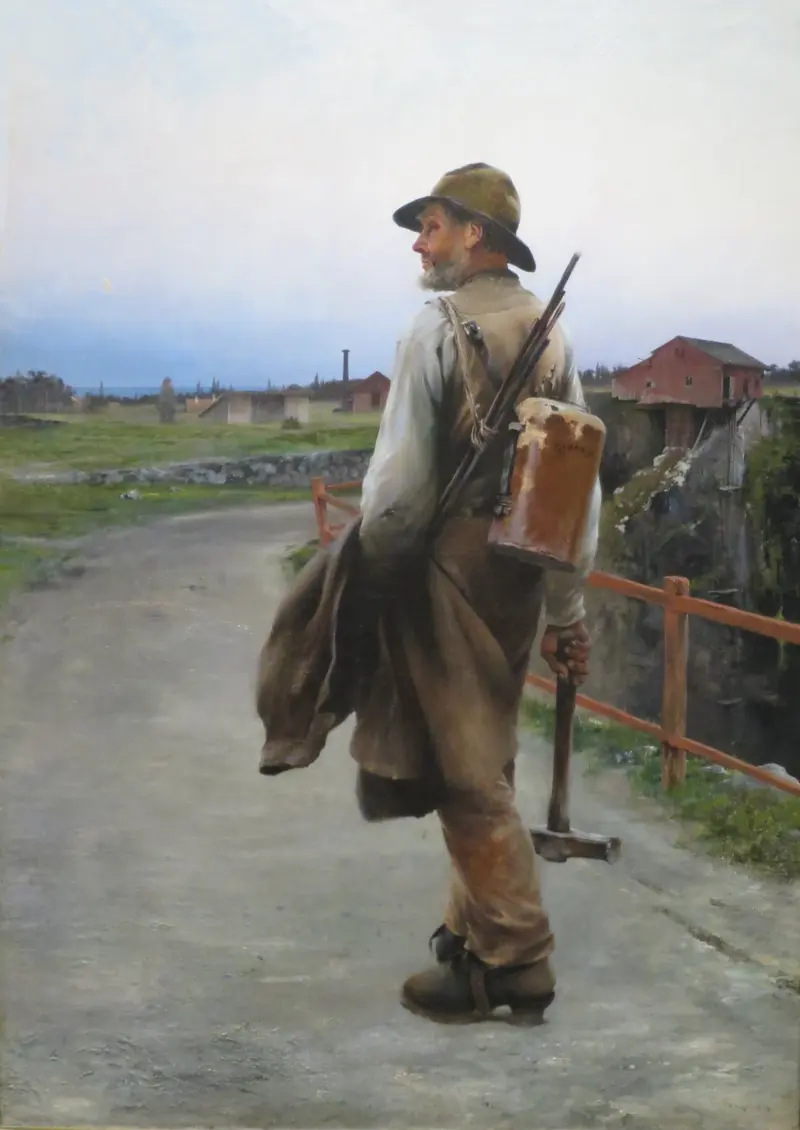
A Miner
August Hagborg
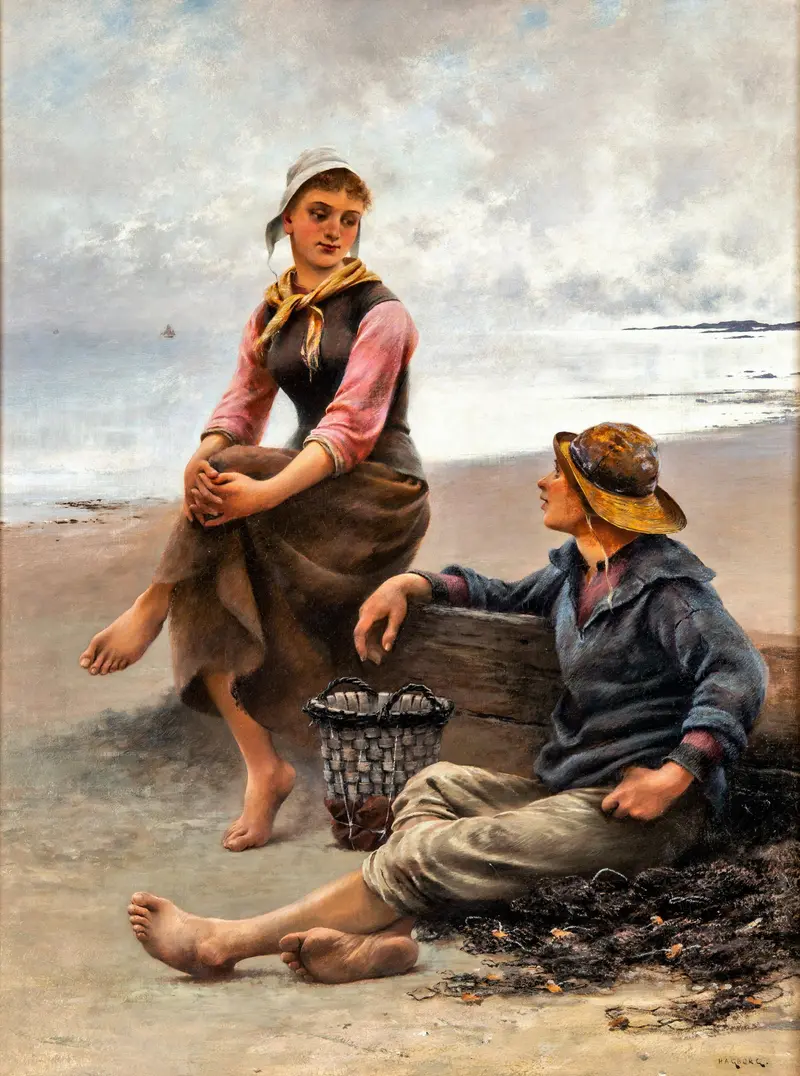
Fisherman and his Maiden
August Hagborg
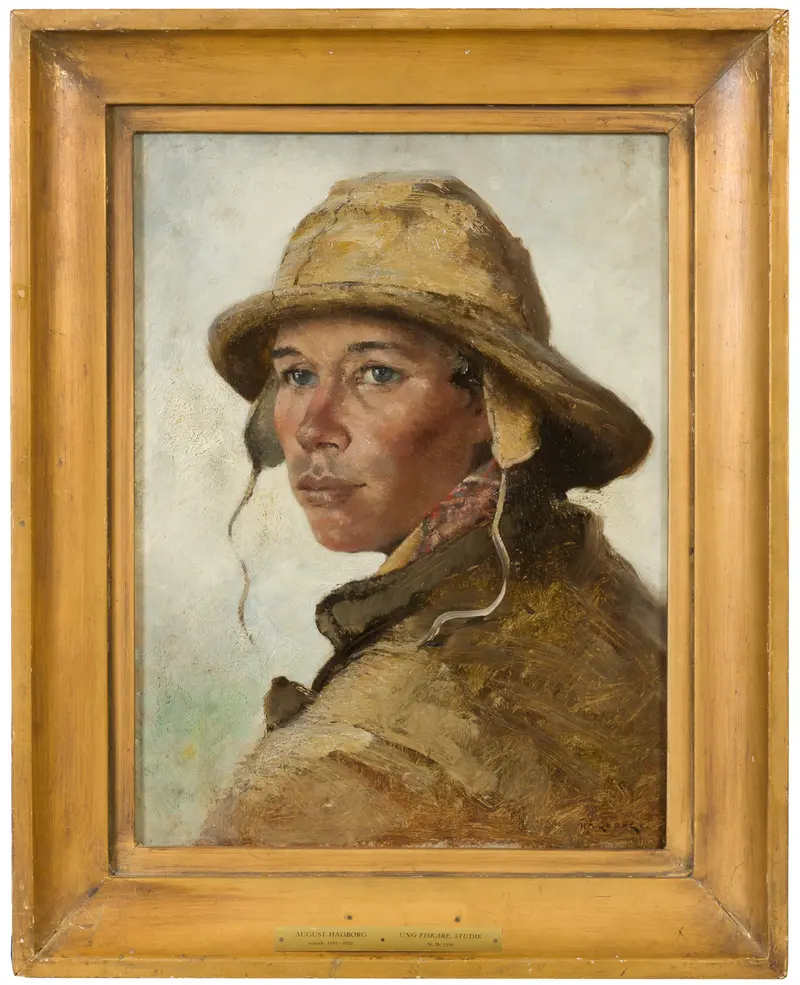
Head of a Young Fisherman. Study
August Hagborg
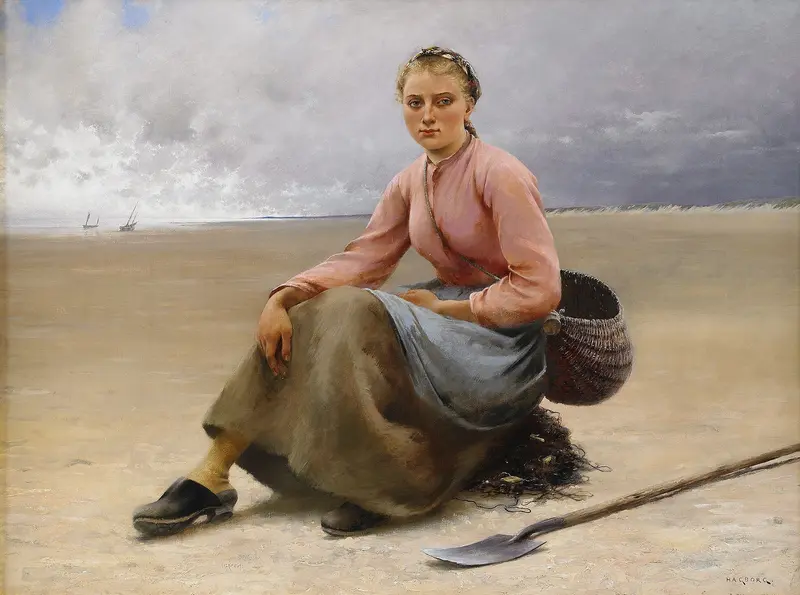
Ostronplockerska Bretagne
August Hagborg
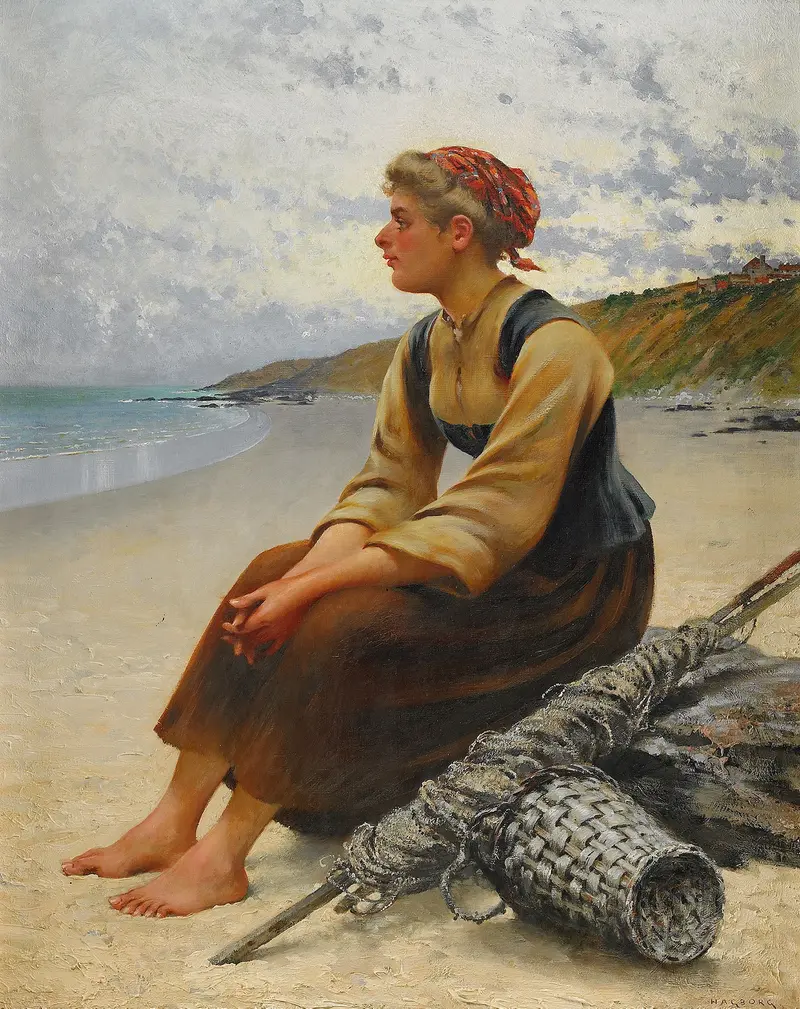
Ostronplockerska på stranden
August Hagborg
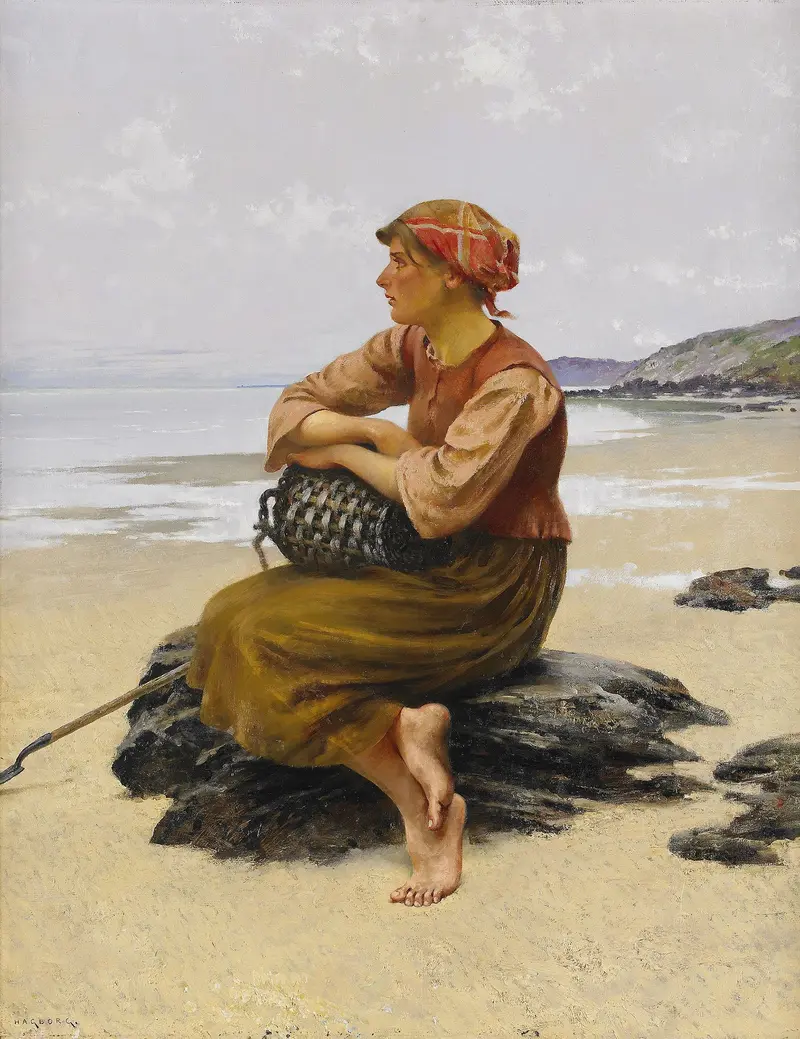
Sittande ostronplockerska på stranden
August Hagborg
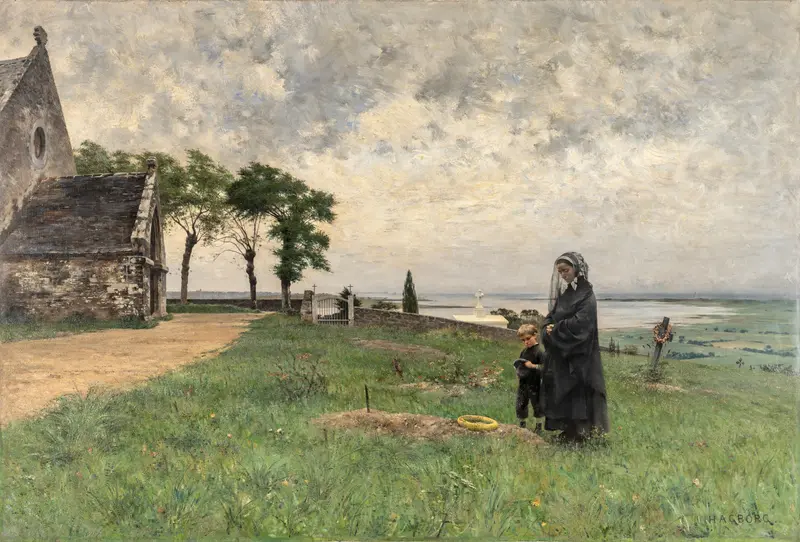
The Cemetery at Tourville
August Hagborg
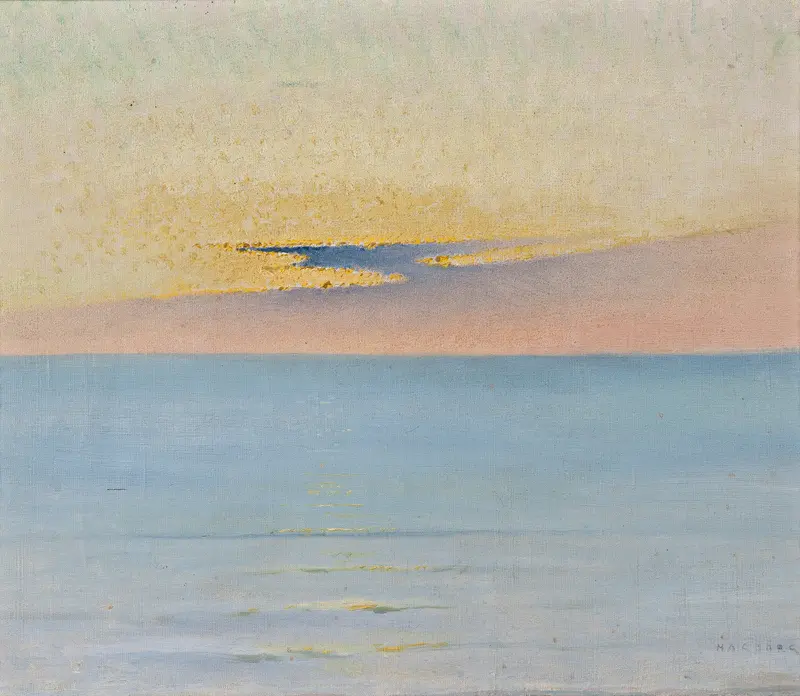
Sea in Sunset
August Hagborg
More Genre Scene Art

Banquet of the Officers of the St George Civic Guard
Frans Hals

Rembrandt and Saskia in the Scene of the Prodigal Son
Rembrandt van Rijn

Bal du moulin de la Galette
Pierre-Auguste Renoir

Quadrille at the Moulin Rouge
Henri de Toulouse-Lautrec

A Burial at Ornans
Gustave Courbet

When Will You Marry?
Paul Gauguin